
A wasp hovering over the patio can make an afternoon feel unfinished, especially when a nest sits near your home or favorite outdoor space. The right trap depends on the insect you have, where you live, and whether you prefer a sticky monitor, a water-activated catcher, or a reusable yellowjacket trap. These options suit homeowners, gardeners, farmers, and anyone dealing with persistent flying pests around frequently used areas.
Your Options, Compared
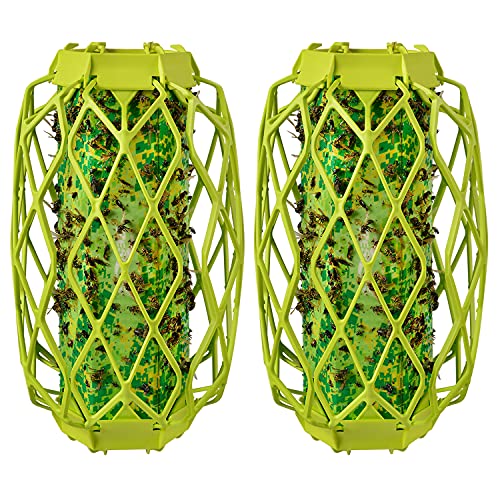
RESCUE! VisiLure TrapStik, 2-Pack

RESCUE! Disposable Yellowjacket Trap, 6-Pack

RESCUE! 10-Week Yellowjacket Attractant Cartridge
RESCUE! Yellowjacket Trap 2-Pack + Refills

Pestvanish Outdoor Wasp Trap

RESCUE! Disposable Hanging Fly Trap with Attractant Bait, 5-Pack

THE INTERCEPTOR PRO Complete Honeybee Swarm Trap Kit, Assembled

RESCUE! Reusable Yellowjacket Trap
A Breakdown Of The Leading Choices
A TrapStik offers a different approach from the hanging traps that use liquid bait. Its bright colors and layered visual pattern draw wasps toward a sticky surface, making it a practical monitor for eaves, porch edges, garages, and other places where mud daubers or carpenter bees become recurring problems.
You may find this format especially useful for confirming insect activity without handling liquid bait. Unlike the yellowjacket-only products later in the list, the TrapStik is intended for several flying pests, including red wasps, mud daubers, and carpenter bees.
Where It Helps
- Colored, dimensional patterns attract multiple listed wasp species to the adhesive surface.
- Glue guards help shield the sticky area from incidental non-insect catches.
- The odorless, spray-free format suits sensitive areas around frequently visited outdoor spaces.
- One two-pack supports separate placement points without complex setup.
Practical Considerations
- The adhesive surface requires careful handling, particularly during removal and disposal.
- Confirm the insects match the listed targets, because the range centers on wasps, mud daubers, and carpenter bees.
Quick Facts
Made For
You benefit most from this option when you need a compact, liquid-free way to monitor wasps, mud daubers, or carpenter bees around a porch, shed, or garden.
Another Choice May Suit
Pestvanish Outdoor Wasp Trap suits people who want to provide their own bait and empty a reusable catcher rather than handle an adhesive trap.
Disposable traps make sense when your priority is straightforward seasonal deployment rather than long-term reuse. This RESCUE! model uses water to activate powdered attractant, then hangs outdoors where yellowjackets forage during warm, dry summer weather.
For homeowners in the Mountain and Pacific regions, that regional formula matters. The six-pack provides several placement points, while the absence of routine rebaiting keeps maintenance light during the season when foraging activity is strongest.
The Practical Payoff
- Adding water activates the attractant without a separate bait-mixing process.
- Attractant remains effective for weeks, reducing frequent maintenance.
- Six traps support distribution around multiple outdoor activity areas.
- Disposal avoids the cleanup required from a reusable catcher.
Worth Noting
- The formula is intended for yellowjacket species in Mountain and Pacific states.
- It does not target wasps or hornets, so it is a poor match for those insects.
- Full traps must be discarded, which adds a recurring material cost to the setup.
Right Fit For
This disposable model fits homeowners in the covered regions who face summer yellowjacket activity around patios, trash areas, or outdoor dining spaces.
Consider Something Else When
RESCUE! Reusable Yellowjacket Trap fits people who prefer to keep a catcher for repeated seasons and refill its attractant separately.
A refill cartridge solves a narrow but common ownership problem: your reusable trap still works, but its attractant has run out. This preloaded cartridge provides 10 weeks of yellowjacket attraction and slots into a compatible RESCUE! reusable trap.
You gain a tidy, mess-free way to refresh the trap without handling loose bait. The cartridge is designed to attract both queens and workers from spring through fall, although the trap body itself is not included.
Useful Strengths
- Preloaded construction keeps bait handling and mess to a minimum.
- A stated 10-week supply gives you a clear replacement schedule.
- The attractant targets queens and workers across spring, summer, and fall activity.
Small Caveats
- You need a compatible reusable trap because no trap body is included.
- Cartridge timing suits seasonal use and may outlast a short-lived problem.
Feature Snapshot
Best Suited To
You get the most value from this cartridge after already owning a compatible reusable trap and noticing that its yellowjacket attractant needs replacement.
Look Elsewhere When
RESCUE! Yellowjacket Trap 2-Pack + Refills suits people who need both the trap bodies and the first set of refill cartridges in one purchase.
This combination balances the two pieces most reusable-trap owners need: durable catchers and initial attractant refills. You receive two traps along with two 10-week cartridges, creating a ready setup for yellowjacket activity around separate outdoor locations.
Its entry system is more structured than a sticky trap. Yellowjackets enter through openings underneath, move upward through an internal cone, and remain inside, where dehydration causes them to die. The design targets stinging yellowjackets rather than honeybees.
Useful Touches
- Two trap bodies allow placement around different sides of a property.
- Two refill cartridges support continued seasonal use.
- Durable plastic construction suits repeated use across seasons.
- The trap targets numerous yellowjacket species found across North America.
Trade Offs
- Attractant replacement remains necessary as the supplied supply is used.
- The system focuses on yellowjackets and does not cover wasps or hornets.
Technical Highlights
Built With In Mind
You benefit most from this set when you want two reusable yellowjacket catchers plus a substantial initial attractant supply for a property with several activity zones.
A Better Fit Elsewhere
RESCUE! Disposable Yellowjacket Trap, 6-Pack fits people who prefer lightweight seasonal traps and straightforward disposal instead of maintaining reusable bodies.
The Pestvanish trap gives you more control over the bait than the factory-filled products in this list. You can add sugar, apple juice, jam, or another liquid bait, then hang the catcher away from your busiest area with the included 18-inch cord.
That makes it useful around vegetable gardens, patios, orchards, and campsites where you may want to adjust the bait or empty and refill the trap. Its ABS plastic body is described as resistant to rain, sun, and corrosion.
Notable Gains
- You control the bait, allowing adjustments to suit local insect activity.
- Eight entrances create several routes into the trap for flying insects.
- A large entry and restricted exit make escape less practical once insects enter.
- The sealed bottom reduces leakage during outdoor use.
- Warm soapy water cleaning makes routine reuse straightforward.
Points To Note
- You must supply bait and empty the trap when it fills.
- The 18-inch cord may be short for elevated placements that require a longer suspension point.
Who It Suits Best
This reusable catcher fits gardeners and homeowners who want flexible bait choices and regular emptying rather than disposable or factory-sealed traps.
Where A Sibling Pick Shines
RESCUE! VisiLure TrapStik, 2-Pack fits people who want to monitor wasps and mud daubers without preparing liquid bait or handling a refillable catcher.
Flies gather around trash cans, animal areas, and farm buildings, where a hanging trap can pull attention away from your patio or backyard. This five-pack uses water to activate its scented bait, and the enclosed bag collects captured flies for simple disposal.
The setup works especially well in broad outdoor spaces such as barns, kennels, gardens, and rural properties. Because the attractant has a strong smell, placement well away from living areas is the essential balance between effectiveness and comfort.
A Strong Showing
- Water activation makes setup fast, with no separate bait preparation.
- The hanging format suits many remote outdoor problem areas.
- Five traps allow placement around several trash or animal zones.
- Disposable bags remove the need to handle caught flies.
Honest Caveats
- The attractant has a strong odor and belongs at least 20 feet from living spaces.
- This model addresses nuisance flies, not wasps or hornets.
- Full traps must be discarded rather than cleaned and reused.
At A Glance
Who Will Love This
This fly trap suits property owners with manure, refuse, barn, or kennel areas where flies collect and a remote hanging station is available.
Not Your Match When
RESCUE! VisiLure TrapStik, 2-Pack suits people dealing specifically with wasps, mud daubers, or carpenter bees rather than nuisance flies.
A honeybee swarm landing on a tree calls for a very different tool from a hanging wasp trap. THE INTERCEPTOR PRO is designed to collect a swarm for later transfer into a hive, with frames, foundation, lure, and a beeswax coating included in the kit.
The trap arrives assembled, apart from its hanger, and includes a tree strap and hooks for placement. Its lightweight construction is described as more durable than wood, which matters during the handling involved in moving a captured swarm.
What Helps Most
- The preassembled design reduces setup work before hanging.
- Frames, foundation, lure, and coating create a ready swarm-catching setup.
- Included straps and hooks support attachment to a tree.
- Instructions focus on transferring the captured swarm into a hive.
Possible Drawbacks
- The hanger is not included with the otherwise assembled kit.
- Captured bees still need a suitable hive and a planned transfer process.
Made For
This kit fits beekeepers and swarm-removal workers who can identify honeybee swarms and have access to a receiving hive.
Another Choice May Suit
RESCUE! Yellowjacket Trap 2-Pack + Refills suits homeowners dealing with yellowjackets around occupied areas rather than a settled honeybee swarm.
This reusable yellowjacket trap offers a straightforward starting point for seasonal control. It includes attractant that lasts for weeks, while the durable plastic body is intended to remain in your outdoor setup across many seasons.
Yellowjackets enter through holes along the bottom and remain within the trap, eventually dying from dehydration. The attractant is formulated for roughly a dozen stinging yellowjacket species found across North America, so it offers broad coverage within that insect group.
Everyday Perks
- The included attractant gets you started without a separate refill purchase.
- Durable plastic supports storage and reuse between seasons.
- Attractant remains useful for weeks, so daily servicing is unnecessary.
- The two-trap format supports coverage around more than one location.
Small Limitations
- Additional attractant cartridges are sold separately once the included supply runs out.
- It targets yellowjackets and will not catch wasps or hornets.
Quick Facts
Made For
You benefit most from this model when you want a reusable yellowjacket trap with enough included attractant to begin a seasonal monitoring routine.
Reach For A Different Pick When
RESCUE! Yellowjacket Trap 2-Pack + Refills fits people who prefer receiving 10-week cartridges alongside the trap bodies from the start.
Match The Trap To The Insect And Season
Start with the insect. Several products in this category are formulated specifically for yellowjackets, while the VisiLure TrapStik covers wasps, mud daubers, and carpenter bees. The fly trap handles nuisance flies, and the Interceptor kit is intended for honeybee swarms. A species-specific match is more useful than choosing by trap shape alone.
Regional formulas matter
The Mountain and Pacific yellowjacket formula is designed around the species found in those states. Confirm your location and the insect’s appearance before ordering. The wrong regional formula may not suit the species active around your property.
Decide how much maintenance you accept
Disposable traps trade repeated purchases for simple disposal. Reusable traps require storage, occasional cleaning, and later attractant refills. Your preferred maintenance routine matters because the most appealing trap on paper may be inconvenient in a busy backyard.
Check placement before buying
Hanging traps need a suitable branch, hook, or cord, while sticky traps need a stable surface that can be monitored and removed carefully. Fly bait has a strong scent and belongs at least 20 feet from living spaces. Always account for children, pets, food areas, and normal foot traffic around your property.
Look for an included kit
A trap body and its attractant are separate needs. A reusable trap with included bait offers a more convenient start than a refill cartridge alone, while a bundle can provide several traps and extra refills. Check the package contents before ordering, especially when you already own compatible equipment.
Practical Details That Shape Your Decision
Where Shoppers Go Wrong
The easiest mistake is treating every flying insect as a wasp. Match the trap to the listed target and regional formula, especially for yellowjacket products. Another common error is ignoring odor, distance, and access before buying; a scented fly trap near a patio or a trap without a secure hanging point can become a nuisance.
What Separates Premium From Basic
A reusable body, included attractant, extra refill cartridges, or multiple mounting options can make a setup more convenient. The upgrade pays off when you plan to reuse the trap across seasons, distribute several units around a property, or avoid preparing bait by hand each time.
Frequently Asked Questions
Do wasp traps catch hornets?
Most of the yellowjacket traps listed here do not catch wasps or hornets, while the VisiLure TrapStik targets wasps, mud daubers, and carpenter bees. Match the label to the insect before placing a trap.
What type of trap is easiest to maintain?
A disposable trap requires little handling because you discard it after use. A reusable trap involves emptying, cleaning, storing, and replacing its attractant when the supply runs out.
Are yellowjacket trap formulas different by region?
Yes. The disposable Mountain and Pacific model uses an attractant formulated for yellowjacket species in those states, so regional fit is an important part of the purchase.
Can you reuse a wasp trap outdoors?
The Pestvanish Outdoor Wasp Trap is designed for reuse with your own bait and warm soapy water cleaning. You must empty it before it becomes full and provide a secure hanging point.
Where should the RESCUE! fly trap be placed?
Place it at least 20 feet from living spaces because the activated attractant has a strong smell. Suitable locations include trash areas, barns, kennels, farms, and other outdoor fly hot spots.
Final Verdict
Your best match starts with the insect: use the TrapStik for its listed wasp and bee targets, choose a yellowjacket model for yellowjackets, and reserve the fly trap for nuisance flies. The Interceptor kit serves a separate purpose, capturing honeybee swarms for transfer. Once the target is right, select disposable convenience, reusable maintenance, or refill flexibility based on your property and season.