
An umbrella that leans in a crosswind can leave its canopy crooked and the pole shifting at the base. The right support matters for a patio table, a compact entryway, or a pergola project, especially when I need a stable fit without taking up unnecessary space. I compared pole compatibility, weight, mobility, construction, and practical footprint to narrow the field.
Your Options, Compared
Lifeswell Umbrella Stand
PGGP 3-Way Pergola Kit
PGGP Fillable Umbrella Base

PGGP Metal Fillable Base

PGGP Fence Post Repair Kit

YAMAZAKI 1579 Smart Tall Stand
More Details On Our Top Picks
The Lifeswell Umbrella Stand is built for a permanent patio arrangement rather than frequent repositioning. Its welded construction and triangular reinforced bottom create a broad support structure, which matters on a deck or lawn where a light, sliding base would feel underweight. Unlike the rolling bases later in this roundup, this model prioritizes a planted, stable footprint.
The adjustable sleeves cover several common pole diameters, so it suits households replacing an aging base without changing umbrellas. In my view, the broad compatibility is the deciding feature for a fixed dining setup, provided the pole measurement is taken before assembly.
What Works In Its Favor
- Welded construction reduces reliance on loose joints for everyday stability.
- A reinforced triangular bottom spreads the load across the supporting surface.
- Multiple sleeve sizes accommodate several common pole diameters.
Trade Offs
- The fixed format makes repositioning less convenient than using a wheeled model.
- Pole compatibility depends on matching the umbrella to the supplied sleeve sizes.
Key Specs
Built With In Mind
I favor this stand for homeowners with a fixed patio table and an umbrella pole measuring no more than 2 inches in diameter.
Where A Sibling Pick Shines
The PGGP Fillable Umbrella Base suits patios where mobility and frequent repositioning matter more than a planted base.
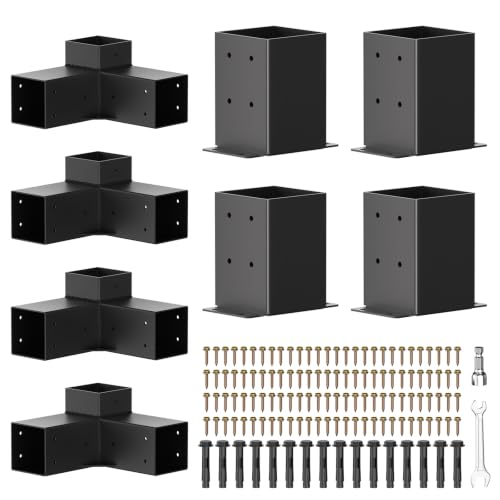
This is an outdoor support accessory rather than an umbrella stand. The PGGP 3-Way Pergola Kit joins a horizontal beam to a vertical post with a right-angle bracket, making it relevant to pergola projects rather than patio umbrella support. That distinction matters because the required opening and post dimensions are completely different from the pole sleeves on the Lifeswell Umbrella Stand.
Two brackets are included for securing opposite corners of a basic pergola frame. For a straightforward backyard build, the three-way geometry can keep the beams visually aligned, although an experienced woodworker may still prefer a custom joint for unusual spans.
What Earns Its Place
- The three-way connection supports both vertical and horizontal members at a corner.
- Two brackets provide matching hardware for opposite corners.
Points To Note
- It does not support an umbrella pole or function as a freestanding umbrella base.
- The opening is 3.5 by 3.5 inches, so nominal 4-by-4 lumber may require an exact fit check.
Who It Suits Best
I recommend this kit to DIYers building a conventional pergola from posts with a 3.5-by-3.5-inch cross-section.
Reach For A Different Pick When
The PGGP Metal Fillable Base fits the needs of households supporting a large outdoor dining umbrella rather than constructing a pergola.
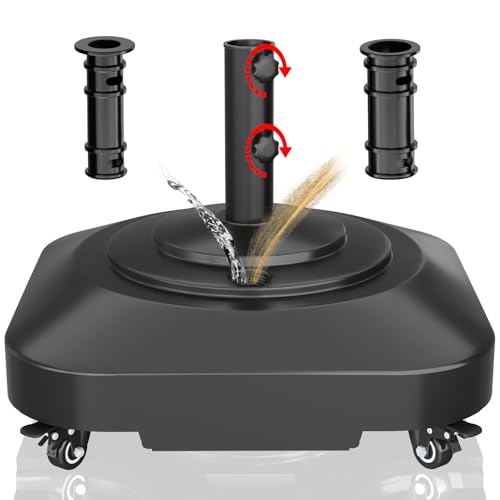
The PGGP Fillable Umbrella Base solves the awkward task of moving a full umbrella across a patio. Four casters, including a dual-wheel unit and two locking casters, give the base multiple contact points and help it stay parked. Compared with the fixed Lifeswell Umbrella Stand, this design is better suited to shaded areas that change with the season or the sun.
Adding up to 100 pounds of material increases the base’s resistance to tipping. The long sleeve and two interchangeable inserts also cover common pole sizes, although measuring the umbrella before ordering remains essential.
Where It Helps
- Locking casters help keep the base stationary on level paving.
- The fillable design accepts material to add stabilizing weight.
- Multiple sleeve diameters improve compatibility with common market umbrellas.
- Rolling construction makes seasonal repositioning much easier.
Small Caveats
- Adding and removing fill material adds a setup step, and the filled base remains heavy to move by hand.
Feature Facts
Made For
This base best fits patio hosts who regularly move an umbrella and need convenient rolling storage.
Consider Something Else When
The Lifeswell Umbrella Stand is the better fit for a fixed location where quick movement is unnecessary.
The PGGP Metal Fillable Base takes a broader approach to umbrella support, with a metal body, a water-fillable interior, and room for umbrellas ranging from 6 to 12 feet. Compared with the PGGP Fillable Umbrella Base, its larger square footprint favors a full-size dining umbrella rather than a compact market model. That extra scale appears useful on a spacious patio, though it will demand more room.
Four casters with locking mechanisms make repositioning manageable, while three sleeve sizes cover several pole dimensions. I would check the table opening and canopy clearance before committing, since the base is designed for substantially larger umbrellas.
A Favorable Mix
- Water fill adds weight without requiring sand or another loose material.
- Locking casters help keep the large base stationary.
- The broad sleeve range supports umbrellas from 6 to 12 feet.
Practical Considerations
- The 21.26-inch square footprint needs more patio space than a compact stand.
- Removal of the water becomes necessary before moving the base by hand.
Technical Highlights
Best Suited To
I favor this base for households with a large dining umbrella and a level patio with ample floor space.
A Better Fit Elsewhere
The PGGP Fillable Umbrella Base serves smaller market umbrellas and patios where a compact rolling footprint matters.
The PGGP Fence Post Repair Kit addresses leaning wood posts rather than patio umbrellas. Its H-shaped steel bracket wraps around both sides of a post, while the widened flanges and ground spike help brace the timber against twisting and soil movement. That makes it a useful companion for garden projects where a leaning post threatens the alignment of a fence line.
Two units are supplied, and each bracket uses five assembly screws. I would inspect the post condition first, since a sound bracket cannot compensate for badly rotted wood, but the ground-level installation may be preferable to removing and resetting the post.
Positive Points
- The H-shaped profile braces both sides of a wooden post.
- Two repair kits support repeated use along a fence line.
Points To Keep In Mind
- This product does not hold an umbrella or support a patio canopy.
- Existing wood rot must be addressed separately for a sound repair.
- Soil conditions and installation depth will affect how the ground spike anchors the post.
The Right Fit
This kit suits homeowners repairing a leaning but structurally sound wooden fence post near a patio or garden.
Skip It When
The YAMAZAKI 1579 Smart Tall Stand is the relevant choice for organizing closed umbrellas in an entryway.
The YAMAZAKI 1579 Smart Tall Stand is built for a different job from the outdoor bases: keeping closed umbrellas organized near an entrance. Its slim black-steel body measures 15 by 15 centimeters across and stands 48 centimeters high, so it uses vertical space rather than a broad patio footprint. That minimalist profile suits a narrow entryway, although the arrangement depends on the umbrellas remaining upright and closed.
The stated capacity reaches 16 umbrellas, giving it more organizational room than a simple one-umbrella holder. Compared with the wheeled PGGP options, this stand is stationary and intended for indoor storage, but its narrow footprint earns its place beside a door.
The Case For It
- The tall profile makes efficient use of vertical space.
- Capacity for up to 16 umbrellas suits busy household entryways.
- The black steel construction complements minimalist interiors.
One Thing To Consider
- Its design is intended for closed umbrellas rather than a deployed patio canopy.
Core Details
Whose Shelf It Belongs On
I recommend this stand for apartment residents and homeowners with a narrow entryway and several folded umbrellas.
Look Elsewhere When
The PGGP Metal Fillable Base is the better option for supporting an open outdoor dining umbrella.
What Matters Before Buying an Umbrella Stand
Start With Pole Fit
Pole diameter is the first practical check because a base cannot securely support a mismatched shaft. The Lifeswell Umbrella Stand accepts poles up to 2 inches, while the PGGP bases use a 1.97-inch main sleeve with smaller inserts. I measure both the outer pole diameter and the table opening before ordering, because clearance around the canopy matters as much as the connection itself.
Balance and Mobility Serve Different Purposes
A fixed base with a reinforced bottom works well for a permanent patio table. A wheeled, fillable base makes more sense for seasonal repositioning, although added water or other material increases its weight. The five-wheel arrangement and locking casters on the PGGP Fillable Umbrella Base help control movement on smooth paving, but level surfaces still make repositioning easier.
Match the Base to the Umbrella
Small market umbrellas and 6-to-12-foot dining umbrellas require different footprints. The PGGP Metal Fillable Base has a 21.26-inch square body, making room around the table important. For indoor storage, the YAMAZAKI 1579 Smart Tall Stand offers a narrower alternative with a completely different purpose, keeping closed umbrellas upright beside an entrance.
Check the Full Project
The PGGP 3-Way Pergola Kit and PGGP Fence Post Repair Kit expand this list into adjacent outdoor projects. Their post dimensions differ from umbrella poles, so neither substitutes for an umbrella base. I keep the categories separate: a pergola bracket joins structural members, a fence repair kit braces timber at ground level, and an umbrella stand secures a canopy pole.
Shopping Lessons for Outdoor Umbrella Supports
Common Shopping Slip Ups
A common mistake is estimating pole size by sight or ignoring the table opening. Another is choosing a small rolling base for a broad canopy without accounting for added weight. Measure the pole, inspect the ground, and leave enough clearance for the canopy to open without catching nearby furniture.
What Separates Premium From Basic
A higher-tier base may provide a larger metal body, multiple sleeve sizes, locking casters, and an integrated water reservoir. Those additions help when the umbrella is large, moved occasionally, or exposed to outdoor conditions. A basic fixed base remains sensible for a light umbrella and a permanent location.
Frequently Asked Questions
What size umbrella stand fits a 2-inch pole?
The Lifeswell Umbrella Stand accepts poles up to 2 inches in diameter, with smaller sleeves included for narrower shafts. I would still measure the pole before assembly.
Are fillable umbrella bases easier to move?
Fillable bases are easier to roll before adding material, but water or another fill increases the weight afterward. Locking casters help keep the base stationary once it reaches its final position.
Should an outdoor umbrella base be filled with water?
Water is a practical way to add weight to a fillable base without bringing in loose material. The base must be drained before lifting, and the local surface should be reasonably level.
What is the difference between an umbrella stand and an umbrella base?
An umbrella stand organizes closed umbrellas indoors, while an umbrella base supports an open patio umbrella outdoors. Pole compatibility, stability, and mobility determine which outdoor design is appropriate.
Can one umbrella base fit different pole sizes?
Several bases use interchangeable sleeves to accommodate different pole diameters. The available sleeve sizes should be compared with the measured pole before purchase.
Final Verdict
I choose the Lifeswell Umbrella Stand for a fixed patio setup, the PGGP Fillable Umbrella Base for frequent repositioning, and the PGGP Metal Fillable Base for a large dining umbrella. The YAMAZAKI 1579 Smart Tall Stand serves indoor organization, while the pergola and fence kits belong to separate outdoor projects. Measuring the pole and available space prevents most fitting problems.