
A mouse behind the pantry wall, crickets near the laundry room, or roaches tracking along the garage floor can turn one small problem into a house-wide headache. These repellers offer a practical mix of plug-in ultrasonic devices, scent-based mouse deterrents, and sticky traps, giving you several ways to respond to activity in garages, basements, kitchens, storage areas, and other indoor spaces.
Ultrasonic repellers use high-frequency sound, measured in kilohertz, to discourage certain pests from remaining in a treated area. Their effectiveness depends on room layout, the pest involved, and careful placement, so the right approach depends on whether you want passive deterrence, active monitoring, or direct capture.
An Overview Of The Picks

BugMD Vamoose! Pro Pouches
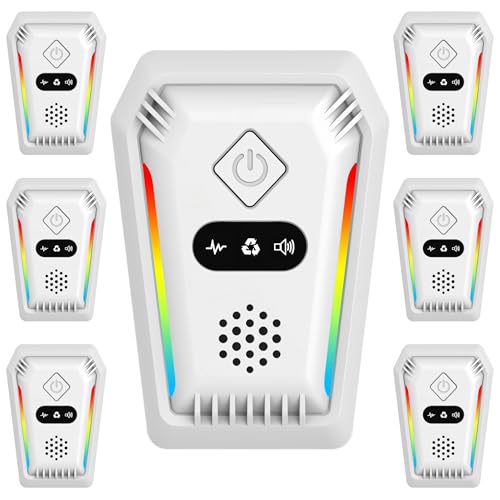
ZzzAway 2026 Ultrasonic Pest Repeller with 3 Modes, 6-Pack

MythLeaf 2026 Ultrasonic Pest Repeller, 2 Modes, 6-Pack

Jqely 2026 Multi-Frequency Repeller, 6-Pack

CXIENAOY Ultrasonic Repeller 8-Pack

Catchmaster Max-Catch Glue Traps 36-Pack

Catchmaster Extra Sticky Glue Boards 12-Pack, 5.3 x 8 Inches

Catchmaster Super Glue Traps 30-Pack
A Deeper Look At The Lineup
BugMD takes a different route from the electrical devices in this lineup. Its Vamoose! Pro pouches carry peppermint, cinnamon, and cedarwood oils on porous volcanic pumice rather than a food-based filler, making them easy to position near a known travel route without leaving bait behind.
For a pantry, storage unit, attic, garage, or vehicle, that simplicity has real value. Unlike the Jqely 2026 Multi-Frequency Repeller, this option needs no outlet, and a larger space may require several pouches for even scent distribution.
Useful Highlights
- Uses a pumice carrier instead of grain or corn fill.
- Targets both mice and rats around nesting and travel areas.
- Eight percent plant oils provide a continuing scent release.
- Works in homes, garages, vehicles, boats, and storage spaces.
- Each sealed pouch is rated for up to 30 days of use.
Small Caveats
- Large or divided areas may need more than one pouch.
- The approach relies on scent rather than trapping or electronic frequencies.
Key Specs
Made For
You need a portable mouse and rat deterrent for a pantry, vehicle, storage area, or other enclosed space with no convenient outlet.
A Better Fit Elsewhere
The Jqely 2026 Multi-Frequency Repeller suits larger rooms where continuous electronic coverage and outlet placement are practical.
ZzzAway gives you more control over operation with three modes labeled Enhanced, Medium, and Silent. That matters in a lived-in space, since a bedroom or home office calls for a different setup than a basement or garage with stronger pest activity.
The six-pack also offers a practical way to cover several rooms. Each unit plugs into a standard outlet, draws 3 to 5 watts, and uses no spray, bait, or traps, which makes this a straightforward option for households wanting passive indoor deterrence.
Where It Delivers
- Three modes support different levels of activity and room use.
- Silent mode suits bedrooms and overnight use.
- Six units allow distribution throughout separate rooms.
- Low 3-to-5-watt power draw suits continuous outlet use.
Worth Noting
- One unit per room is recommended for the most consistent setup.
- Visible changes may take one to four weeks to develop.
- Outlet availability can dictate placement in older rooms.
Quick Facts
Right Fit For
You want plug-in deterrence across multiple indoor rooms, especially where a quieter nighttime setting matters.
Consider Something Else When
The BugMD Vamoose! Pro Pouches offer a simpler alternative for enclosed spaces without a suitable electrical outlet.
MythLeaf centers on frequency conversion, shifting between two ultrasonic bands across a stated 15 to 75 kHz range. For people dealing with an uncertain mix of insects and rodents, that wider range offers a different design approach from the ZzzAway 2026 Ultrasonic Pest Repeller with 3 Modes, 6-Pack and its user-selected settings.
The six units plug directly into outlets and consume 3 to 5 watts, so they can remain positioned around a home without batteries. They use no odor or chemical spray, which makes them practical for kitchens, offices, bedrooms, and storage areas where you prefer not to handle bait.
What It Does Well
- Frequency conversion covers a broad 15-75 kHz range.
- Two modes provide a simple choice between operating patterns.
- Six plug-in units suit multi-room distribution.
- Operation produces no odor and requires no batteries.
Possible Compromises
- Two modes offer less adjustment than the ZzzAway device.
- Meaningful changes may require several weeks of continuous use.
- Every treated area needs a suitable outlet and clear placement.
Built With In Mind
You face mixed pest activity and want one compact device family to cover several indoor zones.
Another Choice May Suit
The ZzzAway 2026 Ultrasonic Pest Repeller with 3 Modes, 6-Pack fits you better when a dedicated silent setting and more mode control matter.
Jqely has the broadest stated open-area coverage in this group, reaching up to 1,600 square feet per unit. That figure works best for an uncluttered room, since walls and solid objects can interrupt ultrasonic signals, and it makes positioning more important than simply filling a room with units.
Its 10 to 65 kHz multi-frequency system targets a wide collection of indoor pests, including rodents, insects, fleas, bed bugs, moths, and silverfish. Six units cover multiple rooms, and the vertical installation guidance of 10 to 50 inches above the floor helps keep the signal clear.
A Favorable Mix
- Stated coverage reaches up to 1,600 square feet per unit.
- Multi-frequency output covers numerous indoor pest types.
- Automatic operation begins once the indicator light is on.
- Six units support room-by-room placement.
Details To Watch
- Separate rooms may still require separate units.
- Stored furniture and other solid objects can limit signal reach.
- Visible results may take five to seven weeks in some conditions.
Feature Snapshot
The Right Fit
You have a large, relatively open indoor area and want a six-unit system with detailed placement guidance.
Swap It Out When
The CXIENAOY Ultrasonic Repeller 8-Pack is more practical when the priority is distributing more units across many smaller rooms.
Distribution is the central advantage of the CXIENAOY set. Eight plug-in units let you cover separate rooms and common activity zones at the same time, including kitchens, bedrooms, basements, garages, offices, laundry rooms, and storage spaces.
Compared with the Jqely 2026 Multi-Frequency Repeller, 6-Pack, the CXIENAOY option emphasizes quantity across a home rather than a stated square-foot range for each unit. That may be useful in a many-room property, although outlet access still determines where each device can go.
The Good Stuff
- Eight units support simultaneous coverage in separate rooms.
- Plug-in installation keeps placement simple.
- Useful across common household and utility areas.
Factors To Consider
- Eight outlets must be available for full distribution.
- No room-level coverage figure is provided.
- Large obstructions can still interrupt ultrasonic output.
Core Details
Best Suited To
You want to cover numerous smaller rooms or utility areas and have enough outlets for an eight-device setup.
Look Elsewhere When
The Jqely 2026 Multi-Frequency Repeller, 6-Pack offers a better match for a large open area with a stated coverage range.
The Catchmaster Max-Catch set changes the method completely by using sticky boards rather than ultrasonic output. Thirty-six traps make sense for a garage, basement, attic, storage building, or other property where you want to place monitoring points along suspected rodent and crawling-insect routes.
The traps are used without bait, which simplifies setup and lets their sticky surfaces catch passing pests. A more measured approach is to leave the paper covering on during an initial placement period so the boards become familiar, then position them where activity is most likely.
Standout Benefits
- Thirty-six boards support extensive placement.
- Works without separate insect or rodent bait.
- Can catch rodents, insects, spiders, and other crawling pests.
- Placement along travel routes can reveal where activity occurs.
Practical Considerations
- Sticky traps require inspection and eventual disposal.
- They capture pests rather than encouraging them to leave.
- Placement takes more attention than a single plug-in device.
Who Will Love This
You manage a property with many suspected entry points and want a large supply of discreet monitoring traps.
Where A Sibling Pick Shines
The Catchmaster Extra Sticky Glue Boards 12-Pack, 5.3 x 8 Inches suit you better when a smaller number of compact boards is easier to manage.
These 5.3-by-8-inch boards offer a more manageable middle ground than the Catchmaster Max-Catch Glue Traps 36-Pack. Their size suits garages, basements, attics, and other indoor areas where you want to place several boards without building a wall-sized trap arrangement.
The boards are intended for use without insect or mouse bait, and their adhesive surfaces are designed to attract crawling insects and rodents. As with the larger Catchmaster set, leaving the paper on for a period before full deployment can help the boards blend into a familiar route.
Strengths Worth Knowing
- Twelve boards provide useful coverage without excessive bulk.
- Compact dimensions suit tight storage and utility areas.
- No separate bait is required.
- Useful for both insects and small rodents.
Less Ideal Details
- Each board needs regular inspection.
- Captured pests leave physical remains on the adhesive.
- Twelve boards may be insufficient for a large property with widespread activity.
Technical Highlights
Made For
You want a compact, moderate-sized set of sticky boards for garages, basements, attics, and nearby rooms.
Another Choice May Suit
The Catchmaster Max-Catch Glue Traps 36-Pack fit larger properties where extensive checkpoint coverage matters more than compact handling.
Thirty units give the Catchmaster Super Glue Traps a useful balance between the 12-board set and the 36-pack Max-Catch assortment. They fit properties where you want more placement points than a small set allows, without reaching for the largest option in the lineup.
These traps are designed for insects, ants, mice, rats, roaches, spiders, crickets, and other crawling pests. They work without mouse bait and should be placed indoors along known or suspected rodent pathways, making them a direct monitoring option rather than an electronic deterrent.
The Case For It
- Thirty traps offer substantial placement flexibility.
- Covers rodents and several common crawling insects.
- Operates without separate mouse bait.
- Suits indoor route monitoring and direct capture.
Points To Note
- Regular inspection is needed to handle captured pests promptly.
- The traps occupy floor or shelf space along travel routes.
- Placement accuracy matters more than the number of units alone.
Whose Shelf It Belongs On
You want a moderately large supply of adhesive traps for monitoring several indoor areas around a home or garage.
Reach For A Different Pick When
The BugMD Vamoose! Pro Pouches suit you better when you prefer scent-based deterrence over physically capturing pests.
What Matters Before You Choose a Pest Repeller
Match the Method to the Pest
Ultrasonic devices are designed to discourage pests through changing sound frequencies, while sticky traps physically capture activity along a route. BugMD Vamoose! Pro Pouches take a third approach, using a pumice-mounted scent near travel and nesting areas. A mixed infestation may call for more than one method rather than a single device placed in every room.
Count Rooms, Outlets, and Obstructions
A six-pack or eight-pack only helps when you have enough outlets and sensible placement locations. Furniture, walls, and stored objects can interrupt ultrasonic waves, so open areas generally offer more useful coverage. In garages or basements, place each unit where pests travel instead of grouping every device near a single wall outlet.
Check the Operating Mode or Scent Schedule
The ZzzAway device offers three modes, while the MythLeaf model provides two, giving you some control over how the unit operates. The BugMD pouches require periodic replacement and use multiple pouches in larger spaces. Match the schedule to how much attention you can give the placement without expecting every device to work identically in every room.
Use Traps Where Confirmation Matters
Sticky traps can show you where mice, insects, or spiders are moving because catches remain visible on the boards. The Catchmaster sets are most useful along walls, behind appliances, and near suspected entries. They require inspection and disposal, so direct capture suits a household comfortable managing physical traps.
Mistakes Worth Dodging
Wrong Turns To Avoid
Placing one ultrasonic unit in a large, cluttered room and expecting even coverage is a common mismatch. Sound encounters walls and solid objects, so separate areas may need separate units. Another mistake is positioning glue boards in open spaces rather than beside the routes used by rodents or crawling insects.
What Separates More Sets From More Coverage
A larger pack helps only when you have enough outlets, rooms, or trap locations to use it. Higher unit counts are most useful across a property with many separate zones, while frequency range, operating modes, and placement guidance matter more in one large, open area. Count the locations before deciding which set suits your home.
Frequently Asked Questions
Do ultrasonic pest repellers work in every room?
They work best in open indoor areas where the signal has fewer obstacles. Walls, furniture, and stored objects can reduce its reach, so separate rooms may need separate units.
How long do ultrasonic repellers take to show results?
Visible changes may take one to four weeks, depending on the device and infestation level. Some listings indicate that clearer results can take five to seven weeks, so continued use and careful placement matter.
Are glue traps better than ultrasonic repellers?
Glue traps directly capture pests and reveal travel routes, while ultrasonic repellers work as passive deterrents. A trap fits a need for confirmation and capture; an electronic device fits a preference for low-contact deterrence.
Can ultrasonic devices be used around children and pets?
The devices operate with ultrasonic frequencies rather than sprays or bait, which may suit households avoiding chemical pest-control products. You should still follow the placement instructions and keep units inaccessible to children and animals.
Where should pest traps be placed?
Place glue boards along walls, near entry points, behind appliances, and beside known or suspected pest pathways. Leave the paper covering on during an initial acclimation period for the most natural placement.
Final Thoughts
The right choice depends on your space and the kind of evidence you need. Plug-in ultrasonic devices suit open, outlet-accessible rooms, BugMD pouches fit targeted scent placement, and Catchmaster boards reveal activity along travel routes. Match the method to the pest, check the placement requirements, and give the setup time to show a meaningful change.