
A 65-inch television dominates a room differently from a 42-inch set, and the right wall mount can improve sightlines, free floor space, and reduce screen glare. I consider screen size, weight, VESA compatibility, wall construction, and viewing-angle needs before choosing a mount for a busy family room, compact apartment, or dedicated media space.
Full-motion mounts suit changing seats and off-center windows, while fixed models keep the television close to the wall. The six options below cover practical combinations for different television sizes, room layouts, and installation conditions.
How The Shortlist Stacks Up

USX MOUNT Full Motion TV Wall Mount 32-70 inch TVs up to 99 lbs, Dual Articulating Arms

USX MOUNT Full Motion TV Wall Mount 37-84 inch TVs, 120 lbs, Dual Arms

USX MOUNT Full Motion TV Wall Mount 32-74 inch TVs up to 110 lbs, Dual Arms
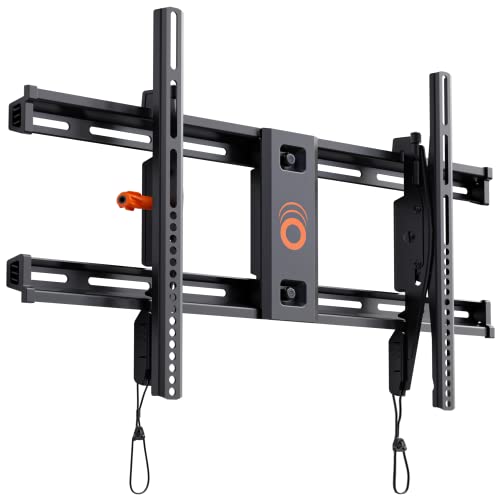
ECHOGEAR Tilting TV Wall Mount 40-90 inch TVs, 10-Degree Tilt

HOME VISION Fixed TV Wall Mount 26-65 inch TVs

Perlegear Full Motion TV Mount 26-65 inch TVs
The USX MOUNT Full Motion TV Wall Mount handles common living-room sizes without demanding a very large television. It accommodates 32- to 70-inch sets up to 99 pounds, giving apartments and family rooms a useful middle ground between compact and oversized equipment.
Dual articulating arms provide both swivel and tilt rather than locking the screen against the wall. That flexibility helps when a window creates reflections or when the main seating area sits off-center, although the extended arms need more space in front of the wall.
Real-World Strengths
- Supports televisions from 32 through 70 inches across a broad size range.
- Swivel and tilt adjustment makes off-axis viewing easier in multi-use rooms.
- Mounting support includes 12- and 16-inch wood studs, concrete, and brick.
- The 99-pound limit accommodates many popular mid-sized displays.
Trade Offs
- Articulating arms require more clearance than a fixed wall mount.
- Television weight and VESA measurements need checking before installation.
Feature Snapshot
Made For
This mount suits households with a television between 32 and 70 inches and regularly changing seating positions.
Consider Something Else When
The USX MOUNT 37-84 inch model supports heavier sets and wider VESA patterns for larger media rooms.
The USX MOUNT Full Motion TV Wall Mount is built around larger displays, covering 37- through 84-inch televisions with a 120-pound capacity. That range gives it a clear purpose in dedicated media rooms where a fixed, low-profile bracket may not provide enough adjustment.
Its dual arms offer up to 45 degrees of swivel and a tilt range from minus 15 to plus 5 degrees. Compared with the smaller USX MOUNT model, the broader VESA range and higher load limit make this the more substantial option for large screens, subject to matching the television’s rear pattern.
The Value In It
- Extends compatibility to 84-inch displays and a 120-pound load.
- Wide swivel range helps a screen serve seating across a large room.
- VESA coverage reaches 600×400 mm for compatible large televisions.
- Wood-stud mounting support uses standard 12- and 16-inch spacing.
Points To Note
- The larger mounting envelope may need more wall and furniture clearance.
- Its size range excludes many compact televisions below 37 inches.
Quick Facts
Right Fit For
This model fits large-screen media rooms with multiple seating positions and 12- or 16-inch wood-stud framing.
Where A Sibling Pick Shines
HOME VISION Fixed TV Wall Mount offers a shallower profile for compact rooms where articulation is unnecessary.
The USX MOUNT Full Motion TV Wall Mount raises the load ceiling while retaining a broad 32- to 74-inch screen range. It makes more sense than a basic fixed bracket in a family room where the television needs to face different parts of the space.
Dual articulating arms support swivel and tilt adjustment for glare control. The 110-pound capacity exceeds the first USX MOUNT option, but its VESA ceiling remains 400×400 mm, so size alone does not determine compatibility for unusually large sets.
Positive Takeaways
- Higher 110-pound capacity suits larger televisions in active living rooms.
- Swivel and tilt movement reduces the need to move the screen manually.
- Installation fits 12- and 16-inch wood-stud spacing.
- Broad VESA range covers many standard flat-screen television patterns.
Small Caveats
- The 400×400 mm VESA maximum excludes some larger mounting patterns.
- Moving arms require adequate space in front of the wall.
Who Should Grab It
It suits a household with a television under 110 pounds that needs flexible positioning in a multipurpose room.
Reach For A Different Pick When
The ECHOGEAR Tilting TV Wall Mount carries a higher 135-pound limit for particularly large displays.
The ECHOGEAR Tilting TV Wall Mount concentrates on large displays, accepting 40- through 90-inch televisions up to 135 pounds. It makes sense for a purpose-built media wall where screen size and load capacity matter more than side-to-side movement.
A 10-degree tilt gives the screen enough downward or upward adjustment to manage reflections without requiring a full-motion arm. The three-step installation, divided hardware, and drilling template also appeal to first-time installers working with a prepared mounting area.
Points In Its Favor
- Supports very large displays through 90 inches.
- Carries a 135-pound capacity for heavier television sets.
- Ten-degree tilt offers practical glare adjustment.
- Pre-divided hardware and a drilling template simplify setup.
Practical Considerations
- Tilt adjustment does not provide the lateral movement of a full-motion mount.
- The 40-inch minimum excludes many smaller bedroom televisions.
Feature Card
Built With In Mind
This bracket fits large-screen media rooms where controlled tilt and substantial load capacity take priority over swivel movement.
Swap It Out When
The Perlegear Full Motion TV Mount fits smaller screens and offers more positional freedom for a shared living area.
The HOME VISION Fixed TV Wall Mount keeps the display close to the wall, creating a cleaner appearance in apartments and compact living rooms. Its fixed construction suits a television positioned directly in front of the main seating area.
Compatibility extends from 26- to 65-inch flat or curved televisions up to 99 pounds. That differs from the full-motion models in this shortlist, which trade some of the close-to-wall clearance for swivel and tilt adjustment.
Features That Help
- Stands only one inch away from the wall for a shallow profile.
- Supports flat and curved televisions from 26 through 65 inches.
- A 99-pound limit covers many mainstream television sizes.
- Fixed positioning suits a centered, dedicated viewing area.
Less Ideal Details
- Fixed placement cannot swivel toward a side seat.
- Tilt adjustment is not included in the stated design.
The Right Fit
This model suits a compact room with centered seating and a television that does not require frequent repositioning.
Another Choice May Suit
The Perlegear Full Motion TV Mount provides more adjustment for seating located away from the center of the room.
The Perlegear Full Motion TV Mount brings flexible positioning to 26- through 65-inch flat and curved televisions. It works well in apartments and shared living rooms where seating changes but the television remains below 82 pounds.
Tilt adjustment helps control glare, while the full-motion format allows the screen to follow the main viewing area. Installation support includes wood studs, concrete, and brick, though the lower weight ceiling requires close attention to the television specification.
A Few Strong Suits
- Flexible movement suits rooms with more than one seating area.
- Accommodates flat and curved displays from 26 through 65 inches.
- Mounting options cover wood studs, concrete, and brick.
- VESA support spans 100×100 through 400×400 mm.
Where It May Fall Short
- The 82-pound limit is lower than several full-motion alternatives.
- Extended positioning requires space behind the television.
Technical Notes
Whose Shelf It Belongs On
It suits apartment residents and families using a medium-sized television in a room with flexible seating needs.
Look Elsewhere When
HOME VISION Fixed TV Wall Mount provides a much shallower profile for a tightly arranged display wall.
What Matters Before Mounting a Television
Start With the Back Panel
VESA is the distance between a television’s four mounting holes. I check the television manual and the bracket’s supported range before anything else, since screen size alone does not confirm a match. The television’s weight must also remain below the mount’s stated limit.
Match the Mount to the Wall
Wood studs require spacing that lines up with the bracket’s mounting pattern. Concrete and brick need appropriate anchors and drilling equipment, making wall construction a central part of the installation plan rather than a later detail.
Treat Clearance as Part of the Design
Fixed mounts keep the screen close to the wall, while tilting and full-motion arms need room to move. I account for nearby furniture, cables, and the depth of the television before choosing a more flexible bracket.
Common Mistakes in TV Mount Decisions
Mistakes Worth Dodging
Buying by diagonal screen size without checking VESA or weight creates an avoidable compatibility problem. Full-motion mounts also need more clearance than fixed models, so furniture placement should be considered before installation.
What Separates Premium From Basic
Higher-tier mounts commonly add load capacity, broader adjustment, or stronger articulated hardware. The added capability is worthwhile for large televisions, changing seating positions, and viewing-angle adjustments, while simpler rooms may need less.
Frequently Asked Questions
How do I know which TV wall mount fits my television?
The bracket must support the television’s weight, screen size, and VESA hole pattern. Each of the three measurements needs to fall within the manufacturer’s stated limits.
Is a full-motion mount better than a fixed mount?
A full-motion mount offers more viewing-angle control and works better with off-center seating. A fixed mount takes less space and leaves the screen close to the wall.
Can I install a TV mount on a stud wall?
Many models support 12- or 16-inch wood-stud spacing. The television’s mounting holes and the bracket’s hole pattern must align with that framing.
Does a curved television need a special mount?
Curved sets can work with a universal mount when their weight and VESA pattern fall within its limits. Both the HOME VISION and Perlegear options support compatible curved displays.
How much space is needed behind the television?
Fixed models can sit roughly one inch from the wall, while tilting and articulating mounts require additional clearance. The arms need room to move without striking nearby furniture.
Final Verdict
I would choose the USX MOUNT 37-84 inch model for a large media room, the ECHOGEAR bracket for very heavy displays, and the HOME VISION mount where minimal wall clearance matters. For more flexible positioning with a medium-sized screen, the Perlegear option provides a practical balance. The decisive steps remain checking VESA, weight, wall structure, and available depth before ordering.