
A damp cabinet floor or unexplained water bill can turn a small plumbing problem into an expensive excavation. Whether you manage a household, maintain rental property, or troubleshoot a commercial system, you need the right tool for the pipe, space, and depth involved. Sewer cameras show what happens inside drains, while acoustic detectors help locate pressurized or buried leaks. These tools solve different problems, so matching the equipment to the situation matters more than choosing on screen size alone.
A Fast Comparison Of The Options

Sanyipace Sewer Camera 230FT/70M with Locator and 10.1-Inch Screen

Sanyipace 7MM Sewer Camera with Locator

Sanyipace Self-Leveling Sewer Camera with 512Hz Locator

Sanyipace 7mm Sewer Camera with Locator, 165FT Cable, 32GB Card

Sanyipace 165FT Drain Camera with Locator, Zoom, and 4500mAh Battery

PQWT PQ125D Water Leak Detector
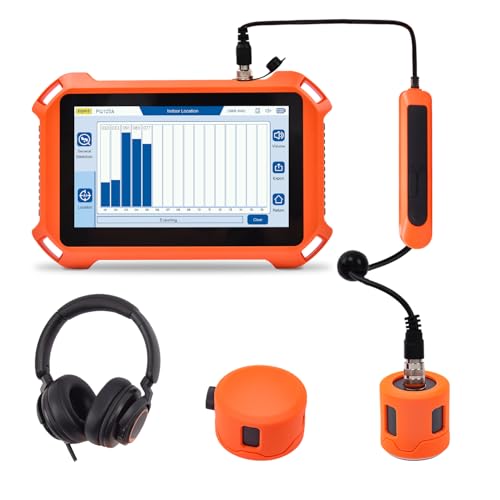
PQWT PQ125A Water Leak Detector for Walls and Ground
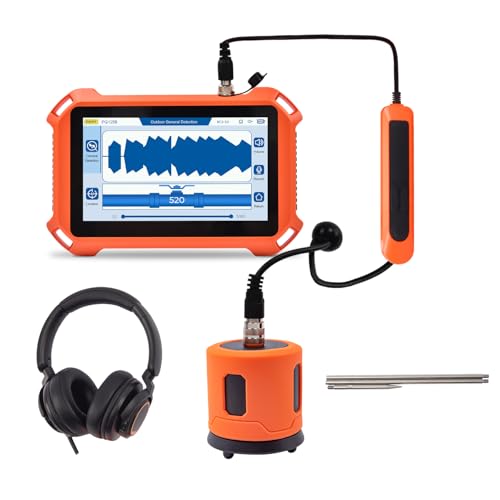
PQWT PQ125B Outdoor Underground Water Leak Detector
Taking A Closer Look At The Options
A 230-foot camera cable gives you room to inspect long residential drain runs without constantly reconnecting the probe. The 10.1-inch display makes the 1080p image practical for spotting cracks, corrosion, and obstructions, while 12 lights illuminate the inside of dark pipes. This configuration fits you when the inspection point is far from the suspected failure.
The included 512Hz locator adds a second layer of information by tracing the camera head from above ground. Far mode covers a 16.5-foot search area, while near mode narrows the range to 3.3 feet for close positioning. That combination matters when you need to mark the ground before planning an excavation.
A Strong Showing
- The 230-foot cable reaches farther than the shorter sewer camera options in this group.
- A 10.1-inch screen gives you a comfortable view for detailed pipe inspection.
- Near and far locator modes support both broad searching and precise surface marking.
- Recording, a distance counter, and integrated lighting support repeatable inspections.
Practical Considerations
- The long cable takes more space to store, lay out, and clean after use.
- Locator readings depend on suitable ground conditions and the pipe material, so confirm your site can support a surface trace.
Key Specs
Built For Long-Distance Work
This camera best suits you who must inspect long or remotely accessed residential drain lines and mark likely trouble spots above ground.
Another Choice May Suit
The Sanyipace 165FT Drain Camera with Locator, Zoom, and 4500mAh Battery may suit you who values a larger battery over maximum cable reach.
The 7mm probe puts the focus on access rather than a large display package. Its semi-rigid fiberglass push rod supplies enough forward force for routine drain lines, while the tapered camera tip is designed to move around obstacles with less snagging. That makes the camera worth considering for cleanout points and routes with limited working room.
Unlike the 230-foot Sanyipace Sewer Camera with Locator and 10.1-Inch Screen, this model centers on a slender push cable and a cone-shaped probe. A live distance counter tracks how much cable has entered the pipe, helping you relate the visible obstruction to its approximate position. The 512Hz locator then helps you trace that position from the surface.
What Helps Most
- The 7mm cable fits into comparatively confined drain openings.
- Real-time distance readings reduce guesswork about how far the probe has traveled.
- The tapered tip supports smoother movement past common obstacles.
- The locator adds a ground-trace method without requiring excavation first.
Things To Weigh
- You need a reasonably clear approach because the semi-rigid rod must be pushed and steered.
- The smaller probe format offers fewer visual details than the 10.1-inch screen camera unless the display resolution is adequate for your diagnosis.
Made For Narrow Access
This camera fits you who works from tight cleanouts and wants a small probe with distance and locator functions.
Reach For A Different Pick
The Sanyipace 7mm Sewer Camera with Locator, 165FT Cable, 32GB Card suits you who needs a larger display and saved inspection footage more than a compact push rod.
A self-leveling camera keeps its orientation as the probe changes direction, which gives you a steadier view when a drain bends or the cable lies unevenly. You can use that image to confirm a blockage, damaged section, or sag before taking the next diagnostic step. It is a practical choice for inspection work where maintaining a clear view matters.
The companion 512Hz locator lets you trace the camera head from ground level, with the signal described as strongest within about 2.6 feet. Unlike the Sanyipace 7MM Sewer Camera with Locator, which emphasizes distance tracking during the push, this package focuses on connecting the visual diagnosis with a marked surface location. That pairing reduces the area you need to open when a repair point is identified.
What It Does Well
- Self-leveling keeps the view more consistent through changes in pipe direction.
- The locator links the internal image with a surface position for targeted marking.
- The combined approach supports both blockage confirmation and repair-location planning.
Honest Caveats
- The locator is most useful when you remain close to the camera head, so you need room to walk the surface in a measured pattern.
- A precise signal trace still requires careful mapping and does not remove the need for a proper site assessment.
Quick Facts
The Right Fit
This model suits you who inspects drain lines and needs the camera position marked accurately after identifying a visual problem.
Consider Something Else
The Sanyipace Sewer Camera 230FT/70M with Locator and 10.1-Inch Screen may suit you who needs more cable reach and a larger viewing area.
The 10.1-inch IPS screen gives you a larger, well-lit workspace for studying pipe conditions, while a 145-degree lens keeps more of the pipe wall in view. Twelve high-intensity lights illuminate dark interiors, and 5x digital zoom helps you examine cracks, corrosion, and blockages more closely. The 165-foot cable provides useful reach without moving to the 230-foot configuration.
A built-in DVR records the inspection and includes a speaker for audio. The included 32GB card gives you room to save findings, which is useful for documenting a diagnosis or sharing evidence before arranging a repair. Compared with the Sanyipace 7MM Sewer Camera with Locator, this set emphasizes recorded detail and viewing comfort rather than the smallest possible probe.
Benefits That Matter
- The large IPS screen supports careful review of the live pipe image.
- Twelve lights and a wide-angle lens improve visibility inside dark drains.
- Digital zoom helps you inspect small defects without relying only on physical proximity.
- Recording and a 32GB card create a record of the inspection.
- The 512Hz locator helps connect the internal view with a surface location.
Small Caveats
- The 165-foot cable falls short of the longest model in this group, so longer routes need extra planning.
- Stored footage must be organized on the 32GB card to keep important clips easy to find.
Feature Snapshot
Who Will Love This
This kit suits you who needs a large display, saved video, and close visual analysis during routine drain inspections.
A Better Fit Elsewhere
The PQWT PQ125A Water Leak Detector for Walls and Ground suits you who needs acoustic leak detection rather than an internal pipe camera.
The 4500mAh battery makes this camera a practical companion to a drain-cleaning vehicle or a property inspection kit. You can work away from a wall outlet while the self-leveling probe follows the pipe and a distance counter tracks its progress. The 165-foot version gives you substantial reach for household lines without extending as far as the 230-foot Sanyipace model.
Its 512Hz locator offers a broad scanning mode and a close-range mode for narrowing the surface position of the camera head. Five-times digital zoom supports closer examination of the pipe interior. You also have 66-foot, 100-foot, and 165-foot configurations, so the right cable length can match the access point and property layout.
Where It Delivers
- The large battery supports extended work away from a mains connection.
- Self-leveling helps maintain orientation through bends and uneven cable placement.
- Distance tracking gives context to the camera position inside the line.
- Two locator modes support both broad searches and fine positioning.
- Digital zoom adds useful detail when evaluating a visible defect.
Points To Note
- The available cable lengths differ, so confirm that the selected version reaches your inspection point.
- For very long runs, the 230-foot Sanyipace Sewer Camera with Locator and 10.1-Inch Screen offers greater reach.
Good Match For Routine Work
This camera suits you who performs repeated drain inspections without a reliable outlet near the work area.
Swap It Out When
The PQWT PQ125B Outdoor Underground Water Leak Detector may suit you who is locating a leak in a buried water supply line rather than inspecting a drain.
The PQ125D changes the approach by using acoustic detection, meaning it listens for the sound of escaping water rather than sending a camera through the pipe. Its general mode covers a broad area quickly, while the focused mode helps narrow the location. That makes the kit useful for household leaks where the exact pipe route is uncertain.
Three sensor arrangements broaden the use cases. The DMR-H40 works against walls and in confined spaces, the DMR-V59 handles indoor pipe leakage, and the RCS-S3 can locate metal or plastic pipes around 100mm at depths up to 6 meters. Unlike the Sanyipace camera options, this tool does not require direct access to the inside of the pipe.
Useful Touches
- Separate sensors cover wall, indoor pipe, and buried pipe-location applications.
- Acoustic detection can narrow a leak location without opening the pipe.
- Broad scanning and focused positioning modes suit different stages of a search.
Details To Watch
- Acoustic results can be harder to interpret in noisy surroundings, so quiet conditions offer more useful listening.
- The different sensors are suited to particular jobs, so you should match the attachment to the pipe location before starting.
Technical Sheet
Who Should Grab It
This detector suits you who must locate leaks in walls, indoor pipes, or underground lines without inserting an inspection camera.
Look Elsewhere When
The Sanyipace Self-Leveling Sewer Camera with 512Hz Locator suits you who needs direct visual evidence of cracks, sags, or blockages inside a drain.
The PQ125A focuses on two common residential problem areas: water escaping behind a wall and a leak forming beneath the ground. The DMR-H40 sensor reaches wall surfaces and confined areas, while the DMR-V59 is intended for indoor pipe leakage. You can move from a broad search to a focused location without needing to open the surface first.
Its general detection mode covers a large area more quickly, while location mode is stated to narrow the position within 10 centimeters. That level of localization can help you decide where to investigate more closely. For deeper supply-line work, the PQWT PQ125D Water Leak Detector adds an RCS-S3 sensor that can locate certain buried pipes, so the broader kit may be a closer match.
Everyday Perks
- Wall and ground coverage suits common residential leak complaints.
- The DMR-H40 reaches confined spaces where larger equipment cannot sit comfortably.
- Focused mode supports precise positioning after the initial area search.
- You can locate the source without beginning with an invasive wall or yard opening.
Potential Compromises
- Wall and ground work may require you to reposition the sensor several times during a broad search.
- Outdoor noise can make acoustic positioning less consistent in busy surroundings.
Best Suited To
This detector fits you who checks residential walls, floors, and ground areas for water leaks before deciding where to excavate.
Where A Sibling Pick Shines
The PQWT PQ125D Water Leak Detector may suit you who also needs to locate metal or plastic pipes at greater underground depth.
The PQ125B is built around outdoor water-supply work, where a leak can sit beneath soil, gravel, landscaping, or a paved surface. Its RCS-S3 sensor uses low-frequency resonance to carry through thick-walled pipes and deep burial layers. That makes it more relevant to external network lines, industrial supply pipes, and underground household water systems than an indoor wall detector.
You begin with general detection to survey a broad section, then move into location mode for a tighter result. The acoustic method avoids waiting for a visible puddle to appear at the surface. Compared with the Sanyipace drain cameras, however, the PQ125B locates leaks from outside the line rather than showing the interior condition of a pipe.
Where It Excels
- The RCS-S3 sensor is designed for deep burial and thick-walled supply pipes.
- Outdoor operation suits buried lines beneath soil, gravel, or landscaping.
- General and location modes support a staged search from broad area to specific point.
- The tool can narrow the leak site before the surrounding surface is disturbed.
Where It May Fall Short
- It is less relevant to visible indoor pipe joints and concealed wall leaks than the PQWT PQ125A.
- Traffic, machinery, and flowing water nearby can complicate acoustic positioning, so a quiet patch of ground helps.
Core Details
Made For Buried Supply Lines
This detector suits you who searches outdoor water-supply lines beneath soil, gravel, landscaping, or pavement.
Not Your Match When
The PQWT PQ125A Water Leak Detector for Walls and Ground suits you whose leak is more likely behind an indoor wall or close to the surface.
Where Each Detection Method Fits
Start With The Kind Of Fault
A sewer camera is the practical choice when you need to see inside a drain, confirm a blockage, or document a damaged section. An acoustic detector is better suited to finding pressurized or buried leaks through the sound of escaping water. Starting with the fault prevents you from carrying a camera into a job that requires listening instead.
Match The Tool To Access
The 7mm Sanyipace 7MM Sewer Camera with Locator may suit a tight cleanout, while the 230-foot model suits a distant access point. Wall detectors need a surface to press against, and outdoor underground detectors need enough open ground for a broad-to-focused search. Measure the route and check the available working space before ordering.
Consider Pipe Material And Depth
Locator sensitivity changes with pipe material, burial depth, and soil conditions. The PQ125B is oriented toward deep outdoor supply lines, while the PQ125D offers separate sensors for walls, indoor pipes, and buried pipe location. Match the sensor to the known installation rather than relying on the broadest set of accessories.
Decide What Evidence You Need
A camera provides visual evidence and can preserve recorded footage. An acoustic tool gives you a location estimate without opening the pipe. You may need both at different stages, but a single-purpose tool often provides a clearer diagnosis when the problem and access points are already known.
Avoiding Costly Diagnostic Misfits
Common Shopping Slip Ups
Do not choose a sewer camera for a pressurized supply leak or an acoustic detector for a visible cracked drain. Match the tool to the suspected failure, available access, and pipe depth before comparing screens or sensors.
What The Higher Tier Buys
Higher-tier camera packages may add longer cable, larger displays, stronger lighting, recording, and more precise location modes. Those extras help with complex inspections, but a basic camera can be more suitable for a short, accessible residential line.
Frequently Asked Questions
Are Sewer Cameras Suitable For Finding Water Leaks?
Sewer cameras are mainly suited to inspecting drains, blockages, cracks, corrosion, and pipe alignment. They work best where you can insert a probe into the line, while acoustic detectors are more practical for pressurized or buried supply leaks.
What Is The Difference Between A Sewer Camera And An Acoustic Leak Detector?
A sewer camera shows the inside of a pipe through a connected probe. An acoustic detector listens for water escaping from a pressurized line, so it helps locate a suspected leak without entering the pipe.
Can One Tool Locate Both Indoor And Outdoor Leaks?
Some kits include sensors for walls, indoor pipes, and underground locations. You still need to select the correct sensor for each environment, and deeper outdoor work may require a detector designed specifically for buried supply lines.
How Much Cable Length Does A Drain Camera Need?
Choose enough cable to reach the suspected point without creating awkward loops in your work area. A 165-foot camera suits many residential lines, while a 230-foot model offers more room for long runs or distant cleanouts.
Is A 512Hz Pipe Locator Complicated To Use?
The locator adds a surface-tracing step after you move the camera head. You need to understand the locator range and the pipe material, and you should mark the signal as you scan rather than relying on one isolated reading.
Final Verdict
The right pipe leak detection tool depends on what you need to see or hear. Choose a camera for internal drain faults, a wall detector for residential surfaces, and an outdoor acoustic unit for buried supply lines. Match the tool to the access point and fault type, and you can narrow the problem before deciding where repair work should begin.