
A basement takes on water, a garden needs irrigation, or a rural property needs a dependable water supply, the correct pump depends on depth, flow, and control. This collection covers submersible, sump, utility, shallow-well, and deep-well systems, with the right details for home water tasks.
A Fast Comparison Of The Options

Red Lion RL-SWJ50/RL6H 1/2 HP Jet Pump and 5.8-Gallon Tank
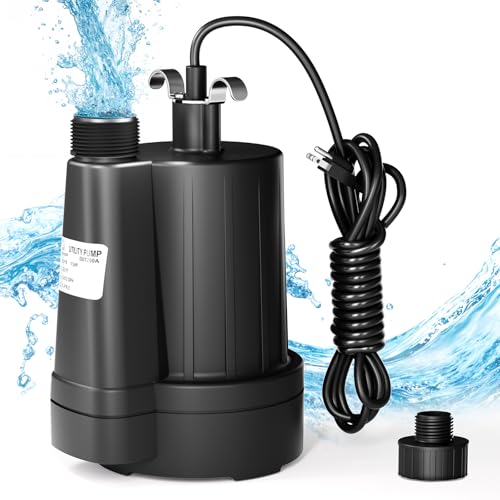
D-HONOR 1/3 HP 2400 GPH Pump
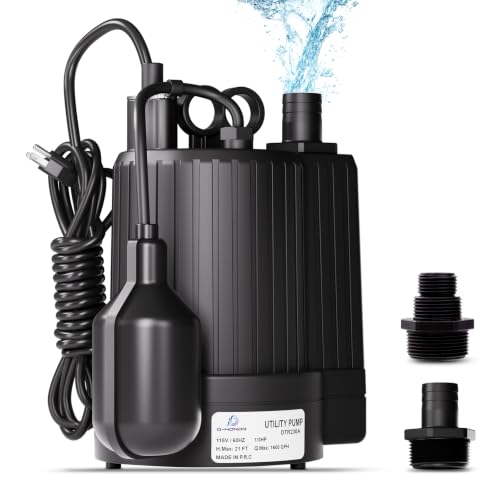
D-HONOR 1/3 HP 1600 GPH Float Pump

D-Honor 330 GPH Water Pump Kit

iMeshbean Deep Well Pump 33 GPM

BOMGIE 1 HP 980 GPH Self-Priming Garden Transfer Pump

Red Lion RL-SC33V Automatic Sump Pump

Red Lion RL-SC33DUP 6000 GPH Sump Pump
The Picks, Examined More Closely
A rural home, cabin, or farm needing a complete pressure-water system benefits from this factory-assembled package. The jet pump, 5.8-gallon precharged pressure tank, switch, gauge, and stainless hose arrive as one coordinated system, reducing the number of separate components required at installation.
This is a shallow-well solution rather than a submersible deep-well pump. Its cast iron construction suits demanding service, and the glass-filled thermoplastic impeller handles the moving water inside the pump. For households needing steady household pressure without assembling a tank package from individual parts, that combination is compelling.
A Few Highlights
- Factory assembly simplifies a pressure-water installation.
- The 5.8-gallon tank supports shorter cycling and steadier household pressure.
- Cast iron housing and volute suit long-term service in a protected pump area.
- Dual-voltage capability allows 115- or 230-volt operation when configured correctly.
Things To Consider
- The pump arrives set for 230 volts, so the electrical configuration must match the supply.
- Its 1-1/4-inch intake and 1-inch discharge require compatible plumbing fittings.
Key Specs
Made For Rural Households
You benefit most from this package when serving a shallow well at a rural home, cabin, or farm with a suitable 115- or 230-volt supply.
Consider Something Else When
Choose the iMeshbean Deep Well Pump 33 GPM instead when the water source requires a pump that sits inside a deep well casing.
Moving several hundred gallons of water across a basement, yard, pool, or pond calls for more capacity than a small transfer pump can provide. This D-HONOR model combines a 1/3-hp motor with a maximum flow of 2,400 gallons per hour, giving you a useful option for substantial dewatering and routine water movement.
Unlike the Red Lion RL-SWJ50/RL6H, this is a portable submersible utility pump rather than a pressurized well system. Its straight-through 1-1/4-inch outlet reduces internal resistance, while the 10-foot cord and carrying handle support movement around a wet basement or garden.
Why It Works Well
- The 2,400 GPH maximum flow suits demanding drainage and transfer tasks.
- A 28-foot maximum lift covers deeper water than compact household pumps.
- Thermal overload protection guards the motor during demanding operation.
- The removable intake screen makes routine debris checks more practical.
Worth Noting
- Manual operation requires you to start and stop the pump yourself.
- The 10-foot cord may be short for a distant yard drain or pond.
Feature Snapshot
Who Will Love This
You benefit most from this pump when managing heavy water removal, pool transfer, or pond drainage with a standard 115-volt outlet.
Another Choice May Suit
The D-HONOR 1/3 HP 1600 GPH Float Pump suits you better when automatic switching and low-water shutdown are more useful than maximum flow.
A sump basin that needs dependable unattended operation makes the float switch the decisive feature. This D-HONOR pump starts automatically at a 12.5-inch water level and stops below 2 inches, reducing the need to monitor a basement during rain or a plumbing mishap.
Manual mode drains down to one-tenth of an inch, which is useful for a wet floor or sump pit that benefits from near-complete removal. Compared with the higher-flow D-HONOR 1/3 HP 2400 GPH Pump, this model prioritizes automatic control and low-level extraction over maximum transfer volume.
Notable Upsides
- Automatic start and stop simplify continuous sump protection.
- Low-water shutdown reduces the risk of continuing without water.
- Manual mode can lower the remaining water to one-tenth of an inch.
- The filter screen excludes larger particles and can be removed for cleaning.
- A 21-foot maximum lift covers a range of basement and cellar applications.
Points To Note
- Basin dimensions and the float’s 12.5-inch activation point need to work together.
- The 10-foot power cord limits its reach within larger pits.
The Right Fit
You benefit most from this model with a small-to-medium sump pit where automatic operation and thorough low-level drainage matter.
Reach For A Different Pick When
The D-HONOR 1/3 HP 2400 GPH Pump better serves you when moving the highest possible volume takes priority over float-controlled operation.
Changing aquarium water, draining a small utility sink, or rinsing a patio calls for a pump light enough to carry around. This D-Honor kit provides a 1/10-hp self-priming pump, 330 gallons per hour of capacity, and a six-foot hose in a compact package.
Self-priming means the pump can establish its water flow after the inlet is filled, rather than requiring the entire unit to sit underwater. That distinction matters for aquarium work and shallow transfer jobs, although the unit must remain above the water line.
What Makes Sense
- The included hose makes the pump usable without a separate transfer line.
- The metal body and coated fittings suit repeated household water movement.
- Spare carbon brushes, an impeller, gasket, and strainer support maintenance.
- The compact body and nonslip handle make storage and carrying easier.
Small Caveats
- The pump must not be submerged.
- Fill the inlet before starting and stop the pump below a one-eighth-inch water level.
- The one-eighth-inch strainer excludes relatively large debris.
Quick Facts
Best Suited To
You benefit most from this kit for aquariums, rain barrels, garden irrigation, patio cleaning, and small household transfer jobs.
Look Elsewhere When
The BOMGIE 1 HP 980 GPH Self-Priming Garden Transfer Pump suits you better when substantial irrigation or drainage flow outweighs compact portability.
A deep well requires a pump that can operate below the water line and lift water through a narrow casing. The iMeshbean model combines a 1-hp motor, eight impellers, and a listed 207-foot maximum head with a 33-gallon-per-minute maximum flow.
Its stainless steel body and thermoplastic impellers suit corrosive well environments, while the integrated control box provides thermal, short-circuit, and overload protection. For an ash-pipe, steel-pipe, or soil well with a compatible four-inch casing, this gives you a purpose-built deep-well option.
Well-Handled Touches
- Eight impellers support lifting from a genuinely deep well.
- The 33 GPM maximum flow serves substantial household water demand.
- A stainless steel body adds corrosion resistance in wet well environments.
- The integrated control box centralizes motor protection.
- A built-in check valve helps limit reverse flow.
Practical Considerations
- The pump requires a compatible four-inch well casing and a 1-1/4-inch NPT discharge connection.
- An additional check valve is recommended by the manufacturer.
- The 33-foot electrical cord needs a suitable route back to the control box.
Built With In Mind
You benefit most from this pump when operating a properly developed deep well with a four-inch casing and adequate electrical service.
Swap It Out When
The Red Lion RL-SWJ50/RL6H 1/2 HP Jet Pump and 5.8-Gallon Tank is the better fit for a shallow well needing an assembled household pressure system.
Moving water from a rain barrel to sprinklers or drawing from a shallow source for irrigation calls for more pressure than a small transfer kit offers. This 1-hp BOMGIE pump provides up to 980 gallons per hour and a listed 131-foot maximum lift, while its self-priming design supports surface-water use.
Unlike a submersible pump, it stays above the water and draws through a hose connection. With a regulator added, it can also act as a pressure booster, giving you flexibility between irrigation and water-transfer arrangements around a lawn, farm, pond, or pool.
Everyday Wins
- The 980 GPM flow handles meaningful lawn and garden volumes.
- A stainless steel casing and aluminum motor housing suit outdoor work.
- Dry-running shutdown and thermal overload protect the motor.
- Two garden-hose adapters and PTFE tape support connection setup.
- The carry handle makes seasonal repositioning less cumbersome.
Possible Compromises
- The unit is a self-priming surface pump, not a submersible model.
- Booster use requires a compatible regulator and suitable hose connections.
- The 131-foot lift rating does not replace the need to account for pipe friction and fittings.
Feature Card
Whose Shelf It Belongs On
You benefit most from this pump for garden irrigation, shallow-well transfer, pond work, and other high-volume outdoor water tasks.
A Better Fit Elsewhere
The D-Honor 330 GPH Water Pump Kit suits you better when compact storage and precise small-volume transfer matter more than irrigation flow.
A compact basement pit often lacks the space for a large dual-pump system, yet the water may contain the small solids common around a home. The Red Lion RL-SC33V combines a 1/3-hp motor with an automatic piggyback float switch, cast iron housing, and an impeller designed to handle semi-solids up to three-eighths of an inch.
The float activates the pump at 7.25 inches and stops it at 2.75 inches. Those dimensions make basin clearance worth checking before installation, especially in a narrow pit where a taller float arrangement would not move freely.
Where It Excels
- Automatic float control removes manual pump operation.
- Cast iron housing suits a demanding sump environment.
- The clog-resistant impeller accepts semi-solids up to three-eighths of an inch.
- The compact vertical format suits narrow sump pits.
Where It May Fall Short
- Your basin must provide enough clearance for the float’s operating range.
- Light-effluent capability does not mean the pump can handle large obstructions.
Made For
You benefit most from this pump in a compact residential sump pit with light effluent and a standard 115-volt supply.
Where A Sibling Pick Shines
The Red Lion RL-SC33DUP 6000 GPH Sump Pump suits you better when two pumps and greater combined capacity justify the extra space.
Large basements and high-water areas benefit from capacity beyond a single sump pump. This Red Lion package contains two 1/3-hp cast iron pumps, two check valves, and a Y-shaped connection that combines the outputs into one 1-1/2-inch discharge line.
The switching arrangement allows the secondary pump to activate when the primary pump cannot handle the situation, adding operational redundancy to the installation. Compared with the compact Red Lion RL-SC33V, the trade-off is space, plumbing complexity, and the need for two float-controlled pumps in the basin.
What Stands Out
- The listed 6000 GPH capacity supports substantial sump pumping.
- Two independent pumps provide standby assistance.
- Y-piping simplifies the connection to one 1-1/2-inch discharge pipe.
- Cast iron pump housings suit heavy-duty sump service.
- Included check valves help protect the setup from reverse flow.
Trade Offs To Consider
- The basin must have room for two pumps, their floats, and the connecting pipe.
- Your existing discharge pipe must match the one-and-a-half-inch connection.
Details At A Glance
Built With In Mind
You benefit most from this dual system in a larger sump basin that can accommodate two pumps and a shared discharge arrangement.
Not Your Match When
The Red Lion RL-SC33V Automatic Sump Pump suits you better when a narrow pit cannot accommodate two pump assemblies.
Match Pump Type to Water Source
Identify the Actual Water Source
A submersible well pump sits inside the well, while a jet or surface pump remains above ground. Start with the source itself: deep casing, shallow well, sump pit, pond, pool, or another transfer point. A submersible design solves access and lift problems rather than automatically handling every drainage task.
Match Capacity to the Workload
Flow describes how quickly a pump moves water, while head describes the vertical height it can lift it. Homes with several fixtures need more useful sustained flow than a small aquarium transfer, and deep wells need head that accounts for the actual depth and plumbing losses.
Check Control and Plumbing
Automatic float switches suit unattended sump drainage, while manual pumps give you more control over intermittent transfers. Check outlet size, hose diameter, intake restrictions, basin dimensions, and electrical voltage before ordering, because a mismatch can leave you with unusable plumbing or connections.
Separate Portable Use From Permanent Supply
A portable utility pump can handle a flooded basement, garden pond, or pool. A permanent household supply needs a pressure tank, switch, plumbing, and protection appropriate to the installation, making the Red Lion RL-SWJ50/RL6H a more complete fit for a rural home.
Two Details That Change Your Decision
Wrong Turns To Avoid
Do not choose by motor power alone, since a larger motor does not guarantee a suitable flow rate or adequate head. Also distinguish a sump pump from a well pump, and check whether the unit must remain dry or can operate submerged.
What The Higher Tier Buys
More expensive systems may add pressure tanks, redundant pumps, stronger controls, or deeper-lift capability. Those additions help when your installation demands continuous pressure, greater water volume, or backup during heavy drainage.
Frequently Asked Questions
Are submersible well pumps suitable for sump pits?
A submersible well pump can move water from a sump pit, but a dedicated sump pump usually fits that task better. It offers automatic float operation, a compact vertical design, and an impeller suited to the solids commonly found in drainage water.
What does pump head mean?
Pump head is the vertical height the pump can lift water. Your real requirement should account for well depth, the water level, pipe fittings, and friction, rather than matching only the pump’s listed maximum.
Can a submersible pump move garden water?
Yes, a submersible utility pump can move water from a pond, pool, rain barrel, or flooded area. You still need enough capacity, a suitable discharge hose, and a safe way to position the pump and its power connection.
Is a pressure tank necessary for a home well pump?
A pressure tank helps maintain household water pressure and reduces frequent pump cycling. An assembled package can simplify installation, but the tank size, switch settings, and plumbing still need to match your home.
Which pump handles narrow sump pits?
A compact vertical sump pump generally suits a narrow pit better than a dual-pump system. Measure the basin, check float clearance, and confirm the discharge-pipe size before choosing a model.
Final Verdict
The right water pump begins with the source and the job, not the label on the box. Deep wells need a submerged pump with sufficient head, household pressure calls for a coordinated tank package, and basement protection may favor automatic or dual-pump designs. Match capacity, control method, and connections to your actual space before making the final choice.