
Spider mites can turn a thriving garden into a stippled, tired-looking mess, especially during hot, dry weather. You need a treatment that names spider mites on its label, reaches the affected foliage, and fits the plants you’re protecting. Several household pest products in this lineup handle different problems, so the label matters more than the front of the can.
The Choices Worth Comparing

MGK Bedlam Plus Bed Bug Spray 17 oz

BioAdvanced 3-in-1 Mite Control

HOT SHOT Spider & Scorpion Spray

Southern Ag Neem Oil 8 oz

Bonide Captain Jack’s Super Soap 32 oz
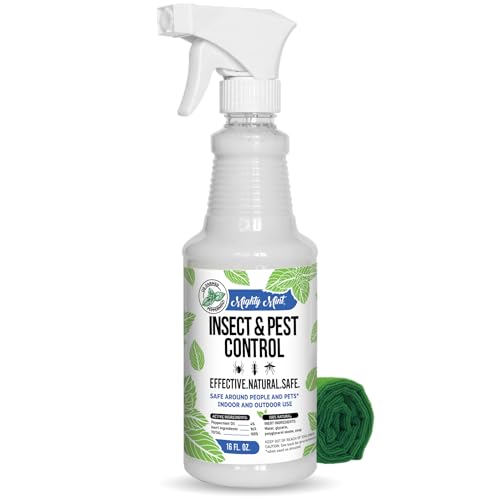
Mighty Mint Peppermint Oil Spray 16 oz
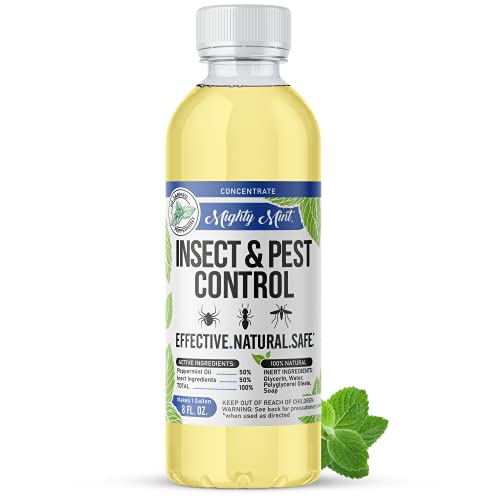
Mighty Mint Peppermint Concentrate 8 oz

deNada Plant-Based Essential Oil Insect Repellent Pods, 6 Pack
A Deeper Look At The Lineup
MGK Bedlam Plus is built for indoor surfaces rather than garden foliage. Its ready-to-use aerosol format suits mattresses, box springs, headboards, baseboards, walls, and floors, giving a household dealing with bed bugs several practical treatment points to work through.
It also targets listed lice and dust mites, so it serves a broader indoor pest role. It does not list spider mites, though, which makes it a reference point rather than a garden-mite choice. The aerosol design saves preparation time, but you still need to follow the label’s placement and ventilation instructions.
Points In Its Favor
- Ready to use, with no measuring or mixing required
- Covers common bed bug hiding and resting surfaces
- Also addresses listed lice and dust mites
- Designed for residential and commercial indoor areas
Practical Considerations
- Spider mites are not among the listed target pests
- Surface treatment requires attention to placement and coverage
Key Specs
Made For
You need this option for an indoor bed bug or dust mite problem rather than spider mites on plants.
Consider Something Else When
BioAdvanced 3-in-1 Mite Control suits you better when spider mites appear on roses, shrubs, flowers, or trees.
BioAdvanced 3-in-1 Mite Control directly lists spider mites among the insects it kills, making it one of the clearest choices in this lineup for an active garden problem. It also handles aphids, adult Japanese beetles, caterpillars, and several other listed insects without changing products.
Unlike MGK Bedlam Plus, this is a garden formulation rather than an indoor surface aerosol. Its plant-focused coverage reaches roses, flowers, shrubs, and trees, while the combined disease action adds value where black spot or powdery mildew is also a concern.
What Works In Its Favor
- Explicitly lists spider mites among its targets
- Combines insect, mite, and plant-disease control
- Works across roses, flowers, shrubs, and trees
- Rain-resistant protection is labeled for up to 14 days
- One 32 fl oz container can cover up to 192 roses
Trade Offs
- Its broader label may be unnecessary for a mite-only problem
- Outdoor plant use does not translate to indoor household treatment
Feature Snapshot
Right Fit For
You benefit most from this option when spider mites and other listed plant pests or diseases affect a mixed outdoor garden.
A Better Fit Elsewhere
Bonide Captain Jack’s Super Soap 32 oz fits organic gardeners who want a ready-to-use treatment across edible and ornamental plants.
HOT SHOT Spider & Scorpion Spray is made for larger outdoor arthropods, not the tiny mites that feed on garden leaves. Its broad spray pattern reaches beyond a narrow jet, which makes it more useful for patios, entry points, and other areas where you need to cover a wider patch of ground or structure.
Unlike BioAdvanced 3-in-1 Mite Control, this aerosol names spiders, scorpions, black widow spiders, ants, cockroaches, and crickets among its targets. The continuing action against several listed crawling pests lasts up to four months, although three ant types are excluded from that claim.
Noteworthy Benefits
- Broad pattern covers a larger treatment area
- Targets spiders and scorpions in outdoor spaces
- Provides continuing action against several listed crawling pests
Points To Note
- Spider mites are not listed among its plant-pest targets
- The four-month claim excludes harvester, pharaoh, and fire ants
Best Suited To
This aerosol suits you when outdoor spiders, scorpions, or other listed crawling insects are the actual problem.
Another Choice May Suit
Southern Ag Neem Oil 8 oz is the more relevant garden choice when spider mites are feeding on your plants.
Southern Ag Neem Oil 8 oz is a broad garden treatment for households that grow more than roses. Its label covers fruits, nuts, vegetables, herbs, and ornamentals, so you can address spider mites alongside aphids, scale, whiteflies, and beetles without dividing your plant-care routine among several narrowly targeted options.
Compared with BioAdvanced 3-in-1 Mite Control, the emphasis shifts from a combined insect-and-disease formula to wider plant compatibility. It also handles black spot and powdery mildew and targets eggs, larvae, and adult insects, which broadens its role in a mixed edible-and-ornamental garden.
Everyday Wins
- Controls spider mites alongside several common plant pests
- Works on edible and ornamental plant categories
- Addresses two common fungal plant problems
- Targets eggs, larvae, and adult insects
- One product can serve multiple garden areas
Small Caveats
- The 8 oz size may require repeated purchases for a large garden
- Plant compatibility and application details still need a label check
- Its broad pest list exceeds what a mite-only treatment needs
Core Details
Whose Shelf It Belongs On
You benefit most from this oil when one garden contains both edible crops and ornamental plants with several common pest problems.
Look Elsewhere When
BioAdvanced 3-in-1 Mite Control offers a more focused choice for roses and ornamental plantings with a combined disease treatment.
Bonide Captain Jack’s Super Soap 32 oz brings a broad plant-pest formula to a ready-to-use spray format. It targets more than 30 listed insects and mites across vegetables, fruit, nuts, berries, herbs, container plants, greenhouse plants, and ornamentals, making the 32 oz bottle convenient for a varied outdoor growing area.
Unlike the 8 oz Southern Ag Neem Oil, this bottle is larger and arrives ready to apply without a mixing step. It also handles powdery mildew, but it does not list bed bugs, indoor household mites, or the broader plant diseases addressed by BioAdvanced 3-in-1 Mite Control.
Advantages To Know
- Covers over 30 listed insects and mites
- Ready to use without preparation
- Serves edible, ornamental, container, and greenhouse plants
- Includes powdery mildew among its plant-disease targets
Things To Consider
- Its application is centered on outdoor and container plants
- Spider mites must appear within the product’s listed pest coverage
Who Should Grab It
This spray is a practical match for organic gardeners managing mites and assorted insects across a varied outdoor planting.
Reach For A Different Pick When
BioAdvanced 3-in-1 Mite Control suits you better when rain resistance and combined rose disease control are priorities.
Mighty Mint Peppermint Oil Spray 16 oz is positioned as a plant-based indoor repellent rather than a labeled spider-mite insecticide. Its peppermint-oil format suits shared rooms, kitchens, and other household areas where you want a straightforward spray for listed insect repellent uses.
Unlike Southern Ag Neem Oil, which explicitly controls spider mites on plants, this option belongs to the deterrence side of pest management. The product information positions the formula for use around children and pets when directed, but any placement still depends on the label and the surface being treated.
Strong Points
- Uses a peppermint-oil-based repellent format
- Ready-sized for common indoor household applications
- Positioned for shared living spaces when used as directed
Points To Keep In Mind
- Spider mites are not specifically listed as a target
- Repellent use differs from directly treating infested foliage
- Surface compatibility and placement should follow the label
Feature Card
Made With In Mind
This spray fits you best when you want a plant-based repellent for shared indoor spaces rather than treatment of garden spider mites.
Swap It Out When
Bonide Captain Jack’s Super Soap 32 oz is the better match for spider mites on outdoor or container plants.
Mighty Mint Peppermint Concentrate 8 oz gives you a more flexible format than the 16 oz ready spray. Because it is a concentrate, its use involves dilution or preparation according to the label, which can make sense when you want to adjust the amount of solution for different rooms or routine applications.
That flexibility comes with a responsibility: measure and mix it exactly as directed. The formula is marketed for plant-based household pest deterrence, but spider mites do not appear among the specific garden treatments offered by BioAdvanced 3-in-1 Mite Control or Southern Ag Neem Oil.
Positive Takeaways
- Concentrated format allows label-directed preparation
- Compact 8 oz container simplifies storage
Possible Compromises
- Preparation is required rather than pouring directly onto surfaces
- It is not a labeled garden spider-mite treatment
The Right Fit
You benefit from this concentrate when you prefer to prepare a plant-based repellent for several indoor pest-control tasks.
Where A Sibling Pick Shines
Mighty Mint Peppermint Oil Spray 16 oz is easier for you to use directly when you do not want to measure a concentrate.
deNada Plant-Based Essential Oil Insect Repellent Pods are a different solution from aerosol spraying. The six pods can be distributed through rooms where ants, roaches, and spiders are unwanted, avoiding the need to coat broad surfaces with a handheld spray.
The botanical blend includes lemongrass, cinnamon, cedar, and thyme. Terpenes are aromatic compounds found in plants and contribute to the blend’s scent, which is why these pods fit a deterrence-based approach. Spider mites remain outside the listed targets, so none of the plant-focused options in this roundup is a more suitable garden treatment.
Good Reasons To Consider
- Six pods cover several household areas
- Plant-based formula uses four named essential oils
- Discreet format avoids repeated surface spraying
- Designed for ants, roaches, and spiders
Less-Strong Areas
- Spider mites are not among the listed pests
- Pods deter pests rather than directly treating plant foliage
- Placement still requires attention to household areas and instructions
Important Details
Perfect Match For
These pods suit you when you want a low-visibility deterrent distributed around several household pest areas.
Not Your Match When
BioAdvanced 3-in-1 Mite Control is the better fit for spider mites affecting roses, flowers, shrubs, or trees.
What Matters Before You Treat Spider Mites
Start With the Pest Named on the Label
Spider mites are small plant-feeding pests, so a household spider spray or general repellent does not automatically address them. Your first check should be simple: does the product label list spider mites, and does it permit use on the affected plant? Products such as BioAdvanced 3-in-1 Mite Control, Southern Ag Neem Oil, and Bonide Captain Jack’s Super Soap make the clearest case for garden use.
Match the Treatment to Your Plants
Fruit, vegetables, herbs, berries, ornamentals, greenhouse plants, and container plants can have different label restrictions. You should verify that the treatment is suitable for every crop in the treated area, especially when edible plants sit beside roses or other ornamentals. A broad plant list can be convenient, but it does not remove the need to check the accompanying directions.
Think About Coverage and Reapplication
Large rose beds and dense vegetable plots need enough product to reach the foliage without repeated spot treatments. BioAdvanced 3-in-1 Mite Control lists coverage for up to 192 roses, while the 32 fl oz Bonide container serves a larger outdoor-garden format. Rain resistance can also matter for exposed plants, and BioAdvanced labels its plant-disease protection as rain-resistant for up to 14 days.
Treat Repellents as a Different Job
Aerosols, concentrates, and pods work through different delivery methods. Aerosols suit direct surface application, concentrates require careful preparation, and pods suit distributed household deterrence. Keep these uses separate from plant treatment so you do not choose a pleasant-smelling repellent for an active spider-mite infestation.
Shopping Details That Prevent Mismatches
Mistakes Worth Dodging
Do not select a product merely because the label says “insect repellent”; spider mites need to appear in the pest coverage. Also check whether the formula is meant for foliage, household surfaces, or general deterrence, since each label describes a different application. The little details on the back matter more than the familiar plant on the front.
What Separates Broader Formulas From Basic Ones
A broader formula can combine mites, other insects, and plant diseases in one container, saving you from managing several separate problems. Larger volumes, rain resistance, or ready-to-use delivery can also reduce preparation and interruptions during a busy growing season. Those benefits matter most when your garden contains several crops and recurring pest concerns.
Frequently Asked Questions
Which spray is best for spider mites on roses?
BioAdvanced 3-in-1 Mite Control is a strong fit because its label lists spider mites and roses, along with several other insects and plant diseases. Southern Ag Neem Oil also controls spider mites and handles black spot and powdery mildew.
Can a household spider spray kill spider mites?
No, not without a label that specifically includes spider mites. HOT SHOT Spider & Scorpion Spray targets larger outdoor pests, while the Mighty Mint products and deNada pods serve as general repellent options rather than labeled garden-mite treatments.
Is rain resistance useful for outdoor spider-mite treatments?
Yes, particularly for plants exposed to frequent rain or overhead watering. BioAdvanced 3-in-1 Mite Control lists rain-resistant protection for up to 14 days, which can make its garden application more convenient in exposed locations.
Can spider-mite sprays be used on edible plants?
Only when the product label lists the crop or plant category. Southern Ag Neem Oil covers fruits, nuts, vegetables, herbs, and ornamentals, while Bonide Captain Jack’s Super Soap lists several edible and ornamental plant types.
Should I use a concentrate or a ready-to-use spray?
Ready-to-use sprays suit you when convenience and straightforward application matter most. Concentrates can suit you when you want to prepare multiple portions according to the label, but accurate measurement becomes an additional step.
Final Thoughts
Start with the pest, plant, and application method listed on the label. BioAdvanced 3-in-1 Mite Control, Southern Ag Neem Oil, and Bonide Captain Jack’s Super Soap are the most relevant choices for spider mites on plants, while the remaining products address different indoor or outdoor pest concerns. Match the formula to the job rather than choosing by scent, container shape, or a broader-sounding name.