
A garage can be the forgotten room in a home, yet it often needs sound for projects, workouts, or weekend gatherings. I focus on outdoor-rated models, wired commercial systems, and wall-mounted Bluetooth options that suit real workspaces. The right choice depends less on raw output than on installation, room coverage, and how often sound needs to travel beyond the garage.
Your Options, Compared

Polk Audio Atrium 8 SDI Outdoor Speaker

GWCASE Hard Carrying Case for MiLESEEY GeneSonic Pro Golf Speaker, Black

Rockville CC65T White Ceiling Speaker Pair
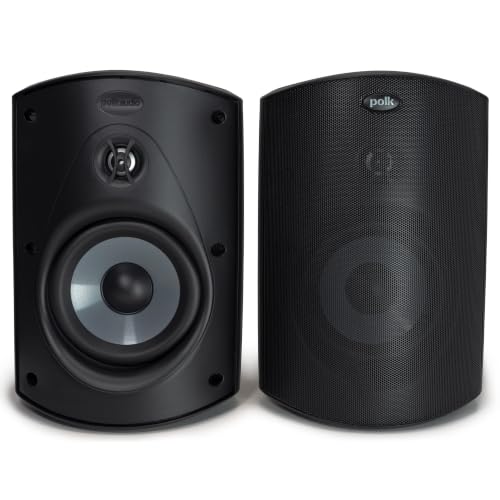
Polk Audio Atrium 5 Outdoor Speakers

Plyee Active + Passive Wall Speakers
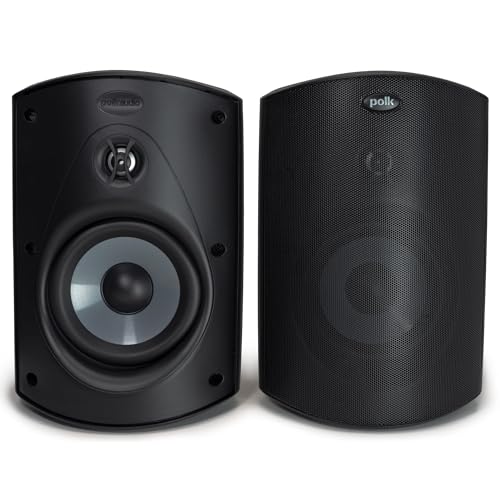
Polk Audio Atrium 6 Outdoor Speaker Pair
The Atrium 8 SDI makes more sense for someone planning sound across a garage, patio, or adjoining outdoor area than for a single indoor shelf. Its single or dual input switch supports different channel arrangements, while the pair of tweeters, the small drivers dedicated to high frequencies, gives the speaker broader placement options.
All-weather and water-resistant construction also suits garages with open doors or nearby landscaping. Compared with the later Plyee system, the Atrium 8 SDI takes more setup planning, but it also provides a more conventional route to permanent outdoor sound.
The Value In It
- The single or dual input switch simplifies adapting the speaker to different stereo arrangements.
- Weather resistance makes the enclosure practical for damp garage edges and covered outdoor areas.
- Two tweeters provide separate high-frequency output for more flexible speaker positioning.
Trade Offs
- Wiring and suitable amplification belong in the installation plan, so this is not a wireless convenience system.
- The listing includes one speaker, making a two-speaker stereo arrangement more complete for full-room coverage.
Feature Snapshot
Made For Flexible Listening
This model benefits homeowners with a larger garage or a connected outdoor living space who need permanent wired speakers.
Consider Something Else When
The Plyee Active + Passive Wall Speakers suit people prioritizing Bluetooth control and simpler source connectivity over wired flexibility.
This is an accessory rather than a speaker, and that distinction matters. For a golfer who keeps portable audio equipment in a car, van, or garage, the case provides a dedicated place for a MiLESEEY GeneSonic Pro golf speaker and its detachable GPS rangefinder rather than leaving the equipment loose on a shelf.
The close internal dimensions and elastic retention strap help keep the speaker from shifting during transport. Compared with the permanent Polk and Rockville systems, this case contributes protection and organization rather than room-filling sound.
Why It Works Well
- A rigid shell gives portable golf audio equipment a protected storage location between outings.
- An internal mesh pocket adds organization for smaller accessories.
- Elastic retention helps limit movement when the case is carried.
Points To Note
- The case contains no speaker or rangefinder, so the compatible equipment must already be owned.
- Compatibility is specific to the MiLESEEY GeneSonic Pro configuration.
- The close fit leaves little room for accessories extending beyond the stated inner dimensions.
The Right Fit
Golfers storing a GeneSonic Pro setup in a vehicle or garage gain the most from this case.
Skip It When
Rockville CC65T White Ceiling Speaker Pair fits shoppers seeking actual garage audio rather than equipment storage.
The CC65T pair brings a commercial installation approach to a garage workshop, restaurant, café, office, or retail space. Its 6.5-inch polypropylene woofer handles the larger low- and midrange work, while the 0.5-inch Mylar dome tweeter supplies high-frequency detail. The listed frequency response extends from 60Hz to 20kHz.
Unlike the plug-and-play character of the Plyee system, this Rockville pair requires careful electrical and cutout planning. For a large garage needing several overhead speakers, that added structure may be worthwhile.
Benefits That Matter
- Selectable 70V power taps allow output to match a commercial distribution system.
- An 8-ohm mode also supports conventional amplifier setups.
- The aimable tweeter directs high frequencies toward the listening area.
- Paintable flush grilles blend into a finished ceiling.
Practical Considerations
- A compatible 70V amplifier or an appropriate 8-ohm amplifier must be part of the installation.
Technical Sheet
Built With In Mind
Commercial electricians, workshop owners, and experienced DIY installers gain the most from this system.
Another Choice May Suit
Plyee Active + Passive Wall Speakers suit people needing Bluetooth audio without a ceiling-mounted 70V installation.
Space is often the deciding factor in a one-car garage, and the Atrium 5 pair is designed around a compact form. Its smaller enclosure can sit more comfortably near a pool, on a deck, around an outdoor kitchen, or along a garage wall where a larger loudspeaker would crowd the space.
Weatherproof black construction and easy-mount hardware make this a practical permanent outdoor option. The Atrium 8 SDI offers more advanced input switching, while the Atrium 5 concentrates on a straightforward pair for smaller areas.
The Practical Payoff
- The compact enclosure suits tight wall spaces and modest patios.
- Weatherproof construction supports use around pools, decks, and outdoor kitchens.
- Mounting hardware simplifies a permanent speaker installation.
Points To Keep In Mind
- Compact size may provide less low-frequency weight than the Atrium 6 or 8 models.
- These are wired outdoor speakers, requiring cable and amplifier planning.
Quick Facts
Who Will Love This
Homeowners with a compact garage, deck, pool area, or outdoor kitchen benefit from the space-conscious pair.
Where A Sibling Pick Shines
Polk Audio Atrium 8 SDI Outdoor Speaker fits larger installations that need dual-input flexibility and more directional high-frequency output.
The Plyee pair removes the amplifier from the visible equation, which makes it appealing for a garage that already has household Bluetooth audio. One speaker is active and handles source connections, while the passive companion expands the system without needing a second amplified unit.
Bluetooth and auxiliary input support cover common listening habits, and the wall-mounted format keeps the speakers out of the work area. Compared with the Polk Atrium models, the tradeoff is less control over the underlying speaker system and a heavier dependence on the active unit.
A Few Highlights
- Bluetooth and auxiliary connections provide convenient everyday playback options.
- The active and passive arrangement simplifies a two-speaker wall installation.
Possible Compromises
- The 200W peak rating differs from the 20W RMS rating, which represents continuous output in a more useful way.
- The active speaker needs power, so an outlet must be available at the installation location.
- Bluetooth playback depends on a stable connection from the source device.
Best Suited To
Homeowners wanting convenient Bluetooth sound and aux support without building a dedicated amplifier setup fit this profile.
Reach For A Different Pick When
Polk Audio Atrium 6 Outdoor Speaker Pair suits installations that prioritize wired control and all-weather outdoor construction.
The Atrium 6 pair sits between the compact Atrium 5 and the more configurable Atrium 8 SDI. Each speaker combines a 5.25-inch dynamic balance polypropylene woofer with a 1-inch anodized aluminum dome tweeter, pairing larger low- and midrange output with detailed high-frequency reproduction.
PowerPort bass venting supports the low-frequency design, while the 100W wired specification gives installers a clear power figure to work around. It remains a better fit for a permanent patio or garage setup than for anyone seeking portable Bluetooth operation.
Notable Upsides
- All-weather construction suits changing outdoor conditions.
- The 5.25-inch woofer gives the pair more low-frequency capability than a compact outdoor design.
- Aluminum dome tweeters add crisp high-frequency reproduction.
Worth Noting
- The wired configuration requires compatible amplification and careful cable placement.
Core Details
Made For In Mind
Homeowners building a permanent wired system for a garage, patio, or pool area gain the most from this pair.
A Better Fit Elsewhere
Rockville CC65T White Ceiling Speaker Pair fits large commercial-style garages requiring overhead 70V distribution.
What to Check Before Building a Garage Sound System
Wired, Wireless, or Commercial Distribution
A permanent wired system provides consistent signal delivery, but it also requires cable routing, amplifiers, and compatible speakers. The Polk Atrium 8 and Atrium 6 fit this approach, while the Plyee pair offers the shorter path from household Bluetooth to wall-mounted sound. For a garage used daily, wired audio removes wireless pairing from the routine.
Matching the Speaker to the Room
A one-car garage may suit the compact Polk Atrium 5, while a larger workshop can benefit from the greater scale of the Atrium 6 or Rockville CC65T pair. Ceiling speakers work well where mounting space matters, although the Rockville pair requires a 7.6-inch cutout and 2.91-inch mounting depth. Wall-mounted outdoor speakers fit garages that also serve as social spaces.
Checking Outdoor Exposure
Weather-resistant construction matters near an open garage door, deck, pool, or outdoor kitchen. The Polk models and Plyee wall system are positioned for outdoor or indoor-outdoor use, while the Rockville ceiling pair is primarily suited to protected commercial interiors. Placement should match the exposure level of the chosen model.
Power, Controls, and Coverage
The Plyee system adds Bluetooth and auxiliary control to an active-and-passive arrangement. The Rockville CC65T uses selectable 70V taps for larger distributed installations, while the Polk speakers are conventional wired choices. Matching the connection method to the garage’s layout prevents an installation from becoming more complicated than necessary.
Practical Lessons Before Installation
Mistakes Worth Dodging
Ignoring amplifier requirements can derail a wired installation before any music starts. Another common error is treating peak wattage as the only measure of output; continuous RMS power gives a more realistic sense of sustained performance. I also check cutout size and mounting depth before considering ceiling speakers for a finished garage.
What Separates Premium From Basic
The meaningful upgrade usually involves driver design, enclosure construction, weather resistance, and installation flexibility rather than a dramatic increase in headline power. The Atrium 8 SDI adds configurable input handling, while the Atrium 6 provides larger drivers and a defined 100W figure. Those features matter most for permanent installations and demanding spaces.
Frequently Asked Questions
Are Wired Speakers Better for a Garage?
Wired speakers provide consistent signal delivery and suit permanent installations, while Bluetooth systems offer easier everyday control. The Polk Atrium 8 and Atrium 6 fit the first approach, and the Plyee pair fits the second.
Can Outdoor Speakers Work Inside a Garage?
Outdoor-rated models can work inside a garage, especially near an open door or damp entry area. The Rockville CC65T pair is better suited to a protected ceiling installation because its design centers on commercial indoor spaces.
Do Polk Atrium Speakers Need an Amplifier?
The wired Polk Atrium 8 and Atrium 6 require compatible amplification and speaker cable. Amplifier selection should match the listening space and the intended system configuration.
Are 70V Speakers Suitable for a Large Garage?
The Rockville CC65T supports 70V systems with selectable power taps, making it practical for distributed overhead sound. A compatible 70V amplifier and matching wiring are required.
Which Option Is Simplest for Everyday Garage Audio?
The Plyee Active + Passive Wall Speakers offer the simplest everyday path through Bluetooth and auxiliary connections. Permanent wiring and amplifier setup are avoided, although the active speaker still requires electrical power.
Final Verdict
The Polk Atrium 5 works best for compact spaces, the Atrium 6 balances driver scale with outdoor flexibility, and the Atrium 8 SDI suits more configurable permanent installations. The Rockville pair handles professional ceiling systems, while the Plyee system removes much of the wiring complexity. Match the installation method to the space, and the right garage setup becomes far easier to live with.