
A cat pushing at a closed bedroom door while a dog waits in the hallway is a familiar household problem. You need pet access without giving every animal the run of the house, whether that means a cat moving toward food or a dog needing space from an open kitchen. The right fit depends on your doorway measurements, pet size, installation surface, and how selective the entry system needs to be.
The Choices Worth Comparing

Carlson Extra Wide Walk-Thru Dog Gate, White

Carlson Extra Wide Walk-Thru Dog Gate, Black

Carlson 36-Inch Extra Tall Walk-Thru Dog Gate, Black

Carlson 62-Inch Wooden 3-Panel Pet Gate

Carlson 70-Inch Adjustable Wooden Pet Gate
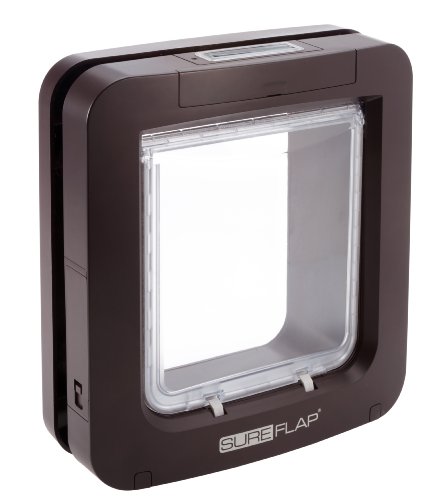
SureFlap Microchip Pet Door, Brown

CUIBIRD Smart Cat Door with 4 Collar Sensors

Cat Mate Elite Microchip Cat Flap and Wall Liner
More Details On Our Top Picks
This metal gate handles a common multi-pet problem without electronic programming. The small opening lets cats and smaller companions move between rooms while the larger barrier contains dogs, and the 16.5-inch walk-through section saves you from stepping over the gate yourself.
It works particularly well in a wide doorway near a kitchen, hallway, or bottom of the stairs. Compared with the taller Carlson model, its 30-inch height is more compact, so measure your dog before assuming a standard barrier will be enough.
A Few Strong Suits
- The built-in small-pet opening gives cats access without opening the entire barrier.
- A one-touch latch makes the 16.5-inch walk-through convenient for adults.
- Pressure-mounted installation uses wall cups, avoiding permanent mounting work.
- The white finish blends naturally with light-colored walls and traditional interiors.
Things To Consider
- The gate leaves a gap between 32 and 34 inches, so measure the opening before ordering.
- The 30-inch height may be modest for a large, energetic dog.
Key Specs
Built With In Mind
You will appreciate this gate in a mixed-pet household that needs a wide indoor barrier and a separate route for cats.
Consider Something Else When
Carlson 36-Inch Extra Tall Walk-Thru Dog Gate, Black is the better match for a large dog that may jump a 30-inch barrier.
Black gives this wide indoor barrier a quieter visual presence, especially around dark woodwork, gray walls, or modern cabinetry. The metal construction and pressure-mounted base make it a practical choice for separating a dog from a room while preserving the cat’s route.
Your doorway must fall within 29 to 32 inches without the extension, or 34 to 36.5 inches with it. That restriction is easy to overlook in a casual measurement, so treat the tape measure as your first step.
Reasons It Performs
- Small-pet access prevents cats from being shut out of spaces where the dog remains contained.
- The walk-through opening reduces the need to climb over the barrier during busy household moments.
- Wall cups support a pressure-mounted setup without permanent doorway modification.
Points To Note
- Openings from 32 to 34 inches are not accommodated.
- Its 30-inch height is less suitable for a large dog known to jump barriers.
- The black finish may show dust and marks in a busy entryway.
Made For
You get a practical fit for a busy hallway or doorway where a dark finish suits the surrounding decor and small pets need independent access.
Another Choice May Suit
Carlson 70-Inch Adjustable Wooden Pet Gate fits wider open spaces better because it expands to 70 inches and requires no doorway mounting.
The extra height is the defining advantage here. At 36 inches, this Carlson gate gives a large or active dog more room before it can jump over the top, while the small pet opening preserves a route for cats.
It still mounts under pressure rather than requiring permanent hardware, making it useful at the bottom of a staircase or in a wide hallway. Compared with the 30-inch Carlson gates, the extra height adds greater coverage at the cost of a larger overall presence.
What Pays Off
- The 36-inch height better addresses dogs that spring upward near a barrier.
- A 16.5-inch walk-through door and lever handle simplify movement between rooms.
- The 7.5-by-7.75-inch pet opening gives smaller animals a separate passage.
- Pressure mounting suits renters and households avoiding permanent doorway changes.
Honest Caveats
- Widths between 31 and 34 inches fall outside the supported ranges.
- The taller profile may feel visually heavy in a narrow hall.
Technical Highlights
Who Will Love This
You need this model for a large dog, a dog that jumps, or a staircase opening where added height has practical value.
Reach For A Different Pick When
SureFlap Microchip Pet Door, Brown suits small pets that require identity-based entry rather than a broad dog barrier.
Three connected wooden panels give you a much more flexible barrier than a fixed doorway gate. You can arrange the sections in a straight line, at angles, or in a U shape, which helps cover a broad opening or redirect a dog away from a busy part of the home.
The freestanding construction means you can move the barrier without drilling or attaching wall cups. That makes this a strong option for rentals and open floor plans, although the 62-inch span and panel structure require more floor space than the Carlson pressure-mounted models.
Practical Advantages
- The three panels can follow several room shapes rather than one fixed opening.
- Wood construction gives the barrier a furniture-like appearance.
- No permanent mounting makes repositioning and renter-friendly setup straightforward.
- A built-in small-pet opening supports mixed-pet movement.
Where It May Fall Short
- A large open-floor-plan area needs enough space to position all three panels.
- Freestanding placement may be less suitable where a strong dog could shift the panels.
The Right Fit
This gate suits a flexible home layout where you want a movable wooden barrier, especially in a rental or open-plan interior.
A Better Fit Elsewhere
Carlson Extra Wide Walk-Thru Dog Gate, White is more appropriate for a single wide doorway where pressure mounting and a dedicated adult passage matter.
Expand the wooden frame across 41 to 70 inches and you can cover a wide doorway, section off an open room, or create a temporary barrier without wall hardware. Its freestanding format is the key convenience for apartments and spaces where permanent installation is unwelcome.
The 20-inch height makes it more relevant to puppies, toy breeds, and smaller dogs than the 30-inch Carlson gates. The honest catch is height, not width, so measure your dog carefully before choosing this broad but low profile.
A Favorable Mix
- A 70-inch maximum span covers unusually wide indoor openings.
- No drilling or wall mounts are required for setup.
- The New Zealand pine finish suits both classic and modern interiors.
- The frame folds for more compact storage between uses.
Trade Offs
- The 20-inch height is low for medium or large dogs.
- It lacks the small-pet opening offered by the three-panel Carlson model.
Feature Facts
Made For
This model fits small dogs in wide rooms, temporary barriers, and homes where you want an adjustable wooden frame without drilling.
Swap It Out When
Carlson 62-Inch Wooden 3-Panel Pet Gate is a better choice when your cat also needs a separate passage through the barrier.
RFID, or radio-frequency identification, lets this door recognize an implanted microchip before unlocking the flap. That turns a conventional cat door into selective entry for a small dog or cat, which is useful when unwanted neighborhood animals might otherwise follow your pet inside.
The unit can remember up to 32 identities and accepts common 9, 10, and 15-digit microchip formats. It can also be installed in a door, window, or wall, although the opening and available installation accessories determine whether the chosen surface will work.
The Value In It
- Microchip recognition allows entry without a conventional flap that every animal can push through.
- Storing 32 identities suits homes with several microchipped pets.
- One-button programming simplifies adding household pets.
- Installation options cover doors, windows, and walls.
Practical Considerations
- Four C batteries are required and are not included.
- Pets without an implanted microchip need a separately sold collar tag.
- The flap opening measures 6 11/16 inches high by 7 inches wide.
Quick Technical Notes
Who Should Grab It
You need this model for a microchipped cat or small dog that should enter a specific area while other animals remain outside.
Not Your Match When
Carlson 62-Inch Wooden 3-Panel Pet Gate suits you better when you need a large movable dog barrier rather than a selective pet door.
Four collar sensor keys make this a sensible fit for a household with up to four cats that need access to an interior room. The door unlocks when it detects a matching collar, reducing unwanted entry without requiring implanted microchips.
Remote control and four locking positions add control over when and in which direction a cat can pass. Installation appears straightforward on a standard interior door, but the stated warning about metal doors and walls deserves attention because metal can interfere with the RFID signal.
What Makes Sense
- Four included sensor keys support several cats in one household.
- Automatic unlocking reduces scratching at a closed interior door.
- Separate access for food, sleep, or litter areas helps organize pet routines.
- The remote control provides a way to manage the door from a distance.
Potential Drawbacks
- Metal doors and walls may reduce the collar sensor’s reading performance.
- Every participating cat needs a compatible sensor key.
- It is designed around interior access rather than exterior containment.
Built With In Mind
This door works best for a multi-cat household seeking controlled access to an interior bedroom, feeding area, or litter room.
Where A Sibling Pick Shines
SureFlap Microchip Pet Door, Brown suits you better when implanted microchips are available and you need exterior installation options.
The LCD display gives this cat flap a clear management advantage in a multi-cat home. You can review lock status, location, and last-use information for up to three selected cats, while the system can hold microchip identities for as many as nine cats.
Timed curfews and four locking directions make it useful for controlling nighttime movement, feeding access, or entry during selected hours. The bundle includes a wall liner, and the flap can also be fitted into UPVC, glass, metal, or wooden doors when the construction allows.
Useful Highlights
- Microchip access keeps the flap from serving unfamiliar animals.
- The LCD makes recent movement easier for you to monitor.
- Timed locking supports a consistent overnight routine.
- Four locking directions accommodate different household schedules.
- The included liner creates a proper passage through a wall.
Details To Watch
- A Cat Mate identification disc is sold separately for cats without microchips.
- Wall installations can require deeper space than a standard door opening.
- Tracking details are listed for three selected cats, even though access storage reaches nine.
Important Details
Right Fit For
This model suits a multi-cat household that values selective access, timed curfews, and clear movement information.
Look Elsewhere When
CUIBIRD Smart Cat Door with 4 Collar Sensors is the better fit for cats that use collar keys rather than implanted microchips.
What Matters Before You Choose a Pet Access System
Start with the opening itself. Measure both the width and height, then account for trim, baseboards, and the space required by a tunnel or liner. A nominal doorway size rarely tells the whole installation story, especially with glass, metal, or wall-mounted products.
Match the barrier to the animal
A low wooden frame may contain a puppy or toy breed, while a large dog needs a barrier tall enough to discourage jumping. Small-pet openings add convenience in mixed-pet homes, but they do not replace a dog gate when the main task is separating a large dog from a room.
Decide how selective entry must be
RFID and microchip systems identify a specific pet before opening the flap. Collar sensors offer a different route, while a standard small opening lets cats and similarly sized animals pass without electronic recognition. Your household’s existing microchip setup should guide that choice.
Check the installation before the features
Pressure-mounted gates need a stable doorway or wall area and do not require permanent mounting. Freestanding wooden gates trade doorway precision for portability, while electronic pet doors need room for electronics, batteries, and potentially a wall liner. Confirm material compatibility, especially for RFID systems installed near metal.
Common Mistakes to Avoid
Mistaking width for complete fit
A listed opening range does not cover every measurement between its lowest and highest number. Check the exact spans supported with and without an extension, and measure after removing or accounting for the door trim.
Ignoring how the pet is identified
Microchips and collar sensors are not interchangeable. Check your pet’s microchip number and installation material, and consider how many household animals need access before settling on a system.
Where The Extra Money Goes
Higher-cost models commonly add electronic recognition, programmable schedules, access logs, or a locking system with more directional choices. Those features matter when you need precise control over several cats; a simple flap or freestanding barrier is often enough for a single pet or temporary indoor separation.
Planning the Entire Installation
Door type, wall depth, battery access, and signal interference can affect the final setup more than the headline feature. Review all four before ordering, especially for metal surfaces and homes with several differently sized pets.
Frequently Asked Questions
Are microchip pet doors better than collar-sensor doors?
Microchip doors work without a wearable collar, while collar-sensor doors need a compatible key on each pet. Your cat’s microchip compatibility and the material of the installation surface are the first factors to check.
Can a smart pet door fit in a wall?
Some models support wall installation, often with a separate liner that creates a tunnel through the wall. You need the manufacturer’s installation dimensions and enough depth between the wall surfaces.
Which Carlson gate is best for a large dog?
Carlson 36-Inch Extra Tall Walk-Thru Dog Gate, Black offers the greatest height in this group at 36 inches. Its 29-to-36.5-inch width range still leaves unsupported gaps, so measure the opening first.
Do electronic cat doors need batteries?
The SureFlap Microchip Pet Door, Brown uses four C alkaline batteries, which are not included. Its red flashing indicator gives you a signal when the power level is running low.
Can one pet door serve several cats?
Cat Mate Elite Microchip Cat Flap and Wall Liner stores identities for up to nine cats and tracks selected movement details for three. The CUIBIRD model is an alternative for households using four included collar sensor keys.
Final Verdict
Your best choice starts with the real constraint: doorway size, dog height, installation material, or the number of pets that need selective access. The Carlson gates cover indoor barriers, while the SureFlap, CUIBIRD, and Cat Mate options bring electronic control to cat doors. Measure first, then choose the access system that fits your home rather than forcing the home to fit the product.