
A backrest turns a basic rolling shop stool into a more supportive seat for extended projects at the bench, under a vehicle, or around crowded workbenches. I focus on height adjustment, back support, floor-friendly mobility, storage, and load capacity because those details determine whether a stool feels useful in a real garage. These six options cover rolling mechanic stools, swivel shop seats, and compact task chairs for workshops, home offices, and service spaces.
The Leading Options At A Glance

FreekyFit Backrest Shop Stool
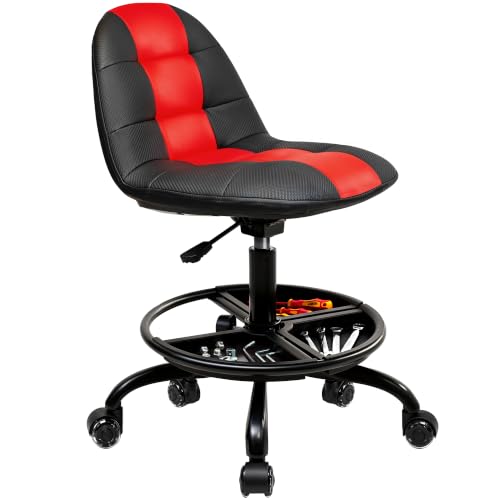
FreekyFit Backrest Footrest Stool

DEWALT 30-Inch Swivel Shop Stool
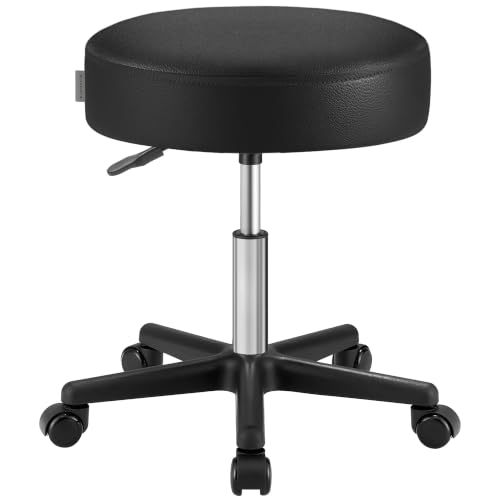
SONGMICS 300-LB Round Rolling Stool

FreekyFit DO02 330-LB Shop Stool with Tool Tray and Magnetic Holder
HDHNBA Round Rolling Stool, Height Adjustable
Taking A Closer Look At The Options
The FreekyFit Backrest Shop Stool brings together a rolling base, pneumatic height adjustment, and a supportive backrest for garage work that requires frequent repositioning. That combination makes more sense at a crowded bench than a stationary stool, especially for assembly, repair, or household projects carried across the floor.
Compared with the FreekyFit Backrest Footrest Stool, this model prioritizes a simpler setup centered on back support and seat-height control. I see it as the more natural fit for a home garage where a foot ring would add unnecessary bulk.
Bright Spots
- The backrest adds useful trunk support during detailed bench work.
- Pneumatic adjustment covers a 20-to-26-inch range for varied bench heights.
- Casters allow the seat to move with the task instead of being carried across the garage.
- The adjustment lever makes frequent height changes straightforward.
Points To Note
- A wheeled base needs clear floor space to roll safely around stored tools and vehicle projects.
Feature Snapshot
Made For
DIYers, hobby mechanics, and home-shop workers who want back support and frequent height changes.
A Better Fit Elsewhere
The FreekyFit Backrest Footrest Stool suits taller users and mechanics who prefer a foot ring for steadier lower-body positioning.
The FreekyFit Backrest Footrest Stool adds an adjustable foot ring to the rolling backrest format, giving mechanics more control over leg placement while working at a bench. I find that feature most relevant for long sessions involving a vise, repair stand, or other station where the feet need a consistent resting point.
Unlike the FreekyFit Backrest Shop Stool, this version supports a more mechanically oriented setup. The added ring takes up more visual space, so compact work corners require a little more planning.
What Works In Its Favor
- The adjustable foot ring supports a steadier working position.
- A backrest improves comfort for extended seated tasks.
- Pneumatic seat-height control accommodates different workstation heights.
- Rolling casters reduce the need to readjust a stationary chair.
Small Caveats
- The foot ring may feel unnecessary at a low workbench that leaves the legs free.
- Both the wheelbase and foot ring require adequate clearance around the work area.
Right Fit For
Mechanics, automotive hobbyists, and taller users who work at benches for extended periods.
Another Choice May Suit
The FreekyFit Backrest Shop Stool fits home-shop workers who value a simpler structure without an adjustable foot ring.
The DEWALT 30-Inch Swivel Shop Stool brings a fixed-height workshop chair with a broad, supportive seat and storage shelf. Its all-steel frame and 300-pound capacity make it a sensible alternative for a stationary bench position, especially where floor space rules out a sprawling rolling base.
Compared with the backrest options, this stool trades adjustable support for a more substantial steel structure and under-seat storage. I would favor it for fixed workstations rather than mobile repair tasks.
Advantages To Know
- The steel frame supports demanding workshop use.
- A 300-pound capacity handles substantial working loads.
- Foam padding makes the fixed seat more comfortable than bare metal.
- The textured vinyl upholstery is designed to resist rips and tears.
- A lower wire shelf keeps frequently used tools close.
Trade Offs
- The fixed 30-inch height may not align with every work surface.
- Leveling feet protect the floor but do not provide the mobility of a caster-equipped stool.
Key Specs
Who It Suits Best
Workshop professionals and serious hobbyists who work at a fixed, height-compatible bench.
Consider Something Else When
The FreekyFit Backrest Shop Stool better suits mobile tasks requiring height changes and lumbar support.
The SONGMICS 300-LB Round Rolling Stool centers on cushioning rather than back support, with a high-density foam seat covered in thickened PU leather. That makes it most convincing for drafting benches, salon work, home offices, and service counters where frequent rotation and a padded seat matter.
The 17.3-to-23.2-inch adjustment range distinguishes it from the fixed-height DEWALT stool. For a garage, I would place it at a drafting desk or clean assembly bench rather than a dirty vehicle-repair zone.
Notable Upsides
- High-density foam gives the round seat a noticeably padded feel.
- The PU leather surface wipes down easily after shop or office use.
- A 360-degree swivel makes it easy to turn between a desk and nearby materials.
- Height adjustment accommodates both seated drafting work and slightly higher counters.
Less Ideal Details
- The PU leather may feel less practical around grease and coarse workshop debris than an open metal frame.
- A round seat provides less lateral space than a broader square shop seat.
Built With In Mind
Drafting workers, salon professionals, and office-focused users who value cushioning and mobility.
Look Elsewhere When
The DEWALT 30-Inch Swivel Shop Stool better fits garages where an all-steel frame and lower tool shelf take priority.
The FreekyFit DO02 330-LB Shop Stool with Tool Tray and Magnetic Holder is built around fast access to fasteners and hand tools. A dedicated tray and magnetic holder reduce reliance on a separate cart, while the steel frame and 330-pound capacity suit demanding garage work.
Unlike the cleaner styling of the SONGMICS stool, this model looks more deliberately mechanical. The broad yellow frame also makes it easier to recognize as dedicated shop equipment, though the storage features add visual bulk.
Notable Gains
- The tool tray keeps frequently used items within reach.
- A magnetic holder provides a dedicated place for loose metal fasteners.
- The steel frame supports a 330-pound capacity.
- Height adjustment and 360-degree swiveling suit varied work positions.
- Casters let the entire storage station move around a project.
Potential Drawbacks
- The tray and magnetic holder make the stool wider than a simple seat.
- Its tool-focused construction may be excessive for light household projects.
- Moving a loaded rolling base calls for an uncluttered path.
Quick Facts
Who Will Love This
Mechanics and DIYers who want storage built into a mobile shop seat.
Reach For A Different Pick When
The FreekyFit Backrest Footrest Stool better suits long bench sessions where back and foot support outweigh integrated storage.
The HDHNBA Round Rolling Stool, Height Adjustable offers the smallest stated seat among these choices, with a 12.6-inch cushion diameter and a relatively compact adjustment range. I see it as a practical task chair for a home office, salon, café, or light workshop bench where a broad mechanic seat would be excessive.
The smooth 360-degree swivel and rolling casters make repositioning simple, while the gas-lift lever keeps height changes direct. Compared with the SONGMICS stool, its smaller footprint favors tight rooms, but the reduced cushion area limits roomier posture changes.
The Practical Payoff
- The compact cushion fits narrow desks and service stations.
- A 16.14-to-20.08-inch range covers common seated and counter tasks.
- Swivel casters make frequent repositioning easy.
Points To Keep In Mind
- The 12.6-inch round seat offers less room than broader workshop stools.
- The narrower height range may sit low for some fixed workbenches.
Details At A Glance
Whose Shelf It Belongs On
Home-office, salon, café, and small-workshop users who prioritize mobility and a compact footprint.
Swap It Out When
The SONGMICS 300-LB Round Rolling Stool suits users who prefer a wider seat, thicker cushioning, and a broader height range.
What Matters Before Bringing A Backrest Into The Garage
Bench height and adjustment range
A stool that cannot reach the working surface creates unnecessary strain. I compare the full adjustment range with the bench height and account for footwear, floor level, and the need to keep feet supported.
Mobility around the workspace
Casters help during sprawling projects, but a wide wheelbase still needs a clear route. I check doorway width, tool-cart placement, and vehicle clearance before choosing a rolling model.
Back support and seat geometry
A backrest can support longer sessions, while the seat width determines how freely the posture can change. Fixed-height stools work well at one station; adjustable models serve garages with several work surfaces.
Storage and load requirements
Tool trays and under-seat shelves reduce clutter, yet they also affect the footprint. I consider weight capacity alongside the type of work and whether loose tools could create a tipping concern.
Practical Checks Before The Purchase
Mistakes Worth Dodging
Ignoring floor space can make a capable stool awkward to use, especially with a wide base or foot ring. I also compare the actual bench height rather than relying on an adjustable seat by default.
What Separates Premium From Basic
Higher-tier models commonly add back support, richer padding, or integrated tool storage. The extra cost matters most for long work sessions or frequent mobile tasks, while a fixed workshop position may need little beyond a strong frame.
Frequently Asked Questions
What height should a shop stool with a backrest have?
The seat should place the feet firmly on the floor or a foot ring while keeping the elbows near bench height. A 20-to-26-inch range covers many common garage benches.
Are rolling shop stools stable on garage floors?
Stability depends on the base, casters, floor condition, and the amount of side force applied while seated. I prefer slow, deliberate movement and a clear path around the work area.
Is a backrest important for garage work?
A backrest can reduce fatigue during extended seated projects, especially at a fixed bench. Height adjustment and good foot support remain equally important for comfortable positioning.
Which option works best for a small workshop?
The HDHNBA Round Rolling Stool, Height Adjustable has the most compact stated seat. The DEWALT 30-Inch Swivel Shop Stool fits larger fixed stations with a full steel frame and lower shelf.
Do shop stools need built-in tool storage?
Built-in storage helps in mobile repairs, but it increases the stool’s footprint and complexity. A separate rolling cart may work better where bench access and tool organization are already handled.
Final Verdict
For a garage requiring supportive backrest seating and frequent height changes, the FreekyFit Backrest Shop Stool offers the clearest balance. Taller users gain steadier positioning from the FreekyFit Backrest Footrest Stool, while fixed stations and tool-heavy work are better served by the DEWALT or FreekyFit DO02. The right choice comes down to the bench, floor space, and storage habits.