
A shop chair with wheels changes a garage job from standing, crouching, and constantly shifting position into a more controlled workspace. I rely on the combination of seat height, back support, caster mobility, and tool access when comparing these models for repair work, detailing, and everyday shop tasks. Each stool has a different practical angle, from a low rolling seat for getting beneath a workbench to a wide metal mechanic chair with a substantial load rating.
Your Options, Compared

FreekyFit Rolling Shop Stool

LWADALN Heavy-Duty Swivel Garage Mechanic Stool with Backrest
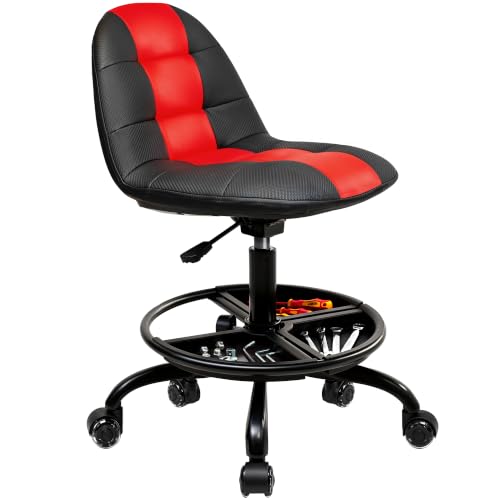
FreekyFit Shop Stool with Ergonomic Backrest

ACCUCRAFT Heavy-Duty Metal Garage Mechanic Stool with Tool Tray

FreekyFit Black Rolling Shop Stool

Halyuhn Low Rolling Stool with Five Casters
Why These Options Stand Out
Spreading a repair across a workbench, floor, and parts cart often means changing posture repeatedly. The FreekyFit Rolling Shop Stool combines a wheeled base, a backrest, and a pneumatic height adjustment, giving me a more grounded option for extended garage projects.
Its gas lift moves from 20 to 26 inches, which covers many common workbench and counter positions. Compared with the Halyuhn Low Rolling Stool with Five Casters, it adds meaningful height range and torso support, although the more conventional configuration takes up additional floor space.
Where It Delivers
- The 20-to-26-inch pneumatic range places the seat near standard working surfaces.
- The padded backrest supports a more upright posture during repetitive shop work.
- Rolling casters reduce the need to carry a stool across the garage.
Small Caveats
- Measure an unusually high or low bench before ordering, since the adjustment range is fixed.
- Check the assembled footprint to make sure the chair clears nearby cabinets and equipment.
Key Specs
Who It Suits Best
This model suits home mechanics and hobbyists who alternate between seated bench work and mobile tasks around a garage.
Where Another Pick Suits Better
The LWADALN Heavy-Duty Swivel Garage Mechanic Stool with Backrest suits those who prioritize a cleanable padded surface and a more substantial backrest setup.
Oil, dust, and shop grime make cleanup a routine part of garage work. The LWADALN Heavy-Duty Swivel Garage Mechanic Stool with Backrest uses a padded PU-leather seat and backrest that can be wiped down after a detailing or repair session.
High-density foam beneath the striped upholstery adds cushioning, while the shaped backrest is intended to support the lower back. A tool tray and swivel-chair format make it more substantial than the compact Halyuhn Low Rolling Stool with Five Casters, particularly for technicians who work seated with tools close at hand.
Strong Points
- Waterproof PU leather simplifies cleanup after dusty or oily work.
- Thick seat foam provides a softer sitting surface than a bare metal stool.
- The shaped, padded backrest supports longer repair sessions.
- A built-in tool tray keeps frequently used items within reach.
Practical Considerations
- Height-adjustable workshop seating still needs to be checked against the specific bench and vehicle geometry.
Made For
Auto repair technicians, detailers, and serious hobbyists who want cleanable padding and lumbar-style back support.
Consider Something Else When
The Halyuhn Low Rolling Stool with Five Casters is a better fit for reaching into low cabinets where a full-height mechanic chair would be awkward.
Workbenches rarely share one fixed height in a multipurpose garage. The FreekyFit Shop Stool with Ergonomic Backrest uses a pneumatic lift and adjustable foot ring, letting the seated position change with the task rather than forcing one compromise position.
Compared with the FreekyFit Rolling Shop Stool, this model adds a foot ring as a dedicated leg support while retaining a backrest and rolling format. That combination appears sensible for smaller technicians working at benches where the feet need firmer support.
Notable Gains
- Pneumatic height adjustment supports different bench and task positions.
- The adjustable foot ring provides a place for the feet during longer seated jobs.
- A backrest supports the torso while tools are handled near the work surface.
- Rolling mobility reduces frequent lifting and repositioning.
Where It May Fall Short
- The seat position and foot ring need to be adjusted together for comfortable support.
- A backrest and foot ring make the configuration less compact than a low rolling seat.
- The assembled footprint should be measured around narrow work areas.
Feature Breakdown
Right Fit For
This stool fits technicians of different statures who regularly move between workbenches and low assembly surfaces.
A Better Fit Elsewhere
The ACCUCRAFT Heavy-Duty Metal Garage Mechanic Stool with Tool Tray better serves repair work requiring a wider seat, metal construction, and a defined load rating.
Long repair sessions call for more seat surface than a compact stool can provide. The ACCUCRAFT Heavy-Duty Metal Garage Mechanic Stool with Tool Tray measures 18.7 inches wide and 12 inches deep, with a 2.8-inch-thick cushion and a separate 12-inch backrest.
A metal frame, five-wheel layout, and 330-pound capacity distinguish it from the padded FreekyFit options. The height adjustment covers 19.5 to 26 inches, a slightly lower starting point than the FreekyFit Rolling Shop Stool, while the tool tray adds a place for small parts and hand tools.
Where It Excels
- The 18.7-inch seat width creates a roomier surface for tools and larger workpieces.
- Metal construction suits the demanding visual character of a repair shop.
- The 330-pound capacity provides a clear limit for seated use.
- A 19.5-to-26-inch gas lift accommodates many common work heights.
- The tool tray keeps frequently used items off the seat surface.
Details To Watch
- The wide seat and tool tray require more clearance around cabinets and vehicle bodies.
- Keep the load within the stated 330-pound capacity, particularly when equipment is placed on the tray.
Best Suited To
This model suits professional repair and detailing work where a wide, height-adjustable seat is more useful than a compact profile.
Another Choice May Suit
The Halyuhn Low Rolling Stool with Five Casters suits low-storage areas where a low seat and minimal footprint matter more than a backrest and tool tray.
Some garage tasks happen below the workbench rather than on top of it. The Halyuhn Low Rolling Stool with Five Casters has a 13-inch profile and an approximately 7.5-inch seat height, making it a more practical fit for low cabinets, shelves, and tight floor-level jobs.
Five swivel casters roll in multiple directions, which is useful when the work area is crowded. Compared with the FreekyFit Shop Stool with Ergonomic Backrest, it trades height adjustment, foot-ring support, and back support for a much lower profile, depending on the task.
The Upside
- The low seat gives access to work that is difficult to reach from a standard stool.
- Five multidirectional casters make movement through a confined area more flexible.
Some Limits To Know
- Its low height makes it less suitable for standard-height benches and vehicle interiors.
Quick Facts
Who Will Love This
This low stool suits technicians working inside low cabinets, under benches, or in garage corners with limited clearance.
Where A Sibling Pick Shines
The FreekyFit Black Rolling Shop Stool is the better choice for mechanics who want a rotating tool tray while keeping a compact rolling format.
Mechanics often reach for the same socket or driver repeatedly while working beneath a vehicle or around a bench. The FreekyFit Black Rolling Shop Stool places a tool tray beneath the seat that rotates through 360 degrees, allowing access from several positions without moving the stool itself.
The tray is recessed with raised edges, which helps contain small parts. Compared with the Halyuhn Low Rolling Stool with Five Casters, this model adds organized tool access, although the Halyuhn remains better suited to very low clearances.
The Case For It
- The rotating tray brings stored tools around the seat for easier access.
- Raised tray edges help keep small parts contained.
- Rolling movement lets the stool travel with the repair area.
Points To Note
- The tool tray adds a functional element to the space beneath the seat.
- Measure the stool and tray together before placing it in a narrow cabinet bay.
- This backrest-free format focuses on tool access rather than upper-body support.
The Numbers That Matter
Built With In Mind
This stool suits mechanics who repeatedly switch between hand tools and repair work while working near a vehicle.
Swap It Out When
The ACCUCRAFT Heavy-Duty Metal Garage Mechanic Stool with Tool Tray suits technicians needing a wider seat, a backrest, and a stated 330-pound capacity.
Set the Height Before Choosing
Start with the work surface rather than the chair style. A pneumatic stool gives more freedom across mixed bench heights, while a low roller concentrates on cabinets and floor-level tasks. Measuring the distance from the floor to the underside of the bench prevents a frustrating mismatch.
Back support matters for longer seated jobs, particularly with automotive work that keeps the torso bent toward a low vehicle. A padded or shaped backrest can feel more supportive than a bare seat, while a backrest-free design gives the legs and knees more open space.
Caster layout and the floor deserve equal attention. Smooth concrete favors the simple movement expected from rolling casters, but thresholds, cords, and uneven patches can interrupt that movement. The assembled width, including any tool tray, also determines how easily the stool fits beneath a workbench.
Match the Seat to the Task
A 7.5-inch low seat makes sense for low storage but not a standard workbench. Wider seats provide more working room for tools and body movement, while compact models trade away back support and accessory space. The right balance depends on whether the main job happens low, at a bench, or beside a vehicle.
Consider What Comes With It
Tool trays save repeated reaches and keep parts away from the seat surface. Rotating or swiveling storage adds convenience, though the entire stool becomes taller and wider. Support, height control, seat material, and storage should be ranked according to the actual garage routine.
Two Lessons Before Shopping
Mistakes Worth Dodging
A rolling seat is not automatically an ergonomic seat. Height, cushioning, back support, and floor clearance should be matched to the task. Avoid choosing by appearance alone, and measure the workspace before adding a wide base or tool tray.
What Separates Premium From Basic
Higher-tier models often add a wider seat, stronger frame materials, greater height range, or a stated load capacity. Those upgrades matter for extended repair work, while a simpler low stool can be more appropriate for occasional access beneath a bench.
Frequently Asked Questions
What height should a shop chair with wheels have?
The best height places the feet comfortably while keeping the elbows near the work surface. Adjustable pneumatic models offer the most flexibility across different benches, while the Halyuhn Low Rolling Stool with Five Casters is designed for much lower work areas.
Are rolling mechanic stools suitable for garage floors?
Rolling mechanic stools suit smooth garage floors with few abrupt thresholds. Uneven surfaces, loose cords, and steep vehicle ramps can make casters harder to control, so floor conditions matter as much as the wheel count.
Should a shop chair include a backrest?
A backrest is useful for longer seated work and provides upper-body support. A backrest-free stool offers more leg clearance and a smaller profile, making it useful for low cabinets and floor-level repairs.
What does a rotating tool tray provide?
A rotating tool tray brings stored tools around the seat for easier access without moving the entire stool. The FreekyFit Black Rolling Shop Stool uses a 360-degree tray with raised edges for containing smaller parts.
How much space should I leave around a rolling stool?
Allow enough room for the seat to roll and for the backrest or tool tray to clear nearby equipment. Wide mechanic chairs and low stools need different clearances, so measuring the assembled dimensions is the safest starting point.
Wrap Up
The FreekyFit Shop Stool with Ergonomic Backrest offers the most flexible height-and-foot-support setup, while the ACCUCRAFT Heavy-Duty Metal Garage Mechanic Stool with Tool Tray provides the roomiest seat and a clear load rating. The Halyuhn Low Rolling Stool with Five Casters serves confined, low-level work, and the FreekyFit Black Rolling Shop Stool prioritizes rotating tool access. Match the chair to the job area, not merely to the number of features.