
A sewing machine taking over the dining table leaves nowhere to spread fabric, sort thread, or keep a project in progress. I favor sewing tables with storage that fold down, roll aside, or use vertical space, because a dedicated work area makes small craft rooms far more practical. The right model depends on floor space, storage needs, and how often the machine moves.
The Main Contenders
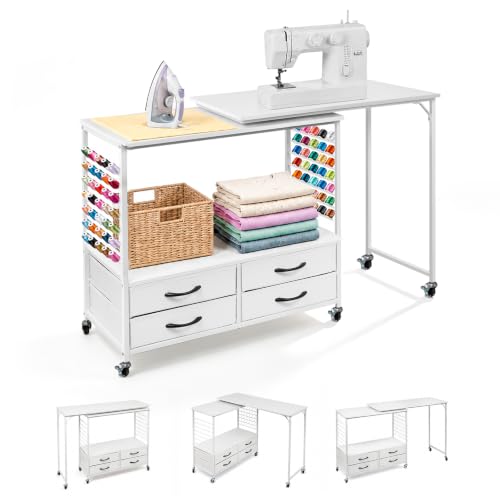
Lanlelin 4-Drawer Sewing Table

Lanlelin 57-Inch Sewing Table

Arrow K8411 Wallaby Kangaroo Sewing, Crafting Cabinet with Airlift

Garvee Folding Sewing Table with Wheels, Trays, Pegs, and Magnetic Locks

Kikihouse Wall-Mount Folding Sewing Table with Shelves and Fabric Drawer

Lanlelin Folding Sewing Table
What Each Pick Brings To The Table
I like this table for the balance between a usable sewing surface and a footprint that folds down to 32.7 inches. A rotating bearing lets one wooden panel turn through 360 degrees, adjusting the work area around the machine rather than requiring a fixed rectangular layout.
For a shared craft room, four drawers, two shelves, and 70 spool pegs keep supplies within reach without turning the table into a large cabinet. It makes more sense for compact organization than the 57-inch Lanlelin model, which offers a broader surface but takes more room when folded.
Useful Touches
- The folding panel reduces the stored length to 32.7 inches.
- Four drawers separate thread, needles, scissors, and smaller tools.
- Seventy pegs give small spools two dedicated storage rows.
- Rotating bearings let the working area follow the project.
- A two-tier shelf adds vertical storage beneath the main surface.
Trade Offs
- The 13.8-inch depth may feel narrow for large cutting mats or quilt backing, so I would check the machine and project dimensions first.
Key Specs
Who It Suits Best
This model fits apartment crafters and beginners who need organized storage in a narrow room.
A Better Fit Elsewhere
The Kikihouse wall-mounted sewing table suits people whose floor space is more limited than their available wall space.
The extra width sets this Lanlelin apart from the 46.5-inch model, giving a machine, fabric, and tools more room to share the surface. It appears especially useful for garment work or quilting where fabric tends to spread beyond a narrow tabletop.
Its six casters make relocation straightforward, and four universal wheels can lock in place for sewing. I would take that mobility over the smaller model’s slightly more compact folded length, particularly in a craft room where the table shares space with other projects.
Positive Takeaways
- The 57-inch worktop offers more room for fabric layout.
- Eighty-four pegs accommodate a large collection of small spools.
- Four drawers and a two-tier shelf organize bulky accessories.
- Four lockable casters stabilize the table during detailed work.
Points To Note
- The 41.3-inch folded length still requires meaningful storage space beside a wall or under a bed.
- Assembly is required, with pre-drilled holes and illustrated instructions provided for setup by one person.
Technical Sheet
Made For
This table suits experienced sewists managing multiple threads and fabric-heavy projects.
Consider Something Else When
The Garvee Folding Sewing Table fits small rooms better because it folds into a compact side-desk format.
The Arrow K8411 brings a different approach from the open folding tables: it combines a sewing, cutting, quilting, and crafting cabinet with storage in a dedicated furniture format. The included airlift mechanism raises the cabinet surface into a working position, keeping the machine enclosed when the area is not needed for crafts.
For a dedicated craft corner, that cabinet format may feel more permanent and focused than the Garvee model’s compact side-desk design. Portable wheels add mobility, although the cabinet still needs clear floor space for rolling and deployment.
The Good Stuff
- The cabinet combines sewing, cutting, quilting, and craft work in one structure.
- Built-in storage keeps the machine and related supplies together.
- An airlift mechanism provides a raised working position for the cabinet surface.
- Wheels make the unit easier to reposition within a craft room.
Small Caveats
- The cabinet format needs a dedicated corner and clear space for the airlift mechanism to operate.
- Its physical dimensions warrant careful measuring before it enters a compact room.
Right Fit For
This cabinet serves serious quilters and crafters who prefer a stationary, furniture-style workstation.
Look Elsewhere When
The Lanlelin Folding Sewing Table suits people who need frequent folding and easier relocation between rooms.
The Garvee model makes the most sense for an apartment where the sewing station must become a side desk after a session. Its folding structure reduces the footprint, while magnetic locks help keep the folded unit stable. Compared with the Arrow cabinet, it takes a lighter approach to hiding a machine away.
I also appreciate the balance between movement and stability. Five wheels allow the station to travel across a room, and three locking wheels secure it once positioned for sewing or crafts.
Benefits That Matter
- The fold-flat design converts the sewing station into a side desk.
- Engineered wood and reinforced metal hinges support frequent setup changes.
- Two trays and 16 pegs organize frequently used notions.
- An open shelf adds storage without another enclosed compartment.
- Three lockable wheels prevent movement during detailed work.
Practical Considerations
- Sixteen pegs hold fewer small spools than the Lanlelin tables, making this the less thread-heavy option.
- Measuring the folded depth is essential in a tight apartment or shared craft room.
Quick Facts
Who Will Love This
This table suits apartment residents who alternate between sewing, crafts, and desk work.
Another Choice May Suit
The Lanlelin 57-Inch Sewing Table fits dedicated sewists who need more surface area and spool capacity.
Wall mounting makes the Kikihouse model a practical answer when floor space is the limiting factor. The 47.8-by-23.6-inch work surface unfolds for sewing and crafting, then folds away to reclaim the area. That arrangement feels more permanent than the wheeled Lanlelin models because the table stays attached to the wall.
The removable non-woven fabric drawer provides a dedicated place for textiles, while additional shelves handle smaller supplies. The 0.7-inch particle board construction and wall-mounted fixtures create a clear tradeoff: the installation requirement adds complexity, but the table removes a large floor footprint.
Practical Advantages
- The wall-mounted format frees valuable floor space.
- The 47.8-by-23.6-inch surface provides useful fabric-preparation room.
- A removable fabric drawer keeps larger textiles together.
- Shelves extend storage beyond the work surface.
Factors To Consider
- Wall installation is required, so unsuitable walls could rule out this model.
- At 76 pounds, the table needs secure fixtures and careful handling.
- Its fixed location suits regular sewing more than a frequently changing machine setup.
Feature Snapshot
The Right Fit
This wall-mounted table suits home sewists in studios or multipurpose rooms where floor space is limited.
Reach For A Different Pick When
The Garvee Folding Sewing Table suits renters who need mobility and cannot install wall fixtures.
This light-oak Lanlelin shares the compact 46.5-inch format of the first model, but its six casters add easier movement around a room. I see it as the more mobile version of that compact storage design, with four lockable wheels providing a stationary platform when precision work begins.
The 360-degree panel rotation changes the working position, and the 70 pegs remain useful for organizing small thread spools. Compared with the 57-inch Lanlelin, it gives up some width and spool capacity in exchange for a shorter unfolded and folded length.
Real Benefits
- Six casters make the table easier to move between work areas.
- Four lockable wheels stabilize the table during detailed tasks.
- The rotating panel adjusts the machine position to suit the project.
- Seventy pegs and four drawers organize thread and sewing accessories.
Worth Noting
- The 13.8-inch depth offers less lateral space than the Garvee table for fabric handling.
- Assembly is required, although pre-drilled holes and illustrated instructions assist setup.
Built With In Mind
This model suits everyday sewists who want organized supplies and frequent access to a movable work surface.
Where A Sibling Pick Shines
The Lanlelin 4-Drawer Sewing Table suits people prioritizing compact storage, while this model emphasizes mobility.
What Matters Before The First Stitch
Measure The Available Footprint
I start with the space occupied during use, not merely the folded dimensions. The Lanlelin tables offer the longest worktops, while the Garvee model folds into a side-desk format and the Kikihouse option uses wall space instead of permanent floor space.
Match Storage To Thread Habits
Pegs are made for small spools, and drawers handle bulkier accessories. Seventy or 84 pegs make sense for extensive thread collections, while the Garvee table’s 16 pegs favor general notions and compact craft storage.
Check Movement And Assembly
Lockable casters help a table remain steady during stitching or cutting. By contrast, a wall-mounted design requires suitable mounting conditions and permanent placement near a power outlet.
Compare The Work Surface
A sewing machine needs a stable area, but fabric projects need room beyond it. I would compare the 13.8-inch depth of the compact Lanlelin tables with the Garvee table’s side-desk format and the broad 47.8-by-23.6-inch Kikihouse surface.
Lessons From Six Sewing Stations
Mistakes Worth Dodging
The most common error is measuring only the tabletop and missing the depth needed for fabric and cutting mats. Another mistake is counting pegs without considering drawer volume or shelf access.
What Separates Premium From Basic
Added surface area, stronger movement hardware, cabinet storage, and wall-mounted mechanisms can justify a higher cost. The extra spending matters most for frequent sewing, larger projects, or rooms where floor space is tightly limited.
Frequently Asked Questions
How much space should a sewing table with storage provide?
A sewing table should accommodate the machine, a pressing area, and nearby tools. Wider models suit quilting and garment work, while compact stations work better in apartments.
Are folding sewing tables difficult to move?
Models with lockable casters move more easily than fixed tables. I would lock every wheel before sewing so the surface remains steady.
Do sewing tables need drawers and pegs?
Drawers help with bulky accessories, while pegs keep small spools visible and accessible. Thread-heavy sewists receive more value from both.
Can a wall-mounted sewing table replace a craft cabinet?
A wall-mounted table provides a large work surface and vertical storage without a floor cabinet. It works best for a regular sewing location with suitable mounting conditions.
Which table is easiest to store in a small room?
The Garvee model changes from a sewing station into a compact side desk. The Kikihouse table is smaller in floor use but requires wall installation.
Final Verdict
The Lanlelin 57-Inch Sewing Table handles large work surfaces and extensive thread storage, while the compact Lanlelin models suit narrower rooms and regular mobile use. The Garvee table fits shared spaces, the Kikihouse option protects floor space, and the Arrow cabinet suits a dedicated craft corner. My shortlist comes down to the room and the project, with storage serving as the deciding factor.