
A roach problem often begins behind the refrigerator, beneath the sink, or along a warm baseboard where you rarely look. These traps suit you best when you want low-mess insect control without mixing chemicals into a busy kitchen, child’s room, or pet area. The options range from compact baited boards to larger rodent traps and plug-in repellers, so the right choice comes down to the pests you need to catch, the space available, and how much routine setup you prefer. Placement matters more than most people expect.
A Quick View Of The Lineup
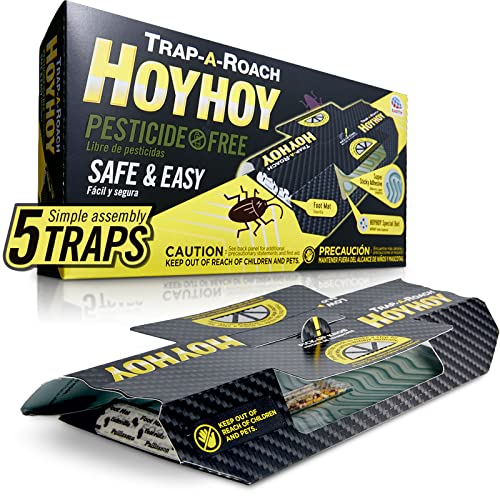
HOY HOY Trap A Roach Bait Glue Traps, 5-Trap Set

Qualirey Jumbo Rat Glue Traps, 16 Pack

Hoelesky 30 Pre-Baited Insect Glue Traps for Roaches and Ants

Victor M327 Roach Monitor Glue Traps, 150 Count

Repelifast Ultrasonic Pest Repeller 10 Pack

Catchmaster Max-Catch Glue Traps, 36-Pack

Catchmaster Extra Sticky Glue Boards, 12 Count, 5.3 x 8 Inches

Catchmaster Super Glue Traps, 30-Pack
More Details On Our Top Picks
The small footprint makes this roach trap practical beneath appliances, inside sink cabinets, or behind toilets. Its adjustable body can follow awkward gaps, while the water-resistant construction gives you more freedom in damp areas. For a busy kitchen, that flexibility may matter more than a large trap.
Bait and adhesive work together instead of relying on a pesticide, making this a sensible option for homes where children or pets share the space. The pickup knob also reduces the unpleasant task of handling a trap after it has caught something. It is more purpose-built for roaches than the broad insect boards later in this list.
Key Advantages
- The adjustable structure fits under appliances, behind toilets, and inside narrow cabinets.
- Water resistance supports placement in damp sink areas and other humid spaces.
- Separate bait sections combine food attraction with a textured, sticky landing area.
- The pickup knob makes disposal more direct than lifting a loose glue board.
- Five traps provide several placements without the bulk of a larger monitoring set.
Things To Consider
- The five-trap count may require regular replacement in a heavily active area.
- Adjustable parts need enough clearance to sit flat against the surface where insects travel.
Quick Facts
Right Fit For
This option suits you best when roaches appear in a few specific spots and you value compact, no-pesticide placement in a child- or pet-occupied home.
Look Elsewhere When
Choose Victor M327 Roach Monitor Glue Traps, 150 Count for broader, high-volume monitoring across many rooms or entry points.
These oversized boards are built for a broader job than catching a few roaches around a kitchen counter. At 11.8 by 9.84 inches, they suit wall edges, cupboards, and spaces beneath large appliances where rodents travel. Sixteen traps also make repeated placement along suspected runways practical.
Each board comes ready to use without extra bait and uses a plastic tray with glue designed to withstand cold or wet conditions. Compared with HOY HOY Trap A Roach Bait Glue Traps, 5-Trap Set, these boards cover much more floor area but take up more room. That makes them a broader pest-monitoring choice rather than a discreet cabinet solution.
Everyday Wins
- Large trays provide greater coverage for rats, mice, snakes, roaches, and other crawling pests.
- Pre-scented boards need no separate bait, simplifying routine placement.
- The non-toxic glue avoids adding rodenticide or pesticide to the area.
- Flush wall positioning helps intercept rodents moving along their usual routes.
- The 16-pack supports distributed coverage across several rooms or structures.
Trade Offs
- The large dimensions may be awkward inside shallow cabinets or narrow storage gaps.
- These traps immobilize pests on contact rather than providing a quick-kill mechanism.
- Outdoor or industrial placement exposes the boards to weather and surface conditions.
At A Glance
Built With In Mind
You gain the most from these jumbo boards in a garage, warehouse, restaurant, or utility area where rats or other larger pests follow visible edges.
A Better Fit Elsewhere
Pick Catchmaster Extra Sticky Glue Boards, 12 Count, 5.3 x 8 Inches when you need a smaller board for tighter gaps and mixed insect activity.
Thirty baited boards give you a flexible way to cover kitchens, bathrooms, basements, garages, balconies, and courtyards. Unlike a roach-specific design, each board targets several crawling insects, including ants, roaches, crickets, spiders, centipedes, and scorpions. That breadth suits homes dealing with more than one kind of intruder.
The pre-applied attractant gives the board a reason to draw pests from hidden edges rather than relying only on accidental contact. Its flexible shape also helps with corners, furniture gaps, and narrow spaces. The honest read is that this becomes a monitoring system, and its effectiveness depends on placing boards where the listed pests actually travel.
A Strong Showing
- Thirty boards make repeated placement across several rooms practical.
- Pre-baited attraction targets pests hiding in corners and gaps.
- Extra-strong adhesive maintains a firm hold once insects step onto the surface.
- No pesticides or toxic fumes suit a physical trapping approach.
- Flexible construction fits narrow gaps better than a rigid tray.
- Both indoor and outdoor placement options suit changing seasonal activity.
Small Caveats
- Thirty disposable boards create more material to collect and remove than a compact five-trap set.
- Boards placed in open areas miss the edge and crevice routes that many crawling insects prefer.
Multi-Use Pick
This set works well for you when ants, roaches, and occasional spiders appear across several parts of a home and you want one physical trapping format.
Reach For A Different Pick When
Victor M327 Roach Monitor Glue Traps, 150 Count serves a larger monitoring program better when quantity and rapid area coverage matter more than compact disposal.
The 150-trap format makes this roach trap feel like a monitoring system for the whole property. You can distribute boards around kitchen edges, utility spaces, storage areas, and other suspected entry points without worrying about running short. It suits landlords, property managers, and anyone tending more than one building.
Food-based glue attracts crawling insects, while multiple access points and two catch areas give pests several routes into the trap. The boards contain no pesticide, and disposal can happen without touching the captured insect. Compared with Hoelesky 30 Pre-Baited Insect Glue Traps for Roaches and Ants, the Victor set wins on quantity, not compactness.
Positive Points
- Food-based adhesive attracts roaches, crickets, spiders, and other crawling insects.
- Multiple access points and catch areas increase the available capture surface.
- Trap-in-trash disposal avoids direct contact with captured insects.
- The 150-count pack supports a large, distributed monitoring program.
Practical Considerations
- One hundred fifty units require storage and regular inspection.
- Boards work best near confirmed movement points rather than scattered randomly.
Quick Facts
Whose Shelf It Belongs On
This pack belongs in homes, rental properties, or workshops where you want to monitor many hiding places while keeping pesticide use out of the equation.
Where A Sibling Pick Shines
Choose HOY HOY Trap A Roach Bait Glue Traps, 5-Trap Set for a more compact, adjustable setup focused on roaches in damp household gaps.
This plug-in device offers a different approach from every adhesive trap in the lineup. It uses ultrasonic frequencies intended to discourage a range of indoor pests, including roaches, ants, spiders, mice, and mosquitoes. You gain a setup without glue boards, bait, or trapped insects to dispose of.
Ten units make it possible to place repellers through several rooms, though each needs access to a wall outlet. Unlike Victor M327 Roach Monitor Glue Traps, 150 Count, this option does not show you which pests are present or where they travel. For most kitchens, that lack of direct feedback is the main compromise.
Points In Its Favor
- Electronic repelling requires no sticky surface, bait, or dead-pest disposal.
- The ten-pack supports distribution through multiple indoor rooms.
Where It May Fall Short
- You cannot inspect a caught roach because the device does not physically trap pests.
- Each unit needs a nearby electrical outlet, which can limit placement in crowded rooms.
- Results may vary with room construction, furniture placement, and the severity of the infestation.
Right Fit For
This option suits you best when you want a low-maintenance electronic deterrent and already know where roaches are entering the home.
Not Your Match When
Choose Hoelesky 30 Pre-Baited Insect Glue Traps for Roaches and Ants instead when you need physical evidence of where crawling pests are active.
Thirty-six traps make this a practical choice for establishing a recurring inspection routine. The boards work without added bait and are intended for insects, ants, mice, rats, roaches, spiders, and crickets. That broad range makes the set more versatile than a roach-specific trap, especially in garages and basements.
The suggested acclimation step gives you a more deliberate setup than simply dropping a board into an open room. Leave the paper on initially, then position the traps along known or suspected rodent paths. Compared with the 150-piece Victor set, this pack uses fewer units but still gives you enough coverage for a substantial home.
Everyday Advantages
- Thirty-six boards support regular placement around a home, garage, or basement.
- No added bait is needed, which keeps setup simple.
- The broad pest coverage suits homes dealing with roaches alongside other crawling insects or rodents.
Things That May Matter
- The initial paper-on period delays full placement along suspected routes.
- Glue boards need periodic checking and replacement after catching pests.
Feature Snapshot
Made For
This pack fits you best when you want a dependable supply of indoor glue boards for checking several rooms along walls and known travel routes.
Swap It Out When
Qualirey Jumbo Rat Glue Traps, 16 Pack makes more sense for large rodents because its wider tray covers more space than a standard board.
These 5.3-by-8-inch boards balance coverage and portability, making them easier to position in garages, basements, attics, and other utility spaces. They work without separate insect or mouse bait, and their adhesive formula targets both crawling pests and rodents. You can use the same physical trapping approach across several kinds of activity.
Extra-stickiness adds confidence for larger insects and small rodents, although the board still relies on proper placement. Leave the paper on during the acclimation stage, then set the boards along suspected paths. Compared with Catchmaster Max-Catch Glue Traps, 36-Pack, this set is smaller in quantity but easier to store and handle in confined areas.
The Case For It
- The 5.3-by-8-inch size fits narrower shelves, storage gaps, and utility areas.
- Extra-sticky glue supports trapping insects, ants, mice, rats, roaches, spiders, and crickets.
- No added bait keeps placement straightforward.
- Twelve boards provide a manageable number for garages, basements, and attics.
Possible Compromises
- Twelve traps offer less coverage than the 30- and 36-piece Catchmaster sets.
- The smaller surface gives large rodents less area than a jumbo board.
- Proper acclimation and path placement require more thought than simply scattering traps.
Who Will Love This
This set suits you best if you manage a garage, basement, or attic and want compact boards for mixed insect and mouse activity.
Consider Something Else When
Catchmaster Super Glue Traps, 30-Pack offers a better fit for a property-wide monitoring program that needs a larger supply of extra-strength boards.
Thirty extra-strength boards support a broad monitoring program across a home, workshop, or commercial interior. The traps work without added bait and target insects, ants, mice, rats, roaches, spiders, crickets, and other pests. This broad scope makes the set useful where you cannot identify every species present in advance.
The recommended setup involves leaving the paper on during an acclimation period and then placing boards along known or suspected rodent paths. That process is less convenient than plugging in a repeller, but it gives you physical evidence of activity. Compared with Victor M327 Roach Monitor Glue Traps, 150 Count, this pack offers half the unit count with a more clearly extra-strength construction.
Benefits That Matter
- Extra-strength adhesive supports trapping across a broad range of pests.
- Thirty boards provide a substantial supply for repeated placement.
- No bait is required, simplifying setup in kitchens, basements, and workshops.
- Flexible boards can be positioned along walls and suspected travel routes.
Details To Watch
- The pack requires storage space and periodic inspection of each board.
- Roach activity around walls and edges requires careful placement for best coverage.
Feature Facts
The Right Fit
This option fits you best when you need a durable supply of multi-pest glue boards for a workshop, rental property, or spread-out interior.
Another Choice May Suit
HOY HOY Trap A Roach Bait Glue Traps, 5-Trap Set offers a better fit for a few roach-prone gaps where a smaller, adjustable, purpose-built trap is easier to position.
Match the Trap to the Pest and Space
Placement Beats Broad Coverage
A trap’s best features mean little in an unused corner. Roaches tend to travel along walls, behind appliances, and near pipes, while rodents follow established edges through cupboards and storage areas. Start with the places where you have seen droppings, movement, or repeated activity, then position the board there. In most kitchens, a few carefully placed traps work better than a scatter of boards across open floor.
Adhesive and Bait Design
Bait draws a pest toward the surface, while adhesive holds it after contact. Pre-baited boards suit you when you want immediate placement without adding food or chemical bait, whereas a roach-specific trap may offer more focused attraction. The trade-off is range: dedicated roach designs can fit into smaller spaces, while multi-pest boards are more useful when several crawling insects share the area.
Pack Size and Ongoing Setup
Quantity makes broad monitoring easier, but it also creates more boards to inspect and remove. A 12-count pack fits a single utility area, while 30 or 36 boards suit a home-wide routine. Larger packs can be useful in rental properties or workshops, where you may want to place traps around several entry points. For a plug-in device, count the available outlets before deciding that setup is simpler.
Consider Trap Size and Access
A wide tray covers more surface and suits larger rodents, but it may not fit beneath a low appliance or inside a shallow cabinet. Smaller boards slide into tighter spaces and are easier to reposition. Check the dimensions against the location before ordering, and account for the clearance needed to handle and remove a board once it contains an insect.
Avoid Common Trap Buying Errors
Common Shopping Slip Ups
Avoid choosing a large board for a narrow cabinet or a compact trap for a large rodent. Another easy mistake is placing glue traps in open floor areas where pests rarely travel, or adding bait to a board already designed to work without it. Check the intended location, available power, and disposal routine before buying.
What Separates Premium From Basic
Higher-tier options often add larger trap counts, stronger adhesive, specialized bait, or easier disposal features. Those upgrades matter when you have several rooms, larger pests, or a need to monitor activity closely. A smaller pack remains sensible for one localized problem, so paying more only makes sense when the added capacity prevents repeated purchasing or improves fit.
Frequently Asked Questions
Are Glue Roach Traps Safe Around Children and Pets?
Glue traps use physical trapping rather than pesticide, but you still need to place them where children and pets cannot reach them. Choose a design with easy disposal and keep the trap covered or positioned in an inaccessible gap.
Where Should You Place a Roach Trap?
Place it along walls, behind appliances, beside pipes, and inside cabinets where roaches are active. Positioning the trap flush against an edge improves your chance of intercepting insects that travel along surfaces.
Do You Need to Add Bait to Pre-Baited Traps?
No, pre-baited traps already include an attractant, and adding food can interfere with that setup. Follow the placement instructions and keep the protective paper on during any acclimation period.
Are Glue Traps Better Than Ultrasonic Repellers?
Glue traps reveal captured pests and show where activity occurs, while an ultrasonic device leaves no physical evidence. The first option suits monitoring and capture, whereas the second offers simpler placement without glue disposal.
How Many Roach Traps Do You Need?
The right count depends on the number of active locations and the size of each trap. Several small placements around confirmed routes usually make more sense than concentrating every trap in one room.
Final Verdict
The best roach trap for your home is the one that fits the infestation, reaches the travel route, and can be maintained without creating a new chore. HOY HOY offers the most compact roach-specific design, Victor covers large monitoring needs, and the Catchmaster options provide flexible board sizes and quantities. Start with placement, choose the format that matches your space, and inspect trapped pests before the problem spreads.