
A back-pain-friendly recliner has to do more than recline. The right model should make changing position easier, support a comfortable daily routine, and fit the available floor space. I also consider lift assistance, motor control, head and foot positioning, upholstery, and the practicality of reaching the controls. The six options below cover compact rooms, limited mobility, independent adjustment, relaxation features, and assisted standing, with clear trade-offs for each situation.
A Quick View Of The Lineup

EONIX Dual Motor Wall Hugger Recliner

BOSMILLER Power Lift Recliner, Grey
PARKOL Stand Assist Power Lift

EONIX Triple Motor Power Lift

EONIX Triple Motor Zero Gravity

Vonilli Power Lift Recliner
The Picks, Examined More Closely
A cramped living room can make a recliner feel impractical before comfort even enters the discussion. This EONIX uses a wall-hugger layout, meaning the chair is designed to sit close to a wall while reclining. That makes it a practical consideration for apartments, bedrooms, and rooms where every inch affects the furniture arrangement.
Dual motors give the backrest and footrest independent movement, while the power headrest adds another adjustable point of contact. Compared with the lift-focused models later in the lineup, this chair prioritizes posture control and compact placement rather than assisted standing. I find that combination especially sensible for someone who wants frequent position changes without moving the chair away from the wall.
Practical Pluses
- Independent backrest and footrest movement creates more useful position combinations.
- The adjustable power headrest supports reading, napping, and relaxed TV viewing.
- One-touch controls reduce the number of steps needed for common adjustments.
- The wall-hugger format addresses tight room layouts.
- Orange upholstery gives the chair a noticeable accent in a neutral living space.
Trade Offs
- Measure the recline path before ordering, especially the space needed in front of the chair.
- This model lacks the powered standing function found in the EONIX Triple Motor Power Lift.
Quick Facts
Right Fit For
This chair suits apartment dwellers and anyone who values compact placement and independent reclining adjustments.
A Better Fit Elsewhere
People who prioritize assisted standing should examine the EONIX Triple Motor Power Lift instead.
Getting out of a low chair can be harder than settling into it, and the BOSMILLER puts that transition at the center of its design. A remote controls the power lift, adjusting the seat height as the chair moves toward a standing position. That makes it a practical choice for anyone who wants assistance without operating a separate lift mechanism.
Massage and heat functions add to the relaxation side of the chair, while the neutral grey finish suits a conventional living room. Unlike the EONIX Dual Motor Wall Hugger Recliner, this model emphasizes assisted transfers rather than fitting tightly against a wall. I would consider it for daily reading, television, and extended periods of seated rest.
The Helpful Details
- The powered lift makes the chair useful for people who find repeated standing difficult.
- A remote keeps seat-height and recline adjustments in one accessible place.
- Massage and heat provide added options for winding down after the day.
Practical Considerations
- Leave enough floor space for the chair to rise without striking nearby furniture.
- The listing centers on powered lifting and a standard recline rather than three separate adjustment motors.
- Remote use requires clear line of sight to the chair during operation.
Feature Snapshot
Who It Suits Best
This model suits older adults and anyone who values assisted standing in a frequently used living room.
Another Choice May Suit
Those wanting more independently controlled head, back, and foot positions should compare the EONIX Triple Motor Power Lift.
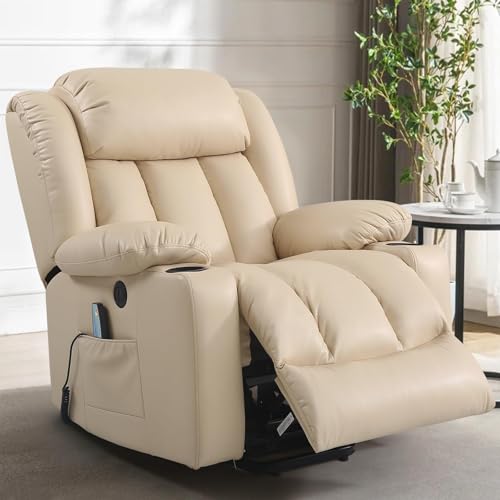
Side access sets the PARKOL apart from the remote-operated lift chairs in this group. A button on the armrest activates the stand-assist function, allowing the seat to rise without pulling on the arms or pushing forcefully from a low position. For someone with limited mobility, that placement can make the control easier to reach.
The chair also reclines to 160 degrees, giving it a useful range between upright sitting and a deep rest position. Compared with the BOSMILLER Power Lift Recliner, Grey, this model emphasizes a broad recline and armrest-mounted assistance. I see the strongest fit in a bedroom or quiet living area used for regular naps and supported repositioning.
Features That Help
- The armrest button provides direct access to the stand-assist function.
- A 160-degree recline supports substantial position changes for resting.
Things To Consider
- Confirm that the side armrest button remains easy to reach in the intended seating position.
- Allow enough floor space for the chair to move through its full lift and recline path.
Made For
This chair suits people with limited mobility who need direct stand assistance and a deep reclined resting position.
Look Elsewhere When
Anyone prioritizing massage, heat, and a higher powered lift angle should examine the Vonilli Power Lift Recliner.
Independent control of the backrest, footrest, and headrest gives this lift chair a more personalized setup. The backrest moves from 90 to 175 degrees, the footrest from 0 to 90 degrees, and the headrest from 0 to 30 degrees. That range allows a shopper to move from upright reading to a more reclined resting posture without accepting one fixed configuration.
Unlike the EONIX Triple Motor Zero Gravity, this model also raises the seat for assisted standing and includes heat and massage. At 5 feet 10 inches, it is listed at a larger size than the 5-foot-7-inch zero-gravity chair. I consider it the more adaptable option for a household that needs both lift assistance and extensive positioning control.
Points In Its Favor
- Three motors operate the backrest, footrest, and headrest independently.
- The powered lift adds practical assistance when leaving the chair.
- Heat and massage expand the available relaxation functions.
- Wide adjustment ranges support several sitting and reclining habits.
Where It May Fall Short
- The 5-foot-10-inch size warrants a careful seated-fit check.
- Several moving sections require adequate clearance during lift and recline.
- Its larger frame may demand more floor space than the compact EONIX model.
Technical Highlights
The Right Fit
This model suits people who want powered standing plus extensive head, back, and leg adjustment in one chair.
Consider Something Else When
A smaller frame and zero-gravity emphasis make the EONIX Triple Motor Zero Gravity more suitable for compact relaxation setups.
Zero-gravity positioning is the defining feature here. The chair arranges the back, legs, and head into a reclined configuration intended to reduce the strain of staying upright. That makes it more relevant to relaxation and resting than to assisted transfers, particularly for someone who spends long periods reading, watching television, or resting in the living room.
Three motors still control the major sections independently. The backrest ranges from 90 to 175 degrees, the footrest from 0 to 90 degrees, and the headrest from 0 to 30 degrees. Compared with the EONIX Triple Motor Power Lift, this model is smaller at 5 feet 7 inches and lacks the powered standing function, but white chenille gives it a softer visual presence.
What Pays Off
- Zero-gravity positioning creates a dedicated full-body rest setup.
- Three motors allow independent head, back, and foot adjustment.
- The 5-foot-7-inch size may suit smaller spaces than the 5-foot-10-inch lift model.
- White chenille upholstery brightens a neutral room.
- Extensive angle ranges make the chair useful for reading, napping, and screen time.
Minor Gripes
- Measure the reclined footprint because the leg section needs room to extend.
Who Will Love This
This chair suits relaxation-focused shoppers who value neutral-body positioning and independently controlled sections.
Where A Sibling Pick Shines
People who need assisted standing and a larger listed size should choose the EONIX Triple Motor Power Lift.
The lift motion reaches a 45-degree angle, giving the chair a pronounced forward rise before standing. A counterbalanced electric motor manages that movement, while the 145-degree recline supports a deep seated rest. I find the combination relevant for anyone who wants assisted standing and a substantial recline without relying on several separate adjustment sections.
Massage and heat add familiar comfort functions, making this a more rounded alternative to the plain lift experience offered by some models. Compared with the PARKOL Stand Assist Power Lift, the Vonilli offers a higher specified lift angle and built-in comfort functions, while the PARKOL extends farther into its 160-degree recline. The deciding factors become room clearance and the preferred control arrangement.
Strengths Worth Knowing
- A 45-degree lift creates a pronounced forward standing movement.
- The 145-degree recline provides ample room for extended rest.
- Massage and heat supplement the powered lift and recline functions.
Practical Considerations
- Check the route from the chair to the standing position for nearby furniture or walls.
- The 145-degree recline requires space behind and around the chair.
Core Details
Best Suited To
This model suits people who want assisted standing, a deep recline, and added massage and heat functions.
Reach For A Different Pick When
Those prioritizing the longest listed recline and an armrest-mounted stand control should consider the PARKOL Stand Assist Power Lift.
What Matters Before Bringing a Recliner Home
Position Control and Daily Comfort
Independent movement of the back, foot, and head sections makes posture changes easier to tailor. Dual-motor chairs cover the primary reclining controls, while triple-motor models add finer head positioning and more combinations. The practical question is whether that extra control will be used regularly enough to justify the chair’s size and complexity.
Lift Assistance and Reach
A power lift raises the seat toward standing, which can be useful for anyone who finds low seating difficult to leave. Control placement also matters. Remote-controlled lifts are convenient for many households, while an armrest button may be easier to reach for someone with limited arm movement.
Floor Space and Upholstery
Reclining and lifting chairs need clear space throughout the movement path, not merely at their closed position. Measure the room, the doorway, and the distance from the wall. Upholstery should also suit the household: light chenille can complement a bright room, while a darker finish may blend more easily into a busy space.
Practical Checks Before Ordering
Common Shopping Slip Ups
Measuring only the chair’s closed size is the most common miss. Powered lift and recline mechanisms need clearance while moving, and a wall-hugger model still needs room for the footrest. Check the control position, too, since a useful feature becomes inconvenient when the armrest is difficult to reach.
What The Higher Tier Buys
Additional motors generally provide more independent positioning, especially around the head and back. Heat, massage, and lift assistance add functions rather than improving the basic act of sitting, so each feature should match a real daily need instead of merely increasing the list of controls.
Frequently Asked Questions
Which Recliner Is Best for Limited Mobility?
The PARKOL Stand Assist Power Lift is the clearest match for limited mobility because its stand-assist control sits on the armrest. The BOSMILLER Power Lift Recliner, Grey also provides remote-operated lift assistance, but its control requires reaching for the remote.
Does a Recliner Help With Back Pain?
A recliner can make changing position more comfortable through adjustable back, foot, and head sections. Personal comfort varies, so the best choice depends on posture, room size, and whether assisted standing is useful.
Are Heat and Massage Features Important?
Heat and massage add relaxation options, but they are most useful to someone who expects to use them regularly. A chair with strong positioning controls may serve a daily comfort routine better.
Which Model Fits a Small Room?
The EONIX Dual Motor Wall Hugger Recliner has the most compact-specific design because it is intended to sit close to a wall. Its full recline still needs adequate space in front, and the footrest requires room to extend.
How Should a Recliner Be Measured?
Measure the room, doorway, wall clearance, and space required for the chair to lift or recline. Also compare the listed chair size with the intended occupant, particularly for shorter or taller users.
Final Verdict
The most useful recliner for back discomfort is the one that fits the room, offers reachable controls, and supports the position changes that occur throughout the day. Compact placement favors the EONIX Dual Motor Wall Hugger Recliner, while assisted standing points toward the lift models. Measuring the full movement path before ordering is the smartest final step.