
A living-room NAS can keep family photos, backups, and media available across every room, but it also adds a device that must be configured and maintained. I focus on the hardware and security tools that serve distinct roles, from compact two-bay storage to six-bay systems and endpoint protection for computers and mobile devices.
Three entries are true network-attached storage systems. The remaining three are security subscriptions rather than storage hardware, which makes the comparison useful for anyone building a broader home data-protection setup.
The Main Contenders

QNAP TS-264-8G-US 2-Bay High-Performance Desktop NAS, Dual 2.5GbE, M.2 Slots

ESET Home Security Premium 2025, 3 Devices, VPN and Folder Guard

ESET NOD32 Antivirus 2025, 1 Device, Gamer Mode and Exploit Blocker

UGREEN DXP6800 Pro 6-Bay NAS, Intel i5-1235U, 8GB DDR5, Dual 10GbE, NVMe Slots
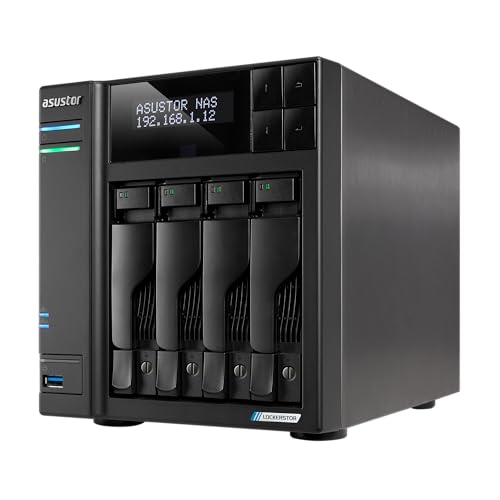
Asustor Lockerstor 4 Gen2+ AS6704T v2 NAS, Quad-Core, Dual 5GbE, 4 M.2 Slots

ESET Home Security Essential 2025, 3 Devices, Webcam Controls and IoT
More On The Choices That Made The List
The TS-264 brings the useful part of a larger NAS into a two-bay desktop format. Its two 2.5GbE connections can accelerate transfers between several computers, while the Celeron N5105 or N5095 processor provides four cores and 8GB of DDR4 memory for file sharing and background storage tasks.
That makes it a sensible center for a family photo archive or a working backup target. Compared with the larger UGREEN DXP6800 Pro, it occupies fewer drive bays, though the six-bay model offers greater storage expansion and faster 10GbE networking.
Points In Its Favor
- Dual 2.5GbE ports support faster transfers and can serve multiple connected devices.
- Two M.2 PCIe Gen3x1 slots accept NVMe SSDs for caching or dedicated storage pools.
- The 8GB memory configuration gives the operating system more room than a minimal entry-level system.
- USB 3.2 Gen 2 Type-A ports suit external drives and faster expansion enclosures.
Minor Gripes
- The two-bay enclosure limits immediate drive capacity compared with six-bay models.
- The PCIe Gen3 x2 expansion slot requires compatible cards for added network or storage functions.
Key Specs
Who It Suits Best
Home users needing fast shared storage, centralized backups, or family media access in a compact two-bay enclosure will get the most from this configuration.
Where A Sibling Pick Shines
The UGREEN DXP6800 Pro suits households needing six drive bays, 10GbE connections, and a higher-tier Intel processor.
A NAS stores data, but it does not replace endpoint protection for the laptops and phones that connect to it. ESET Home Security Premium fills that role for three PC, Mac, or Android devices, with ransomware-related file protection, private browsing controls, a VPN, and home-router checks.
Folder Guard is the standout feature for shared family storage because it controls which applications can modify protected folders. This subscription does not create a NAS, however, so it belongs beside a QNAP or Asustor system rather than in place of one.
The Value In It
- The VPN covers up to three devices with access to servers in 40 countries.
- Folder Guard limits changes to protected folders by trusted applications.
- Router inspection can identify weak passwords, outdated firmware, and connected-device vulnerabilities.
- Secured browsing supports online banking and shopping alongside phishing-site blocking.
Trade Offs
- This is security software rather than a storage appliance with drive bays.
- The three-device allowance requires prioritization across a busy household.
Made For
Security-conscious households running several personal computers, phones, or tablets alongside a separate NAS will benefit most from this coverage.
A Better Fit Elsewhere
The QNAP TS-264-8G-US is the better choice for households that need shared file storage with remote access rather than endpoint security alone.
Gaming desktops face a particular conflict: useful protection can interrupt a session with alerts or background work. NOD32 addresses that with Gamer Mode, which postpones notifications, suppresses pop-ups, and pauses scheduled activity while continuing to run its core security functions.
The one-device focus makes this a clean fit for a main gaming PC, but it lacks the broader VPN, router inspection, and webcam controls offered by ESET Home Security Essential. Its smaller scope suits a focused setup better than a household with many active devices.
Why It Works Well
- Gamer Mode reduces interruptions without removing the core antivirus functions.
- Exploit blocking adds protection for browsers, PDF readers, and similar applications.
- Anti-phishing and ransomware shielding cover common online and file-based threats.
Small Caveats
- The subscription protects one PC or Mac, so additional household devices require separate consideration.
Quick Facts
Right Fit For
A PC gamer who wants one focused security subscription without frequent gaming interruptions will appreciate this straightforward setup.
Another Choice May Suit
ESET Home Security Essential fits mixed-device households that need three-device coverage, webcam controls, and IoT protection.
The DXP6800 Pro is built for households that treat a NAS as active infrastructure rather than a simple file cabinet. Its 10-core Intel i5-1235U processor, 8GB DDR5 memory, and dual 10GbE ports create a high-capacity platform for media libraries, shared project files, and simultaneous access from several computers.
Six drive bays distinguish it from the two-bay QNAP TS-264-8G-US and four-bay Asustor AS6704T v2. The trade-off is a larger enclosure with a more involved storage plan, which may be excessive for a small collection of family photos.
The Upside
- Six drive bays provide more room for shared archives and media libraries.
- Two 10GbE ports suit high-bandwidth transfers between capable local devices.
- The 10-core processor handles heavier multitasking than the quad-core alternatives here.
- DDR5 memory and a 128GB system SSD support a more capable platform configuration.
- Two M.2 NVMe slots allow fast caching or separate high-speed storage.
Things To Consider
- The six-bay chassis requires more shelf space than a compact NAS.
- Fast 10GbE transfers depend on compatible switches, network cards, and client devices.
Technical Highlights
Who Will Love This
Media-heavy homes, creative professionals, and small studios that need six bays and 10GbE connectivity will find this configuration especially relevant.
Consider Something Else When
The Asustor Lockerstor 4 Gen2+ AS6704T v2 suits homes wanting four bays and four M.2 slots in a more compact four-drive layout.
The Lockerstor 4 Gen2+ offers a middle path between a compact two-bay enclosure and a large six-bay system. Four SATA bays hold conventional hard drives or SSDs, while four M.2 slots add NVMe options for caching or storage pools without relying entirely on SATA devices.
Dual 5GbE connections place it between the QNAP TS-264-8G-US at 2.5GbE and the UGREEN DXP6800 Pro at 10GbE. For active media libraries and video-editing workflows, that combination may feel more balanced than choosing only the smallest or largest chassis.
A Few Strong Suits
- Four SATA bays provide a useful balance of capacity and footprint.
- Four M.2 slots create several paths for fast storage and caching.
- Dual 5GbE ports support faster local collaboration than 2.5GbE hardware.
- HDMI and media-server features suit living-room and creator setups.
Practical Considerations
- The 4GB memory configuration is modest beside the 8GB QNAP and UGREEN systems.
- Four-bay expansion is less adaptable than the six-bay UGREEN DXP6800 Pro.
Best Suited To
Home creators and media-library owners wanting four SATA bays, several NVMe slots, and 5GbE networking will find this layout practical.
Reach For A Different Pick When
The QNAP TS-264-8G-US is the simpler choice for a smaller household that values two 2.5GbE ports and a more compact enclosure.
Home Security Essential covers a practical mix of devices without adding the VPN and router inspection found in ESET Home Security Premium. Its three-device allowance fits a typical combination of a laptop, desktop, tablet, or phone, while webcam and microphone controls add visibility into access attempts.
I see this as a straightforward endpoint-security subscription rather than a NAS component. It complements a storage system by protecting selected computers and mobile devices, but it neither supplies drive bays nor secures every device connected to a home router.
What Makes Sense
- One subscription can cover three PC, Mac, or Android devices.
- Webcam and microphone access prompts make unwanted access attempts visible.
- Secured browsing, phishing blocking, ransomware protection, and IoT features cover several common household needs.
Points To Note
- The three-device limit may be restrictive for a larger household.
- The product provides no shared storage or NAS file system.
- Devices beyond the subscription allowance need separate coverage.
Essential Details
The Right Fit
People managing a laptop, phone, and another computer or tablet will appreciate the simple three-device arrangement and centralized management.
Look Elsewhere When
ESET Home Security Premium suits households that also want a VPN, protected folders, and home-router inspection.
Matching NAS Hardware To A Household Routine
Start With The Files That Need Access
A NAS, short for network-attached storage, is most useful when several devices need regular access to the same collection. Family photos, shared documents, media libraries, and computer backups provide a clearer purpose than buying empty drive bays. I would map the daily workflow first, then choose a bay count that supports future expansion without making the initial setup unnecessarily complicated.
Match Network Speed To File Size
The gap between 2.5GbE, 5GbE, and 10GbE matters most during large local transfers and sustained media access. The QNAP TS-264-8G-US uses 2.5GbE, the Asustor AS6704T v2 uses 5GbE, and the UGREEN DXP6800 Pro uses 10GbE. Faster ports still require compatible client hardware, switches, and network configuration, so the rest of the home network must keep pace.
Separate Storage From Endpoint Protection
The three ESET products protect computers, phones, or tablets, while the QNAP, UGREEN, and Asustor devices store and serve files. These functions complement each other but are not interchangeable. A household with a NAS and several personal devices can use both categories, while a smaller setup may need only one.
Account For Expansion And Administration
M.2 slots provide room for NVMe cache or dedicated fast storage, but their role depends on the operating system and intended configuration. More drive bays also mean more storage planning, cable management, and administrative attention. The Asustor AS6704T v2 offers four M.2 slots, while the QNAP provides two, giving each a distinct balance between flexibility and simplicity.
Common Mistakes Worth Avoiding
Mistaking Security Software For Storage
Antivirus software does not create a shared file system or provide drive bays. Treat endpoint protection as a separate layer from NAS hardware, and check device compatibility before assigning a subscription to a household.
Overestimating Network Speed
A 10GbE NAS cannot deliver 10GbE performance to a client limited to a slower connection. Check the network cards, switch, cabling, and storage setup before paying extra for faster ports.
Ignoring The Physical Layout
Bay count, enclosure size, and cooling requirements affect where the unit can live. Measure the intended shelf or cabinet space before choosing a larger model.
What The Higher Tier Buys
More Expansion And Processing
Higher-capacity systems add drive bays, faster processors, faster networking, or additional NVMe slots. The UGREEN DXP6800 Pro makes the largest leap here with six bays, a 10-core processor, and dual 10GbE connections.
Choosing By Actual Workload
The extra capability is worthwhile for large media collections, active creative files, and several simultaneous users. A smaller household can often direct the budget toward the drive count and backup plan that matter more.
Frequently Asked Questions
What Is A NAS Device For Home Use?
A NAS device stores files on a connected network so several computers or mobile devices can access them. It can also provide shared storage, centralized backups, and media organization.
Is A Two-Bay NAS Enough For Home Use?
Two bays work well for a small household, particularly with one drive for storage and another for backup. More users, large media collections, and greater expansion needs favor four or six bays.
Do NAS Devices Replace Antivirus Software?
No. A NAS stores and serves data, while endpoint security protects compatible computers and mobile devices from online threats, ransomware-related file locking, and malicious applications.
Is A 10GbE NAS Worth It For Home Use?
It benefits households moving large files between modern computers and high-speed network equipment. Standard file browsing and backups may not require the added network complexity.
Should Home Security Essential Or Premium Be Chosen?
Home Security Essential suits a smaller mixed-device household needing webcam and microphone controls. Premium adds a VPN, folder protection, and router inspection for broader network-focused coverage.
Final Verdict
I would choose the QNAP TS-264-8G-US for a compact, well-connected home NAS, the Asustor AS6704T v2 for flexible four-bay media storage, or the UGREEN DXP6800 Pro for a larger high-speed system. For endpoint security, ESET NOD32 covers a single gaming computer, while the Home Security editions suit broader household device counts. Match the hardware to the storage workload, then add endpoint protection separately where it belongs.