
A storm knocks out the power while dinner is still cooking, or a weekend trip leaves the campground without an outlet. I focus on six portable generators and battery power stations that address those moments, balancing output, portability, noise, and practical setup requirements. The right model depends less on maximum wattage than on the equipment being powered, the available space, and whether a battery or conventional fuel system fits the situation better.
The Picks In Brief

BROWEY 1600W 1024Wh LiFePO4 Solar Power Station

Honda EB2200i 2200W Generator

Honda EB5000 5000W Generator
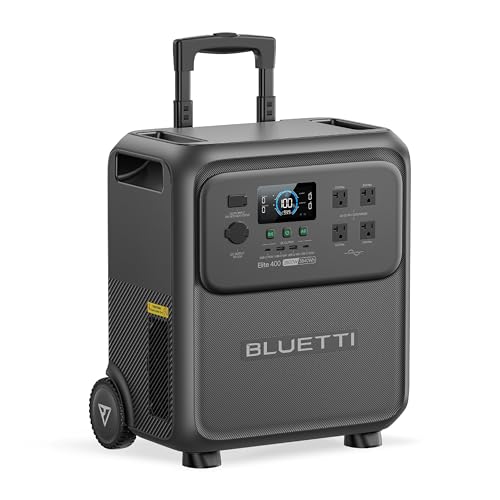
BLUETTI Elite 400 3840Wh Power Station

Enphase IQ PowerPack 1500Wh + IQ Cart with LFP Battery and IQ8 Microinverters

WEN DF1100X 11000W Electric Start Generator
Taking A Closer Look At The Options
The built-in solar panel makes this more self-contained than a power station that depends on a separate panel. For an RV trip, a remote campsite, or a household managing a brief outage, the combination of 1,024 watt-hours of storage and 1,600 watts of output is a sensible middle ground between a small power bank and a larger home system.
Its LiFePO4 battery uses lithium iron phosphate chemistry, which is a relevant distinction from conventional lithium-ion cells because it has a strong safety and cycle-life profile. The built-in MPPT controller manages energy collected by the solar panel, while the 100W USB-C Power Delivery port handles compatible phones, tablets, and smaller electronics without occupying the main AC outputs.
What Pays Off
- Built-in solar eliminates the need to carry and position a separate panel.
- The 1,600W output can support moderate household loads and camping equipment.
- The 100W USB-C port simplifies charging compatible personal electronics.
- LiFePO4 chemistry suits repeated charging cycles and mobile use.
Things To Consider
- The 1,024Wh capacity is less than the BLUETTI Elite 400, so extended outages require careful load management.
- Built-in solar charging depends on suitable sunlight, making stored battery capacity important during poor weather.
Key Specs
Made For
This model suits campers, RV travelers, and households seeking renewable charging in a portable format.
Consider Something Else When
The BLUETTI Elite 400 3840Wh Power Station suits households needing substantially more stored energy for a longer outage.
Conventional fuel makes the Honda EB2200i a practical answer where prolonged power is needed, but its 48 to 57 dBA operating range is the more important detail for many campsites and residential backup use. Decibels on the A-weighted scale account for how human hearing responds across frequencies, making the listed range easier to compare with everyday background noise.
Unlike the BROWEY 1600W 1024Wh LiFePO4 Solar Power Station, this model does not depend on stored battery charge or sunlight. That makes it useful for an extended outage, although fuel storage and outdoor placement add responsibilities that a self-contained battery system avoids.
Notable Gains
- Inverter technology supports stable output for compatible electronics and tools.
- The low operating-noise range suits campsites and occupied neighborhoods.
- Fuel-based operation avoids dependence on wall power during a prolonged outage.
Minor Gripes
- The 2,200W output is modest for homes with several high-demand appliances running together.
- Fuel storage, ventilation, and placement away from occupied interiors require attention.
Right Fit For
Campers, contractors working remotely, and households needing quiet temporary power for essential electronics will find this model practical.
Reach For A Different Pick When
The Honda EB5000 5000W Generator serves households that need more output and 240V capability for heavier loads.
Moving up from the Honda EB2200i 2200W Generator brings a substantial increase in usable output and the addition of 240V support. That combination makes this model more relevant to a house dealing with a prolonged outage or a contractor running equipment that exceeds the smaller inverter’s capacity.
The generator can deliver 7,000 watts for 10 seconds, giving motor-driven equipment extra startup headroom. Its intelligent automatic voltage regulation, or iAVR, adjusts output to help maintain consistent voltage as engine load changes, a useful feature for tools and household equipment with sensitive electronics.
What Earns Its Place
- The 5,000-watt output handles more household equipment than the EB2200i.
- Dual 120V and 240V capability broadens the range of supported loads.
- Short-duration 7,000W surge output assists larger motor startup.
- Automatic voltage regulation supports steadier operation as demand changes.
Room For Improvement
- Its 63 to 65 dBA range is louder than the EB2200i, making placement more noticeable.
Feature Snapshot
Who Will Love This
Homeowners, contractors, and workshop users needing 240V support and stronger motor-starting capability will appreciate this model.
A Better Fit Elsewhere
The Honda EB2200i 2200W Generator is quieter and easier to carry for campsites and smaller loads.
The 3,840 watt-hour battery gives the BLUETTI Elite 400 3840Wh Power Station much more stored energy than the BROWEY 1600W 1024Wh LiFePO4 Solar Power Station. For a home outage, that additional capacity can support a larger mix of essential loads, although the unit itself demands more room than a compact camping station.
Its 2,600W continuous output, with 3,900W available in surge mode, provides meaningful headroom for refrigerators, electronics, and selected tools. Nine output ports reduce the need for a crowded power strip, while the rolling trolley helps manage the considerable weight of a large LiFePO4 battery system.
What Works In Its Favor
- The 3,840Wh capacity provides stronger outage coverage.
- Continuous and surge output cover both steady loads and startup needs.
- Nine ports simplify connections for several device classes.
Points To Note
- Its larger battery makes it bulkier than the BROWEY and Enphase power stations.
- The trolley helps with movement, but storage space still needs to be planned.
- It needs access to suitable solar input or mains charging to remain ready.
Technical Highlights
The Right Fit
Households needing several hours of stored power for essential appliances will find this capacity more useful than a compact camping station.
Another Choice May Suit
The Enphase IQ PowerPack 1500Wh + IQ Cart with LFP Battery and IQ8 Microinverters better fits households centered on a solar-integrated setup.
The Enphase IQ PowerPack 1500Wh + IQ Cart with LFP Battery and IQ8 Microinverters is built around home energy integration rather than a simple stand-alone battery. The IQ8 microinverters and Enphase app connect stored power to a solar-oriented household system, giving it a clear advantage for people already considering residential renewable equipment.
The included IQ Cart adds practical mobility through a telescoping handle, locking wheel brakes, and a stable platform for the power pack. Its LFP battery is specified for operating conditions from -4°F to 122°F, which broadens its relevance for garages, utility areas, and changing seasonal conditions.
What Stands Out
- IQ8 microinverters support a more integrated home-energy approach.
- The app adds centralized monitoring and control.
Small Caveats
- The 1,500Wh capacity is smaller than the BLUETTI Elite 400, limiting stored energy for prolonged outages.
- The cart improves handling, but the complete system still requires suitable storage space.
Built With In Mind
Solar-equipped households that value integrated monitoring and mobile battery storage will find this system more relevant than a basic portable power bank.
Where A Sibling Pick Shines
The BLUETTI Elite 400 3840Wh Power Station better serves households that prioritize battery capacity and broader device connections.
For a home that needs to carry several substantial loads at once, the WEN DF1100X 11000W Electric Start Generator offers more conventional generator output than any battery station in this group. That scale makes it relevant to a well-equipped household, workshop, or event site, provided there is adequate room for a larger machine and its fuel system.
Electric starting removes the need to pull a recoil cord, which matters during an outage or on a job site. Dual-fuel capability allows gasoline or propane, while the wheel kit makes the generator easier to reposition. The carbon monoxide shutdown sensor adds a useful layer of protection by stopping the engine when elevated carbon monoxide is detected.
Positive Takeaways
- The 11,000-watt output supports multiple high-demand devices.
- Gasoline and propane provide flexible fuel choices.
- Electric starting adds convenience during outages.
- The wheel kit and CO shutdown sensor support practical handling and operation.
Worth Noting
- Its output and fuel flexibility require more space and fuel planning than a compact power station.
Quick Facts
Whose Shelf It Belongs On
Large homes, workshops, and event operations needing substantial conventional generator output will find this model more capable.
Swap It Out When
The Honda EB5000 5000W Generator offers a smaller conventional option for households that need less capacity and prioritize 240V support.
Matching Output to the Job at Hand
Portable power comes down to output, usable capacity, and setup constraints. The first decision is whether the equipment draws conventional power from a fuel-driven generator or electricity stored in a battery system.
Output Type
A fuel generator offers sustained output and uses gasoline or propane, while a power station stores electricity for later use. I consider fuel availability and operating duration as important as the wattage figure on the label.
Capacity Versus Output
Output describes instantaneous power, while capacity describes stored energy in watt-hours. A refrigerator may need only a modest amount of running power, but keeping several essential devices operating for an extended period requires considerably more battery capacity.
Portability and Setup
A camping user cares about carry weight, charging access, and physical footprint. A household must also account for ventilation, weather exposure, fuel storage, and the noise generated during operation.
Matching the Load
I list each device’s running requirement and startup demand before selecting a model. Motor-driven equipment can draw a sharp surge, so a higher output level may be necessary even when the equipment’s normal consumption looks modest.
Important Generator Setup Details
Mistakes Worth Dodging
Choosing from peak wattage alone can lead to a generator that handles startup but lacks enough continuous output. I also check port types, battery charging options, fuel requirements, and the space needed for safe outdoor placement.
What Separates Premium From Basic
Higher-tier models often add battery capacity, inverter control, quieter operation, stronger surge support, or easier transport. The extra expense is most justified when the intended load would strain a basic model or when outdoor noise and handling matter during routine use.
Frequently Asked Questions
Are battery power stations or fuel generators more dependable?
Dependability depends on the application. Battery stations operate quietly and need no fuel logistics, while fuel generators provide sustained output during extended outages.
How much power is needed for an essential home outage?
Most households can start by totaling the running watts of a refrigerator, lighting, internet equipment, and selected electronics. Additional headroom makes sense for pumps, motors, or medical-support equipment.
Is an inverter generator necessary?
An inverter generator is valuable for sensitive electronics, tools with electronic controls, and low-noise settings. Conventional output can suit simpler loads when greater capacity matters more.
Can a portable generator run a refrigerator?
Most portable generators can run a refrigerator, but startup surge and simultaneous household loads determine whether the model has enough headroom. A fuel generator is also unsuitable for indoor operation.
How should a portable generator be maintained?
I follow the manufacturer’s schedule for oil, filters, fuel, cooling, and connection checks. A clean, dry storage location also helps protect the machine between periods of use.
Final Thoughts
Dependability comes from matching the power system to the load, not chasing the largest specification. I favor the Honda EB2200i 2200W Generator for quiet, compact use, the BLUETTI Elite 400 3840Wh Power Station for substantial stored energy, and the WEN DF1100X 11000W Electric Start Generator for conventional high-output backup.