
A cat with diabetes may need more frequent litter-box monitoring, careful cleanup, and dependable urine containment. The right setup should reduce tracking around the room without making access difficult, especially for a cat that is larger, older, or less steady on its feet. These options range from washable stainless steel boxes to app-controlled automatic models, giving you practical choices for daily care at home.
A Closer Look At The Lineup

AIPERRO Stainless Steel XL Litter Box

Modkat Top-Entry Litter Box, Black

Amazon Basics Large High-Sided Top-Entry Litter Box with Scoop

Qiuma Stainless Steel Litter Box for Small Cats

PETKIT Purobot Max 3 Self-Cleaning Box

AIPERRO Extra-Large Enclosed Litter Box

PETKIT Purobot Max Pro 2 AI-Camera Box
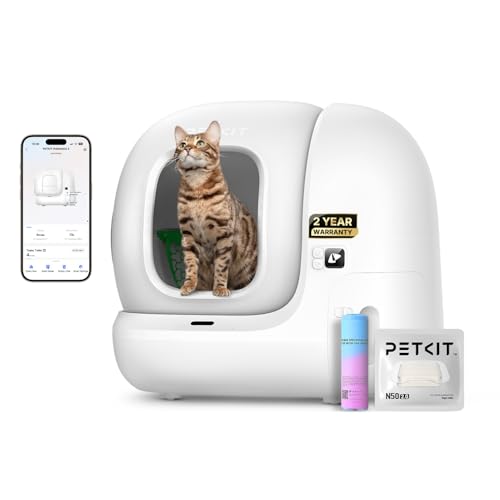
PETKIT PuraMax 2 App-Controlled Litter Box with Safety Sensors
A Breakdown Of The Leading Choices
The AIPERRO box gives a cat room to dig without giving loose litter a wide path into your hallway. Its 23-by-15-by-11-inch enclosure, stainless steel walls, and sealed bottom make it a practical choice for a large cat or a home where urine containment matters.
The angled filter plate is the feature that sets it apart from an ordinary open pan. It helps keep litter inside, while the included mat catches stray pellets around the entrance. The honest read is that this is a manual box, but its cleanup controls make the daily routine more manageable.
Positive Points
- Stainless steel wipes down cleanly and resists rust.
- The sealed base helps contain urine near the edges.
- A 30-degree filter plate reduces kicked-out litter.
- Extra-large dimensions suit large and giant cats.
- The mat and metal scoop support a complete setup.
Points To Note
- The enclosed footprint takes up more floor space than an open pan.
- Manual scooping remains part of your daily routine.
Key Specs
Built With In Mind
This fits large-cat households that prioritize urine containment and washable surfaces over automatic cleaning.
A Better Fit Elsewhere
PETKIT Purobot Max 3 Self-Cleaning Box suits households that would rather automate scooping.
Modkat takes a different route from the surrounding steel options: the lid itself becomes a walk-off surface for litter. That design makes particular sense in a home where loose pellets are the main daily annoyance and your cat is comfortable stepping through a top opening.
The seamless base extends up the sides to discourage side-peeing, while the swivel lid gives you quick access during scooping. Its custom reusable liner also removes much of the lining disposal routine. You will still need to remove waste regularly, but the box is designed to keep each task contained.
Standout Benefits
- The top entry provides a broad, comfortable interior.
- Full-height sides help contain both litter and side-peeing.
- The swivel lid simplifies access for routine cleaning.
- A reusable liner reduces recurring liner waste.
Soft Spots
- Some cats may hesitate to use a top-entry opening.
- The custom liner must be fitted and maintained correctly.
Made For
It suits cat households focused on reducing tracked litter and keeping cleanup inside one compact system.
Consider Something Else When
Qiuma Stainless Steel Litter Box for Small Cats offers a lower entry for kittens and small breeds.
Large, high-sided plastic makes this a straightforward choice for everyday use. The filtered top helps reduce litter scatter, and the 20.5-by-14.75-by-14.38-inch enclosure gives a cat enough space to turn, dig, and settle without the footprint of a large hooded system.
The removable top makes monitoring easier, which is useful when you need to notice changes in output or how often your cat uses the box. A stored scoop eliminates the chance of reaching for the wrong tool during cleanup. It does not automate anything, but it handles the essential tasks neatly.
Notable Upsides
- High walls help contain spraying and loose litter.
- The top entry reduces material kicked onto the floor.
- The removable lid allows quick visual checks.
- Recyclable, BPA-free plastic supports lighter handling.
Practical Considerations
- Its tall plastic construction may retain more odor than steel.
- The top-entry format can deter cautious or very small cats.
Quick Facts
Right Fit For
It works well for indoor households with a large cat and a preference for simple manual equipment.
Reach For A Different Pick When
AIPERRO Stainless Steel XL Litter Box is more suitable when washable steel and a sealed base are your priorities.
The Qiuma box answers a more specific need: a low, compact litter pan for a kitten, rabbit, or small cat. Its 15.6-by-11.6-by-3.9-inch footprint fits more easily beneath furniture or inside a smaller room than the larger enclosed options in this lineup.
Stainless steel gives you a surface that can be wiped down rather than absorbing moisture into plastic. The low entry also makes stepping in less demanding. For a small pet, that combination may matter more than a hood or elaborate litter-retention system.
What Makes Sense
- The low entry suits short legs and small bodies.
- Stainless steel simplifies routine wiping.
- The compact dimensions conserve floor space.
- Non-slip pads improve stability during use.
Where It May Fall Short
- Its open profile offers less litter shielding than an enclosed box.
- The smaller interior may feel cramped to a large cat.
Made For
It fits kittens, small breeds, and homes where a low-profile metal pan is easier to access.
Swap It Out When
Modkat Top-Entry Litter Box, Black is a better fit for households prioritizing reduced litter tracking.
The Purobot Max 3 moves cleanup into the background, which can help you monitor a cat with diabetes without constantly reaching into the box. Clumping waste is transferred into a sealed compartment, while the upgraded mat helps protect the surrounding floor from litter and moisture.
Its wide, low opening supports cats weighing 3.3 to 22 pounds and provides a 76-liter interior. You still need to remove waste from the sealed container and inspect the box, but the automatic cycle handles the repetitive sifting. The tradeoff is added complexity and a larger appliance footprint.
Where It Helps
- Automatic sifting reduces daily manual work.
- The semi-enclosed body limits odor leakage.
- A low, wide opening supports varied body sizes.
- The sealed base helps manage edge moisture.
- The anti-stick mat reduces loose litter buildup.
Possible Compromises
- Automatic equipment requires more space than a basic pan.
- The waste container still needs regular emptying.
Feature Breakdown
Who Should Grab It
It suits multi-cat or high-maintenance households seeking automatic cleanup and accessible entry.
Another Choice May Suit
AIPERRO Extra-Large Enclosed Litter Box fits households that prefer a simpler manual enclosure.
The extra-large enclosure is aimed at cats that spray high or throw litter with enthusiasm. Its metal construction creates a more substantial barrier than a plastic pan, while the lid helps define a private area and limit material leaving the box.
The upgraded joint design overlaps the frame, and inverted plastic guards close gaps where liquid could otherwise escape. Those details make the enclosure appealing for urine containment, although the enclosed shape means you need enough floor space to place it away from walls and walkways.
The Case For It
- Extra-large enclosure suits larger cats.
- The lid helps limit scattered litter.
- Metal walls create a sturdy cleaning surface.
- Overlap joints and plastic guards close vulnerable gaps.
Things To Weigh
- Its enclosed footprint requires generous placement room.
- The design focuses on containment rather than automated cleanup.
Built With In Mind
It fits households with high-spraying or vigorous-digging cats that need stronger enclosure boundaries.
Look Elsewhere When
PETKIT Purobot Max 3 Self-Cleaning Box suits those who want automatic sifting instead of manual scooping.
The Purobot Max Pro 2 adds an AI camera to automatic litter-box care, letting you check activity around the box without immediately entering the room. The camera uses a 210-degree viewing angle and infrared night vision, which is useful for monitoring after dark.
Its opening is about 10 inches high and 43 percent larger than the preceding generation, with an anti-pinch entrance that remains open. A sealed base and waterproof Oxford-fabric mat add another layer of moisture protection. For a cat needing careful monitoring, the extra information may be valuable, but camera placement also calls for privacy-conscious setup.
A Few Highlights
- The camera supports remote observation of litter-box activity.
- Infrared night vision works in low-light rooms.
- Pet-proximity sensors stop the cycle immediately.
- The 8-liter waste bin accommodates several days for one cat.
- A sealed waste bin and odor system limit escaping smells.
Details To Watch
- Camera placement requires a suitable private location.
- The automatic unit occupies more floor space than a pan.
Technical Highlights
Who Will Love This
It suits multi-cat households that value camera monitoring, quiet operation, and automatic cleaning.
Where A Sibling Pick Shines
PETKIT PuraMax 2 App-Controlled Litter Box with Safety Sensors is simpler for households not seeking camera footage.
The PuraMax 2 offers connected control without the camera-focused feature set of the Purobot Max Pro 2. App operation lets you manage automatic cleaning remotely, while safety sensors help manage movement around the entrance. Its low entry is designed to make access easier for cats with limited mobility.
The sealed waste bin and N50 2.0 odor-control unit work together to contain waste and reduce smell transfer. Most clumping litters are supported, although this version does not work with K3 Smart Spray. The basic bundle includes trash bags, a sifter, a magnetic litter remover, and setup materials.
Bright Spots
- App control simplifies remote cleanup settings.
- Safety sensors support cautious pet monitoring.
- The low entrance helps older or short-legged cats.
- Trash bags and removal tools support the setup.
Where It Is Less Suited
- Carpet or mats can interfere with the sensors.
- K3 Smart Spray litter is not compatible.
Core Details
Who It Suits Best
It fits connected households seeking automatic cleaning without a camera or larger Pro-series setup.
Not Your Match When
Qiuma Stainless Steel Litter Box for Small Cats is simpler for a kitten in a compact living space.
What Matters Most in a Diabetes-Friendly Litter Box
Start With Urine Containment
A sealed base and high walls deserve priority because a cat with diabetes may visit the box more frequently. Look for a smooth surface, protected corners, and a design that reduces side-peeing. Automatic models also need leak-resistant mats and waste compartments.
Match Access to Your Cat
Entry height and opening width affect daily access. A low threshold helps kittens, senior cats, and pets with limited mobility, while a top entry can reduce litter tracking. Choose based on your cat’s movement rather than the style of another cat using the same room.
Keep Cleaning Predictable
Stainless steel and removable liners can simplify wiping and replacement. Automatic models reduce sifting but still require regular waste removal. A consistent routine also makes changes in litter-box use easier to notice, so speak with your veterinarian about any meaningful change in your cat’s habits.
Check the Placement
Automatic litter boxes generally need a flat, hard floor for their sensors to operate correctly. Leave the entrance clear and allow space for the cat to approach without negotiating tight corners. This setup detail matters as much as the feature list once the box is operating.
Avoiding Litter-Box Mistakes
Mistakes Worth Dodging
Do not select a box solely because it looks automatic; entry height, containment, and cleaning fit are more important. Check your cat’s litter compatibility, floor surface, and available space before ordering. A premium feature will not compensate for an entrance your cat avoids.
When Paying More Pays Off
Higher-tier models cost more because they add automatic cycles, connected controls, sealed waste compartments, or camera functions. Those additions can help when you cannot scoop every day or need remote visibility. A simple steel or plastic box remains more economical when your cat uses a standard setup and manual cleanup works well.
Frequently Asked Questions
Which litter box is best for a cat with diabetes?
The best choice is the one your cat enters comfortably while containing urine and allowing you to monitor use. Stainless steel, sealed bases, and easy-access openings deserve more attention than decorative features, while your veterinarian should guide any health-related concerns.
Does a stainless steel litter box help a diabetic cat?
Stainless steel provides a smooth, nonporous surface that is easy to wipe and does not absorb liquid like many plastics. It supports cleanup around a cat with diabetes, but the material does not manage the condition itself.
How often should a diabetic cat’s litter box be cleaned?
Remove waste at least daily and inspect the box more frequently when urination has increased. Clean urine residue promptly to control odor and keep the surface comfortable for the next visit.
What opening size works for an older or less mobile cat?
A low threshold and broad entrance generally make access easier for senior or mobility-limited cats. The PETKIT Purobot Max 3 Self-Cleaning Box offers a wide, low opening, while larger manual models are worth comparing against your cat’s usual posture.
Are automatic litter boxes suitable for diabetic cats?
Automatic boxes can suit diabetic cats when access, sensors, and litter compatibility meet the cat’s needs. They reduce repetitive sifting, but regular waste removal and visual monitoring remain necessary, and changes in usage deserve veterinary attention.
Final Verdict
For a cat with diabetes, prioritize a comfortable entrance, urine containment, and a cleaning routine you can realistically maintain. The AIPERRO Stainless Steel XL Litter Box offers strong manual containment, while the PETKIT options add automation for homes that need it. Let your cat’s mobility, litter habits, and your cleaning routine make the final call.