
A freezer full of food and a dark hallway are a bad combination when the electricity goes out. I built this roundup for homeowners who need dependable backup, portable power for a trip, or a solar-based system that can operate away from the grid. The six options range from compact battery stations to installed standby systems, with each one serving a distinctly different household need.
A Snapshot Of The Selections
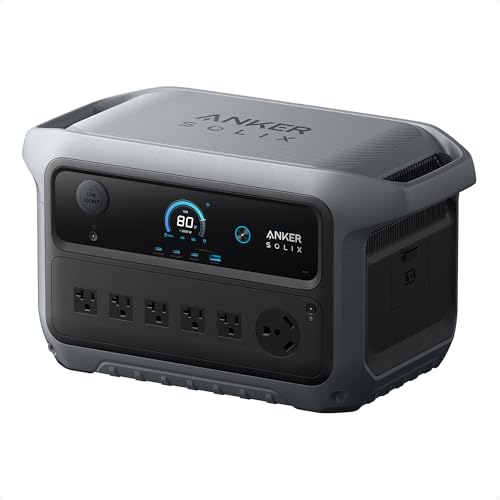
Anker SOLIX C2000 Gen 2 Power Station

Anker SOLIX S2000 Portable Power Station 2,010Wh, 3,000W Peak, LiFePO4

BLUETTI Elite 200 V2 2x200W Solar Kit

Generac 18kW Whole Home Generator
Generac 22kW Whole Home Generator
Generac 26kW Whole Home Generator
The Details Behind The Selections
A weekend at a remote campsite becomes less stressful when the power station can run a refrigerator rather than just recharge phones. The C2000 Gen 2 stores 2,048 watt-hours, a measure of usable energy, and delivers 2,400 watts of continuous AC power for everyday equipment.
Compared with the Anker SOLIX S2000, this model emphasizes faster recharging and expandable capacity. I would favor it for households that regularly move between a campsite, patio, and home backup role.
A Favorable Mix
- A dual-door refrigerator can run for up to 32 hours on one charge.
- AC and solar recharging can restore the full battery in about 58 minutes.
- A compatible expansion battery raises capacity to 4kWh for longer outages.
- 4,000 watts of peak power covers startup surges from suitable appliances.
Things To Consider
- The 2,048Wh base capacity may be modest for sustained high-load use.
- Expansion requires the compatible add-on battery and a suitable storage location.
Key Specs
Made For
Campers and families needing flexible refrigerator and electronics power benefit most from the expandable setup.
Where Another Pick Suits Better
The BLUETTI Elite 200 V2 2x200W Solar Kit offers a more complete solar-charging arrangement for off-grid setups.
Keeping a refrigerator running through a short outage is straightforward with the S2000, whose stated fridge runtime reaches 35 hours. That makes it a practical fit for households that need food storage protected without a full-size installed system.
The lithium iron phosphate battery, commonly called LiFePO4, is paired with a 10,000-cycle rating and a stated 15-year lifespan. I would place this model ahead of the C2000 Gen 2 for homes prioritizing battery endurance and low idle consumption.
Notable Upsides
- Up to 35 hours of refrigerator support extends cold storage during outages.
- A 6W idle draw reduces consumption while the unit waits for the next need.
- The LiFePO4 battery is rated for 10,000 charge cycles.
- Uninterruptible power supply mode switches connected equipment during outages.
- Solar input supports replenishment from compatible solar setups.
Worth Noting
- Runtime figures depend on appliance demand and operating conditions.
- 3,000 watts is peak output rather than continuous output.
- Solar charging performance depends on panel placement, weather, and compatible wiring.
Right Fit For
Homeowners seeking a rechargeable battery system for refrigerators, networking equipment, and essential electronics will find the runtime useful.
Another Choice May Suit
The Anker SOLIX C2000 Gen 2 Power Station fits households prioritizing faster recharging and expansion to 4kWh.
Solar power becomes much easier to assemble when the panels arrive with the battery. This kit pairs the BLUETTI Elite 200 V2 with two 200-watt panels, giving campers and remote-site users a more complete starting point than a power station alone.
The 2,073.6Wh unit supplies 2,600 watts of continuous AC power and can support nine connected devices. I would choose it for an off-grid cabin, work area, or campsite where solar collection is part of the daily plan.
Everyday Perks
- Two 200W solar panels are included for a ready-made charging arrangement.
- The panels can replenish the unit in about 5.5 hours under suitable conditions.
- Power-lifting mode provides a brief 3,900W assist for high-startup loads.
Minor Gripes
- The two panels require clear, appropriately directed sunlight for efficient charging.
Feature Snapshot
Who Will Love This
Campers, van travelers, and remote-work households benefit from receiving both the power station and solar panels together.
A Better Fit Elsewhere
The Anker SOLIX S2000 Portable Power Station 2,010Wh, 3,000W Peak, LiFePO4 suits households wanting a longer stated refrigerator runtime.
An installed generator changes the outage experience because it starts automatically after utility power fails. The Generac 18kW model connects to an existing LP or natural-gas supply and continues operating until the electrical service returns.
That makes it a different proposition from the portable stations above, which must be carried, charged, and managed manually. I would consider the 18kW configuration for households that want automatic support for essential circuits without moving into the 22kW and 26kW configurations.
Points In Its Favor
- Automatic startup removes the need to rush to a control panel during an outage.
- The included transfer switch manages the connection between utility and generator power.
- Cellular capability provides a remote connection option.
- LP and natural-gas compatibility supports common household fuel arrangements.
Practical Considerations
- Installation requires a suitable fuel supply, transfer switch, and generator location.
- Cellular service coverage and connection details should be confirmed before installation.
- The fixed installation is less portable than any battery station in this roundup.
Core Details
Built With In Mind
Homeowners seeking automatic outage response for essential loads will find the 18kW configuration easier to integrate into daily life.
Reach For A Different Pick When
The Anker SOLIX C2000 Gen 2 Power Station better serves households needing portable power without a fixed installation.
Some homes need more electrical capacity than an 18kW standby system provides, particularly when several sizable appliances could operate during an outage. The Generac 22kW model adds output headroom while retaining automatic startup, a transfer switch, and cellular connectivity.
That middle position makes more sense than jumping directly to the 26kW system when the planned electrical load falls between the two. I would have the installation team calculate the actual load before choosing this configuration.
Noteworthy Benefits
- The 22kW rating offers greater capacity than the 18kW configuration.
- Automatic operation restores power without manual activation.
- Cellular capability adds remote monitoring access.
- LP and natural-gas connections accommodate common household fuel sources.
Trade Offs
- Equipment size and installation requirements are greater than for a portable power station.
- Output still depends on the selected transfer switch and the home’s available fuel supply.
- A load calculation is important before spending on more capacity than necessary.
The Right Fit
Larger households with several substantial loads will find the added 22kW output more useful than an 18kW installation.
Swap It Out When
The Generac 26kW Whole Home Generator is a stronger candidate for homes with several high-demand appliances and substantial starting loads.
At 26kW, this Generac configuration addresses homes with larger electrical demands and several appliances that may start at once. Automatic operation, an included transfer switch, and cellular capability place it in the same whole-home category as the 18kW and 22kW models.
The extra output only earns its place when the home’s load calculation supports it. For smaller households, I would direct the money toward carefully planned essentials rather than buying capacity that has no clear purpose.
Real-World Strengths
- The 26kW output offers the most rated capacity among these selections.
- Automatic startup keeps essential systems operating without manual activation.
- Cellular capability supports remote status access.
- The transfer switch coordinates safe switching between utility and generator power.
- LP and natural-gas configurations support common residential fuel supplies.
Potential Drawbacks
- Installation, fuel delivery, and site preparation require dedicated planning.
Key Attributes
Whose Shelf It Belongs On
Large households with a professionally calculated need for high starting and sustained output are the strongest candidates.
Look Elsewhere When
The Generac 18kW Whole Home Generator fits a household focused on essential circuits with a smaller planned load.
Matching Backup Power to the Household
Capacity and Runtime
Battery capacity is measured in watt-hours, which indicates stored energy rather than the speed at which equipment runs. I start by listing the refrigerator, freezer, internet equipment, lighting, medical support devices, and other items that must remain online. Runtime then becomes a realistic operating estimate based on the combined demand rather than a single impressive appliance figure.
Continuous Output and Startup Demand
Continuous output describes the level a unit can sustain, while peak output covers brief startup surges. A refrigerator and several lamps require far less capacity than a well pump, furnace, or workshop motor, so I compare the starting demands of every essential device before deciding how much headroom is needed.
Installation, Fuel, and Storage
A standby generator needs a fixed location, a compatible fuel supply, and a transfer switch that coordinates utility and generator power. Portable stations require no fixed fuel connection, but they need charging, storage, and regular attention. I weigh automatic standby convenience against the flexibility of a battery unit that can travel with a household.
Two Details That Change the Decision
Mistakes Worth Dodging
Choosing by wattage alone can leave a household short on runtime or overspending on unnecessary output. I also avoid assuming every portable system can support the same appliances, since connection types, starting demand, and compatible accessories determine what can actually run.
When Paying More Pays Off
Higher output and capacity become worthwhile when several large appliances, continuous refrigeration, or frequent outages justify that additional capability. For a small home with one refrigerator and basic electronics, a lower-capacity battery station often handles the real requirement more neatly.
Frequently Asked Questions for House Generator
How much power does a house generator need?
The required power depends on the appliances that must operate during an outage. Essential loads usually need less capacity than a full household, so a load calculation provides the soundest basis for sizing an installed system.
Is a portable power station better than a standby generator?
A portable power station offers flexibility, quiet operation without fuel consumption, and easier transport. A standby generator provides automatic, sustained operation tied to a fuel supply, making it more suitable for extensive whole-home use.
How long can a power station run a refrigerator?
Runtime varies with the model, refrigerator size, ambient conditions, and other connected loads. Published examples range from 32 to 35 hours for a dual-door refrigerator on the Anker models featured here.
What is the difference between peak and continuous output?
Peak output handles brief demand spikes, such as the startup surge of a motor. Continuous output is the level the generator or battery station can maintain while operating connected equipment.
Does a whole-home generator require professional installation?
Professional installation is the prudent approach because the unit, transfer switch, fuel supply, and household wiring must work together correctly. The installer can also assess location, electrical load, and local requirements before commissioning the system.
Final Verdict
I would choose the Anker SOLIX S2000 for refrigerator-focused outage support, the BLUETTI Elite 200 V2 kit for solar-oriented setups, and the C2000 Gen 2 for expandable camping power. Installed households should size the Generac models around a calculated load, choosing 18kW, 22kW, or 26kW according to the equipment that genuinely needs power.