
A refrigerator goes dark, the Wi-Fi router shuts down, and the house suddenly feels less secure. I built this guide around the systems that can restore essential power during outages, from compact battery stations for an apartment to permanently installed Generac units for an entire home.
Your Options, Compared
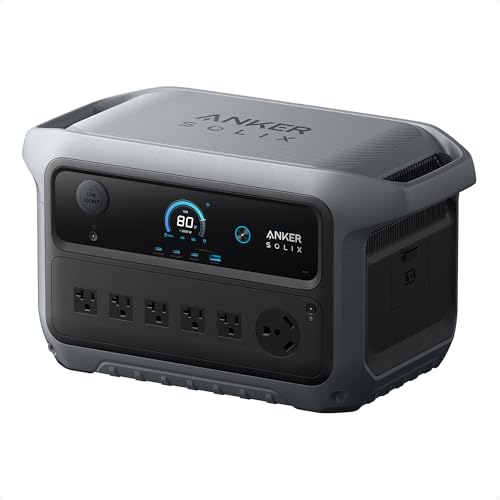
Anker SOLIX C2000 Gen 2 Portable Power Station 2,048Wh 2,400W

Anker SOLIX S2000 Portable Power Station, 2,010Wh, 3,000W Peak, LiFePO4

BLUETTI Elite 200 V2 Solar Generator 2073.6Wh

Generac 18kW Whole Home Generator
Generac 22kW Whole Home Generator
Generac 26kW Whole Home Generator
Inside Each Recommended Option
The C2000 Gen 2 makes sense for a home office, apartment, or weekend campsite that needs more capacity than a small power bank. Its 2,048Wh battery and 2,400W continuous output can handle a refrigerator and several essential devices, while the 4,000W peak rating gives compatible electronics some headroom.
Compared with the Anker SOLIX S2000, this model offers slightly greater battery capacity and faster recharging. That combination suits households wanting a portable system for both daily outages and remote use.
Standout Benefits
- Claimed refrigerator runtime reaches 32 hours, making it useful during extended utility interruptions.
- An expansion battery raises total capacity to 4kWh and extends the stated refrigerator runtime to 64 hours.
- AC and solar charging can restore the full charge in about 58 minutes.
- Low 9W standby consumption helps preserve stored energy during periods of inactivity.
- Coverage includes eligible drops, spills, broken parts, and breakdowns, with claims available online or by phone.
Trade-Offs To Consider
- This is a portable battery system rather than an automatic whole-home installation.
- Solar charging speed depends heavily on panel placement and available sunlight.
Quick Facts
Made For
This model fits apartment residents, campers, and home-office households needing portable power for essential devices.
Look Elsewhere When
The BLUETTI Elite 200 V2 suits off-grid households that want solar panels bundled with the power station.
For essential household backup, the S2000 emphasizes endurance and low idle consumption. Its lithium iron phosphate battery is rated at 2,010Wh, and the stated dual-door refrigerator runtime reaches 35 hours, making it a practical option for keeping food cold and communications equipment running.
The UPS function also makes this model more useful for a home office than a basic camping station. Unlike the Generac whole-home systems, it remains portable and does not require a fixed fuel supply or automatic transfer switch.
A Few Strong Suits
- The 6W idle draw supports longer standby periods with less stored-energy loss.
- LiFePO4 cells are rated for 10,000 charge cycles and a 15-year lifespan.
- A 1,500W solar input enables direct solar recharging.
- UPS operation suits routers, computers, and other sensitive electronics.
- Round-the-clock support and eligible damage coverage add ownership support.
Points To Note
- The 3,000W figure is peak output, so continuous appliance requirements need separate checking.
- The 35-hour estimate depends on the refrigerator and operating conditions.
- The battery eventually needs recharging during a prolonged utility outage.
The Right Fit
This system fits households seeking quiet, portable backup for a refrigerator, router, and several small essentials.
A Better Fit Elsewhere
The Anker SOLIX C2000 Gen 2 offers faster recharging and expandable capacity for households that value flexibility.
The BLUETTI Elite 200 V2 stands apart because the kit includes two 200W solar panels. That arrangement gives an off-grid household a more complete energy package than a power station sold without a charging source, while the 2,073.6Wh battery remains similar in size to the two Anker models.
For a cabin, campsite, or remote workspace, the 2,600W continuous output and ability to operate as many as nine devices add useful flexibility. The honest read is that this package is especially attractive where clear rooftop or ground-level solar exposure is available.
What Works In Its Favor
- Two 200W panels recharge the system in about 5.5 hours under suitable conditions.
- Power lifting raises available output to 3,900W for compatible loads.
- Nine-device operation supports a broader mix of electronics.
- The included panels reduce the need to source solar equipment separately.
Practical Considerations
- Two full-size solar panels require adequate storage and unobstructed sunlight.
- The 3,900W lifting figure differs from the unit’s 2,600W continuous output.
Feature Snapshot
Built With In Mind
This kit fits campers, cabin owners, and households preparing for outages with access to direct sunlight.
Another Choice May Suit
The Anker SOLIX S2000 fits apartment households that prioritize long battery life and UPS support over bundled panels.
The Generac 18kW model changes the category by supplying backup power automatically rather than requiring someone to carry a battery outside and connect individual devices. Once connected to an existing liquid propane or natural-gas supply and paired with the included transfer switch, it starts within seconds of detecting a utility failure.
This is the more sensible choice for a home with a refrigerator, HVAC equipment, internet service, and several other essential loads. Unlike the portable stations, it supplies power through the home’s wiring rather than one extension cord at a time.
Useful Touches
- Automatic operation removes the need for manual startup during an outage.
- An 18kW rating supports a broader collection of household loads.
- Cellular capability adds remote visibility into system status.
- Support is available around the clock, with eligible coverage for damage and breakdowns.
Things To Weigh
- Fixed installation requires an appropriate location, fuel connection, and transfer equipment.
- Permitting and installation requirements depend on local rules.
- The 18kW model offers less capacity than the 22kW and 26kW Generac options.
Quick Technical Notes
Who It Suits Best
This generator fits homeowners with an established fuel supply who want automatic protection for essential circuits.
Reach For A Different Pick When
The Anker SOLIX C2000 Gen 2 fits renters and campers who need portable rather than permanently installed power.
At 22kW, the Generac 22kW Whole Home Generator sits between the 18kW and 26kW options without reaching the largest configuration. That middle position makes it useful for households that need more headroom than a smaller standby unit but may not need the highest output available here.
Automatic startup, a transfer switch, and cellular monitoring place it firmly in the permanently installed category. Existing liquid propane or natural-gas service provides the fuel path, allowing operation for as long as the fuel supply remains available.
Useful Highlights
- The 22kW rating provides additional capacity over the Generac 18kW model.
- Automatic sensing starts power restoration within seconds.
- Cellular monitoring gives remote access to operating status.
- The transfer switch coordinates the generator with the home’s electrical supply.
Where It May Fall Short
- Installation, fuel-line work, and local permitting add complexity compared with a portable station.
- Households with only a refrigerator and router may find the 18kW model sufficient.
Best Suited To
Homeowners with moderate whole-home demand benefit most from the balance between the 18kW and 26kW Generac models.
Where A Sibling Pick Shines
The Generac 26kW Whole Home Generator fits properties combining many essential circuits with higher household power demand.
The Generac 26kW Whole Home Generator provides the largest rated output among these six options. It makes sense for larger properties, extensive HVAC systems, and households that expect several major appliances to operate during a lengthy outage rather than merely keeping a handful of essentials alive.
The automatic transfer arrangement and cellular monitoring match the smaller Generac systems, so the main distinction is capacity. In practice, that extra output reduces the need to decide which loads to leave disconnected during utility interruptions.
Positive Takeaways
- The 26kW rating offers the most headroom in this group.
- Automatic startup follows power-loss detection within seconds.
- A transfer switch integrates the unit with the home’s electrical system.
- Cellular capability supports remote status monitoring.
- Connection to liquid propane or natural gas supports extended operation while fuel remains available.
Factors To Consider
- Fixed placement and fuel-line connections require professional site preparation.
- Local permits and installation rules can affect the project timeline.
- Smaller households may pay for capacity that their typical loads never require.
Core Details
Who Will Love This
Large households and owners of substantial properties benefit most from the higher output and automatic whole-home restoration.
Swap It Out When
The Generac 18kW Whole Home Generator fits essential-circuit backup in a smaller home with a more modest load profile.
What Matters Before Powering a Home
Capacity And Load Shape
Generator capacity should match the appliances expected to operate at the same time. A portable station works best for a refrigerator, router, lights, and selected electronics, while a standby generator may need to support HVAC equipment, kitchen appliances, and interior electrical systems. I would calculate the combined demand of essential loads before choosing between a 2kWh battery and an 18kW, 22kW, or 26kW generator.
Fuel And Installation Path
Portable battery systems need periodic recharging, while the Generac models connect to liquid propane or natural gas. Standby systems also require suitable outdoor placement, a transfer switch, and compliance with local installation rules. Renters and apartment residents generally have fewer installation options than homeowners with an existing fuel supply.
Transfer Method And Monitoring
A UPS mode in a portable power station can support sensitive electronics, but a household still manages connections and operating time manually. Automatic standby generators detect utility loss and restore power through the home’s wiring. Cellular monitoring adds visibility for a fixed installation, while a portable station is more practical for locations where moving the system is necessary.
Common Sense Checks Before Purchasing
Mistakes Worth Dodging
The most common error is comparing headline output without checking the appliance’s startup demand. Another mistake is overlooking fuel access, installation rules, or the amount of space required for a portable system. I would also avoid treating peak power as the same figure as sustained output.
What The Higher Tier Buys
A higher-output standby generator adds room for simultaneous loads and can reduce the need to leave large appliances disconnected. A battery expansion, faster recharging, or bundled solar panels serve a different need, chiefly more flexibility away from mains power. The added capacity matters most when the household has substantial, continuous electrical demand.
Frequently Asked Questions
How much power does a house backup generator need?
The required power depends on the appliances intended to operate during an outage. A portable battery station commonly covers essential electronics, while a whole-home generator needs enough capacity for HVAC equipment, refrigeration, and other connected loads.
Is a portable power station better than a standby generator?
A portable station is more practical for renters, apartments, camping, and temporary outages. A standby generator provides automatic restoration for a larger home and depends on an installed fuel supply and transfer switch.
Can a portable power station run a refrigerator?
A compatible portable station can run a refrigerator, but runtime depends on battery capacity, refrigerator demand, and operating conditions. The stated 32-hour and 35-hour figures correspond to particular dual-door refrigerator configurations.
What does UPS mean on a portable power station?
UPS stands for uninterruptible power supply, and it allows a compatible station to switch to battery power with minimal interruption. This mode is useful for routers, computers, network equipment, and other sensitive electronics.
How much space does a whole-home generator require?
Space depends on the unit and local requirements, so site preparation should account for placement, fuel connections, ventilation, and service access. A qualified installer can confirm the appropriate location and clearance before installation.
Final Verdict
The Anker SOLIX C2000 Gen 2 is the most adaptable portable option for outages and camping, while the SOLIX S2000 focuses on longer essential-power runtime and UPS support. The BLUETTI Elite 200 V2 stands apart with included solar panels. For automatic whole-home restoration, the 18kW, 22kW, and 26kW Generac models cover progressively larger household load requirements.