
A 6:30 alarm should not turn a dark bedroom into a search for the phone. I judge gentle alarm clocks by the way they introduce morning light, control sound, display the time, and handle different schedules. A dim bedside display, ceiling projection, sleep-focused light, or carefully chosen alarm tone can make the first moments of the day less abrupt, with one high-volume model serving as a deliberate contrast for heavy sleepers.
The Main Contenders

ALANAS Slim Digital Alarm Clock, Dual USB Ports, Dual Alarms, Dimmer

OnLyee Projection Alarm Clock

Hatch Sleep Clock, Cocoa Finish

Hatch Sleep Clock, Greige Finish
Hatch Sleep Clock, Putty Finish

Acedeck 115dB Alarm
The slim mirror-style face gives this clock a place in a bedroom, dorm, or office without looking like office equipment. I like the large digital display, 12- or 24-hour format, and visible weekday for quick bedside checks.
Its dimming control makes it gentler in a dark room, while two independent alarms suit partners on different schedules. The charging ports add practical value, although a bedside unit with many settings benefits from a little planning before use.
A Favorable Mix
- Four brightness levels include a backlight-off setting for a darker room.
- Two independent alarms each support five repeat schedules.
- Snooze intervals range from 5 to 60 minutes.
- Two USB ports reduce bedside cable clutter.
- Weekday and 12- or 24-hour displays aid quick checks.
Small Caveats
- A generous snooze interval can delay the start of the day when set too long.
- Several independent settings take planning in a shared room with different routines.
Key Specs
Made For Shared Bedrooms
I favor this model for couples, roommates, and students who need two schedules and a display that can recede in darkness.
Another Choice May Suit
The OnLyee Projection Alarm Clock fits sleepers better who prefer a large ceiling display over a bedside mirror-style screen.
Where the ALANAS clock relies on a bedside screen, the OnLyee Projection Alarm Clock moves the time overhead. A projector rotates through 350 degrees and has adjustable focus, so I can position the display toward a ceiling or wall instead of reaching across the bed.
Two alarms and four scheduling options make this practical for households with weekday and weekend differences. For a dark room, the projected time may feel less intrusive than a glowing screen, provided the placement suits the ceiling and sleeping position.
Real-World Strengths
- Projection keeps the time visible without reaching for a device.
- The 350-degree rotation supports varied bedside positions.
- Adjustable focus helps refine the projected image.
- Dual alarms and four schedule modes support varied routines.
Practical Considerations
- Ceiling or wall placement must allow the projected time to remain visible from bed.
Quick Facts
Built With In Mind
I recommend this model for heavy sleepers and light sleepers who want the time visible from bed without touching the clock.
Where Another Pick Shines
The ALANAS Slim Digital Alarm Clock serves small nightstands better where ceiling projection would be impractical.
The cocoa finish gives the Hatch Sleep Clock a warmer bedside presence than the cooler-looking OnLyee projector. More importantly, this model combines three roles: a sleep tracker, a smart light, and a sound machine.
I see it as a sleep-environment device rather than a conventional alarm clock. That approach suits someone who wants light, ambient sound, and sleep-related tracking in one dedicated bedside unit instead of several separate accessories.
The Case For It
- Combines a smart light, sound machine, and sleep tracker.
- Warm cocoa finish blends naturally with darker bedroom decor.
- One bedside unit simplifies a wind-down setup.
Points To Note
- Connected features introduce more setup than a basic display alarm.
- The multi-function design suits a dedicated bedside space better than a minimalist one.
- Color preference matters more here because the core functions remain consistent across finishes.
Who Will Love This
I favor the cocoa version for sleep-focused households that value coordinated light and sound as part of the nightly routine.
Reach For A Different Pick When
The ALANAS Slim Digital Alarm Clock is a better fit for a simple bedside display with two conventional alarms and a dark-room backlight.
Compared with the cocoa Hatch, the greige finish is the quieter decorating choice, sitting easily beside pale wood, gray bedding, and neutral lamps. The underlying combination remains unchanged: bedside sleep tracking, smart lighting, and a sound machine share one housing.
I prefer this version for a bedroom that already has a restrained palette. Its value comes from consolidating bedtime functions, although anyone wanting only a clock and two conventional alarms may find that focus excessive.
A Few Highlights
- Neutral greige finish coordinates with modern bedroom colors.
- Smart light supports a light-based bedtime routine.
- Sound machine adds another way to shape the sleep environment.
- Sleep tracker brings sleep-related functions into the same bedside unit.
Trade Offs
- Connected setup adds a configuration step compared with a simple digital clock.
- The all-in-one format demands more attention from one bedside object.
Feature Snapshot
The Right Fit
I recommend the greige version for minimalists, couples, and families building a coordinated sleep environment around light and sound.
A Better Fit Elsewhere
The Acedeck 115dB Alarm suits heavy sleepers better who prioritize an forceful sound level over a combined sleep-lighting setup.
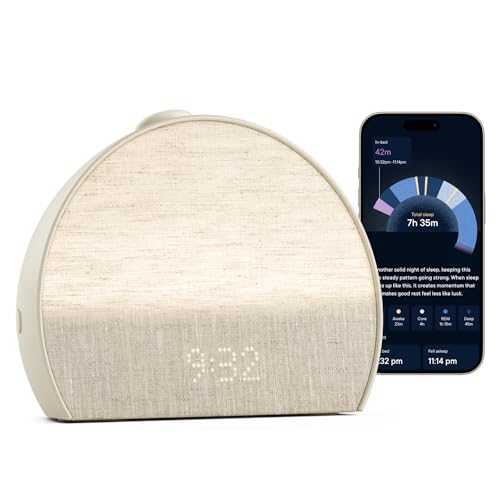
The putty finish offers a muted alternative to the warmer cocoa and cooler greige versions. It still combines a bedside sleep tracker, smart light, and sound machine, so the main decision comes down to visual character rather than a different operating approach.
I would choose it for an understated room where the bedside equipment should recede into the background. The honest limitation is that the finish does not reduce the connected setup or concentrate the device on basic alarm-clock duties.
The Value In It
- Combines bedtime lighting, sound, and sleep-tracking functions.
- Putty color creates a restrained, earthy bedside look.
Details To Watch
- The color changes the décor match but not the core feature set.
Where Its Shelf Belongs
I recommend the putty finish for sleepers who prioritize a subdued appearance and a multi-purpose bedtime setup.
Swap It Out When
The OnLyee Projection Alarm Clock is a stronger fit for sleepers who want the time projected overhead without a connected bedside ecosystem.
That bedside-light focus contrasts with the Acedeck 115dB Alarm, which is built around sheer output. The stated maximum of 115 decibels makes this a practical choice for heavy sleepers, shift workers, and students who routinely sleep through softer alarms.
Six alarm sounds give me some control over the tone, while two independent alarms and snooze cover different routines. I would treat maximum volume as a situational tool rather than the first setting, especially in a shared home.
What Makes Sense
- A 115dB maximum targets listeners who need strong audio.
- Six sound choices make it easier to find an effective tone.
- Two alarms and snooze support changing schedules.
Where It May Fall Short
- Maximum output conflicts with the quietest possible bedroom wake-up.
- Shared-room placement calls for careful volume control at peak hours.
Technical Highlights
Built For Heavy Sleepers
I recommend this alarm for heavy sleepers and shift workers who have little response to conventional bedside audio.
Not A Match When
The Hatch Sleep Clock, Cocoa Finish fits light-oriented sleepers better who prefer gradual bedroom illumination over maximum sound.
What to Prioritize Before Choosing a Gentle Alarm
Start with the waking stimulus
Light, sound, and a visible time are the three main paths into a gentler morning. I look for the stimulus that matches the sleeping environment: a dimmable display for a dark nightstand, projection for someone who stays under the covers, or smart lighting for a full wind-down routine. The Acedeck model takes the opposite approach with unusually high audio output, which can be useful but is not inherently gentle.
Match the display to the bed
A bedside clock must be readable without becoming a source of light. I pay attention to brightness control, display size, and whether the time can move beyond arm’s reach. The ALANAS clock provides four dimming levels, while the OnLyee model uses projection to place the time on a ceiling or wall. A small bedroom may favor the former; a sleeper who avoids reaching may appreciate the latter more.
Separate convenience from complexity
Two alarms, adjustable snooze intervals, and multiple repeat modes simplify shared or changing schedules. More involved connected features serve a different purpose, combining light, sound, and sleep tracking in one unit. I consider bedside space, setup effort, and which functions will actually be used before choosing the more elaborate design.
Check the practical fit
USB ports, display formats, weekday visibility, and clock placement influence daily use. Dual charging ports can reduce cable clutter, while 12- and 24-hour formats serve different preferences. For projected displays, I also check the available wall or ceiling area and the direction needed from bed.
Common Mistakes in Gentle Alarm Clock Choices
Mistaking loud for gentle
A higher sound level may wake someone reliably, but it does not create a gradual transition from sleep. I reserve strong audio for confirmed heavy sleepers or shift workers. Light, dimming, a visible time, and a controlled tone suit most people seeking a softer morning.
Comparing every function equally
A feature matters only when it solves a recurring problem. I avoid paying attention to a tracker, projector, or charging port that has no place in the intended routine. The strongest choice connects its specific feature to a real bedside habit.
What The Higher Tier Buys
The Case For Spending Up
Higher-tier models tend to combine more functions or refine a core capability, such as adjustable projection, finer display control, or a unified sleep-lighting system. The extra cost is more defensible when several features will be used regularly. For a simple bedside display, a dedicated dual-alarm clock can deliver the necessary function without added setup.
Frequently Asked Questions
What makes an alarm clock gentle?
A gentle alarm clock uses dim light, a visible time display, softer sound, or a gradual transition into the morning. I consider the environment as important as the clock, since brightness and volume affect the entire room.
Are ceiling projection clocks easier to read than bedside displays?
Ceiling projections can be easier to read without reaching or turning toward a nightstand. I would choose projection for a clearly visible ceiling or wall, while a bedside display remains more practical in a compact room.
Which alarm clock is best for heavy sleepers?
The Acedeck 115dB Alarm provides the highest stated output in this group. It is more appropriate for strong-audio needs than for a quiet bedroom, so I would consider lower settings and shared-room placement.
Do gentle alarm clocks need phone connectivity?
Connectivity becomes relevant when a clock includes tracked sleep data or app-based controls. A standalone digital or projection model avoids that setup, while the Hatch Sleep Clock functions are designed around a more connected bedside experience.
Is a smart light and sound machine different from an alarm clock?
A smart light and sound machine shapes the sleep environment, while an alarm clock directly signals the appointed wake-up time. I find the combined Hatch design useful when light, sound, and sleep tracking form one bedtime routine.
Final Thoughts
I find the ALANAS model most useful for shared bedrooms, the OnLyee model best for keeping the time overhead, and the Hatch finishes strongest for sleep-centered lighting and sound routines. The Acedeck alarm serves a different need entirely, using high audio output for people who do not respond to softer cues. The right choice comes down to the waking method that fits the room and the sleeper.