
A storm knocks out the refrigerator, lights, and internet connection, and a portable generator becomes the difference between managing a short outage and improvising for the evening. I evaluate the Honda’s portable gasoline option, three Generac standby systems, and two battery stations that offer quieter alternatives for homes without a fixed generator installation.
A Quick View Of The Lineup

Honda EU2200i Companion Generator
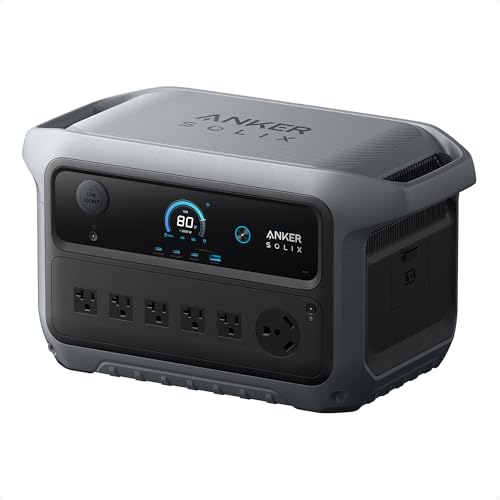
Anker SOLIX C2000 Gen 2 Station

BLUETTI Elite 200 V2 Solar Kit

Generac 22kW Standby Generator
Generac 26kW Standby Generator
Generac 24kW Standby Generator
Inside Each Recommended Option
At 46.5 pounds, the Honda EU2200i Companion Generator is the one portable gasoline unit in this group. Its 2,200-watt maximum output suits smaller emergency circuits rather than a full household load, and the inverter design provides steadier AC power for sensitive electronics. That is a materially different proposition from the Anker and BLUETTI battery stations, which need an electrical or solar recharge rather than stored gasoline.
For a household that needs a refrigerator, lights, and selected tools during a short outage, that portability is more useful than cabinet-sized standby capacity. Carrying 46.5 pounds is manageable for one adult, but fuel storage and safe refueling still need a plan. I would reserve this model for lighter emergency duty and move to Generac standby systems when automatic whole-home coverage matters.
The Practical Payoff
- Gasoline operation supports use where stored fuel is more practical than an electrical recharge.
- The 46.5-pound weight makes this more portable than a permanently installed system.
- Stable inverter output is better suited to electronics than an open-frame generator.
- A 2,200-watt maximum provides useful capacity for essential household equipment.
Practical Considerations
- Its output ceiling makes it unsuitable for several large appliances running together.
- Gasoline storage, ventilation, and refueling require a suitable outdoor plan.
Quick Facts
Made For
Portable gasoline power best serves households needing essential circuit support during moderate outages.
Another Choice May Suit
The Anker SOLIX C2000 Gen 2 Station suits households that prefer silent battery operation and have no gasoline-storage arrangement.
The Anker SOLIX C2000 Gen 2 Station changes the fuel decision entirely because it stores energy rather than generating it from gasoline. Its 2,048Wh battery capacity and 2,400-watt rated output cover many common household and camping loads, while the 9-watt standby draw is designed to preserve capacity during periods of limited use. That makes it a practical battery alternative to the Honda EU2200i Companion Generator.
Refueling is simpler because the unit can recharge from an AC outlet or compatible solar setup, with a full charge reported in 58 minutes under the specified conditions. The honest limitation is endurance: a battery cannot be replenished with gasoline during a prolonged outage, and expanded runtime requires additional equipment.
Features That Help
- The 2,400-watt rated output supports common household appliances and tools.
- Low 9-watt standby consumption is useful during extended periods of intermittent use.
- A dual-door refrigerator can run for up to 32 hours on one charge.
- An expansion battery can increase capacity to 4kWh and refrigerator runtime to 64 hours.
- AC and solar charging can return the unit to full capacity in 58 minutes under specified conditions.
Some Limits To Know
- Long outages depend on an electrical or solar recharge path because gasoline is not an option.
- The 58-minute charging result depends on compatible inputs and suitable charging conditions.
Key Attributes
Right Fit For
This station fits households and campers seeking portable electricity without gasoline storage or engine noise.
Swap It Out When
The Honda EU2200i Companion Generator is the stronger choice for locations where stored gasoline offers more dependable replenishment.
The BLUETTI Elite 200 V2 Solar Kit comes with more charging hardware than the Anker SOLIX C2000 Gen 2 Station, including two 200-watt solar panels. Its 2,073.6Wh capacity is similar, but the 2,600-watt continuous AC rating gives it a little more room for household appliances. That makes the kit especially practical for cabins, campsites, or a home managing short outages without a gas supply.
The panels can recharge the system in 5.5 hours when paired with the full 400 watts and suitable sunlight. A 3,900-watt power-lifting figure provides a short-duration surge allowance for demanding equipment, while support for up to nine connected devices broadens the number of supported products. Capacity numbers still matter more than device count.
Everyday Wins
- Two included 200-watt panels provide a renewable charging path away from an outlet.
- The 2,600-watt continuous AC output supports refrigerators, hair dryers, and coffee makers.
- Power lifting offers a brief surge allowance beyond the continuous rating.
- Up to nine devices can remain connected for a varied mix of daily needs.
Details To Watch
- The 5.5-hour solar recharge depends on strong sunlight and the complete 400-watt panel setup.
- The 3,900-watt surge allowance is not the same as sustained output.
- Supporting nine devices does not mean nine high-draw appliances can run together.
Who Will Love This
This kit suits outdoor-oriented households that value included solar equipment and a generous mixture of continuous and surge power.
Look Elsewhere When
The Anker SOLIX C2000 Gen 2 Station is a better fit for households prioritizing fast recharging and a lower standby draw over included panels.
Among the three Generac systems in this lineup, the Generac 22kW Standby Generator has the lowest listed output. A standby generator is permanently connected to the home and activates automatically when utility power fails, removing the manual starting and extension-cord arrangement required by a portable gasoline model. It is a different category of solution, not simply a larger Honda.
The included transfer switch and cellular capability support a permanently installed system with remote communication. The generator can operate from an existing LP or natural-gas supply and continue for as long as fuel remains. For a household that primarily needs essential circuits covered, 22kW offers a reasonable starting point, subject to a proper load calculation.
What Earns Its Place
- Automatic operation removes the need to carry or manually start a portable unit.
- The 22kW rating is suited to many moderate household load combinations.
- Transfer-switch and cellular functions support an installed home-power system.
Points To Note
- The unit requires permanent placement and a properly coordinated transfer switch.
- An existing LP or natural-gas supply is necessary for operation.
- Essential loads still need to be calculated before installation.
Technical Sheet
Built With In Mind
This model suits households prioritizing automatic outage response and a moderate whole-home capacity requirement.
Where A Sibling Pick Shines
The Generac 26kW Standby Generator provides more capacity for homes with heavier operating loads or several large appliances.
Moving from 22kW to the Generac 26kW Standby Generator adds 4,000 watts of listed capacity while preserving the same core standby arrangement. That extra headroom is most relevant to larger homes with multiple major loads, but wattage alone does not identify the right system. A list of expected loads gives the installation a more useful basis than a broad square-footage estimate.
Automatic activation removes the need to bring equipment outdoors during bad weather. LP or natural-gas service provides an established fuel route, while the transfer switch and cellular capability support a permanently installed configuration. Compared with the Honda EU2200i Companion Generator, this model trades portability for unattended operation and considerably greater home-power capacity.
Useful Strengths
- The 26kW rating is the highest listed output among these three standby systems.
- Automatic startup supports continuous household use during an outage.
- LP and natural-gas options use common household fuel supplies.
- Transfer-switch and cellular features support an installed, connected system.
Where It May Fall Short
- Permanent installation requires more space and setup than a portable generator.
- The additional 2kW over the Generac 24kW Standby Generator may not change the selected equipment for every household.
The Right Fit
This generator suits larger homes with a documented need for more standby capacity than the 22kW model provides.
Consider Something Else When
The Generac 22kW Standby Generator is a more proportionate choice for a home focused on essential circuits and moderate loads.
Between the 22kW and 26kW Generac systems sits the Generac 24kW Standby Generator, which offers a middle capacity without changing the basic installation concept. Automatic startup, transfer-switch integration, cellular capability, and LP or natural-gas operation place it firmly in the whole-home standby category. For many households, that middle position makes the sizing decision less extreme than choosing the smallest or largest option.
The 2,000-watt increase over the 22kW model provides additional room for operating loads, yet it remains 2,000 watts below the 26kW version. Actual appliance lists and startup requirements should determine the selection. This is a scenario where a slightly balanced headline rating can matter less than a clear load calculation.
Benefits That Matter
- Middle-position 24kW capacity sits between the two other listed Generac ratings.
- Automatic operation keeps essential circuits active without outdoor setup.
- Transfer-switch and cellular functions support a connected installed system.
Factors To Consider
- Installation requires permanent equipment and an appropriate transfer-switch arrangement.
- LP or natural gas must be available for continued operation.
- The difference from 22kW or 26kW depends on the household’s actual load profile.
Feature Snapshot
Best Suited To
This model suits households that want middle-range standby capacity with automatic activation and fixed fuel service.
A Better Fit Elsewhere
The Generac 26kW Standby Generator is the stronger option for homes with heavier loads or greater startup-power requirements.
What Matters Before Powering A Home
Match Output To The Load
I start by separating continuous output from surge power. Continuous output describes the level a unit can sustain, while surge power covers the brief extra demand created when equipment such as a refrigerator or air conditioner starts. Comparing both figures against the household’s appliances gives a more useful result than selecting by generator type alone.
Choose The Replenishment Path
Gasoline works well for portable equipment that can be stored and refueled away from an outlet. LP or natural gas suits a permanently installed standby system with an established fuel supply. Battery stations avoid both fuel arrangements, but their runtime depends on stored energy and access to an appropriate recharge source.
Decide Between Carry-In And Installed Power
A portable model offers flexibility and a lower installation commitment, with extension-cord placement and fuel handling as part of the routine. A standby system powers itself automatically and remains available during severe weather, but permanent placement, transfer-switch coordination, and fuel-service connections make installation a larger project. I compare those operating requirements before focusing on headline wattage.
Avoiding Common Power Mistakes
Mistakes Worth Dodging
Sizing a generator from its maximum headline number can hide the difference between steady output and startup demand. Another common error is overlooking the transfer switch or fuel connection, both of which shape the installation and operating plan.
What The Higher Tier Buys
Higher standby capacity can create room for more simultaneous household loads, but the increase only matters when a load calculation supports it. The real upgrade is often coordinated capacity, fuel service, transfer-switch integration, and automatic operation rather than a single wattage figure.
Frequently Asked Questions
Is a gas generator better than a battery power station during outages?
A gas generator offers extended operation when fuel is available, making it better suited to prolonged outages. A battery station is quieter and simpler to replenish from an outlet or solar panels, but its runtime depends on stored energy.
How much generator power does a home need?
Required power depends on the appliances expected to operate during an outage. Essential circuits may need far less than a full household, while HVAC, pumps, and other motor-driven equipment can require substantial starting power.
Can a portable generator run a whole house?
A portable generator can support selected household circuits through properly connected outlets. A standby system is the more appropriate choice for automatic whole-home operation and greater load coverage.
What is the difference among 22kW, 24kW, and 26kW standby systems?
The difference is listed power capacity, with 22kW at the low end and 26kW at the high end. The 24kW model occupies the middle, but appliance requirements should determine which capacity is appropriate.
Do standby generators need a transfer switch?
A properly coordinated transfer switch is a central part of a safe and functional standby installation. It manages the connection between utility power and generator-supplied circuits.
Final Verdict
I would choose the Honda EU2200i Companion Generator for portable, gasoline-powered emergency support and the Generac systems for automatic whole-home service. The Anker and BLUETTI stations fit households that value battery-based portability over extended gasoline operation. The right decision comes down to load size, refill method, and installation needs rather than headline capacity alone.