
A guitar stand should keep an instrument ready without taking over the room, yet the right support depends on how many guitars I own, where I play, and how much I move between rehearsals. I compare six options for home practice rooms, small stages, and dedicated music corners, with an emphasis on stability, padding, folding design, and practical storage.
An Overview Of The Picks

OnStage XCG4 Velveteen Guitar Stand 2-Pack

OnStage XCG4 Black Tripod Guitar Stand
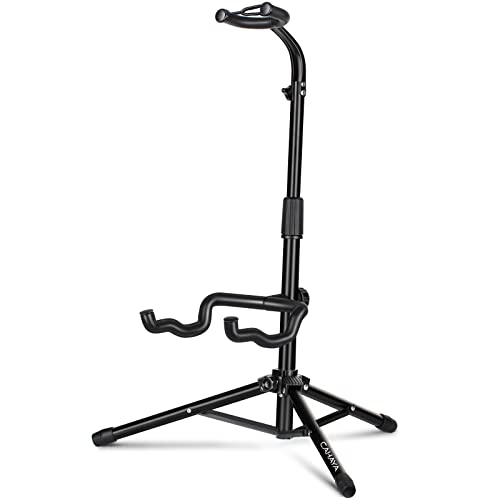
CAHAYA Folding Adjustable Guitar Tripod Stand

Espelism Multi-Guitar Rack Rustic Wood Top

Pyle 5-Slot Foldable Multi Guitar Stand

Alomejor Folding Universal A-Frame Guitar Stand
Meet The Standout Selections
Two stands matter in a busy practice room, where one guitar may be in hand while another is waiting for a lesson or rehearsal. The OnStage XCG4 Velveteen Guitar Stand 2-Pack gives me two padded tubular supports with a stepped lower yoke and an upper security strap, so a standard guitar can sit securely without resting directly on hard tubing.
Compared with the single OnStage XCG4 Black Tripod Guitar Stand, this set is the more practical choice for a home with two instruments. The velveteen covering adds a softer contact surface, which matters for players who handle a guitar frequently or want to reduce visible wear on the finish.
Real-World Strengths
- Two stands support separate instruments without requiring a larger floor footprint.
- Velveteen padding gives the frame a softer contact area for the guitar body and neck.
- The stepped lower yoke supports the instrument while keeping it away from the base.
- A security strap helps keep a guitar from being bumped out of position.
Small Caveats
- The tubular construction is intended for traditionally shaped guitars rather than unusual specialty instruments.
- Two stands occupy more floor space than one single-position tripod.
Feature Snapshot
Who It Suits Best
These two stands suit home players maintaining separate spaces for an acoustic and electric guitar, or anyone who wants a spare position ready for a second instrument.
Where Another Pick Suits Better
The CAHAYA Folding Adjustable Guitar Tripod Stand suits a musician who values a foldable design and a wider tripod footprint more than having two stands available immediately.
A single-position stand keeps the floor open while making one instrument immediately accessible. The OnStage XCG4 Black Tripod Guitar Stand uses an adjustable upper yoke and a swiveling lower yoke to accommodate traditional acoustic, electric, and bass shapes, while padding on both support points helps protect the finish.
Where the OnStage XCG4 Velveteen Guitar Stand 2-Pack focuses on two padded positions, this model focuses on one adaptable frame and a broad tripod base. That makes it a sensible center-of-the-room choice for a player who practices in a bedroom, apartment, or small studio and wants a stable place for a single guitar.
Everyday Perks
- The adjustable upper yoke allows the neck to be supported at different positions.
- A swiveling lower yoke gives the guitar room to settle into a natural resting angle.
- Wide tripod feet create a broad base for a single instrument.
- The padded contact points reduce the chance of the frame resting directly against the finish.
Points To Note
- It provides one instrument position rather than a multi-guitar storage arrangement.
- The design is aimed at traditionally shaped guitars, so unusual bodies deserve a compatibility check.
Built With In Mind
This tripod stand works well for a musician with one primary guitar who wants a straightforward, padded support for daily practice and informal sessions.
Another Choice May Suit
The Pyle 5-Slot Foldable Multi Guitar Stand is a better match for a player who needs five instrument positions in a shared rehearsal room.
The CAHAYA Folding Adjustable Guitar Tripod Stand makes sense for someone whose practice space changes often. Its umbrella-shaped frame folds for transport, yet the deployed version uses three metal support bars, extended legs, and anti-slip rubber feet to create a broad footprint for one guitar.
That is a different balance from the OnStage XCG4 Black Tripod Guitar Stand, which emphasizes padded yokes and a broad traditional tripod base. The CAHAYA model appears more useful when portability matters nearly as much as support, especially in a rehearsal room where the stand must be moved between corners.
A Favorable Mix
- The folding frame reduces the space required when the instrument is not in use.
- Three thick metal support bars add structure to the umbrella-style base.
- Extended legs create a wider stance for everyday floor support.
- Rubber feet help the stand grip the floor during practice.
Potential Compromises
- It is designed around one instrument, not a rack for a collection.
- The folded size may still be less convenient than a flat, wall-mounted arrangement for permanent storage.
Quick Facts
Made For
This folding tripod suits a mobile musician who practices in shared rooms, moves between locations, and prefers one sturdy instrument position over a larger rack.
Look Elsewhere When
The Espelism Multi-Guitar Rack Rustic Wood Top suits a player who wants several instruments displayed together and has room for a floor-standing storage unit.
Several guitars scattered across a room become easier to manage when they share one visible rack. The Espelism Multi-Guitar Rack Rustic Wood Top uses center slots for acoustic and electric guitars, side hangers for bass guitars, and foam padding on the metal frame to soften contact points.
Unlike the portable CAHAYA Folding Adjustable Guitar Tripod Stand, this is a floor unit for a dedicated music corner. Its 26-inch length, 12-inch width, and 47-inch height give the arrangement a noticeable presence, while the rustic wood top adds a display surface that separates it visually from a plain metal rack.
Useful Strengths
- Center slots organize acoustic and electric instruments in one place.
- Side hangers provide separate positions for bass guitars.
- Foam padding reduces direct metal contact with each instrument.
- The wood top creates a surface that can visually anchor the rack.
Where It May Fall Short
- Its 47-inch height and 26-inch length require a larger floor area than a single tripod.
- The rack is built for multiple instruments, so it is unnecessary for a single-guitar setup.
At A Glance
Right Fit For
This rack suits a home studio owner or serious practice-room user who keeps several guitars and wants them visible, accessible, and grouped in one location.
A Better Fit Elsewhere
The OnStage XCG4 Black Tripod Guitar Stand is the more restrained option for a musician with one guitar and limited floor space.
Stage corners and rehearsal rooms benefit from a rack that can hold several instruments while still collapsing for transport. The Pyle 5-Slot Foldable Multi Guitar Stand provides five positions for acoustic, electric, and bass guitars, using a heavy-duty metal frame and foam padding to support the instruments.
Its 29-by-19-by-25-inch footprint is more substantial than the single CAHAYA Folding Adjustable Guitar Tripod Stand, but the five-space layout serves a different purpose. I see this as a storage-oriented choice for a working musician who needs instruments organized near a rehearsal area and wants the rack to fold when the setup is finished.
Key Advantages
- Five positions keep a collection together instead of spreading instruments across the room.
- Foam padding cushions the contact areas where instruments rest.
- The metal frame provides a substantial structure for a multi-instrument arrangement.
- Foldable construction makes the rack easier to place away between sessions.
Less Ideal Details
- Five positions require enough open floor space for the full rack to remain deployed.
- The broad footprint is less convenient for a narrow bedroom corner than a single tripod.
Core Details
Who Will Love This
This stand suits a rehearsal-room user, teacher, or stage musician who regularly handles multiple guitars and values a foldable storage format over a single-position frame.
Reach For A Different Pick When
The Espelism Multi-Guitar Rack Rustic Wood Top is a better fit for a home display area where the wood surface and separate bass hangers matter more than folding portability.
A lightweight A-frame is useful for a musician who wants a simple support that can disappear into a corner or travel bag. The Alomejor Folding Universal A-Frame Guitar Stand uses ABS engineering plastic, soft silicone cushions at the contact points, and non-slip silicone feet for floor contact.
The folding shape makes it more portable than the Espelism Multi-Guitar Rack Rustic Wood Top and the Pyle 5-Slot Foldable Multi Guitar Stand, while the A-frame format is less elaborate than the tubular and tripod designs from OnStage. For a beginner or a player who practices in several locations, that simple profile is the central appeal.
What It Does Well
- The folding design reduces storage space when the stand is not supporting a guitar.
- Lightweight ABS construction supports portable practice setups.
- Silicone cushions soften the areas that touch the instrument.
- Non-slip feet help the frame remain planted on the floor.
Possible Compromises
- Plastic construction suits lightweight portability, while metal frames may feel more substantial for a permanent setup.
- It is intended for acoustic and electric guitar formats, so larger instrument dimensions deserve a check before purchase.
The Right Fit
This A-frame stand fits a beginner, student, or traveling musician who values a lightweight, foldable support for one guitar and simple floor storage.
Swap It Out When
The OnStage XCG4 Velveteen Guitar Stand 2-Pack is a better fit for a home setup that needs two padded positions at the same time.
What To Weigh Before Buying A Frame Guitar Stand
A frame guitar stand should match the number of instruments, the available floor space, and the type of guitar being supported. I start with capacity, because a single-position model offers a smaller footprint while a multi-guitar rack consolidates several instruments in one place.
Capacity and layout
A single tripod is usually easier to move between a bedroom, rehearsal room, and practice corner. Multi-guitar racks make sense for players who want instruments grouped together and accessible, but the wider frame needs a clear floor area. The Pyle 5-Slot Foldable Multi Guitar Stand and Espelism Multi-Guitar Rack Rustic Wood Top both address storage, though their layouts differ.
Stability and contact points
A broad base, extended legs, and non-slip feet help the stand remain planted during ordinary handling. Padding at the yoke or hanger matters for protecting the instrument’s finish, particularly for a guitar that is moved in and out frequently. A-frame plastic stands emphasize portability, while tubular and metal-frame models provide a more substantial visual and physical structure.
Folding and finish care
Folding designs are valuable for portable players and shared rooms, since the stand can be stored away after practice. I also check the yoke or hanger shape against the instrument body and neck. The OnStage models use padded yokes and security straps, while the Espelism rack separates center slots from side hangers for bass placement.
Key Considerations Across These Picks
Mistakes Worth Dodging
The most common mistake is choosing capacity before considering floor space, because a five-position rack can be inconvenient in a narrow room. Another error is focusing only on the frame material and overlooking the contact points, where a hard edge can mark a finish. I also check whether the stand folds and how the instrument sits before committing to a model.
What Separates Premium From Basic
A more elaborate stand earns its place through the combination of support structure, padding, and useful layout rather than through extra parts alone. Basic single-position frames cover the essential task, while multi-guitar models add organization and a broader storage footprint. The meaningful upgrade is the feature that matches the way I actually use my instruments.
Frequently Asked Questions
What type of frame guitar stand suits a small room?
A single folding tripod usually offers the easiest fit for a small room because it supports one instrument and can be moved or folded away. The CAHAYA Folding Adjustable Guitar Tripod Stand is designed around that combination of broad support and compact storage.
Can a guitar stand hold both acoustic and electric guitars?
Yes, a standard frame stand can support many traditional acoustic and electric guitar shapes. The OnStage XCG4 Black Tripod Guitar Stand specifically accommodates traditional acoustic, electric, and bass designs, while the Alomejor Folding Universal A-Frame Guitar Stand is listed for acoustic and electric guitars.
Which stand is best for storing several guitars?
A multi-guitar rack is the practical choice when several instruments need dedicated positions. The Pyle 5-Slot Foldable Multi Guitar Stand holds up to five instruments, while the Espelism Multi-Guitar Rack Rustic Wood Top separates standard guitars from bass hangers.
Do padded contact points matter?
Padded contact points help reduce direct contact between the stand and the instrument finish. They are especially useful in a high-traffic practice area where a guitar is repeatedly placed on and removed from its support.
Is a folding guitar stand easier to store?
A folding stand takes up less room when it is not in use, which helps in shared rooms and small homes. The Alomejor Folding Universal A-Frame Guitar Stand and CAHAYA Folding Adjustable Guitar Tripod Stand both prioritize a collapsible format.
Final Thoughts
The right frame guitar stand depends less on the label and more on the room, instrument count, and movement involved. Single positions suit focused practice, folding tripods handle mobile setups, and multi-guitar racks serve organized homes and rehearsal spaces. I would choose padding and stability for daily use, then confirm that the stand’s footprint fits the intended corner before making a decision.