
A bicycle lying across a garage floor turns usable space into obstacle course. I considered six vertical racks for apartments, garages, sheds, and homes shared by several cyclists, focusing on frame protection, installation demands, storage capacity, and how each design handles different bike shapes.
The Leading Options At A Glance

Swagman Stow It Wall-Mounted Bike Rack

Kificet 4-Bike 3-Tier Garage Storage Rack

VuvuVoda Wall-Mount Bike Rack

Ultrawall Freestanding Bike Rack

Swagman Stand It Vertical Bike Stand
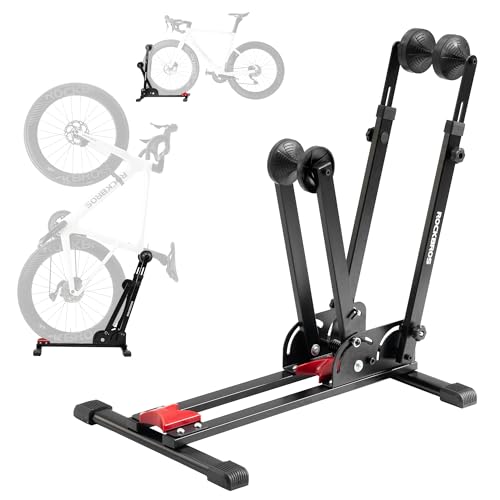
ROCKBROS 2-in-1 Adjustable Bike Stand
The Strengths Of Each Pick
The Swagman Stow It stands out through its contact geometry. Instead of relying on a single wheel-hanging point, it adds a third contact that helps keep the rim away from the supporting surface.
The pivoting design also lets a stored bike sit closer to the wall. In a compact garage, that movement can make access easier without turning a row of bicycles into a wall-mounted tangle.
Where It Helps
- Third-point contact reduces direct pressure on the rim.
- Left-right pivoting improves access in narrow rooms.
- Wall mounting keeps the floor clear for everyday movement.
Things To Consider
- Wall strength and mounting position require attention before installation.
- Multiple-bike clearance depends on the available wall width.
Core Details
Built With In Mind
Households storing lighter bikes in a narrow garage will appreciate the rim-conscious contact and pivoting access most.
Where Another Pick Suits Better
The Kificet 4-Bike 3-Tier Garage Storage Rack suits households that need four bike positions and shelves for helmets and other equipment.
Where the Swagman focuses on a single bicycle and careful contact, the Kificet treats storage as a larger system. It combines four bicycle positions with three elevated tiers for helmets, shoes, bags, and sports equipment.
Its adjustable slots measure 4.1, 2.5, 1.9, or 1.6 inches, giving the stand some flexibility across road bikes, mountain bikes, e-bikes, children’s bikes, and fat-tire models. For me, that versatility is the central appeal.
Key Advantages
- Four bike positions support a varied household fleet.
- Three tiers turn open shelving into usable equipment storage.
- Adjustable slot widths accommodate several bike types.
- Hooks provide hanging points for bags and rackets.
- Vertical organization keeps floor space available for other gear.
Minor Gripes
- The larger footprint requires more clearance than a single-bike wall rack.
Feature Snapshot
Made For
Active families and garage-based cyclists benefit most from the combination of four bike spaces and built-in equipment tiers.
Consider Something Else When
The Swagman Stow It Wall-Mounted Bike Rack is a better fit for a single-bike space where rim protection and pivoting access matter more than shelving.
The VuvuVoda Wall-Mount Bike Rack takes a direct approach to floor space. A bike hangs from the wall, leaving the area beneath available for shoes, bags, or a maintenance area in an apartment or shed.
The rotating single-piece construction can change the bike’s orientation, depending on the mounting position. That rotation may prove useful in a tight room, although the rack remains less accommodating than a four-bike station with dedicated shelves.
Everyday Advantages
- Wall mounting releases valuable floor space.
- Rotating construction adds positional flexibility.
Practical Considerations
- The wall must accommodate the mounted bicycle’s full height and width.
- Handlebars, baskets, and other accessories require a clearance check.
- Bikes are limited to 50.6 pounds under the stated capacity.
Right Fit For
Apartment residents and shed owners with one moderately weighted bike will find this a practical space-saving option.
Another Choice May Suit
The Swagman Stand It Vertical Bike Stand suits spaces without suitable wall mounting points because it operates entirely from the floor.
The Ultrawall Freestanding Bike Rack removes both the wall and ceiling from the installation equation. Its steel frame, five welded hooks, four wheels, and stabilizing foot pads make it a movable option for garages that lack practical mounting space.
Each hook supports up to 70 pounds, which gives the rack more capacity than several lighter stands. I would still measure the parked bikes together, since five occupied positions can consume considerable length.
What Works In Its Favor
- Five welded hooks organize several bikes in one frame.
- Four wheels make repositioning easier within a garage.
- Foot pads provide a stationary alternative to rolling.
Factors To Consider
- Freestanding placement still requires a suitable floor area.
- Wheels and foot pads mean the rack occupies more space than a simple wall hanger.
- Hook spacing should be checked against wider handlebars.
Technical Highlights
Who Will Love This
Multi-cyclist households needing substantial capacity and mobile storage will appreciate the steel frame and five-hook layout.
A Better Fit Elsewhere
The Kificet 4-Bike 3-Tier Garage Storage Rack offers more dedicated equipment shelving for households organizing more than bicycles.
The Swagman Stand It is built for a simple decision: keep the bicycle upright without attaching hardware to a wall. Its seatpost support, adjustable height, and freestanding base make setup straightforward in apartments, garages, and sheds.
Compared with the Ultrawall’s five-bike steel system, this stand concentrates on fewer bicycles and a smaller freestanding footprint. I see it as especially useful for one bike that needs a protected parking position near an entry or workbench.
Well-Handled Touches
- No-drill setup avoids permanent wall changes.
- Height adjustment supports bikes of different sizes.
- Seatpost support keeps the bicycle upright.
- The freestanding base works in temporary or shared spaces.
Points To Note
- Seatpost diameter and bike weight should be checked before parking.
The Right Fit
Renters, apartment residents, and cyclists with one frequently used bike will value the drill-free, vertical arrangement.
Swap It Out When
The Ultrawall Freestanding Bike Rack fits households that need five positions and a wheeled steel frame rather than a single vertical stand.
The ROCKBROS 2-in-1 Adjustable Bike Stand can hold a bicycle vertically or horizontally, giving the same stand a different role as the available space changes. Vertical parking preserves floor area, while horizontal placement gives more room to bikes carrying baskets, fenders, or other accessories.
The frame adjusts for wheel sizes from 20 to 29 inches and folds down to 21.45 by 15.75 by 5 inches. That flat profile makes it easier to place behind a door, along a wall, or inside a storage cabinet.
Real Benefits
- Two storage orientations suit changing floor-space needs.
- Adjustment covers common 20- to 29-inch wheel sizes.
- The folded frame reduces storage bulk.
Possible Compromises
- Horizontal mode occupies more floor length than vertical parking.
- Accessories may require careful clearance in either orientation.
Quick Facts
Best Suited To
Cyclists with racks, baskets, or fenders will appreciate the option to switch from vertical parking to horizontal support.
Where A Sibling Pick Shines
The Swagman Stow It Wall-Mounted Bike Rack suits garages where wheel-rim protection and pivoting clearance matter more than foldable storage.
What Matters Before Committing to Vertical Storage
Wall clearance and installation
Wall-mounted racks make the most sense where the bicycle can hang without striking a door, shelf, or parked vehicle. I also check the complete outline of the bike, including handlebars and pedals, rather than measuring only the wheel.
Storage capacity beyond bike count
Capacity is more than a number of hooks. The Kificet adds tiers for helmets, footwear, and bags, while single-bike designs concentrate on preserving a particular wall or floor area.
Bike shape and weight
Rack geometry should match the bicycle being stored. The Swagman Stow It emphasizes rim-conscious contact, the ROCKBROS stand accommodates common wheel sizes, and the Ultrawall rack lists a 70-pound limit per hook.
Mobility and permanence
Freestanding racks avoid wall modification but require floor space. The Ultrawall adds wheels for repositioning, while the Swagman Stand It provides a lighter, more compact vertical option for temporary or shared environments.
Practical Decisions Behind These Picks
Mistakes Worth Dodging
Measuring only the rack instead of the complete bicycle can leave no room for handlebars or pedals. I also compare the storage orientation with the actual routine, since horizontal parking consumes more floor length while vertical storage can require more overhead clearance.
What Separates Premium From Basic
A higher-tier rack often adds stronger materials, higher load limits, adjustable geometry, or storage beyond the bicycle. The extra capability is worthwhile for heavier bikes, multiple riders, or equipment-heavy households, while a single lightweight bicycle may need only a simple vertical support.
Frequently Asked Questions
Can floor-to-ceiling bicycle racks work in an apartment?
Yes, particularly the freestanding or foldable models that require no wall drilling. The Swagman Stand It and ROCKBROS stand are the most relevant options for temporary or compact living spaces.
Which rack holds several bicycles?
The Kificet stores four bicycles with three equipment tiers, while the Ultrawall provides five welded hooks in a freestanding steel frame. Floor dimensions and bicycle width should be checked before either arrangement is chosen.
Are wall-mounted racks better for narrow garages?
They can be, provided the wall has enough clear width and the bicycles do not interfere with one another. The Swagman Stow It adds a pivoting movement designed to improve access in a confined area.
What capacity is needed for an e-bike?
Weight matters more than wheel size because an e-bike can exceed the limits of lighter stands. The Ultrawall lists up to 70 pounds per hook, making its stated capacity a useful starting point for heavier bicycles.
Can a vertical bike rack hold accessories?
Accessories need adequate clearance in the selected orientation. The ROCKBROS stand offers horizontal parking for bikes with baskets or fenders, while the Kificet includes tiers and hooks for separate equipment.
Final Verdict
I would choose the Swagman Stow It for careful single-bike wall storage, the Kificet for a full garage organization station, and the ROCKBROS for adaptable, foldable storage. The best choice comes down to the available space, bicycle weight, and how much equipment needs a home of its own.