
A toilet that keeps running or refills slowly can turn a small repair into a frustrating plumbing project. You may be replacing a failed valve, working around mineral buildup, or trying to fit a narrow tank without removing the entire toilet. These six options cover exact replacements, universal assemblies, quiet fills, and a specialized pressure-assisted repair.
The Main Contenders
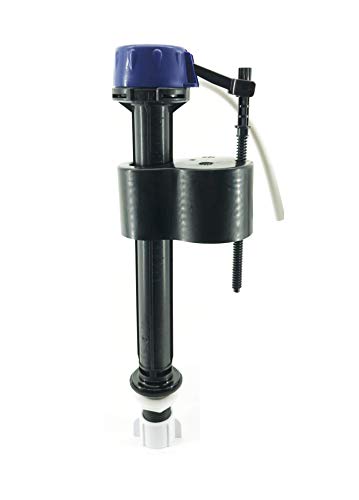
WDI AquaSource 1.28 GPF Fill Valve for Select Toilets
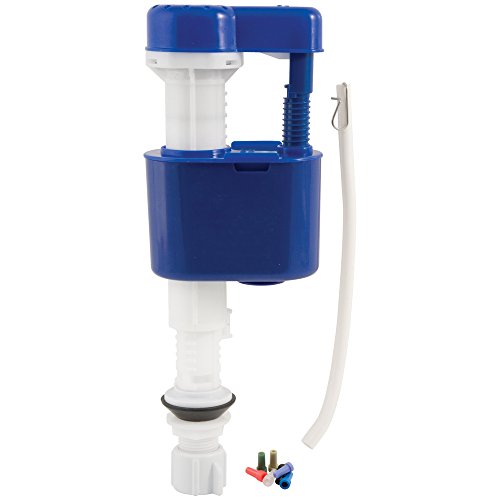
PlumbCraft 7030911 Quick Shut-Off Adjustable Anti-Siphon Fill Valve Assembly

Fluidmaster PRO400UK Plastic Inlet Fill Valve

WDI B3260 Universal Fill Valve

EcoFlush B8106-03 Flush Valve Cartridge
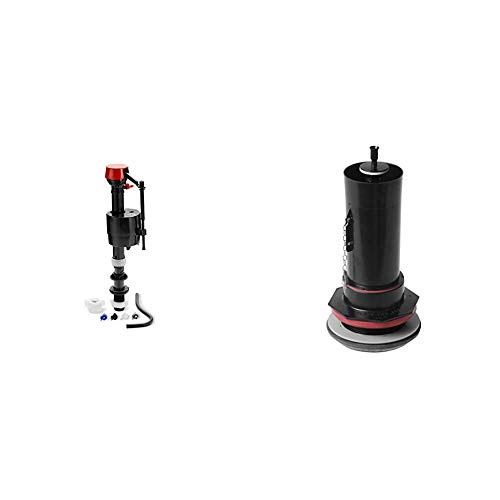
Kohler Class Five GP1083167 Silent Fill and 1069722 Flush Valve Kit
A Breakdown Of The Leading Choices
Replacing the valve in a 1.28-gallon-per-flush AquaSource toilet calls for accuracy before adaptability. This WDI-made replacement targets Lowes AquaSource models 98923, 312795, 352027, 395280, and 12293, including the original Lowes part number 710011 and WDI number B3834.
That model-specific approach makes more sense than forcing a universal valve into a tank whose original parts you already know. The package contains the fill valve, refill tube, cone washer, and coupling nut, so a basic replacement can proceed without hunting separately for each small fitting.
What Helps Most
- Direct model matching reduces uncertainty during a repair.
- Replacement parts arrive together in one package.
- Meets stated US and Canadian plumbing standards.
Practical Considerations
- Compatibility is limited to the listed AquaSource models.
- Confirm the tank’s model or part number before ordering.
Quick Facts
The Right Fit
This option suits you when your toilet tank carries one of the listed AquaSource model numbers and you want a model-specific replacement.
Another Choice May Suit
PlumbCraft 7030911 suits you better when you need an adjustable assembly rather than a valve matched to a specific AquaSource model.
A tank that continues running deserves a valve with an accessible shutoff and enough adjustment to suit the installation. PlumbCraft 7030911 combines an adjustable assembly with a refill tube, attachment hardware, and flow adjustment tips, giving you the main pieces needed for a residential replacement.
The height adjusts from 8 to 13 inches after installation, which offers useful positioning freedom in a standard tank. Its anti-siphon design helps prevent tank water from entering the potable water supply, a meaningful distinction from a basic mechanical fill valve.
Notable Gains
- Quick shutoff gives you direct control of the water supply.
- Post-installation height adjustment supports different tank layouts.
- Anti-siphon protection separates it from a basic float valve.
- Instructions and required fittings are included.
Trade Offs
- Measure the tank and water connection before choosing this adjustable assembly.
Technical Sheet
Made For
This assembly fits first-time repairers and homeowners handling a conventional toilet tank where adjustable height and simple water control matter most.
Where A Sibling Pick Shines
WDI B3260 is the better match for a small tank because its diameter stays below 2.5 inches and its height range covers many restricted installations.
A noisy fill can be especially noticeable in a half-bath or a bedroom close to a shared wall. The Fluidmaster PRO400UK uses a bottom-entry float valve, meaning the inlet enters beneath the tank rather than through its side, and its quiet-fill design targets smoother refilling.
The 1/2-inch brass shank accepts the usual connection size while the body is made from plastic. Height adjustment from 9 to 14 inches gives this assembly more vertical range than the PlumbCraft 7030911, though the bottom-entry layout still needs adequate space beneath the valve.
Good Reasons To Consider
- The bottom-entry arrangement suits tanks with an accessible underside.
- The quiet-fill design addresses distracting refill noise.
Where It May Fall Short
- The taller adjustment range can create clearance concerns beneath a float cup.
- The plastic body differs from the metal valve body in the AquaSource replacement.
- Verify that the 1/2-inch inlet matches your toilet’s supply connection.
Who Should Grab It
This valve suits you when tank noise bothers you and the underside of the tank offers enough room for a bottom-entry installation.
Reach For A Different Pick When
WDI AquaSource 1.28 GPF Fill Valve suits you more closely when you already know the exact original AquaSource model and need a direct replacement.
Older toilets often have more generous tanks, while compact modern models can leave very little room around the fill valve. The WDI B3260 addresses that space problem with a body under 2.5 inches wide and an adjustable height from 8.25 to 12.25 inches, measured from the tank floor.
Its self-cleaning design is intended to resist sediment and mineral deposits in hard or dirty water, while operation across low and high pressure settings adds flexibility. The stated installation time of approximately five to ten minutes makes this a practical option for a familiar one-valve replacement.
Notable Upsides
- The narrow body fits restricted tank layouts.
- One adjustment covers an 8.25-to-12.25-inch height range.
- Self-cleaning construction targets mineral and sediment buildup.
- Low- and high-pressure operation broadens compatibility.
- Universal design suits many modern and older toilets.
Points To Note
- Measure the tank because “most toilets” does not describe every unusual installation.
Feature Snapshot
Built With In Mind
This universal valve suits you when the existing model is unknown or the tank has limited clearance around the fill assembly.
Consider Something Else When
Fluidmaster PRO400UK suits you better when a bottom-entry layout and a 9-to-14-inch height range match your tank more closely.
This is the one option in the group that repairs a flush valve rather than replacing the tank’s fill valve. The EcoFlush B8106-03 is a cartridge for pressure-assisted EcoFlush units, including the B8104, B8106, B8106S, B8105, and B8204 series, so it serves a very specific type of toilet.
Replacing the cartridge can address a sluggish flush, continuous running, rim seepage, incomplete waste clearance, or a sticking valve without replacing the entire pressure vessel. Top-access installation and a removal tool make the swap more approachable for an experienced DIYer or a plumber.
Real Benefits
- Targets several common pressure-flush malfunctions without replacing the full unit.
- The kit includes seals, a removal tool, and instructions.
- Top-access installation limits the need for extensive tank disassembly.
Potential Compromises
- It does not replace a conventional tank fill valve.
- Your existing EcoFlush model number must match the listed series.
- Its compatibility is narrower than that of a universal fill valve.
Whose Shelf It Belongs On
This cartridge belongs in your repair plan when your toilet uses a listed EcoFlush pressure-assisted system and the complete unit still functions properly.
Skip It When
WDI B3260 is the better fit for a conventional toilet that needs a general-purpose fill valve rather than a pressure-flush cartridge.
Matching components can make a Kohler repair feel much more coherent than combining pieces from unrelated systems. This kit pairs the GP1083167 silent fill component with the 1069722 canister flush valve for Kohler Class Five and Wellworth toilet applications, depending on the exact installation.
The silent fill is the centerpiece for a shared bathroom or overnight household, where the sharp sound of a conventional refill can become surprisingly disruptive. The included flush valve also brings the refill and flushing functions together, which is useful when both worn components need attention.
What Works In Its Favor
- Quiet filling reduces the most noticeable sound during a refill cycle.
- The combined kit can address both fill and flush components together.
Factors To Consider
- Compatibility is centered on specified Kohler systems.
- Check the existing toilet and part numbers before ordering.
- The kit may include more than you need for a single fill-valve repair.
Core Details
Made For
This kit suits you when your toilet is a compatible Kohler system and quiet filling is a priority in a frequently used bathroom.
A Better Fit Elsewhere
WDI B3260 suits you better when you want a universal fill valve and the toilet is not part of the specified Kohler system.
Matching the Valve to Your Toilet Repair
A fill valve controls how water enters and stops at the proper level in a toilet tank. Start with compatibility, because a model-specific part can be easier to trust than a universal assembly, while a universal design can solve an unidentified or unusual installation.
Confirm the toilet and part numbers
Read the label inside the tank or locate the manufacturer’s model information before ordering. The WDI AquaSource option is a direct choice for five listed toilet models, while the EcoFlush B8106-03 serves a different pressure-assisted category altogether.
Check the available tank space
Measure the vertical clearance from the tank floor and note the direction of the water connection. A bottom-entry valve needs room beneath the tank, and a side-entry assembly needs accessible space beside the float cup. The WDI B3260 offers a compact body for restricted tanks, but dimensions still deserve a quick comparison.
Decide which functions need attention
A conventional fill valve controls the incoming water level. A flush valve releases water during flushing, and a pressure-assisted cartridge can address an entirely different failure. Matching the part to the symptom prevents you from replacing a working component while leaving the actual problem in place.
Consider noise and water conditions
Quiet-fill designs help in bedrooms, guest baths, and apartments where refill noise carries easily. Mineral-resistant or self-cleaning features also matter in areas with hard water or sediment, although connection size and tank clearance remain the first compatibility checks.
Lessons Before Opening the Tank
Common Shopping Slip Ups
The most common mistake is buying from a vague product category instead of matching the toilet model and part number. A flush cartridge cannot replace a standard fill valve, and an adjustable universal valve still has connection and clearance limits. Measure the tank and inspect the existing hardware before choosing.
What Separates Premium From Basic
Premium assemblies may add quiet operation, anti-siphon protection, broader adjustment, or coordinated fill and flush components. Those extras help most in frequently used bathrooms, hard-water locations, and older toilets with limited space, while a precise model-match replacement can be the sensible choice for a straightforward repair.
Frequently Asked Questions
How do you know which fill valve your toilet uses?
The most reliable starting point is the model number on the toilet or tank. Part numbers, inlet position, height, and connection size can narrow the choice, and an exact model match is preferable to relying on a universal label alone.
Can you replace a fill valve without replacing the toilet?
Yes, a compatible fill valve can usually be replaced while leaving the toilet in place. Shut off the water, flush the tank, disconnect the old assembly, and compare the new valve’s dimensions and connection before installation.
Is a universal toilet fill valve easier to install?
It can be, especially when the original model is unknown. The trade-off is more compatibility checking, since adjustable height, tank clearance, and connection size must all work together.
What is an anti-siphon fill valve?
An anti-siphon fill valve is designed to reduce the chance that tank water is drawn into the potable water supply. It provides a distinct advantage over a basic float valve in suitable installations.
Should you replace the fill valve or the flush valve?
Replace the fill valve for running water, slow refilling, or a tank that does not stop filling. Investigate the flush valve for a weak flush, continuous draining, or a flush component that remains open.
Closing Remarks
The right valve depends less on general reputation than on the toilet in front of you. Match the model and part numbers first, measure the tank, then choose based on connection style, clearance, noise, and the specific component that needs repair. A careful compatibility check is the shortest path to a cleaner result.