
A powder room rarely has enough space for a full-size toilet, while a basement bath may need a system capable of moving waste beyond the reach of ordinary plumbing. The options below cover two distinct needs: compact dual-flush fixtures and macerating systems that use a pump to send waste through difficult plumbing routes. Your floor plan, drain layout, and required pumping reach matter more than the label on the box.
The Leading Options At A Glance

WinZo WZ5089WB Compact Dual Flush Toilet, 23 Inch
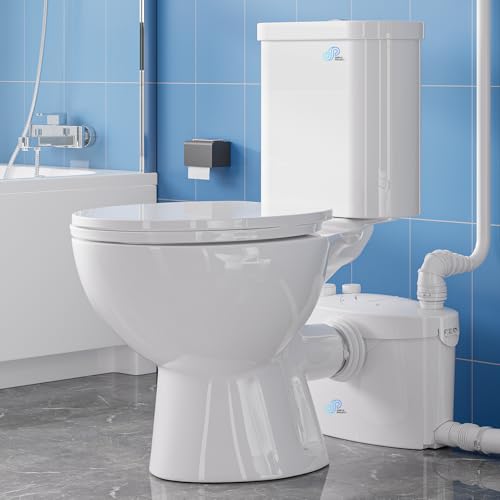
Simple Project 750W PRO Toilet

Simple Project 600W Toilet
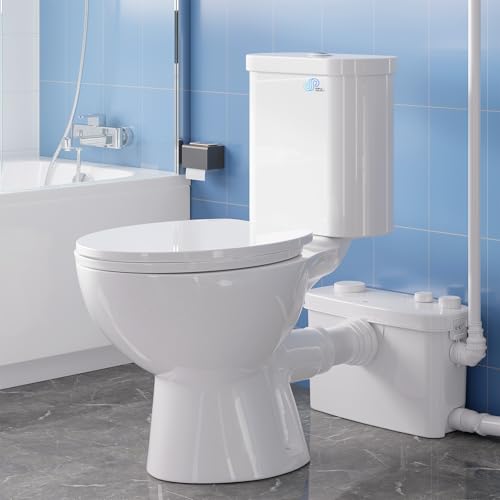
Simple Project 500W 4-Inlet

Simple Project 1000W Toilet

Simple Project 600W Toilet System
Meet The Standout Selections
A 23-inch projection changes what fits inside a tight bathroom. The WinZo WZ5089WB extends 23 inches from the wall, making it a practical fit for a small powder room, child’s bathroom, or RV space where a deeper fixture would crowd the doorway.
Unlike the macerating systems later in the list, this model uses a conventional floor-mounted design with a top-mounted dual-flush button. It also has a standard 16-inch seat height and a 12-inch rough-in, so measuring the room is essential before the fixture arrives.
Bright Spots
- The short 23-inch body preserves valuable clearance in narrow bathrooms.
- Dual flush settings use 0.8 or 1.6 gallons per flush, averaging 1.28 gallons.
- Nozzle-based bowl flushing directs water around the bowl and away from rim openings.
- A quick-release, soft-closing seat supports routine cleaning and maintenance.
Worth Noting
- The 12-inch rough-in and 23-inch depth must both work with your existing room.
- Standard-height seating offers less lowering clearance than a comfort-height fixture.
Feature Snapshot
Made For
You benefit most from this model in a compact powder room with a 12-inch rough-in and a standard-height seat preference.
A Better Fit Elsewhere
The Simple Project 750W PRO Toilet suits a basement bathroom where a pump is needed to move waste beyond a gravity drainage route.
A macerator toilet is most useful where gravity-fed waste lines cannot cover the distance from the fixture to the sewer connection. The 750W motor and stainless-steel grinder blades give this model substantial pumping capability, with listed reach of 360 feet horizontally and 36 feet vertically.
Four water inlets let a basement bathroom share the system with a shower, sink, or another fixture. That flexibility makes this a better fit for a finished basement suite than a conventional toilet tied closely to the existing drain slope.
Real-World Strengths
- The 750W motor is suited to substantial pumping and grinding demands.
- Stainless-steel blades add durable cutting contact for incoming waste.
- Four inlets reduce the number of separate waste lines in a basement bath.
- The listed pumping reach provides flexibility for remodels below the main level.
Practical Considerations
- Your drain route still needs adequate slope, even though the pump handles the horizontal run.
- Basement installation involves electrical, venting, and waste-line connections that need careful planning.
- This system is substantially more involved than the compact WinZo fixture.
Who It Suits Best
You benefit most from this model when adding a basement bathroom with several fixtures and a long or elevated waste route.
Another Choice May Suit
The WinZo WZ5089WB Compact Dual Flush Toilet is easier to place in a small powder room because it needs no macerating pump or extension pipe.
Shared basement bathrooms create a familiar problem: the toilet, shower, and sink all need to reach the available drain line. This 600W macerating system approaches that issue with four water inlets, allowing several bathroom fixtures to connect to the same pumping arrangement.
The rear-outlet configuration and description as a silent system make it interesting for finished rooms where pump noise would be noticeable. Compared with the 750W PRO model, it uses less nominal motor power, yet the four-inlet layout remains the more important feature for many basement additions.
Strong Points
- Four inlets support a coordinated basement bathroom layout.
- The 600W motor offers a practical middle ground between the 500W and 750W options.
- Silent operation is a useful consideration for occupied rooms and home offices nearby.
Where It May Fall Short
- The 600W rating sits below the 750W model for applications with especially demanding pumping needs.
- The pump and multiple inlet connections call for more installation planning than a standard toilet.
Best Suited To
This model fits you best in a shared basement bathroom where quiet operation and several connected fixtures matter more than maximum motor power.
Where Another Pick Shines
The Simple Project 750W PRO Toilet offers a higher motor rating and longer listed pumping reach for a more demanding waste route.
Not every basement bathroom needs the largest motor available. This 500W macerating system combines four water inlets with a listed 1.6-gallon-per-flush flushing volume, making it a sensible middle option for rooms serving a toilet plus a sink or shower.
The included extension pipe supports routing the system beyond the immediate fixture location. Its described silent design also makes more sense in an occupied space than a setup that places motor noise beside a bed, desk, or sitting area.
Useful Highlights
- A 1.6 GPF flush provides a defined water volume for routine use.
- Four inlets support shared bathroom waste lines.
- The extension pipe adds routing flexibility during installation.
- The system is described as a quiet upgrade for finished basement rooms.
Points To Keep In Mind
- The 500W motor is the lowest rated among the macerating systems listed here.
- You still need to confirm that the pipe route and fixture placement suit the room.
Quick Facts
The Right Fit
You benefit most from this system in a compact basement bath with several fixtures and a straightforward pumped drain route.
Consider Something Else When
The Simple Project 600W Toilet System suits you better when a longer horizontal run or greater vertical lift is required.
Some installations place the waste line farther away or require a higher lift than a standard basement fixture can manage. The 1000W motor in this rear-outlet macerating system gives you more nominal power than the 500W, 600W, and 750W alternatives, while its listed pumping reach extends up to 40 feet.
An extension pipe and four water inlets support flexible routing and shared fixtures. That makes this a serious option for a basement suite with several plumbing points, although the added power does not remove the need for correct pipe sizing, venting, and drainage design.
Advantages To Know
- The 1000W motor offers the highest nominal rating in this group.
- Four water inlets accommodate a multi-fixture basement layout.
- The extension pipe helps create a more workable waste route.
- Its described quieter operation suits completed living spaces.
Some Limits To Know
- Power alone does not establish suitability; route length, pipe diameter, and lift still need checking.
- This larger-capacity approach requires more complex plumbing than a conventional floor-mounted toilet.
Built With In Mind
This system fits you best when a basement remodel has a demanding waste route and several fixtures to connect.
Reach For A Different Pick When
The Simple Project 750W PRO Toilet is a better fit for projects whose route needs the longer horizontal and vertical reach stated for that model.
A one-piece macerating system can simplify the look of a basement bathroom while moving waste to a more distant drain connection. The 600W motor here has a listed reach of 295 feet horizontally and 30 feet vertically, giving you a generous routing window in many below-grade installations.
Three water inlets allow connections from a sink, shower, or laundry fixture. Compared with the four-inlet alternatives, that limitation matters only when your bathroom genuinely has multiple waste sources that need to share the system.
The Practical Payoff
- The 600W pump supports substantial horizontal and vertical travel.
- Three inlets cover several common basement bathroom fixtures.
- The one-piece body gives the installation a streamlined appearance.
- Long listed pumping reach reduces pressure to place the toilet beside the main drain.
Trade Offs
- Three inlets offer less connection flexibility than the four-inlet systems.
- Basement installation still requires careful attention to waste-line slope and venting.
Technical Highlights
Who Will Love This
You benefit most from this system in a standard basement addition with a long drain run and up to three shared fixture connections.
A Better Fit Elsewhere
The Simple Project 750W PRO Toilet suits you better when the installation needs greater motor power and the longest listed reach.
What to Match Before You Buy a Water-Saving Toilet
Start with the drain route
A compact gravity toilet depends on a suitable floor flange, drain slope, and clearance from the wall. A macerating system adds a pump, so you also need to map the discharge pipe, electrical connection, vent arrangement, and required lift before choosing a fixture. Measure first, then select the plumbing approach.
Match the flush design to the water goal
Dual-flush controls provide separate choices for lighter and fuller flushing needs. The WinZo WZ5089WB uses 0.8 and 1.6 gallons per flush, with a 1.28-gallon average, while the macerating systems focus their stated water figures on full-flush operation. Compare the actual control design rather than assuming every toilet on this list behaves the same way.
Check clearance and fixture connections
The WinZo model needs a 12-inch rough-in and projects 23 inches from the wall. The macerating toilets depend more heavily on pipe routing, inlet count, and available pump reach. A room with several sinks or showers may justify four inlets, while a single-fixture arrangement can work with a simpler layout.
The Details That Shape a Toilet Purchase
Pitfalls Shoppers Hit
The most common mistake is treating a short toilet and a macerating toilet as interchangeable. One solves a room-size problem, while the other solves a waste-routing problem. Measure the bathroom, check the rough-in, and map the drain before deciding which mechanism fits.
Where The Extra Money Goes
A higher-capacity macerating model can add motor power and reach, but those specifications only matter when your plumbing route demands them. A smaller 500W system may be more sensible for a short basement run, while a 1000W model earns its place when lift or distance is the harder problem.
Frequently Asked Questions
Are all six options dual-flush toilets?
No. The WinZo WZ5089WB is the dual-flush model here, with 0.8 and 1.6 GPF settings. The other five are macerating systems designed to pump waste through difficult drainage routes.
How much water does the WinZo toilet use?
The WinZo WZ5089WB uses 0.8 gallons per flush for the lighter setting and 1.6 gallons for the fuller setting. Its stated average is 1.28 gallons per flush.
Can a macerating toilet work without conventional plumbing?
A macerating system can extend the usable range of a basement waste route, but it still needs a properly configured discharge pipe and vent. A plumbing professional should confirm that the route, slope, and connection point are suitable.
How do you choose between macerating systems?
Start with horizontal distance, vertical lift, and the number of fixtures sharing the system. Motor power is another consideration, with choices here ranging from 500W to 1000W, but route dimensions matter more than wattage alone.
Is a compact toilet suitable for a basement bathroom?
A compact gravity-fed toilet suits a basement only when the waste line has the correct slope and reaches the drainage connection. A macerating model is the better fit where the toilet must pump waste farther or higher.
Final Thoughts
The WinZo WZ5089WB stands apart as the true dual-flush choice, especially for a 23-inch-deep powder room. The Simple Project systems address a different problem: moving waste through basement layouts that conventional gravity drainage may not reach. Choose the fixture that matches your room’s dimensions, waste route, and number of connected fixtures, and let the plumbing layout make the final call.