
A dementia clock needs to make the time, date, and daily schedule understandable at a glance. In a home caring for someone with memory loss, a small display can create repeated confusion, while a large calendar format can provide useful orientation without demanding constant supervision. I evaluated these options by display size, readability, alarms, reminders, viewing angle, power features, and spoken information.
The Picks In Brief
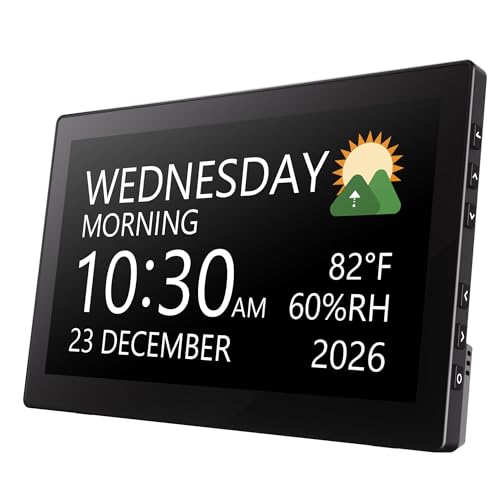
Raynic 10.1-Inch Digital Calendar Clock with 20 Alarms, Auto Dimming, Black

American Lifetime Large Digital Calendar Clock with Custom Alarms, White

American Lifetime 8-Inch Digital Calendar Clock, Black, Auto-Dim, Battery Backup

Generic 10-Inch Dementia Digital Clock, 12 Alarms, IPS Display, Auto Dimmer

Aowasi 7-Inch Digital Calendar Clock, 12 Alarms, Time-of-Day Display

Cirbic High-Contrast Talking Clock, Blue
More On The Choices That Made The List
The Raynic combines a large calendar display with the environmental details often wanted on a bedside or desk clock. Its 10.1-inch face shows the time, date, indoor temperature, and humidity, reducing the need for several separate devices. For a household managing medications and appointments, I find the 20 alarms and 20 reminders more useful than a basic time display alone.
Auto dimming adjusts the display brightness, and 12 display themes make this a flexible option for different rooms. The honest read is that this model suits a shared nightstand or office desk more than a compact shelf, particularly when indoor conditions matter alongside the calendar.
The Value In It
- A 10.1-inch display presents time, date, temperature, and humidity together.
- Twenty alarms can distinguish separate medication, meal, and appointment prompts.
- Twenty reminders add useful structure without requiring another scheduling device.
- Automatic dimming should reduce glare during nighttime use.
Practical Considerations
- The large footprint requires a clear desk or nightstand area for proper visibility.
- Twenty alarms and reminders need careful labeling to remain useful in a busy household.
Feature Snapshot
Made For In Mind
This clock best fits caregivers managing several daily prompts in a bedroom, kitchen, or shared living area.
Consider Something Else When
The American Lifetime 8-Inch Digital Calendar Clock is a better fit for a smaller surface that needs fewer display options.
Large numbers and a full calendar layout make the American Lifetime easy to scan from across a room. Its white housing also gives it a lighter appearance than the Raynic’s black design, which can suit a bright kitchen or sitting area. Compared with the Raynic, this model focuses more directly on time, date, and custom alarms.
For a family that needs one dependable reference point, the display reduces the need to interpret abbreviations or switch between screens. The trade-off is less information density, since this version does not add the Raynic’s temperature, humidity, theme, or reminder options.
Practical Advantages
- Large, clear numbers support quick recognition from a comfortable distance.
- The day-and-date display provides essential orientation at a glance.
- Custom alarms support separate meal, medication, and appointment times.
- The white finish blends naturally into lighter home interiors.
Worth Noting
- Fewer customization options make it less flexible than the Raynic for varied schedules.
- A large display still needs an unobstructed shelf or tabletop for regular use.
Who It Suits Best
This model suits households that prioritize large type, a straightforward calendar, and uncomplicated alarm management.
Look Elsewhere When
The Generic 10-Inch Dementia Digital Clock offers a wider viewing angle for a clock placed away from the main approach to the room.
The 8-inch American Lifetime balances display size with a more restrained feature set than the 10.1-inch Raynic. Day, date, and customizable alarms cover the central needs of a daily routine, while multi-language support adds value in a multilingual home. It appears especially sensible for a nightstand where every extra field would add clutter.
Auto dimming reduces glare at night, and a battery backup provides a secondary power source during an interruption. I would favor this model over the larger American Lifetime for compact placement, though the smaller face may demand a closer line of sight.
The Upside
- An 8-inch display fits many bedside tables while retaining large calendar information.
- Customizable alarms accommodate recurring personal routines.
- Multi-language support serves households with different language preferences.
- Battery backup adds a useful power layer for an essential household display.
Minor Gripes
- The smaller display may be less suitable for viewing across a large room.
- Black housing may show dust and fingerprints more readily than the white model.
Quick Facts
The Right Fit
This clock best fits a nightstand user who values battery backup, automatic dimming, and a compact calendar display.
Another Choice May Suit
The Aowasi 7-Inch Digital Calendar Clock better fits caregivers who need spelled-out morning, afternoon, evening, and night periods.
A clock viewed from a doorway or side table needs to remain legible without forcing a direct frontal angle. The Generic model addresses that concern with an IPS display, a technology that controls pixel alignment to reduce changes in color and brightness as the viewing angle shifts. Its stated 175-degree viewing range makes it a practical choice for an open-plan room.
The 10-inch screen shows the time, date, day of the week, and calendar information in large type, while 12 alarms handle the main routine prompts. Automatic daylight saving time adjustment and dimming reduce routine upkeep, although the electric-only design requires a nearby outlet.
What Works In Its Favor
- IPS display technology supports broad off-angle visibility.
- A 10-inch face reduces the need for close inspection.
- Twelve alarms cover several recurring daily events.
- Automatic daylight saving time adjustment simplifies clock maintenance.
- Four display colors offer a choice for different room finishes.
Points To Note
- The clock is not battery operated, so an outlet must be within reach.
- The wide viewing range matters most when the clock is mounted or placed off-center.
Feature Breakdown
Whose Shelf It Belongs On
This model suits open rooms where the clock may be viewed from the side rather than directly in front.
Where A Sibling Pick Shines
The American Lifetime Large Digital Calendar Clock is a better fit for a bright room where a white finish and custom alarms are the priorities.
The Aowasi makes time-of-day orientation unusually explicit by displaying terms such as morning, afternoon, evening, night, and before dawn. It also spells out the full day, week, month, and year rather than relying on shortened labels. That approach may help a routine built around periods of the day feel more concrete.
Its 7-inch display is smaller than the American Lifetime 8-inch and Generic 10-inch options, so the placement matters. In a compact bedroom or kitchen, that difference can be helpful, while a larger room may favor one of the bigger screens.
What Stands Out
- Time periods are written out instead of represented only by a numeric hour.
- Full calendar wording reduces the need to decode abbreviations.
- Twelve alarms can separate meals, medication, appointments, and household tasks.
- The 7-inch footprint suits smaller tables and counters.
Trade Offs
- The smaller display may require a closer viewing position than the 10-inch models.
- Time-period language takes more space than a purely numeric display.
Who Will Love This
This clock fits caregivers who rely on verbal time periods and specific routine prompts throughout the day.
Reach For A Different Pick When
The Raynic 10.1-Inch Digital Calendar Clock better fits a household seeking temperature, humidity, themes, and 20 reminders in one display.
The Cirbic takes a different approach from every display-based pick by announcing information aloud. One press of the large button gives the time, and a second press provides the date. For someone with limited or no vision, that spoken output removes the need to locate and interpret a visual calendar.
The high-contrast blue design reinforces the visual side for people with partial sight, while audio instructions help with alarm setup. The spoken information comes from a male voice with a North American accent, an important preference check for households where another voice or dialect would be more suitable.
What Makes Sense
- A large button makes the time and date accessible by touch.
- Spoken time and date support people who cannot comfortably read a display.
- High-contrast styling also serves partially sighted users.
- Audio instructions assist with alarm setup.
Small Caveats
- The male voice uses a North American accent, which may not suit every household.
- It functions as a talking clock rather than a full calendar-style visual display.
The Details
Built With In Mind
This clock suits a blind or low-vision user who values spoken information and simple button controls.
Swap It Out When
The Aowasi 7-Inch Digital Calendar Clock better fits a household that prefers a visual calendar and written time periods.
What Matters Most In A Dementia Clock
Display Size And Placement
A larger face can make the time and date easier to recognize, but the physical footprint should match the intended location. An 8-inch model may work better on a nightstand, while a 10-inch screen needs more space and may be visible from farther away. Placement, lighting, and the likely viewing distance matter more than screen size alone.
Alarms And Reminders
Alarms are useful for recurring events such as meals, medication, and appointments. Reminders can hold more specific notes, but a larger number does not automatically make a clock easier to manage. Clear labels and a simple schedule are essential in a home where repeated instructions can already be difficult.
Readability And Viewing Angle
Large numbers, full calendar text, and written time periods reduce the amount of interpretation required. IPS display technology can also help when the clock sits at an angle. A direct, well-lit position remains important, particularly for a display that must be read throughout the day.
Power And Setup
Mains power, battery backup, and automatic daylight saving time adjustments affect ongoing convenience. A nearby outlet is required for an electric-only model, while backup power can preserve the clock’s function during an interruption. Alarm labels and language settings should also be checked before establishing the daily routine.
Mistakes Worth Avoiding In Clock Selection
Wrong Turns To Avoid
Choosing by screen size alone can leave important details overlooked. The display should show enough information for the intended routine, and the controls should be understandable to the household. Placement, power access, language, and alarm labeling deserve attention before settling on a model.
The Upgrade Payoff
A larger or more specialized clock earns its additional cost through useful functions, not appearance alone. The Raynic adds environmental information and reminders, the Generic model provides a wide viewing range, and the Cirbic replaces visual reading with speech. Those distinctions matter more than a longer specification list.
Frequently Asked Questions
What Is A Dementia Clock?
A dementia clock presents the time, date, and daily context in a clear, accessible format. It may also include reminders, spoken information, automatic dimming, or multiple alarm settings.
Are Dementia Clocks Only For People With Dementia?
No, the same large displays and spoken time features can help anyone with low vision, memory difficulties, or a preference for prominent calendar information. The most useful model depends on reading ability, hearing, routine structure, and placement.
Which Display Size Is Most Practical?
An 8-inch model generally suits compact bedside use, while a 10-inch display is easier to read from farther away. Placement and viewing distance should determine the choice more than any single size.
Do These Clocks Speak The Date And Time?
Only the Cirbic talking clock provides spoken time and date information. The other choices rely on a visual display, calendar text, alarms, and reminders.
How Many Alarms Do I Need?
One alarm can cover a simple routine, while 12 or 20 settings separate meals, medication, appointments, and household tasks. The useful number depends on how many distinct events need regular prompts.
Wrap Up
The most suitable dementia clock depends on the household’s routine, available surface, viewing distance, and reading needs. The Raynic offers the broadest information set, the Generic model emphasizes wide-angle visibility, and the Aowasi spells out time periods clearly. For spoken access, the Cirbic serves a distinct and practical need. Matching the clock to the person’s abilities and the room’s layout is the decisive step.