
A deck screw can look like a minor hardware choice until an unsuitable length splits framing, a coating gives up under persistent moisture, or a small installation becomes frustrating with loose fasteners. I focus on the details that affect real projects: holding power, corrosion protection, drive compatibility, pilot-hole requirements, and whether the quantity suits the scale of the work.
For a weekend homeowner replacing boards, the main concern is matching the screw to the lumber and having a manageable driving system. For a professional crew or a permitted build, documentation, consistent feeding, and code-relevant specifications carry more weight, so the practical choice changes with the job.
Your Options, Compared

Doumewor #10 x 3 Deck Screws, Ceramic Coated, T25 Drive, 10 lb

SENCO Duraspin #8×2-1/2 Exterior Screws
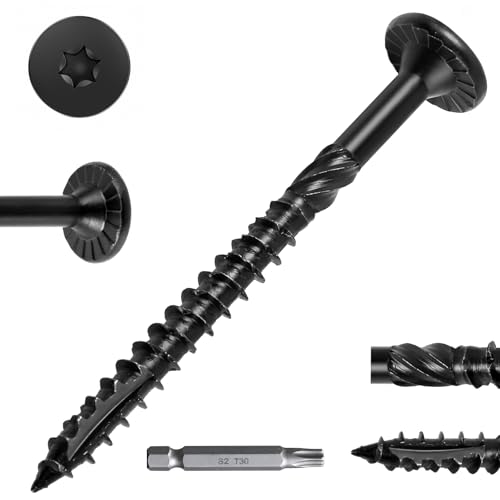
FMhotu #14 Heavy-Duty Screws
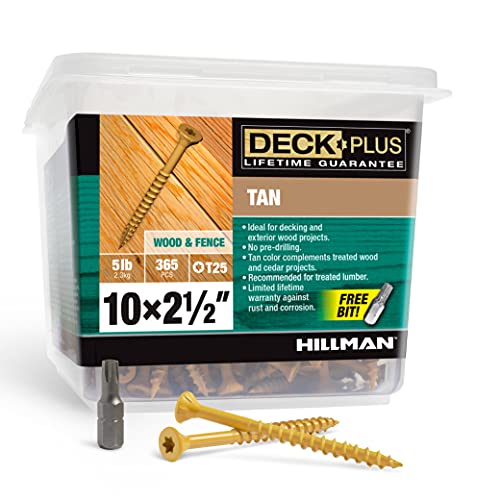
Deck Plus #10 2-1/2 Tan Screws

Deck Plus #10 3-Inch Green Screws

FastenMaster TimberLOK 6-Inch Wood Screw
The Doumewor pick is built around a 3-inch #10 screw with a ceramic anti-corrosion coating, a combination that makes more sense for exposed boards and humid framing than a short interior screw. For most backyards, the coating addresses the persistent moisture that turns ordinary fasteners into a recurring maintenance issue.
The T25 star drive reduces slipping under torque, and the included bit avoids a separate tool purchase. Compared with the shorter Deck Plus model, its extra length reaches farther into framing, although that also makes it less forgiving around thin joists.
Positive Points
- The ceramic coating is intended for rain, humidity, sunshine, and snow exposure.
- Six-point T25 engagement helps maintain control during high-torque driving.
- The included T25 bit simplifies tool matching.
- A 10-pound container suits repeated board replacement and larger repair batches.
- The 3-inch length provides deeper engagement for substantial framing.
Trade Offs
- The 10-pound container needs somewhere dry and organized for storage.
- A 3-inch screw may protrude through thin framing unless penetration is checked carefully.
Technical Sheet
Made For
Homeowners handling exposed deck boards, humid framing, or a substantial seasonal repair batch benefit most from this combination.
A Better Fit Elsewhere
Deck Plus #10 2-1/2 Tan Screws suit projects needing shallower penetration and a finish that blends with natural-toned lumber.
SENCO treats this as a production fastener rather than a small box of deck screws. The 800-count tub, reusable handled container, and strips of 50 screws suit a professional crew that repeatedly feeds a collated-screw tool, where loose fasteners would slow the workflow.
Its #8 by 2-1/2-inch format uses a flat head and a type 17 self-drilling point, a small cutting point that starts without a pilot hole in suitable wood. The listing also places it within Miami-Dade County requirements, making local code verification especially relevant for projects in that jurisdiction.
Notable Upsides
- Collated strips support fast, repeatable feeding with a compatible tool.
- The reusable handled tub makes transport and storage more orderly.
- The type 17 point removes the need for pilot holes in suitable wood.
- Its 800-count quantity fits sustained installation work.
- The Miami-Dade listing provides useful information for local project checks.
Small Caveats
- A compatible collated-screw tool and #2 square drive are required.
- The 2-1/2-inch length is less suitable for deep connections into thick timber.
Feature Snapshot
Right Fit For
Professional deck crews and high-volume installers benefit most from the collated format and 800-count supply.
Look Elsewhere When
FMhotu #14 Heavy-Duty Screws suit projects requiring a larger gauge and deeper timber engagement than this #8 model provides.
The FMhotu choice changes scale. Its #14 gauge and 2-7/8-inch length target heavy timber connections where a standard deck screw may feel undersized, making it more relevant for substantial outdoor structures than ordinary board replacement.
Alloy steel, a rust-resistant finish, and compatibility with ACQ-treated lumber support demanding exterior use. For heavy framing work, that material profile carries more weight than a large quantity, although the 50-piece count may require several orders for a full deck.
Everyday Wins
- The #14 gauge supplies a larger fastening body for heavy timber.
- Alloy steel suits demanding structural connections.
- The rust-resistant finish suits exposed exterior lumber.
- ACQ-treated lumber compatibility supports outdoor framing use.
Points To Note
- The heavy gauge may be excessive for light trim or small repair projects.
- Only 50 screws are included, limiting uninterrupted work on a large structure.
- Driving clearance around dense timber may require careful positioning.
Who Will Love This
Experienced woodworkers handling heavy posts, beams, and thick outdoor timber benefit most from the #14 construction.
Another Choice May Suit
SENCO Duraspin #8×2-1/2 Exterior Screws fit professional installers who favor collated feeding and a much larger working quantity.
Deck Plus takes the friction out of common fastening tasks. Coarse threads and a self-drilling point work together to enter suitable wood without a separate pilot hole, which makes the 2-1/2-inch #10 screw practical for weekend board work and trim installation.
The four-layer epoxy coating targets outdoor exposure, while the tan finish blends with common natural wood tones. Compared with the green Deck Plus option, it looks less conspicuous on untreated boards, though 2-1/2 inches provides less penetration than the 3-inch version.
Useful Strengths
- The self-drilling point reduces setup time on suitable lumber.
- Coarse threads provide an aggressive bite during installation.
- Four-layer epoxy coating supports exterior applications.
- The 365-piece count covers a meaningful residential project.
- The tan finish suits natural-toned decking and trim.
Practical Considerations
- Penetration is shallower than with the 3-inch Deck Plus model.
- The tan finish is less discreet against dark-stained or painted surfaces.
Key Attributes
Built With In Mind
Weekend woodworkers handling decking, fencing, composite surfaces, and natural-toned trim benefit from the simple installation setup.
Where A Sibling Pick Shines
Deck Plus #10 3-Inch Green Screws suit thicker framing or pressure-treated lumber where deeper penetration and a green finish are preferred.
The 3-inch Deck Plus model suits a larger deck where deeper framing engagement matters, particularly with pressure-treated lumber. Its self-drilling point and coarse threads remove the need for a pilot hole in suitable wood, keeping the installation sequence direct.
A four-layer epoxy coating targets resistance in wet outdoor conditions, while the Torx-style star drive helps the bit maintain contact. The green finish is visually unobtrusive on green-treated wood, although it will stand out more against natural brown lumber.
A Favorable Mix
- Three-inch length provides deeper framing engagement.
- The self-drilling point simplifies board installation.
- Four-layer epoxy coating supports exposed outdoor use.
- Star-drive engagement reduces the chance of bit slippage.
- Green coloring blends with treated lumber.
Areas To Watch
- Green heads remain noticeable against natural brown wood.
- At 310 pieces, the quantity is lower than the tan Deck Plus box.
- The longer length needs adequate wood thickness for clean penetration.
The Right Fit
Homeowners building or expanding a pressure-treated deck gain from the combination of deeper length, self-drilling geometry, and green-matched hardware.
Swap It Out When
Deck Plus #10 2-1/2 Tan Screws are a closer fit for natural-toned lumber, lighter repair work, and a larger 365-piece quantity.
FastenMaster takes the specification seriously with a 6-inch heavy-duty wood screw suited to thick timber connections. The black finish and six-inch length make it a specialist choice rather than a standard deck-board fastener, so framing depth needs to support the full penetration.
Its tapered head countersinks into wood, while head stamping makes identification easier during inspection. The product is listed under IBC and IRC ESR #1078 and works with ACQ-treated lumber, giving code-sensitive projects useful documentation to review locally.
What Pays Off
- The six-inch length reaches deeply into thick timber.
- The tapered head seats cleanly into wood.
- Head stamps support straightforward visual inspection.
- ESR #1078 supplies code-related documentation.
- ACQ compatibility suits treated structural lumber.
Worth Bearing In Mind
- Six-inch penetration requires sufficient timber depth.
- The 50-piece count is small for a full residential deck.
Important Details
Best Suited To
Code-sensitive builders working with thick, ACQ-treated structural timber benefit most from the documented 6-inch format.
Reach For A Different Pick When
Deck Plus #10 2-1/2 Tan Screws fit standard board installation, thinner framing, and projects needing a much larger piece count.
What Matters Before Ordering Deck Fasteners
Match The Fastener To The Joint
I start with the joint rather than the screw box. A board-to-joist connection needs a length appropriate to the framing thickness, while a heavy post connection may require a deeper structural screw. The gauge also matters because a larger fastener needs a matching driver, adequate clearance, and wood capable of accepting its diameter.
Read Length As Penetration
Screw length is more than the number printed on the package. The full shank may pass through decking, a spacer, or joist material before the threads begin their useful engagement. For a 3-inch or 6-inch screw, I check the actual wood depth so the point does not emerge from the opposite face or split the member.
Consider Coating And Lumber
Outdoor fasteners face rain, humidity, and preservative-treated lumber. A ceramic or multi-layer epoxy coating is intended to slow corrosion, while compatibility with ACQ-treated lumber confirms that the finish is suited to that treatment. I also check the drive system: Torx-style heads resist stripping better than a basic flat head, though the matching bit must be available.
Account For Quantity And Storage
A professional installation may need collated strips and a reusable tub, while a small household repair may require only a box. Larger packs reduce repeated handling but need a dry storage place. The count also matters when matching materials, since an unfinished deck can consume fasteners faster than a small repair.
Key Details That Change the Purchase
Mistakes Worth Dodging
A common error is selecting by length alone, especially when the screw must pass through several layers or stop before thin framing. Another mistake is ignoring the drive requirement, leaving a compatible bit missing. I also check coating and lumber compatibility before ordering rather than assuming every exterior screw suits treated wood equally.
What Separates Premium From Basic
Higher-tier fasteners may add coating layers, self-drilling points, stronger drive geometry, or code documentation. Those differences matter most for exposed framing, substantial timber connections, and professional workflows. For a small natural-wood repair, a simpler screw may handle the same connection more economically.
Frequently Asked Questions
Do Deck Wood Screws Need Pilot Holes?
The Deck Plus #10 models specify a self-drilling point that removes the need for pilot holes in suitable wood. Dense hardwood, unusual composite materials, or a fragile surface may still call for a different installation approach.
Are 2-1/2-Inch or 3-Inch Deck Screws Better?
A 2-1/2-inch screw suits standard board connections and thinner framing, while a 3-inch screw reaches farther into substantial joists. The correct choice depends on the combined thickness of the decking, any spacer, and the framing beneath it.
Are These Screws Suitable for Pressure-Treated Lumber?
Deck Plus screws are designed for pressure-treated lumber and outdoor decking, while the FMhotu and FastenMaster models specify compatibility with ACQ-treated lumber. The relevant treatment and coating should still be matched to the actual lumber.
Which Screw Drives or Bits May Be Required?
The Doumewor screws use a T25 star drive and include a matching bit. SENCO Duraspin uses a #2 square drive, while the Deck Plus models use a Torx-style star drive, so the correct driver should be available before installation begins.
What Does Collated Mean for Deck Screws?
Collated screws come joined in strips that feed into a compatible installation tool. This setup supports repetitive work by reducing the need to handle individual fasteners, as in the 50-screw strips supplied by SENCO Duraspin.
Final Verdict
I favor Doumewor for exposed general deck work, Deck Plus for accessible weekend projects, and SENCO for high-volume installation. Heavy timber and inspection-sensitive work shift the decision toward FMhotu or FastenMaster, with length, lumber, and tool compatibility making the final call.