
A tight powder room rarely needs a standard toilet footprint, and a basement bathroom may need a unit that can move waste uphill. The right compact toilet depends on your room shape, drainage route, and nearby fixtures. A macerating toilet grinds waste and pumps it through a smaller line, making it useful where gravity drainage is difficult.
A Fast Comparison Of The Options

EaziRinsy Corner Toilet Elongated 17.2-Inch Comfort Height
Simple Project 750W PRO Macerating Toilet

Simple Project 600W Macerating Toilet
Simple Project 500W 4-Inlet Toilet

Simple Project 1000W Toilet System

Simple Project 600W Basement Toilet
The Strengths Of Each Pick
A corner-shaped footprint makes the EaziRinsy Corner Toilet a practical fit for bathrooms where the toilet sits against two walls. Its elongated bowl provides a longer seating area without requiring the full width of a conventional rectangular model, and the 17.2-inch bowl height gives adults a slightly raised seat.
Unlike the pump-based systems below, this toilet connects to standard gravity drainage and relies on a 12-inch rough-in, the distance from the finished wall to the toilet’s centerline. The trade-off is placement rather than pumping power, so you should confirm the corner geometry and drain position before ordering.
Well-Handled Touches
- The corner body turns an awkward room angle into usable floor space.
- The 17.2-inch comfort-height bowl supports a more upright seated position.
- Dual flush choices use 0.8 or 1.28 gallons, giving you control according to the task.
- A 12-inch rough-in suits many standard residential plumbing layouts.
- The glazed bowl surface is designed to resist water marks and staining during routine cleaning.
Things To Consider
- Corner clearance and flange positioning must match your bathroom measurements.
- Unlike a macerator, this unit cannot pump waste toward a distant or elevated drain.
Key Specs
Made For
This toilet suits you best in a small powder room with a corner drain and a standard 12-inch rough-in.
Where Another Pick Suits Better
Simple Project 1000W Toilet System better serves a basement where waste must travel a longer pumped route.
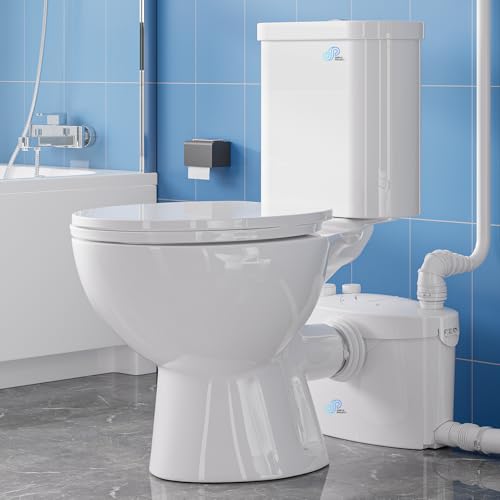
The 750W pump gives the Simple Project 750W PRO Macerating Toilet meaningful reach for a basement or attic where the waste line sits below the fixture. Its stainless steel cutting blades reduce waste before pumping, while the four inlet ports let you connect additional bathroom fixtures to the same system.
That reach distinguishes it from the 600W models reviewed later. The honest catch is installation planning: a pump does not remove the need for a properly sized discharge route, and the stated distances still need to fit your actual floor plan.
Where It Excels
- The pump can move waste up to 360 feet horizontally and 36 feet vertically.
- A 750W motor suits routes longer than the 600W systems in this group.
- Four water inlets support a toilet plus nearby sinks, showers, or washbasins.
- Stainless steel blades provide a durable cutting element within the grinding chamber.
Practical Considerations
- Confirm that the planned horizontal and vertical route stays within the listed reach.
- The pump and multiple inlets call for more installation planning than a corner toilet.
Feature Snapshot
Right Fit For
This system fits you best when a basement or attic requires a long discharge route and several fixtures share one pump.
Consider Something Else When
Simple Project 600W Basement Toilet is a more streamlined choice when three inlets and shorter pumping distances meet your layout.
A basement bathroom can make noise feel like a bigger problem than it is, particularly near living spaces. The Simple Project 600W Macerating Toilet pairs a 600W pump with a quiet-oriented design, while its rear outlet and four water inlets give you flexibility when building a compact bathroom around a shared waste line.
Compared with the 750W PRO Macerating Toilet, this model offers less specified pumping reach and a lower motor rating. In return, its quiet emphasis may suit a completed basement bathroom where pump noise is a legitimate concern.
Benefits That Matter
- The quiet-oriented motor fits rooms near finished living areas.
- Four inlets let you connect multiple bathroom fixtures.
- The 600W motor provides pumping support for basement and attic installations.
- A rear outlet opens up more routing options than a front outlet.
Some Limits To Know
- No horizontal or vertical reach figures are listed for this model.
- Your plumber should verify the outlet route and the locations of connected fixtures.
- The 750W PRO model may suit a substantially longer route.
Built With In Mind
This unit makes sense for you when quiet operation and four fixture connections matter more than a stated maximum pumping distance.
A Better Fit Elsewhere
Simple Project 500W 4-Inlet Toilet offers a similar four-inlet arrangement with a specified 1.6-gallon flush for shoppers who value that detail.
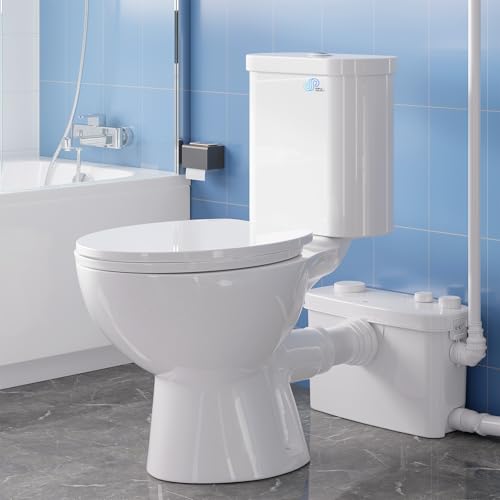
The Simple Project 500W 4-Inlet Toilet is built around a basement bathroom that needs several fixtures linked to one system. Four inlet ports handle waste from a toilet and compatible fixtures such as a shower or sink, while the included extension pipe adds routing flexibility where the discharge line sits beyond the toilet’s immediate connection point.
Its 500W motor is less powerful than the 750W and 1000W options, and no maximum pumping distance is specified. That makes this a fit based on fixture layout and flushing details rather than a clear choice for the longest possible pipe run.
The Case For It
- Four inlets support a connected bathroom arrangement.
- The extension pipe helps bridge a longer discharge route.
- A 1.6-gallon flush provides a specified flushing volume.
- The 500W motor balances compact system needs with pumping requirements.
- The quiet-oriented version suits finished basement bathrooms.
Points To Note
- Maximum pumping reach is not specified.
- Its motor rating is lower than the 750W and 1000W systems.
Feature Rundown
Who Will Love This
This choice suits you when a shower, sink, and toilet need to share a basement macerating system.
Another Choice May Suit
Simple Project 750W PRO Macerating Toilet better serves a project with a longer route or a greater pumping demand.
The Simple Project 1000W Toilet System takes the highest motor rating in this group, a relevant distinction when your basement or attic has a demanding waste route. Its macerating pump can transport waste up to 40 feet, and the included extension pipe gives you more freedom when positioning the toilet.
Four water inlets support shared connections, while the design emphasizes quieter operation than a standard macerating toilet. You still need a sound plumbing plan, and the stated 40-foot reach should be treated as a layout constraint rather than an open-ended range.
Noteworthy Benefits
- The 1000W motor provides the highest specified output in this group.
- An included extension pipe supports a longer discharge arrangement.
Trade-Offs To Consider
- The 40-foot reach has more value for a longer route than for a close connection.
- Four inlets may be more than a simple one-fixture installation requires.
- Your plumber must confirm that the extension pipe and pump fit the available space.
- A simpler basement setup may not need the highest motor rating.
Whose Shelf It Belongs On
This system fits you best for a complex basement bathroom with an extended discharge route and several connected fixtures.
Swap It Out When
Simple Project 600W Basement Toilet is a more restrained option for a basement layout with a shorter route and three inlets.
The Simple Project 600W Basement Toilet gives a below-grade bathroom more placement freedom than a conventional gravity-fed unit. Its 600W macerator pump can move waste up to 295 feet horizontally and 30 feet vertically, useful where the main drain sits above the toilet or farther across the basement.
Three water inlets let you add compatible sinks, showers, or washbasins without running separate discharge pumps. Compared with the four-inlet models, this one-piece system offers a more focused layout for projects with three fixture connections.
What It Does Well
- The 600W pump reaches up to 295 feet horizontally.
- Vertical pumping extends up to 30 feet.
- Three inlets support a toilet plus two compatible fixtures.
- The one-piece body suits a straightforward basement installation plan.
Details To Watch
- Check the full discharge path and fixture connections before ordering.
Quick Facts
The Right Fit
This toilet suits you best for a basement with three connected fixtures and a discharge line requiring horizontal or vertical pumping.
Look Elsewhere When
Simple Project 500W 4-Inlet Toilet better serves a bathroom that needs a fourth inlet and a specified 1.6-gallon flush.
Measure The Room And Plan The Drain Route
Start With The Floor Plan
A corner toilet solves a footprint problem, while a macerating toilet solves a drainage problem. Draw the room to scale, mark the drain, and locate nearby sinks or showers before selecting either type. Clearances around the bowl, side wall, and doorway can determine whether a compact design actually fits.
Understand Rough-In And Bowl Height
Rough-in is the measurement from the finished wall to the toilet’s centerline. The EaziRinsy model uses a 12-inch rough-in and stands 17.2 inches high, so both numbers deserve a place on your bathroom plan. Bowl height affects daily comfort, while rough-in determines whether the drain connection aligns.
Match The System To Connected Fixtures
Each inlet provides a connection point for a compatible fixture. Three inlets cover a toilet and two additional fixtures, while four-inlet systems can support another connection. A 750W or 1000W motor becomes more relevant as the discharge route grows longer or climbs higher.
Check The Pump Reach
Pumping reach describes how far the system can move waste horizontally and vertically. Compare the listed reach with your actual measurements, including turns and connection points, rather than relying on a single straight-line estimate.
Avoid Two Costly Plumbing Missteps
Common Shopping Slip Ups
Do not choose a macerating toilet by motor power alone. A higher wattage does not replace proper pipe sizing, route planning, or compatible inlet connections, and a corner model cannot solve a drain that sits beyond gravity reach.
What Separates Premium From Basic
The higher-output models add pumping capacity for longer or steeper routes. Paying more can make sense when the alternative requires relocating a main drain, provided a plumber confirms that the stated reach and connection layout fit your basement.
Frequently Asked Questions
Are compact toilets suitable for small bathrooms?
Yes. The EaziRinsy Corner Toilet is designed for corner placement, while macerating systems can save room by replacing a conventional gravity-fed layout. Measure the room and plumbing route before choosing.
Can a macerating toilet work in a basement?
Yes. These systems pump waste toward the building’s drainage line, making them suitable for many below-grade bathrooms. The available route must remain within the pump’s stated reach.
What is the difference between rough-in and pumping reach?
Rough-in measures the toilet’s horizontal connection from the finished wall. Pumping reach describes the waste line’s horizontal and vertical travel through a macerating system.
How many bathroom fixtures can share a macerating toilet?
It depends on the model. The Simple Project 600W Basement Toilet has three inlets, while the 500W and 750W PRO systems provide four.
Should compact toilet installation involve a plumber?
For a macerating system, a plumber can evaluate the discharge route, inlet connections, and local requirements before installation. A corner toilet also needs accurate measurements to confirm its rough-in and clearance.
The Takeaway
Compact toilets solve two different space problems: the EaziRinsy model reduces the room footprint, while the Simple Project systems make awkward basement or attic plumbing routes workable. Choose the corner option for a tight powder room, then use pump reach and inlet count to narrow the macerating choices for your actual layout. A careful floor plan makes the decision much easier.