
A delivery driver raising a shop door in the rain needs the motor to respond without a prolonged struggle, especially when the entrance faces traffic and weather. The right commercial roll up garage door opener also needs enough pulling force, a practical control method, and a mounting arrangement that suits the door and available space. I compare six options across roller-door power, drive type, remote access, backup capability, and installation constraints.
The Shortlist At A Glance

SRTYGHW 110V 80W Roll Up Garage Opener 250N

Chamberlain 1/2 HP Chain Drive

Chamberlain 3/4 HP Belt Drive

Josbuynls 110V 80W Roll Up Opener 250N
Chamberlain Belt Drive 1/2 HP Backup

LZMSNZ 800N 24V Roll Up Garage Opener, 164ft Remote
The Picks, Examined More Closely
This compact roller-door motor targets workshops and small commercial entrances where a full carriage system would add unnecessary bulk. Pulling force is the force used to raise a door, and its 250N rating covers doors up to 129.1 square feet under the stated conditions. Compared with the LZMSNZ 800N option, it uses less power but places a tighter limit on heavier doors.
For a warehouse receiving a few deliveries each day, I would favor the uncomplicated 110V setup and 164-foot remote control. The 80W motor and stated 50 rpm no-load speed suit routine opening and closing, although an exact door measurement and weight check remain essential before installation.
Notable Gains
- The 250N pulling force provides a clear capacity figure for comparing the door.
- Remote operation reduces the need to approach a heavy roller door manually.
- The compact motor format suits entrances with limited side space.
- One-touch control simplifies daily operation for shop staff.
Points To Note
- The stated door capacity may not suit oversized or unusually heavy commercial doors.
- The 110V supply arrangement requires a compatible electrical connection near the motor.
Key Specs
Made For
This motor fits small-to-medium roller doors operated in workshops, garages, and light commercial spaces with a compatible 110V supply.
Consider Something Else When
Owners of substantially heavier doors should examine the LZMSNZ 800N 24V Roll Up Garage Opener for its greater pulling-force rating.
A chain-drive opener brings physical strength to a heavy sectional garage door, where the chain transfers the motor’s force along a rail. The 1/2 HP motor gives this Chamberlain model a different role from the purpose-built roller motors in the shortlist, making it a stronger fit for standard sectional doors than for a true roll-up installation.
I would consider it for a busy attached garage where power outages are inconvenient and remote access matters. The included battery backup supports operation during an outage, while the myQ platform adds phone-based control rather than relying solely on a wall control or handheld remote.
Why It Works Well
- Chain drive is suited to heavier sectional doors and frequent daily use.
- Backup operation provides access when the main supply is unavailable.
- myQ connectivity supports convenient phone-based door control.
- The DC motor and chain arrangement suit attached garages seeking restrained noise.
Factors To Consider
- Its sectional-door format is a less direct match for commercial roll-up doors.
- Chain hardware requires adequate overhead clearance and compatible sectional tracks.
Who Will Love This
Homeowners and small-business operators with heavy sectional garage doors, attached spaces, and a need for backup access will appreciate this configuration.
A Better Fit Elsewhere
A warehouse with a genuine roller door will find the SRTYGHW 110V 80W Roll Up Garage Opener 250N more closely matched to that door type.
The 3/4 HP rating gives this belt-drive model more motor capacity than Chamberlain’s 1/2 HP alternatives, a meaningful distinction for wide or heavy sectional doors. Belt drive uses a belt instead of a chain, reducing mechanical noise and vibration in an attached garage. That makes this the more substantial of the two belt-driven options in the shortlist.
The fixed camera is the distinguishing feature for a shop or home office where visual confirmation of the entrance adds useful context to remote control. A built-in battery backup and myQ connectivity complete the package, although none of those features changes the need to confirm that the existing tracks and door match a sectional opener.
Everyday Advantages
- The 3/4 HP motor offers more capacity than the 1/2 HP Chamberlain models.
- Belt drive reduces vibration and noise around an attached living space.
- A fixed camera provides a view of the garage entrance.
- Built-in backup and myQ access support remote and outage-related use.
Less Ideal Details
- The camera and connected features add complexity that a basic roller motor does not require.
- Its sectional configuration calls for a track and door-system compatibility check.
Feature Snapshot
Right Fit For
This model fits connected homes and businesses with heavy sectional doors, overhead clearance, and a need for camera and app-based access.
Another Choice May Suit
Operators needing a lower-profile roller-door motor for a side-mounted commercial entrance should examine the Josbuynls 110V 80W Roll Up Opener 250N instead.
This motor shares the SRTYGHW model’s 250N pulling force and 129.1-square-foot stated capacity, but adds several protective controls. That combination gives it a clear installation angle for workshops where an obstruction response and stable voltage supply matter during daily operation.
The included control box manages the motor, and the 164-foot remote allows operation from a vehicle or across a work area. I would favor this version over the SRTYGHW model when protective shutdown and reopening behavior carry more weight in the decision, rather than simply matching the basic lifting figures.
Advantages To Know
- Overload protection helps the motor stop when operating demand exceeds its limits.
- Low-voltage protection prevents a commanded movement at inadequate supply voltage.
- Resistance protection is specified to reopen the door when resistance is detected during closing.
- Remote and control-box operation serve a straightforward workshop setup.
Practical Considerations
- The 250N rating remains the main limit for unusually large or heavy doors.
- The 110V motor and separate control box require a compatible installation layout.
Technical Sheet
Built With In Mind
This opener fits small commercial workshops that value obstruction response, remote access, and a 110V roller-door installation with a separate control box.
Where A Sibling Pick Shines
A facility with a substantially larger roller door will find the LZMSNZ 800N 24V Roll Up Garage Opener more suitable because of its higher stated pulling force.
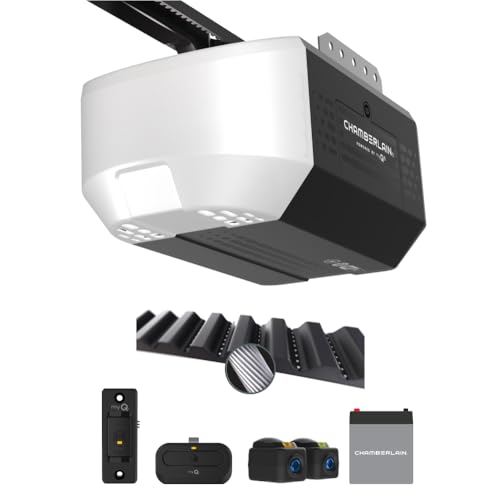
The 1/2 HP rating makes this the more restrained Chamberlain option, while belt drive remains the decisive feature for an attached garage. Belt-driven movement reduces mechanical noise and vibration compared with the chain-driven version, which matters in offices or living spaces directly beside the opening.
Its myQ connectivity and included battery backup support a practical daily routine. I would select it for a standard residential-scale sectional door that does not require the extra stated capacity of the 3/4 HP model, with the same caveat: this is not a purpose-built commercial roller motor.
What Helps Most
- Quiet belt operation suits garages near living or working areas.
- Backup operation preserves access during a mains-power interruption.
- myQ support allows remote control through a connected phone.
- The 1/2 HP motor offers a balanced starting point for typical sectional doors.
Some Limits To Know
- The lower horsepower may be less appropriate for a very heavy sectional door.
- Sectional tracks, overhead space, and door dimensions must align with the opener system.
The Right Fit
This model suits an attached home or small office with a standard sectional door, quiet operating priorities, and a need for phone access and backup control.
Reach For A Different Pick When
Operators with a heavy commercial roller door should reach for the LZMSNZ 800N 24V Roll Up Garage Opener instead of relying on a sectional-door system.
The 800N pulling force places this LZMSNZ unit well above the 250N roller motors in the shortlist, making it the relevant choice for a larger or heavier door. Its 24V DC motor uses direct-current power, while the side-mount arrangement keeps the mechanism beside the roller rather than suspended overhead. I see the strongest fit in a barn, workshop, shop, or warehouse with enough structural and side-space support.
Two 433MHz rolling-code remotes provide a stated 164-foot range, and their included batteries simplify the initial setup. A 55 dB operating claim suits a location where noise matters, while optional battery backup support preserves operation during a power interruption. The backup accessory is sold separately.
The Upside
- The 800N rating offers the highest stated pulling force in the group.
- Side mounting suits roller doors with overhead space reserved for other functions.
- Two rolling-code remotes support vehicle and work-area access.
- The 164-foot range reaches beyond a typical single-car driveway.
- Optional backup support adds outage convenience.
Where It May Fall Short
- Its 24V configuration requires a compatible power supply arrangement.
- Battery backup is an optional accessory rather than an included component.
Quick Facts
Whose Shelf It Belongs On
This opener fits operators of large roller doors in barns, workshops, shops, and warehouses that need high pulling force and side-mounted hardware.
Swap It Out When
Smaller roller doors on a restricted budget can rely on the SRTYGHW 110V 80W Roll Up Garage Opener 250N instead.
Matching an Opener to the Actual Door
A roll-up garage door travels along a vertical track and curls around a drum above the opening. The opener must match that rolling system rather than a sectional door that moves along horizontal and curved rails. Door dimensions and weight therefore deserve attention before motor output becomes the deciding factor.
Pulling Force and Door Weight
Pulling force describes the force generated to raise a door. The 250N motors list a maximum stated area of 129.1 square feet, while the LZMSNZ model reaches 800N for heavier applications. I would use the door’s actual weight and dimensions as the first filter, then use pulling force to separate the remaining options.
Drive Type and Door Compatibility
Chain drive, belt drive, and direct roller motors serve different track systems. The Chamberlain products in this shortlist are designed around sectional garage doors, while the SRTYGHW, Josbuynls, and LZMSNZ options target roll-up doors. Existing tracks, drum arrangement, and mounting space are non-negotiable compatibility checks.
Controls, Backup, and Access
Remote range matters for vehicle entry, while myQ adds phone-based control for connected spaces. Battery backup provides a practical benefit during a power interruption, although it does not remove the need for correct electrical installation. A fixed camera serves a different purpose from a remote, adding visual context rather than additional lifting capacity.
Installation Space and Daily Use
Side-mounted roller motors conserve overhead room, while chain and belt systems need compatible sectional tracks. In a busy loading area, I prioritize door compatibility, clear control access, and enough power for the stated operating mode. The most capable motor still creates an installation mismatch when the mechanism does not fit the existing door.
Smart Details That Affect Daily Operation
Mistakes Worth Dodging
Choosing by horsepower alone can leave an opener mismatched to a roller or sectional track. I would measure the opening, check the door weight, confirm the voltage, and identify side space before selecting a motor. Ignoring the 50 rpm no-load figure would be another mistake, since that describes unloaded speed rather than loaded operating performance.
What Separates Premium From Basic
The LZMSNZ unit separates itself through 800N pulling force, 24V operation, and a stated 55 dB level. The Chamberlain additions cover battery backup, myQ access, and a fixed camera, while the smaller roller motors concentrate on compact lifting and remote control. The stronger option makes sense for heavier doors, whereas basic models suit lighter installations with simpler requirements.
Frequently Asked Questions
Can one garage door opener run a roll-up and sectional door?
No. Roll-up and sectional doors use different tracks and mechanisms, so an opener must match the installed door system. The Chamberlain models here fit sectional doors, while the other three target roller-style entrances.
What pulling force does a commercial roll up garage door opener need?
The required force depends on door weight, dimensions, track condition, and operating environment. I would treat 250N as a comparison point for lighter roller doors and 800N as a starting point for heavier commercial applications.
Are 164-foot remotes useful for business entrances?
Yes, especially for vehicle access, loading areas, and doors viewed from beyond a single parking space. Actual performance can also depend on walls, vehicles, and the installation position of the receiver.
Does a battery backup keep a roll-up door operating during an outage?
It can, provided the opener supports a compatible backup battery and that battery is correctly installed. The LZMSNZ model supports a separately sold backup, while the relevant Chamberlain sectional models include backup capability.
Is a chain drive louder than a belt drive?
Chain drive is generally associated with more mechanical noise because the chain moves along a metal track. Belt drive is quieter in operation, making it a stronger fit for attached garages and offices.
Final Verdict
The LZMSNZ 800N 24V Roll Up Garage Opener leads my list for heavy commercial roller doors, while the SRTYGHW and Josbuynls motors cover lighter installations more economically. The Chamberlain models excel in connected sectional-door settings, not true roll-up systems. I would match the opener to the existing tracks, door weight, electrical arrangement, and access pattern before making the final choice.