
A bedside clock that goes dark at 7:10 can derail an entire morning routine, especially for students, shift workers, and light sleepers. I keep coming back to six battery-powered designs that solve different problems, from large wall displays to compact night lights and personal vibrating alarms. The right choice depends less on extra controls than on where the clock lives, how the alarm reaches me, and how much attention I want at bedtime.
The Shortlist At A Glance

Timegyro Digital Wall Clock with LED Backlight, Alarm, 12/24 Hr

Peakeep Digital Alarm Clock with Night Light

Bernhard Products 4-Inch Copper Twin-Bell Alarm Clock, Silent Quartz, Backlit
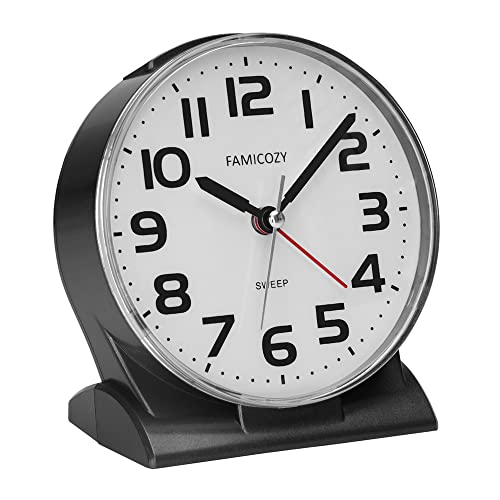
FAMICOZY 4.5-Inch Silent Analog Alarm Clock with Big Numbers and Backlight

Pavlok Shock Clock 3 App-Controlled Vibration, Beep, and Zap Alarm

Pavlok Shock Clock 2 Silent Alarm for Heavy Sleepers
Inside Each Recommended Option
The Timegyro Digital Wall Clock makes the strongest case for anyone who wants the time readable from across a bedroom or home office. Its large LED numerals and illuminated backlight remove the need to lean over a bedside display in a dark room, while 12- and 24-hour formats suit either preference.
Four AA batteries keep this model independent of a wall outlet, and the stated battery life can reach one year under normal operating conditions. That makes it a practical wall or tabletop clock for rentals, guest rooms, and busy households where a cord would be inconvenient.
The Upside
- Large LED digits remain easy to locate from a distance.
- The illuminated face provides immediate nighttime visibility.
- Battery operation supports flexible wall or tabletop placement.
- Adjustable brightness and 12/24-hour formats improve daily control.
Practical Considerations
- Four AA batteries require more replacement planning than a two-AA model.
- A continuously lit LED can consume power, so the stated one-year figure remains an estimate.
Key Specs
The Right Fit
This clock suits households wanting a large, wall-visible time display without a power cord.
A Better Fit Elsewhere
The Peakeep Digital Alarm Clock with Night Light takes less space for anyone working with a very small nightstand.
The Peakeep Digital Alarm Clock with Night Light fits the role of a small bedside assistant rather than a room-wide display. At 5.25 by 2 by 3 inches, it leaves useful space on a narrow nightstand while combining a digital clock, alarm, and indoor temperature readout.
Unlike the Timegyro’s always-visible LED face, the Peakeep uses an LCD with a separate adjustable night light. Low, high, and off settings let me choose how much glow remains after bedtime, which is useful in a shared room or a compact apartment.
Real-World Strengths
- The small footprint preserves limited nightstand space.
- Three night-light levels accommodate different sleeping habits.
- The LCD presentation suits close-up bedside viewing.
- Temperature information adds useful room context.
Small Caveats
- The screen is less suitable for reading across a large room than the Timegyro LED display.
- The night light still needs a level appropriate to the room’s ambient darkness.
Feature Snapshot
Built With In Mind
This model fits small bedrooms, dorm rooms, and nightstands where space and adjustable light matter most.
Reach For A Different Pick When
The Timegyro Digital Wall Clock with LED Backlight, Alarm, 12/24 Hr suits larger rooms that benefit from distant visibility.
The Bernhard Products clock brings a more decorative presence than the compact Peakeep, with a brushed copper finish, twin metal bells, and a classic white dial. Black hands and numerals contrast clearly against the face, while a red alarm hand adds another visual reference.
Its quiet quartz movement avoids the constant ticking associated with many mechanical clocks, yet the alarm itself remains deliberately loud. That balance works well for a bedroom where background noise is distracting but a strong morning wake-up is essential.
Where It Helps
- The copper finish adds character to a traditional bedside table.
- Metal bells and hammer provide a more substantial alarm presence.
- Silent quartz movement reduces repetitive ticking.
- The backlit face improves visibility in a dark room.
Points To Note
- The 4-inch format offers less distant readability than a large LED display.
- The twin-bell design favors audible wake-ups over personal vibration.
Who It Suits Best
This clock suits anyone who values traditional styling, analog controls, and a forceful bedside alarm.
Where A Sibling Pick Shines
The FAMICOZY 4.5-Inch Silent Analog Alarm Clock with Big Numbers and Backlight is easier for someone who prefers a gradual alarm and a more prominent face.
The FAMICOZY clock is the most approachable analog model here, with a 4.5-inch face, large numbers, and only two rear knobs for setting the time and alarm. A side switch handles alarm activation, removing the menu-like button sequence found on many digital clocks.
The gradual-rise alarm, snooze function, and soft backlight make it practical for someone who prefers a gentler bedside progression. I would also consider it for an older adult, although the two AA batteries must be supplied separately.
Strengths Worth Knowing
- Two rear knobs simplify initial setup.
- The side alarm switch provides clear everyday control.
- Big numbers improve quick reading at close range.
- The gradual-rise alarm offers a less abrupt start.
- Snooze and backlight functions add practical bedside control.
A Few Limitations
- The two AA batteries are not included.
- The 4.5-inch face needs a stable nightstand or desk.
- Analog hands require a brief glance rather than an instant digital readout.
Quick Facts
Made For
This model suits beginners, older adults, and anyone who wants large numerals without a complicated digital interface.
Another Choice May Suit
The Bernhard Products 4-Inch Copper Twin-Bell Alarm Clock, Silent Quartz, Backlit better reflects a vintage bedroom or traditional metal décor.
The Pavlok Shock Clock 3 takes a different approach from bedside displays by placing the alert directly on the wearer. Vibration, sound, and an adjustable electric pulse provide multiple escalation paths, while app control adds a connected layer that the Peakeep and Bernhard Products models do not offer.
I find the personal vibration especially relevant in a shared bedroom because it can wake one person without filling the room with beeps. Waterproof and sweatproof construction also suits active daily routines better than a traditional glass-covered bedside clock.
Where It Delivers
- Personal vibration supports quieter shared sleeping spaces.
- App control provides centralized alarm management.
- Multiple alert modes accommodate different wake-up preferences.
Worth Bearing In Mind
- Consistent wear is necessary for a wearable alarm to work as intended.
- The electric pulse mode is more intense than vibration or sound.
- App-based setup adds a step compared with basic mechanical controls.
Best Suited To
This model fits heavy sleepers and couples who want a personal alarm with several alert choices.
Swap It Out When
The Pavlok Shock Clock 2 Silent Alarm for Heavy Sleepers offers task-based challenges for anyone who responds better to movement than escalating vibration.
The Pavlok Shock Clock 2 focuses on getting a person out of bed rather than simply announcing the time. Its personal vibration provides a quiet starting point, while wake-up tasks can include jumping jacks, solving a puzzle or riddle, and scanning a QR code located in another room.
That movement requirement gives students and heavy sleepers a practical way to separate waking up from remaining in bed. Compared with the Shock Clock 3, however, this model lacks the app-controlled setup and broader alert-mode selection, so its appeal rests on task-based behavior.
A Few Strong Suits
- Vibration keeps the initial alert personal and quiet.
- Physical tasks encourage movement beyond the bed.
- The QR-code option adds a distance-based challenge.
Details To Watch
- The QR-code challenge requires a compatible phone and another room.
- Physical wake-up tasks will not suit a morning routine that prioritizes staying still.
- Smartphone placement needs thought before settling on this setup.
Core Details
Whose Shelf It Belongs On
This alarm suits students and heavy sleepers who respond better to movement and challenges than a conventional beep.
Look Elsewhere When
The Pavlok Shock Clock 3 App-Controlled Vibration, Beep, and Zap Alarm is the more flexible choice for someone who wants several alert modes and connected controls.
What to Prioritize in a Battery Alarm Clock
Display Type and Readability
I start with viewing distance and the room’s lighting. A large LED face works well for a clock mounted across the room, while an LCD with an adjustable night light makes more sense on a small nightstand. Analog models remain useful when dial markings, large hands, and a backlit face provide enough contrast.
Alarm Delivery
A sound alarm covers the entire room, while vibration keeps the alert personal. Gradual alarms suit someone who prefers a softer start, and task-based wearables depend on movement. The practical choice comes down to sleep habits, shared sleeping space, and how much morning activity already feels natural.
Power and Placement
Battery operation removes cord constraints but calls for attention to battery type and replacement access. Wall placement needs a stable surface, while nightstand models need enough depth for a stable base. I also check backlight controls because a bright display that remains visible through the night can consume more power than necessary.
Common Shopping Slip Ups
Mistakes Worth Dodging
The most common mistake is judging an alarm solely by its display. A clock can be easy to read yet ineffective for a heavy sleeper, or effective at waking someone while occupying too much nightstand space. I also avoid assuming every backlit model has adjustable brightness or that a silent movement means a silent alarm.
What Separates Premium From Basic
A higher-tier model may add app control, several alert modes, water resistance, or task-based wake-ups. Those additions matter most for people who struggle with conventional alarms; a simple analog clock remains more appropriate for a straightforward bedside setup. The useful upgrade solves a specific sleeping problem rather than merely adding controls.
Frequently Asked Questions
Can a Battery Alarm Clock Work During a Power Outage?
The Timegyro and Peakeep models use batteries and do not require a wall connection. Their displays and alarms can continue operating during a power interruption.
Which Battery Alarm Clock Has the Easiest-to-Read Display?
The Timegyro offers large LED numerals for distance viewing, while the FAMICOZY uses a larger analog face with prominent numbers. Wall placement favors the LED model, while close-range bedside use favors the analog face.
Do All Battery Alarm Clocks Have a Backlight?
Several models include a backlight, but the feature is not universal. The Timegyro has an illuminated LED face, and the Bernhard Products and FAMICOZY clocks include backlit dials.
Are Silent Alarm Clocks Completely Silent?
A silent movement does not necessarily mean a silent alarm. The Bernhard Products clock has a non-ticking movement but uses loud twin bells for waking.
Which Battery Alarm Clock Suits Heavy Sleepers Better?
The Pavlok Shock Clock 2 and Shock Clock 3 use personal vibration, with additional task or alert options. I would favor Shock Clock 2 for movement-based challenges and Shock Clock 3 for app-controlled alert selection.
Closing Remarks
I favor the Timegyro for large, cordless visibility and the FAMICOZY for uncomplicated bedside setup. The Peakeep wins on compactness, while the Bernhard Products clock adds traditional metal-bell character. For personal alerts, Pavlok separates the use cases through vibration, tasks, and app-controlled choices, so the right match comes down to how the alarm needs to reach me.