
Water creeping around a bathtub or shower threshold turns a small splash into a damp floor, slippery tile, and a cleanup job that keeps coming back. The right barrier depends on where the water travels: a curtain gap needs a corner seal, a glass shower door calls for a low threshold dam, and a walk-in entrance benefits from a taller flexible barrier. These options cover those jobs without asking you to change the layout of your bathroom.
A Closer Look At The Lineup

Mofason Silicone Corner Splash Guard 2 Pack

KAYLEINSTER 39-Inch Transparent Water Dam

zhuohai 39-Inch Self-Adhesive Water Barrier

YISUIPU 70-Inch 3.8-Inch Shower Splash Guard

YISUIPU 80-Inch 3.8-Inch Shower Splash Guard

YISUIPU 67-Inch 3.2-Inch Shower Splash Guard
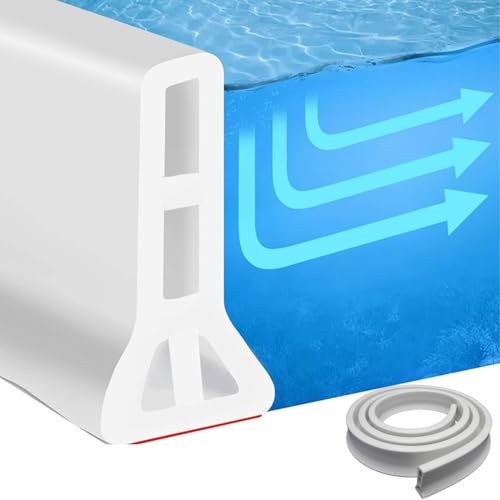
ANTFEES 67-Inch 3-Inch Collapsible Water Dam
A curtain that leaves a narrow gap at the wall can send water across the tub surround instead of into the basin. The Mofason pair addresses that corner directly with clear silicone that blends into light-colored tubs and tiled walls.
Each guard measures 11.5 by 9.2 by 0.6 inches and is intended for a 90-degree corner. For a busy family bathroom, the two-pack allows you to address both ends of a curtain or use one section in the kitchen.
A Strong Showing
- The transparent finish keeps the barrier visually understated beside a tub or shower curtain.
- Adhesive attachment turns installation into a clean-and-press task on smooth surfaces.
- Flexible food-grade silicone avoids a hard edge against the tub.
- Two pieces give you more placement options than a single corner seal.
Points To Note
- The 90-degree design is less natural for a rounded shower wall.
- Cleaning and drying the attachment area beforehand improves the fit.
Key Specs
Made For Corner Gaps
This pair suits you most when a shower curtain leaves a vertical gap beside a square bathtub or sink.
Where Another Pick Suits Better
Choose the KAYLEINSTER 39-Inch Transparent Water Dam instead for the bottom of a frameless shower door.
A low leak beneath a frameless glass shower door is a narrow problem that calls for a narrow barrier. The KAYLEINSTER strip stands only 0.47 inches high and measures 0.79 inches wide, which helps it sit at a shower entrance without creating a substantial step.
You can cut the 39-inch length to fit, then place the adhesive strip along a clean, dry floor. The transparent silicone also suits tiled thresholds where an opaque rubber dam would interrupt the bathroom’s appearance.
Strengths Worth Knowing
- The low profile is practical beneath frameless shower doors.
- Flexible silicone is soft underfoot and simple to wipe clean.
- Cut-to-fit construction accommodates shorter entrances and unusual layouts.
- The clear finish blends into tiled shower thresholds.
Trade Offs
- Silicone sealant is not included and is recommended for sealing the edges.
- A low dam suits small leaks better than areas with substantial water flow.
Feature Snapshot
Right Fit For Glass Entries
This is a sensible match for a frameless shower door where you want a modest barrier rather than a raised threshold.
Consider Something Else When
The zhuohai 39-Inch Self-Adhesive Water Barrier offers similar sizing with a broader sink and countertop use case.
Water running off a kitchen counter follows a different path from shower spray, so the barrier has to fit a flat or angled edge. The zhuohai strip uses a 90-degree profile and can be cut to any length, giving you several household uses from one piece.
It works along a sink rim, countertop, bathtub edge, or shower-door bottom. The low 0.47-inch height makes it less noticeable than the taller walk-in dams, though you still need to account for foot traffic in a busy room.
What Stands Out
- One cut-to-fit strip can cover sink, tub, counter, and doorway gaps.
- The 90-degree profile helps redirect countertop water toward the basin.
- Soft silicone rubber is easy to wipe down after splashing.
- It fits beneath shower doors on flat or slightly angled curbs.
Things To Consider
- The fixed 90-degree shape is less suitable for a deeply rounded edge.
- Cleaning the surface before placement helps the adhesive backing grip.
Core Details
Who Will Love This
You will appreciate this option most in a multipurpose home where sinks, counters, tubs, and shower doors all need a low water barrier.
A Better Fit Elsewhere
Use the Mofason Silicone Corner Splash Guard 2 Pack for a dedicated curtain-to-wall corner rather than a straight threshold.
A walk-in shower without a curb gives you more floor space, but water can travel farther than you may expect. This 3.8-inch-high barrier creates a pronounced threshold that helps keep the shower area separate from the bathroom floor.
The rubber profile bends along straight or curved sections and compresses under pressure. You can trim the 70-inch length to fit, making this a practical choice for a wide entrance where the 39-inch strips would need extra joints.
Real-World Strengths
- The taller profile gives you more separation at an open shower entrance.
- Flexible rubber follows a straight threshold or a gentle curve.
- Compressible construction can be stepped or rolled over.
- The 70-inch length reduces the need for corner joints.
Practical Considerations
- The 3.8-inch height is more noticeable than a low threshold strip.
- Edge sealing may require an additional silicone material.
Built With In Mind
This suits you well in a curbless or walk-in shower with a broad entrance and enough floor area for a raised threshold.
Where A Sibling Pick Shines
The YISUIPU 80-Inch 3.8-Inch Shower Splash Guard reduces joining work when your entrance needs the extra length.
Long shower entrances and broad walk-in openings can consume a short strip faster than you might expect. At 80 inches, this YISUIPU model provides enough material to span a wide threshold or trace a longer curved section before cutting it down.
Its 1.5-inch width and 3.8-inch height match the shorter 70-inch model, so the key decision is coverage rather than profile. The flexible rubber bends around corners and compresses beneath movement in the shower entrance.
Practical Advantages
- The 80-inch length suits broad openings without an immediate joint.
- You can trim unused material for shorter installations.
- The tall profile provides a stronger visible barrier than low dams.
- Compressible rubber works around curved layouts and foot traffic.
Worth Bearing In Mind
- Extra length offers little benefit for a short shower threshold.
- The raised edge changes the appearance of an open entrance.
The Details
Made For Larger Openings
This is a strong match for a broad walk-in shower, curved wet area, or long threshold that benefits from one continuous piece.
Reach For A Different Pick When
Choose the YISUIPU 70-Inch 3.8-Inch Shower Splash Guard for a wide entrance that does not require the extra length.
Sometimes a 3.8-inch threshold is simply too tall for the available floor space. This 3.2-inch version still creates a raised separation, but its reduced height can feel less intrusive in a compact bathroom or apartment shower.
The 67-inch strip provides ample length for a typical shower entrance and can be trimmed to fit. Like the taller YISUIPU barriers, the soft rubber bends along straight or curved areas and compresses under pressure.
Well-Handled Touches
- The 3.2-inch height balances a raised barrier with a smaller visual footprint.
- A 67-inch length covers most standard entrances in one piece.
- Flexible rubber follows slightly uneven or curved layouts.
- Self-adhesive placement supports a straightforward installation.
Small Caveats
- It offers less height than the 3.8-inch YISUIPU models.
- Sealing material may be needed along the edges for a complete seal.
Who Should Grab It
Choose this barrier for a compact shower entrance where you want more separation than a low strip but less height than the larger YISUIPU options.
Swap It Out When
The ANTFEES 67-Inch 3-Inch Collapsible Water Dam fits a slightly lower threshold and adds a supported triangular base.
A collapsible dam has to do two things at once: stand up well enough to redirect water and yield when you cross the entrance. The ANTFEES model uses a triangular lower profile for support while keeping the upper section flexible.
At 67 inches long, 1.4 inches wide, and 3 inches high, it offers a middle ground between a low glass-door strip and a taller walk-in barrier. You can trim it for a bathtub, shower pan, utility sink, or kitchen work area.
Strong Points
- The triangular base adds support along the bottom edge.
- Flexible rubber bends to fit different barrier shapes.
- You can cut the length to suit the installation area.
- Its profile works around shower pans, tubs, and sinks.
The Fine Print
- Silicone sealing strip is suggested for the bottom gap but not included.
- The 3-inch height still changes the profile of a previously open entrance.
Feature Facts
The Right Fit
This option suits you best in a bathroom or kitchen where a supported, collapsible barrier is more useful than a nearly flat strip.
Not Your Match When
The YISUIPU 67-Inch 3.2-Inch Shower Splash Guard offers a slightly taller profile for a more pronounced separation.
Match the Barrier to the Water Problem
Start with the path the water takes, not the product name. A curtain-to-wall gap needs a corner seal, while water crossing a shower threshold calls for a long dam with a profile that suits foot traffic.
Corner shape and surface
Corner guards work best on square transitions where two walls meet at roughly 90 degrees. Straight threshold strips suit flat curbs, angled edges, and countertop rims, and the surface must be smooth, clean, and dry for the adhesive to make proper contact.
Height and traffic
A low profile is less noticeable and easier to step over, making it suitable for glass shower doors. Taller barriers create a more visible line and greater separation, which is worth considering for open walk-in showers where water reaches the bathroom floor.
Length and installation details
Measure the entire run before choosing a strip, including any curves or corners. Extra length gives you room to cut and shape it, but pieces wider than the available threshold can interfere with doors, fixtures, or foot movement.
Two Details That Change the Outcome
Common Shopping Slip Ups
Avoid choosing by length alone, since height, base width, and flexibility determine how the barrier behaves once installed. Check the floor slope, shower-door clearance, and whether the adhesive area is clean enough for secure placement.
What Separates Premium From Basic
The larger models add useful height, longer material, or a more supported base rather than relying on length alone. Those additions matter most at open shower entrances, where water spreads beyond a small threshold patch.
Frequently Asked Questions
Are bathtub splash guards adhesive?
Most options in this roundup use peel-and-stick backing, so a clean, dry surface is essential. Some installations also benefit from silicone sealant along exposed edges.
Can a splash guard fit a frameless shower door?
A low-profile water dam is usually the better match for a frameless shower door. Check the door’s closing clearance before placing the barrier.
What height is best for a walk-in shower?
A taller barrier creates stronger visual and physical separation at an open entrance. A lower profile works better where floor space or step-over clearance is limited.
Can one splash guard work in the kitchen?
Straight, cut-to-fit barriers can suit sink rims, countertop edges, and other smooth kitchen surfaces. Match the profile to the edge before cutting it to length.
Do I need silicone sealant?
Sealant is useful for closing edge gaps and improving the seal around a dam. The required sealant varies by product, and the KAYLEINSTER and ANTFEES options do not include it.
Final Verdict
The best match depends on the leak’s location: Mofason handles tight corners, KAYLEINSTER suits low glass-door thresholds, and the taller YISUIPU and ANTFEES dams serve open shower entrances. Measure the gap, check the traffic path, and choose the profile that solves the actual water route.