
A bathroom wall exhaust fan has to clear moisture without turning ventilation into a noisy or complicated project. You may be replacing a weak grille fan, extending a duct run, clearing a workshop, or reducing airflow around a doorway. The right choice depends less on the label and more on duct size, airflow needs, sound level, and where the equipment will actually operate.
A Snapshot Of The Selections
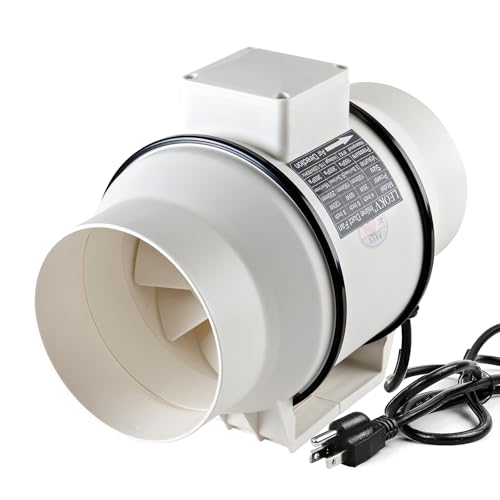
LEOKV 6-Inch Inline Duct Exhaust Fan, 420 CFM, Mixed-Flow Motor

LEOKV 12-Inch Industrial Blower Fan, 3,200 CFM, 27-Foot Hose and 15-Foot Cable and Plug

LEOKV 8-Inch Inline Duct Exhaust Fan, 740 CFM, Mixed-Flow Motor
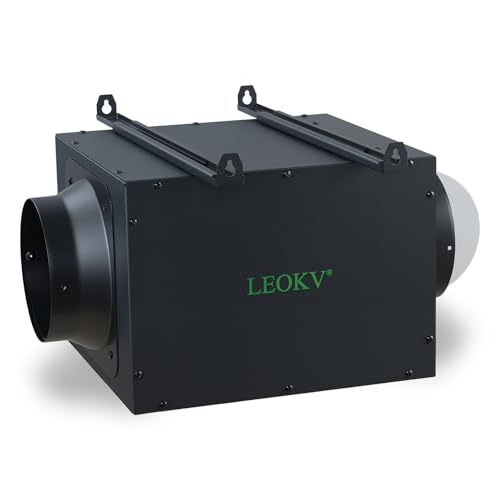
LEOKV 6-Inch Inline Exhaust Fan, 330 CFM, 2-Speed Galvanized Steel
LEOKV 4-Inch Inline Bathroom Exhaust Fan, 200 CFM, 2-Speed Black

LEOKV 36-Inch Black Air Curtain with Remote

LEOKV 36-Inch White 2-Speed Air Curtain with Remote and Magnetic Switch for Standard Doors
More On The Choices That Made The List
A six-inch duct connector can give a bathroom wall fan the push it needs, especially where the existing duct run feels restrictive. You get 420 CFM, meaning 420 cubic feet of air moves each minute, while the mixed-flow motor combines axial and centrifugal airflow characteristics to move air through a duct line.
You gain more flexibility than a basic grille fan because the housing sits inside the duct run instead of directly in the wall. The all-copper motor winding and vibration-reducing mounting design support steady operation, and the inline format works especially well for bathroom extensions, kitchens, and grow rooms with existing ductwork.
The Practical Payoff
- You gain 420 CFM for moving moisture through a constrained bathroom duct.
- The mixed-flow motor suits long or restrictive runs better than a simple wall grille.
- Aerodynamic blades and mounting brackets help limit vibration and operating noise.
- The 6-inch housing fits common duct sizing and keeps installation focused.
Things To Consider
- You still need compatible 6-inch ductwork and adequate support around the housing.
- Its 420 CFM rating sits below the higher-output LEOKV 8-Inch Inline Duct Exhaust Fan.
Quick Facts
Made For
You benefit most when your bathroom has a 6-inch duct line that needs stronger movement without replacing the entire wall grille.
Another Choice May Suit
You gain more capacity from the LEOKV 8-Inch Inline Duct Exhaust Fan when your duct system is larger and requires 740 CFM.
Dust hanging in an attic or stale air collecting in a basement calls for more than a small inline fan. You get a portable 12-inch blower rated at 3,200 CFM, and the included 27-foot flexible hose lets you direct airflow into a confined space without building a permanent duct connection.
Unlike the LEOKV 6-Inch Inline Duct Exhaust Fan, this model serves as a movable jobsite tool. You can position it for dust removal, workshop ventilation, or basement cleanup, while the 15-foot cord and plug give you more freedom than a permanently installed unit.
Practical Advantages
- You get 3,200 CFM for substantial airflow across larger work areas.
- The 27-foot hose reaches into attics, crawl spaces, and narrow access points.
- Its portable design lets you reposition the fan as the job changes.
- Copper motor wiring supports consistent operation in demanding settings.
Worth Noting
- You need floor space for the 12-inch housing and room to manage the hose.
- Its size and output make it less convenient than an inline fan for a finished bathroom.
Feature Snapshot
Right Fit For
You benefit most as a homeowner or trade professional clearing dust, drying spaces, or ventilating an attic, basement, or workshop.
Look Elsewhere When
The LEOKV 6-Inch Inline Exhaust Fan fits a permanent bathroom duct installation better than this portable industrial blower.
Larger bathrooms, long duct runs, and shared ventilation lines give you a more demanding job than a standard wall grille can handle. You get 740 CFM through an 8-inch inline housing, a substantial increase over the 420 CFM offered by the LEOKV 6-Inch Inline Duct Exhaust Fan.
The mixed-flow motor suits a duct installed behind a wall, above a ceiling, or inside a larger utility space. You also gain aerodynamic blades and vibration-reducing brackets, which help keep the housing from turning duct movement into unwanted noise.
What Pays Off
- You receive 740 CFM for higher-volume moisture and odor removal.
- The 8-inch duct connection suits larger residential and utility ventilation runs.
- Mixed-flow construction supports consistent movement through installed ductwork.
Practical Considerations
- You need 8-inch ductwork and more installation space than a compact inline unit.
Built With In Mind
You benefit most when replacing a weak wall grille with a higher-capacity inline fan for a larger bathroom or extended duct run.
Where A Sibling Pick Shines
The LEOKV 6-Inch Inline Exhaust Fan fits smaller 6-inch duct systems and gives you two operating speeds for sound control.
A bathroom beside a bedroom or shared living space calls for airflow you can adjust rather than one fixed operating point. You get two speeds with the LEOKV 6-Inch Inline Exhaust Fan: 330 CFM at 1.7 sones on high and 240 CFM at 1.5 sones on low. One sone is a unit used to express perceived sound loudness.
The galvanized steel housing gives you a practical material for duct installation, while the copper-wound motor suits extended ventilation use. Compared with the LEOKV 8-Inch Inline Duct Exhaust Fan, you trade some airflow capacity for a more manageable 6-inch format and clearer sound control.
What Stands Out
- You choose between 330 and 240 CFM for different ventilation demands.
- Two sound levels help you select quieter operation for occupied rooms.
- The galvanized steel housing is suited to standard duct installation.
- You can use it for bathroom, kitchen, or garage ventilation.
- The 6-inch format fits many common residential duct runs.
Minor Gripes
- Its 330 CFM maximum is lower than the 420 and 740 CFM inline alternatives.
- You must match the housing to a 6-inch duct run rather than a smaller 4-inch line.
Key Specs
Who Will Love This
You benefit most in a compact bathroom where lower sound during everyday showers matters more than maximum airflow.
Reach For A Different Pick When
You gain greater duct capacity from the LEOKV 8-Inch Inline Duct Exhaust Fan when your system needs 740 CFM.
A small bathroom with an existing 4-inch duct line leaves little room for a bulky inline housing. You get a compact 4-inch fan with two speeds, giving you 200 CFM at 1.5 sones on high and 130 CFM at 1.2 sones on low.
The black finish suits a visible installation area, and the galvanized steel body provides a practical housing for moisture-prone spaces. Compared with the LEOKV 6-Inch Inline Exhaust Fan, you gain easier fit within a 4-inch system but give up 130 CFM at the high setting.
Where It Excels
- You get a space-saving 4-inch housing for compact bathroom ducts.
- Two speeds let you reduce airflow and sound for quieter use.
- The lower setting provides 130 CFM at 1.2 sones for gentler ventilation.
- Its black finish blends into a visible installation location.
Some Limits To Know
- You need a 4-inch duct connection, so it cannot replace a 6-inch inline unit directly.
- Its 200 CFM maximum suits smaller spaces better than long, restrictive duct runs.
Made For
You benefit most in a small bathroom where duct size limits the fan choice and a low-speed setting is useful for routine use.
Consider Something Else When
The LEOKV 6-Inch Inline Exhaust Fan suits you better when your existing duct is 6 inches and you want more than 200 CFM.
An open doorway can carry dust, insects, and unwanted outdoor air into a room, but a wall exhaust fan does not solve that particular problem. You get a 36-inch air curtain mounted above the opening, where it directs a downward stream of air to help separate indoor and outdoor spaces.
The remote control makes adjustment convenient in a busy kitchen, workshop, or commercial entryway, and two speeds let you match the airflow to the doorway. Unlike the inline duct options, this model creates an airflow barrier rather than moving air through a bathroom duct.
Practical Pluses
- You control two airflow levels without walking to the unit.
- The 36-inch width suits many standard interior door openings.
- Its black finish works well against darker frames and utility areas.
Points To Keep In Mind
- You need suitable mounting space above the doorway and access to power.
- It moves room air across an opening instead of exhausting moisture through a duct.
Core Details
Best Suited To
You benefit most with a frequently opened doorway that needs a movable air barrier rather than a permanent bathroom duct system.
Not Your Match When
The LEOKV 4-Inch Inline Bathroom Exhaust Fan suits you better when your real goal is removing moisture through a small bathroom duct.
A white air curtain can blend into a bright home interior while directing air across an open doorway. You get a 36-inch unit with two speeds, a remote control, and a magnetic door switch, which provides a more integrated operating setup than the remote-only LEOKV Black Air Curtain.
You can use the magnetic switch to coordinate operation with the door while adjusting the airflow remotely. The unit provides an invisible barrier of moving air rather than heating or cooling the room, so you should choose it for doorway control instead of bathroom moisture removal.
Advantages To Know
- You get remote and magnetic-switch control for convenient operation.
- Two speeds let you adjust the downward airflow around your doorway.
- The white finish suits light-colored walls and residential entries.
- The 36-inch width fits many standard door openings.
Details To Watch
- You need proper overhead mounting and a compatible magnetic switch position.
Feature Facts
The Right Fit
You benefit most in a home or commercial doorway where coordinated controls and a light-colored finish suit the entrance.
Swap It Out When
The LEOKV 6-Inch Inline Exhaust Fan suits you better when you need a duct-connected fan to remove bathroom moisture.
What Matters Before You Choose Your Ventilation Setup
Match the fan to the duct
Your duct diameter is the first compatibility check. A 4-inch inline fan cannot connect directly to 6-inch duct, while an 8-inch housing needs more physical space than a compact unit. Measure both the duct and the available cavity before selecting a model.
Airflow should match the room and run
CFM measures the volume of air moved each minute, so a higher number can help a larger bathroom or longer duct run. More capacity does not automatically create a better system, though, because restrictive ductwork, tight bends, and poor connections can still limit the result.
Consider sound and operating modes
A two-speed fan gives you a practical way to reduce sound during quieter periods. One sone expresses perceived sound loudness, allowing you to compare the listed operating points before deciding which level fits your space.
Decide whether you need ducting or doorway control
An inline fan removes air through a duct, while an air curtain directs air across an open doorway. Choose the first for bathroom ventilation and the second for separating spaces around an entry.
Common Errors To Avoid Before Installation
Mistaking CFM for a complete ventilation plan
You cannot judge a fan by airflow alone. Duct length, bends, diameter, and exterior discharge all affect how air moves, so match the unit to the complete route rather than selecting the highest number.
Ignoring the installation opening
You need enough space around the housing, mounting support, and a practical route for wiring. Measure the cavity and check the duct size before ordering a larger inline fan.
Where Higher Capacity Adds Value
You gain meaningful benefits from a higher-output model when your bathroom is large, the duct run is long, or an existing vent moves air poorly. A stronger mixed-flow unit can also provide more flexibility for kitchens and grow rooms, though the ductwork still needs to support that capacity.
Extra features matter at different points. Two speeds help with sound control, a magnetic switch improves doorway coordination, and a portable hose supports changing work areas rather than permanent ventilation.
Frequently Asked Questions
What size bathroom exhaust fan do I need?
You should base the size on duct diameter, room volume, and the distance air must travel. A 4-inch model fits smaller duct systems, while 6-inch and 8-inch options suit larger airflow demands.
Is an inline duct fan quieter than a wall-mounted fan?
Not always. Installation quality and duct vibration affect noise, and a two-speed model gives you lower airflow and sound settings for quieter operation.
What does 200 CFM mean for a bathroom?
A 200 CFM fan moves 200 cubic feet of air per minute. That capacity can suit a compact bathroom with a short, direct 4-inch duct route.
Can an air curtain replace a bathroom exhaust fan?
No, an air curtain directs air across a doorway and does not remove moisture through a duct. You still need a duct-connected exhaust fan for bathroom moisture control.
Do inline fans need a dedicated duct?
Yes, an inline fan belongs within a compatible duct run. Check the inlet and outlet diameter, available housing space, and electrical connection before installation.
Closing Remarks
Your best choice depends on the job: a 4-inch model fits compact ducts, 6-inch options balance capacity and sound, and an 8-inch fan supports higher airflow. Portable blowers suit larger cleanup tasks, while air curtains address open doorways rather than bathroom moisture. Measure the space and match the device to the airflow path before you buy.