
Steam clinging to the mirror after a hot shower is a familiar sign that one bathroom fan cannot handle a busy household. The right setup depends on your duct size, the amount of air you need to move, and whether you need fixed exhaust, portable airflow, or an over-door air curtain. These options cover everything from compact residential ducts to workshops and larger ventilation jobs.
A Side-By-Side Look
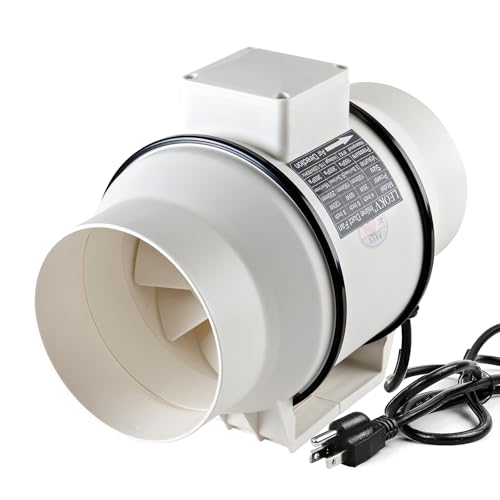
LEOKV 6-Inch Inline Exhaust Fan 420 CFM, Duct Vent Booster for Bathroom

LEOKV 12-Inch Industrial Blower Fan 3200 CFM with 27-Foot Flexible Hose

LEOKV 8-Inch Inline Exhaust Fan 740 CFM, Duct Vent Booster for Bathrooms
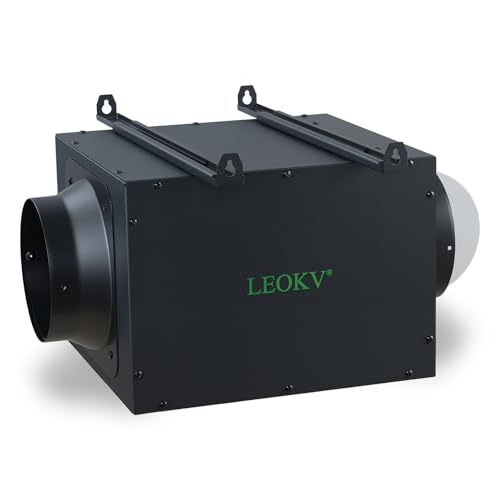
LEOKV 6-Inch Inline Exhaust Fan 330 CFM, Two Speeds, Steel
LEOKV 4-Inch Inline Exhaust Fan 200 CFM, Two Speeds, Black

LEOKV Black Air Curtain
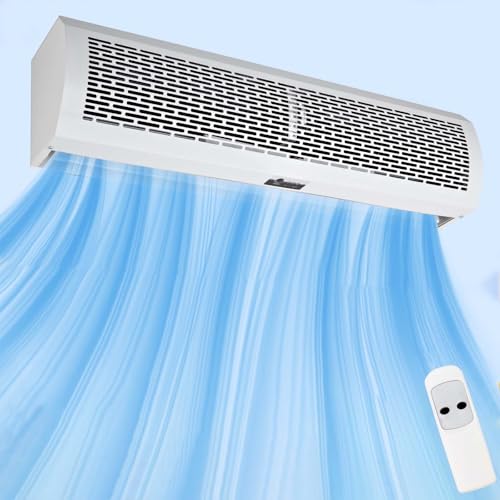
LEOKV White 36-Inch Air Curtain, Two Speeds, Remote and Magnetic Switch
Meet The Standout Selections
Steam lingering after a shower calls for more than a weak wall grille. This inline fan sits within a duct line and pulls air through the system, with a rated 420 CFM, meaning 420 cubic feet of air moves each minute.
For most homes with 6-inch ductwork, that figure offers a sensible middle ground. Its mixed-flow design and vibration-reducing mounting parts are useful where you want strong movement without adding a bulky housing inside the bathroom.
Real-World Strengths
- 420 CFM provides useful airflow for bathroom and kitchen ventilation.
- Mixed-flow construction moves air through compatible duct systems.
- Copper-wire motor components suit frequent ventilation use.
Points To Keep In Mind
- Your existing duct and housing need to accommodate the 6-inch format.
- The 740 CFM LEOKV 8-Inch Inline Exhaust Fan suits systems needing more capacity.
Key Specs
Made For
This fan fits DIYers with compatible 6-inch ductwork who need stronger bathroom or kitchen ventilation.
A Better Fit Elsewhere
The LEOKV 8-Inch Inline Exhaust Fan 740 CFM fits larger 8-inch systems that need greater airflow.
Where the LEOKV 6-Inch Inline Exhaust Fan 420 CFM handles fixed residential ducting, this blower takes a different approach. Its 12-inch portable body and 3,200 CFM rating suit larger jobs such as workshops, construction areas, crawl spaces, attics, and basements.
The included 27-foot flexible hose lets you direct airflow into awkward spaces, while the long power cable adds reach around a work area. In our view, its scale makes it a practical jobsite tool rather than a typical bathroom installation.
Everyday Advantages
- The 3,200 CFM rating supports substantial air movement.
- A flexible 27-foot hose reaches confined or distant spaces.
- The portable design moves between basements, attics, and workshops.
- A 15-foot power cable supports flexible positioning.
Trade Offs
- Its size and hose make it less convenient than a fixed inline fan.
- The 12-inch opening requires a compatible intake or outlet.
- A standard bathroom duct may not need this level of airflow.
Feature Snapshot
Workshop Pick
This blower works well for workshop owners and renovation crews that need portable, high-volume ventilation.
Another Choice May Suit
The LEOKV 6-Inch Inline Exhaust Fan 330 CFM fits bathroom renovations centered on fixed 6-inch ductwork.
Moving up from the LEOKV 6-Inch Inline Exhaust Fan 420 CFM adds both diameter and rated airflow. This 8-inch model moves 740 CFM through compatible ductwork, giving you more capacity for larger rooms, longer duct runs, or demanding humidity control.
The mixed-flow design and vibration-reducing mounting hardware keep the installation practical. It remains an inline duct component, though, so your existing system must provide room for an 8-inch unit.
Everyday Wins
- 740 CFM offers considerably more rated airflow than the 6-inch model.
- The 8-inch format suits larger compatible duct systems.
- Mixed-flow operation supports strong movement with controlled noise.
- Mounting brackets help limit vibration through the duct line.
Small Caveats
- Existing 4-inch or 6-inch ductwork needs modification for an 8-inch fit.
- Its added capacity may be unnecessary for a compact bathroom.
Right Fit For
This option fits homeowners with 8-inch ductwork who need stronger airflow than a standard inline residential fan provides.
Where A Sibling Pick Shines
The LEOKV 4-Inch Inline Exhaust Fan 200 CFM fits tight spaces with 4-inch ducting and lighter airflow requirements.
A two-speed bathroom fan gives you a practical way to balance airflow against operating noise. This 6-inch inline model delivers 330 CFM on high and 240 CFM on low, with a bottom-mounted control for changing settings after installation.
Unlike the larger LEOKV 8-Inch Inline Exhaust Fan 740 CFM, this unit focuses on adjustable residential performance. Its galvanized steel housing adds a material commonly chosen where moisture exposure is a concern.
Practical Pluses
- Two speeds let you lower airflow during less demanding periods.
- Rated airflow reaches 330 CFM on the high setting.
- Galvanized steel provides a practical housing for damp environments.
Worth Noting
- Plan for access to the bottom control, and note that the high setting is rated at 1.7 sones, a sound-level unit where lower numbers indicate less noise.
Technical Highlights
Best Suited To
This fan fits households with 6-inch ducts that want two airflow levels and a galvanized steel housing.
Look Elsewhere When
The LEOKV 6-Inch Inline Exhaust Fan 420 CFM suits projects that want a single higher-capacity airflow option.
Space can dictate the fan before airflow does. This 4-inch inline model fits the footprint left by narrower duct systems, offering 200 CFM on high and 130 CFM on low through a bottom-mounted two-speed control.
Compared with the LEOKV 6-Inch Inline Exhaust Fan 330 CFM, it makes more sense in a compact bathroom where duct dimensions are fixed. The black finish also blends neatly into a dark ceiling grille or utility space.
What Makes Sense
- The 4-inch size fits narrow duct runs and tight installation spaces.
- Two speeds offer 130 or 200 CFM according to the task.
Details To Watch
- Your ductwork must accept a 4-inch fan and matching connection.
- The 200 CFM maximum is lower than the 6-inch model’s 330 CFM.
- You will need access to the bottom-mounted speed control after installation.
Small-Space Match
This option fits apartment residents and renovators working with compact 4-inch bathroom ductwork.
Reach For A Different Pick When
The LEOKV 6-Inch Inline Exhaust Fan 330 CFM fits larger 6-inch systems that call for stronger airflow.
An open doorway can interrupt the comfort of a room, but an air curtain creates a downward stream of air across the entrance. This 36-inch black model mounts above a door and provides two airflow levels, with remote control for convenient adjustment.
That makes it different from every inline fan in this roundup. It separates indoor and outdoor air rather than pulling stale air through a bathroom duct, so you still need actual exhaust ventilation where moisture collects.
What Earns Its Place
- The 36-inch width fits many standard residential door openings.
- Remote control avoids reaching the unit after installation.
- Two speeds let you tune the airflow to your doorway and comfort level.
Possible Compromises
- An air curtain does not remove moisture or odors from a bathroom.
- The unit produces moving air without heating or cooling it.
Core Details
Who Will Love This
This air curtain suits homeowners who want a discreet airflow barrier above a frequently used doorway.
Swap It Out When
The LEOKV 4-Inch Inline Exhaust Fan 200 CFM fits a real bathroom extraction task rather than doorway air separation.
The LEOKV Black Air Curtain already offers remote control and two speeds, but the white model adds a magnetic door switch for a more integrated entry setup. Mounted above the doorway, it directs a curtain of moving air downward while the door opens and closes.
That arrangement works well for kitchens, utility areas, workshops, and household entries where a door is opened frequently. It also provides a cleaner visual than a floor-mounted fan, although the color and width still need to complement your doorway.
Useful Highlights
- The magnetic switch supports convenient operation with a door.
- Two speeds provide adjustable airflow strength.
- Remote control offers another way to change settings.
- The white finish blends naturally with light-colored walls and trim.
Where It May Fall Short
- Measure the doorway and plan the mounting position, while remembering that the unit moves air without heating or cooling it.
Feature Facts
Built With In Mind
This air curtain fits homes with a 36-inch doorway and a preference for integrated, remote-controlled entry airflow.
A Better Fit Elsewhere
The LEOKV Black Air Curtain fits users who prefer a dark finish and do not need a magnetic door switch.
Match the Fan to Your Duct and Doorway
Duct Diameter Comes First
The fan diameter must correspond with your existing ductwork. A 4-inch unit fits narrower residential runs, while 6-inch and 8-inch models require matching connections and adequate space inside the duct housing. Measure before selecting a replacement.
Airflow Should Match the Job
CFM measures how much air moves each minute. Higher capacity can suit larger, humid spaces or longer duct runs, but the entire system still needs to support that airflow. The 4-inch option offers the most compact fit, while the 8-inch model carries the highest inline rating.
Noise and Controls Affect Daily Comfort
Sones describe sound level, with lower values indicating quieter operation. A two-speed fan gives you more control over the balance between airflow and noise. Remote controls and door switches add convenience, but they do not change the basic ventilation task.
Know Which Type You Need
An inline fan extracts air through ductwork, making it appropriate for bathroom moisture and odors. An air curtain creates moving air across a doorway and can help limit insects and exterior air entry. Choose according to the airflow problem your space actually has.
Two Details That Change the Fit
Wrong Turns To Avoid
Do not choose by airflow alone, since duct diameter, housing space, and installation access determine compatibility. Also, do not treat an air curtain as a substitute for bathroom exhaust, because it separates doorway air rather than removing moisture from the room.
What The Higher Tier Buys
Added cost may buy greater airflow, two operating speeds, remote controls, magnetic switches, or a galvanized steel housing. Those improvements matter when your space has a demanding ventilation task or you want finer control over everyday operation.
Frequently Asked Questions
Are wall-mounted bathroom fans the same as inline fans?
Wall-mounted bathroom fans can describe the finished grille location, while inline fans install inside the duct line. The grille you see in the room may connect to an inline fan farther behind the wall.
What duct size should an exhaust fan match?
The fan should match the diameter of the existing duct and connection. Measure the round duct and the available housing space before choosing a 4-inch, 6-inch, 8-inch, or 12-inch model.
Does a higher CFM rating mean better ventilation?
A higher CFM rating means more air moves each minute. It can suit larger or more demanding spaces, provided your ductwork, housing, and outlet can accommodate the added airflow.
Can an air curtain replace a bathroom exhaust fan?
An air curtain is designed to move air across a doorway rather than extract bathroom moisture. A properly sized inline or wall exhaust fan remains the more suitable choice for a humid bathroom.
Which option fits a small bathroom?
The LEOKV 4-Inch Inline Exhaust Fan 200 CFM fits compact 4-inch ductwork particularly well. Its 200 CFM high setting offers more airflow than a small grille alone, subject to the capacity of the rest of the duct system.
Final Verdict
Start with your duct diameter and airflow requirement, since those details narrow the choice faster than appearance. Inline fans handle actual room extraction, while the two air curtains suit open entryways. The LEOKV 4-Inch Inline Exhaust Fan 200 CFM favors compact spaces, the 330 CFM model adds two-speed control, and the 740 CFM version addresses larger compatible ducts. Choose the setup that fits your space rather than forcing a fan into the wrong opening.