
Bathroom ventilation gets awkward when a room has no exterior wall, a cramped ceiling cavity, or a stubborn shower odor. You may need a duct booster for a longer vent run, a portable blower for a basement or crawl space, or an air curtain for a doorway that opens directly outside. These options serve different jobs, so the right one depends mostly on your space, airflow path, and installation point.
How The Shortlist Stacks Up
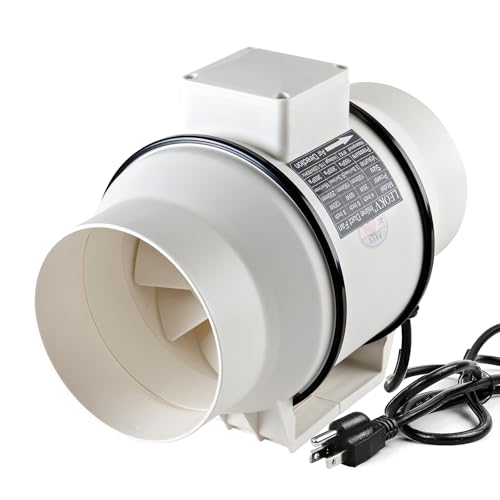
LEOKV 6-Inch Inline Duct Fan 420 CFM

LEOKV 12-Inch Industrial Blower Fan 3200 CFM

LEOKV 8-Inch Inline Duct Fan 740 CFM
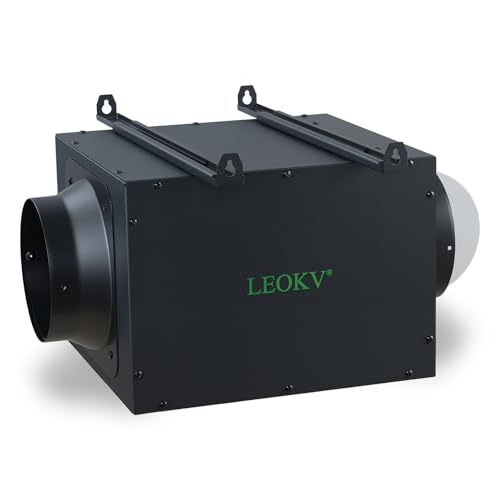
LEOKV 6-Inch Inline Bathroom Exhaust Fan 330 CFM
LEOKV 4-Inch Inline Bathroom Exhaust Fan 200 CFM

LEOKV Black 36-Inch Air Curtain
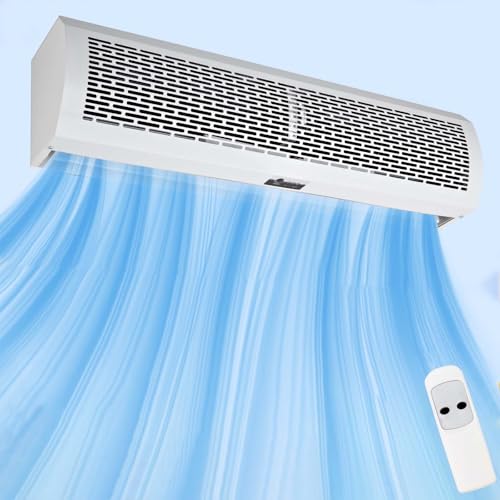
LEOKV White 36-Inch Air Curtain
The Strengths Of Each Pick
A six-inch inline fan makes sense when you need more movement through an existing duct without replacing the entire bathroom vent assembly. The 420 CFM rating gives it a practical middle ground between compact circulation and the stronger output of the eight-inch model, while the mixed-flow design helps move air through bends and longer runs.
For a small bathroom with a standard six-inch duct, this is the more restrained choice than the 740 CFM fan, which may be excessive for a tight room. Its aerodynamic blades and mounting brackets are intended to reduce vibration, a useful detail for a ceiling or attic installation where fan vibration can make itself known.
Noteworthy Benefits
- The 420 CFM output suits ordinary bathroom and kitchen exhaust runs.
- Mixed-flow blades support consistent movement through curved or extended ductwork.
- The all-copper motor winding is a useful construction detail for a permanently installed fan.
- Mounting brackets help reduce vibration during operation.
Things To Consider
- It requires a compatible six-inch duct connection rather than acting as a completely standalone vent.
- The 420 CFM figure is lower than the eight-inch LEOKV option, so very long restrictive runs may benefit from more capacity.
Key Specs
Who It Suits Best
This fan fits you best when you have a standard six-inch bathroom duct and want a moderate upgrade without moving to an eight-inch assembly.
Where Another Pick Suits Better
Choose the LEOKV 8-Inch Inline Duct Fan 740 CFM instead when your duct run is longer or resistance is greater than a normal bathroom installation.
When a bathroom vent reaches a basement, attic, or crawl space, portable equipment can make a frustrating job much easier. The 12-inch LEOKV blower provides 3200 CFM of airflow and pairs that output with a 27-foot flexible hose, so you can direct air toward a work area without building a permanent duct line.
This is the heaviest-duty option in the list, but it is not the usual replacement for a quiet ceiling vent. A contractor or homeowner dealing with dust, construction debris, or a confined space gets more flexibility from the 15-foot power cord, while the all-copper motor winding supports repeated use in demanding environments.
A Favorable Mix
- The 3200 CFM rating supports high-volume air movement.
- The 27-foot flexible hose reaches awkward corners, crawl spaces, and work zones.
- A 15-foot cord gives you more placement flexibility than a short household lead.
- The all-copper motor winding suits demanding ventilation tasks.
Minor Gripes
- A portable blower adds noise and setup compared with a permanent inline fan.
- Its size and hose make it less convenient for a finished bathroom ceiling.
Quick Facts
Made For
This blower suits you best when you work in an attic, basement, crawl space, or workshop and need directed airflow without permanent ductwork.
Consider Something Else When
The LEOKV 6-Inch Inline Bathroom Exhaust Fan 330 CFM is a better fit for a quiet, permanently installed bathroom vent.
The eight-inch inline fan is the capacity-focused bathroom option here, with 740 CFM of rated airflow for a demanding vent run. That extra headroom can matter when exhaust travels through a long duct or past several bends, situations where airflow loses momentum and a smaller fan has to work harder.
You also gain a practical option for kitchens or grow rooms, the same mixed-flow layout and vibration-conscious mounting approach used in the six-inch model. For a compact residential bathroom, that capacity may feel like more than necessary, so the 420 CFM version remains the more measured choice.
The Value In It
- The 740 CFM rating provides extra capacity for restrictive or extended ducts.
- Mixed-flow construction supports movement through bends.
- Mounting brackets are designed to limit vibration.
- The all-copper motor winding suits a permanently installed ventilation role.
Points To Note
- An eight-inch duct connection is required, so existing six-inch plumbing may need modification.
- The higher output is more than some small bathrooms need for daily use.
The Right Fit
This model fits you best when you have an eight-inch duct, a long exhaust path, or a room where a six-inch fan does not provide enough movement.
A Better Fit Elsewhere
The LEOKV 4-Inch Inline Bathroom Exhaust Fan 200 CFM suits a small bathroom with limited ceiling and duct space better.
Two speeds make the six-inch, 330 CFM fan easier to live with in a finished home. High speed moves 330 CFM at 1.7 sones, while low speed reduces output to 240 CFM at 1.5 sones; a sone is a measure of perceived sound, so the lower setting gives you a little more control over background noise.
Compared with the 420 CFM LEOKV model, this option offers more explicit speed control and published sound figures. It also uses galvanized steel for a galvanized construction that resists rust in damp bathroom environments, making it a sensible middle ground for people who care about sound but do not need maximum airflow.
Notable Gains
- Two speeds let you balance airflow against perceived sound.
- High mode provides 330 CFM for stronger exhaust demand.
- Low mode uses 240 CFM at 1.5 sones.
- Galvanized steel provides a practical moisture-resistant housing.
Trade Offs
- The six-inch duct size limits compatibility with eight-inch systems.
- The 330 CFM high setting is lower than the 420 CFM and 740 CFM inline options.
Feature Snapshot
Built With In Mind
This fan suits you best when sound matters in a frequently used bathroom and you want two airflow levels rather than a single setting.
Another Choice May Suit
The LEOKV 6-Inch Inline Duct Fan 420 CFM suits you better when maximum airflow matters more than a dedicated low-speed setting.
Four-inch ductwork is the main reason to notice this model. It can be a practical choice in a small bathroom, older vent layout, or renovation where fitting a six-inch housing would be inconvenient, and the 200 CFM high setting still provides meaningful movement for a compact room.
The lower setting moves 130 CFM at 1.2 sones, while high speed reaches 200 CFM at 1.5 sones. That control is helpful in a guest bath or tight apartment bathroom, although the smaller capacity will not suit a long or highly restrictive duct run as comfortably as the larger LEOKV models.
Real-World Strengths
- The four-inch format fits more compact duct layouts.
- High speed provides 200 CFM for everyday bathroom exhaust.
- Low speed offers 130 CFM at 1.2 sones for quieter operation.
- The black finish can blend into a dark utility space or ceiling cavity.
Small Caveats
- Its 200 CFM maximum is lower than every larger inline fan in this roundup.
- You need a compatible four-inch duct and adequate space around the housing.
At A Glance
Whose Shelf It Belongs On
This fan suits you best in a small bathroom or older building where a four-inch duct is already in place and space is tight.
Reach For A Different Pick When
The LEOKV 6-Inch Inline Bathroom Exhaust Fan 330 CFM is a better fit when a standard six-inch connection and stronger airflow are available.
An air curtain solves a different problem from an exhaust fan. Mounted above a doorway, this 36-inch LEOKV unit creates a downward stream of room-temperature air that helps separate indoor and outdoor spaces, which can be useful for a garage, workshop, or entry that opens toward a porch or yard.
The black finish makes it less conspicuous against dark trim, while two speed settings let you adjust the strength to the doorway. The remote control adds convenient access after installation, and the air curtain does not heat or cool the room, so it should be judged as an airflow barrier rather than a substitute for a bathroom exhaust fan.
Why It Works Well
- The 36-inch width suits many standard interior door openings.
- Two speeds allow you to adjust the airflow barrier for different conditions.
- Remote control makes changes convenient after mounting.
- The black finish fits dark doorframes and utility-room interiors.
Honest Caveats
- It creates a doorway airflow barrier rather than removing moisture through a bathroom vent.
- You need a suitable overhead mounting point and enough vertical clearance for the airflow.
Best Suited To
This air curtain suits you best when you want a ventless doorway barrier for a garage, workshop, or home entrance that connects to an outdoor area.
Look Elsewhere When
The LEOKV 6-Inch Inline Bathroom Exhaust Fan 330 CFM suits you better for removing moisture from a shower or bathroom.
The white air curtain shares the 36-inch, two-speed doorway format of the black model but adds a magnetic door switch. That switch lets the unit respond to the door’s position, a useful detail for a busy entry where you want the airflow barrier to operate as the doorway is used.
Its remote control and switch-based operation make this a more complete choice for a workshop, commercial doorway, or household entrance than a basic fan. Just remember that it produces natural airflow without heating or cooling, so it manages the doorway rather than replacing an exhaust system inside a bathroom.
Everyday Perks
- The magnetic door switch supports automatic control as the doorway opens and closes.
- Two speeds offer adjustable airflow for different conditions.
- Remote control simplifies operating the unit after installation.
- The 36-inch format provides broad coverage across a standard doorway.
Practical Considerations
- Mounting requires suitable space above the door and a working magnetic switch setup.
- It separates indoor and outdoor air but does not provide heating, cooling, or bathroom moisture extraction.
The Details
Who Will Love This
This model suits you best when you want automatic doorway airflow and a white finish that blends into a light-colored interior or commercial entrance.
Where A Sibling Pick Shines
The LEOKV Black 36-Inch Air Curtain fits you better when a dark finish matches your doorway and the magnetic switch is unnecessary.
What Matters Before You Buy a Ventless Ventilation Option
Duct size and existing layout
An inline fan must connect to the duct size already in the wall or ceiling. A four-inch model is useful in older or compact installations, while six- and eight-inch fans need matching space and transitions. Measure the opening and available cavity before choosing.
Airflow needs
CFM means cubic feet per minute, a measure of air volume moved over time. Larger rooms, long ducts, and multiple bends generally call for more airflow, though the correct size still depends on the full ventilation path. A portable blower serves a different purpose because it can be aimed at a temporary work zone.
Sound and speed control
Sones describe perceived sound. The 330 CFM and 200 CFM inline fans offer lower settings with slightly less sound, which can matter in a bedroom-adjacent bath or a busy home. A stronger fan is not automatically the more comfortable choice.
Air curtain placement
An air curtain belongs above a doorway, not inside a shower or duct run. Check the doorway width, mounting height, power access, and whether you need remote control, a magnetic switch, or both.
Key Considerations Across These Picks
Common Shopping Slip Ups
A ventless label can make an air curtain look like a bathroom exhaust replacement, even though it only creates a doorway barrier. Match the device to the task, and check duct diameter or doorway width before ordering.
What The Higher Tier Buys
A higher airflow rating can help with long or restrictive runs, but added output is not needed everywhere. You gain more when a larger inline fan, adjustable speeds, or automatic door control match a specific installation challenge.
Frequently Asked Questions
What is a ventless bathroom exhaust fan?
A ventless bathroom exhaust fan is not a standard exhaust-fan category, because exhaust fans generally move air through ductwork to an outside vent. Air curtains provide ventless doorway airflow, while inline fans require a compatible duct connection.
Can an air curtain replace a bathroom exhaust fan?
No. An air curtain helps block drafts, insects, and outdoor air at a doorway, but it does not remove moisture from a shower or provide the same ventilation as a ducted exhaust fan.
Which duct size is easiest to install?
The easiest option is the one that matches the existing duct without extensive modification. Four-inch fans suit compact layouts, while six- and eight-inch models require the appropriate matching duct and mounting space.
What does two-speed operation help with?
Two speeds let you choose between stronger airflow and lower sound. The lower setting is often useful in quiet rooms, while the higher setting suits humid spaces or doors that open frequently.
Are portable blower fans suitable for a finished bathroom?
Usually not as a permanent solution. A portable blower is more practical for an attic, basement, crawl space, or renovation, while a quiet inline fan suits a finished bathroom ceiling.
Final Verdict
For a permanent bathroom vent, the LEOKV 4-Inch Inline Bathroom Exhaust Fan 200 CFM fits compact layouts, while the 330 CFM model offers more control for standard spaces. The 420 CFM and 740 CFM fans cover stronger duct requirements, and the portable blower handles temporary jobs. For a doorway that needs an airflow barrier, choose the black or white 36-inch air curtain based on finish and control preferences.