
Adding a toilet below ground often means dealing with awkward drain placement, limited floor space, and plumbing routes that don’t follow gravity. A basement toilet pump, also called a macerator or upflush system, grinds waste and moves it through a compact pipe network, giving you more freedom when planning a basement bathroom, garage, or utility-room renovation. The eight options below cover different combinations of pumping power, fixture connections, ventilation, and installation flexibility, with particular attention to real basement constraints.
A Side-By-Side Look

Simple Project 600W Macerator Pump

SUPERFLO Upflush Macerating Toilet System

Patio Zone 500W Macerator System
Simple Project 500W 4-Inlet Macerator
Simple Project 750W PRO 4-Inlet System

Simple Project 1000W Macerating System

Simple Project 600W Macerating System

Simple Project 750W 4-Inlet System
The Picks, Examined More Closely
A macerator pump grinds solid waste into particles small enough to travel through a small discharge pipe, and the Simple Project 600W Macerator Pump places that capability inside a one-piece toilet. You gain a familiar fixture instead of a separate exposed pump, which helps a finished basement retain a conventional bathroom appearance.
You can also route wastewater from a sink, shower, or bathtub into the same system, making this a practical choice for a basement bathroom built around one shared discharge line. The trade-off is that installation still demands careful pipe sizing and outlet alignment, so a skilled plumber remains sensible for complex layouts.
Features That Help
- The 600W motor provides a sensible middle ground for many residential basement layouts.
- Multiple fixture inlets reduce the number of separate waste lines you need to plan.
- The skirted one-piece design conceals the pump while simplifying surface cleaning.
- Small-diameter discharge routing can make installation less disruptive than a conventional gravity drain.
Points To Note
- Confirm that the floor outlet, vent arrangement, and local code allow an upflush installation.
- A compact footprint does not eliminate the need to leave room for maintenance access.
Feature Snapshot
Made For Basement Bathrooms
You benefit most from an all-in-one system for a basement renovation that combines a toilet with at least one additional fixture.
A Better Fit Elsewhere
The SUPERFLO Upflush Macerating Toilet System suits you better when household ventilation and a specified 45-50 dB operating level guide your choice.
The SUPERFLO system brings more attention to operating noise than many of the bathroom fixtures you live with. Its stated 45-50 dB working level sits near the range of ordinary conversation, which makes it easier to place beside a bedroom or finished living area where a louder pump would be noticeable.
Toilet, sink, and bathtub waste can enter the pump, while an optional carbon-vent connection offers a path into your household ventilation system. You also receive a standard-height toilet, water tank, pump, discharge elbows, inlet sleeves, clips, screws, and plugs, giving your installer a useful set of connection components.
Practical Pluses
- The 45-50 dB specification gives you a concrete noise target for a finished room.
- Optional carbon ventilation supports odor management in enclosed basements.
- Standard-height seating suits many household bathroom plans.
- The included elbows and sleeves cover several common connection sizes.
Things To Consider
- The optional vent must connect correctly to your available ventilation route.
- You need to confirm that the discharge pipe and fittings match your local layout.
Quick Facts
Right Fit For Quiet Rooms
This system suits you best when a basement toilet sits near living space and measured noise reduction matters more than maximum pumping reach.
Consider Something Else
The Patio Zone 500W Macerator System fits you better when a tall elongated bowl, ADA-height seating, and a wider collection of included installation components guide your decision.
For a basement that becomes a complete washing area, the Patio Zone system handles toilet, sink, shower, laundry, and bathtub wastewater through one compact pump. That 4-in-1 design reduces the number of independent waste routes you need to coordinate, although each connected fixture still has to meet the system’s inlet requirements.
Its 500W motor is rated for up to 23 feet vertically or 230 feet horizontally, giving you more routing latitude than a compact fixture pump. A self-sharpening stainless-steel cutting assembly reduces solids to particles of 2 mm or smaller, while the 17.7-inch tall elongated bowl and skirted ceramic base suit users who prefer a higher, streamlined profile.
Everyday Wins
- Five fixture types can share a single wastewater system.
- The stated 23-foot vertical reach supports many basement installation heights.
- The skirted bowl and nano-glazed ceramic simplify routine wiping and cleaning.
- Automatic operation starts maceration when wastewater flow is detected.
Worth Noting
- The 17.7-inch bowl height may feel taller than a standard residential toilet.
- You must choose carbon-filter or 1.5-inch vent routing to suit the room.
- Multiple fixture connections require accurate pipe sizing and placement.
Who Will Love This
You benefit most from this system when several laundry or bathing fixtures need to discharge through one coordinated plumbing arrangement.
Swap It Out
The Simple Project 600W Macerator Pump suits you better when a compact one-piece profile and 600W motor matter more than the Patio Zone’s tall bowl and five-fixture design.
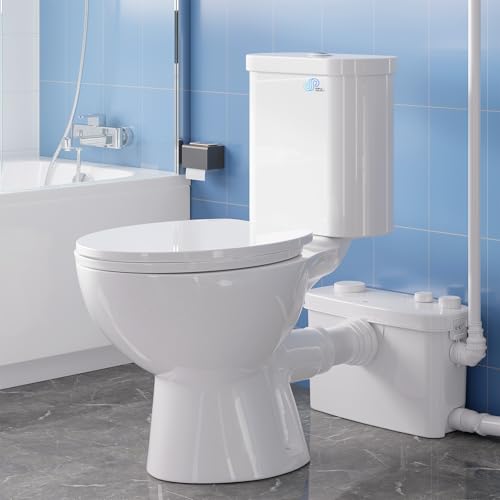
Four water inlets make the Simple Project 500W 4-Inlet Macerator a practical central point for a basement bathroom that shares plumbing between several fixtures. You can bring waste from sinks and showers into the system, reducing the need for separate lines that consume floor space or follow awkward routes.
The stated 1.6-gallon-per-flush flushing volume works alongside the 500W motor, giving this model a more restrained power profile than the 750W and 1000W alternatives. For a straightforward residential layout, that balance can make the installation easier to plan, though pump output still needs to match the pipe distance and vertical rise.
Practical Advantages
- Four inlets provide useful flexibility for grouped bathroom fixtures.
- The 1.6 GPF flush specification supports water-conscious bathroom planning.
- A 500W motor offers a middle-range option for typical residential layouts.
Small Caveats
- You need to map every inlet and the main discharge before ordering fittings.
- Its 500W motor offers less stated power than the higher-output Simple Project models.
Core Details
Built With Shared Plumbing In Mind
This model suits you best when a basement bathroom needs several fixture connections without the larger footprint or power rating of a heavier pumping setup.
Another Choice May Suit
The Simple Project 600W Macerating System fits you better when four inlets are needed alongside a higher 600W motor rating.
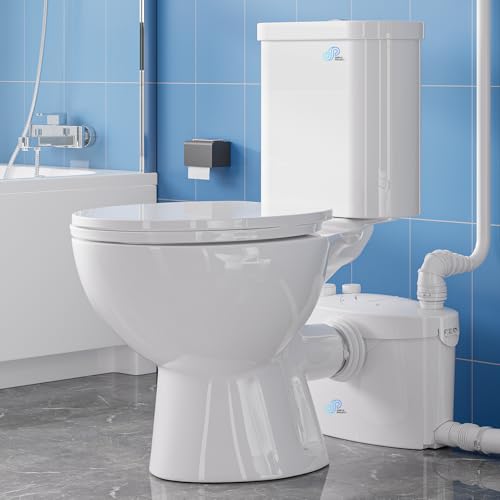
Long pipe runs are the reason to pause over the Simple Project 750W PRO 4-Inlet System. Its motor is stated to pump waste as far as 360 feet horizontally or 36 feet vertically, giving you considerable distance between the toilet and the receiving drain when a basement layout stretches across a finished room.
Four inlet ports let you group a macerating toilet, shower, bathtub, or other bathroom fixture into the same discharge arrangement. A stainless-steel cutting mechanism handles solids before pumping, and the 750W rating gives you more power than the 500W options without reaching the 1000W model’s figure.
Well-Handled Touches
- The 360-foot horizontal rating supports unusually distant drain connections.
- Four inlets suit bathrooms with several wastewater-producing fixtures.
- A 750W motor offers a substantial step above the 500W alternatives.
- Stainless-steel cutting components suit routine solid-waste handling.
Trade Offs
- Long-distance performance still depends on correct pipe diameter, slope, and route.
- You need to reserve suitable floor space for the pump and service access.
Who Should Grab It
This system suits you best when the nearest practical drain sits a long horizontal distance from the basement bathroom.
Look Elsewhere
The Simple Project 1000W Macerating System suits you better when vertical lift and higher motor output matter more than the 750W model’s 36-foot vertical rating.
The Simple Project 1000W Macerating System carries the highest motor output in this group, which makes it the option to examine when your waste must climb or travel farther than a conventional basement layout allows. Its stated pumping height reaches 40 feet, covering a meaningful rise above the installed unit.
You also receive an extension pipe and four water inlets, giving you room to connect a toilet and additional bathroom fixtures while routing the discharge line. The rear outlet arrangement can simplify the plumbing behind the fixture, though you still need to confirm that the room proportions and service access suit the full assembly.
What Makes Sense
- The 1000W motor provides the highest stated power rating here.
- Pumping height reaches up to 40 feet for challenging elevations.
- Four water inlets support a multi-fixture bathroom arrangement.
- The included extension pipe adds routing flexibility behind the toilet.
Details To Watch
- More pumping power does not replace a properly sized discharge pipe.
- The four inlets and extension pipe require careful space planning.
Technical Highlights
The Right Fit
This system suits you best when elevation, pipe distance, or multiple fixture loads justify the highest motor rating in the group.
Reach For A Different Pick
The Simple Project 750W PRO 4-Inlet System fits you better when substantial power and four inlets meet your needs without the 1000W system’s additional output.
A practical basement addition rarely needs every fixture connected to one pump, but it often needs enough flexibility to add a shower or basin later. The Simple Project 600W Macerating System provides four water inlets for wastewater from a shower, laundry area, and wash basin, giving you room to organize the room around a shared line.
The 600W motor places this model between the 500W systems and the higher-output 750W and 1000W choices. Its rear outlet is useful behind the toilet, and the 600W rating may be easier to balance with a standard residential layout, depending on the pipe route and vertical rise.
Noteworthy Benefits
- Four inlets support showers, laundry equipment, and wash basins.
- The 600W motor fits neatly between lower- and higher-power options.
- A rear outlet helps organize the discharge connection behind the fixture.
- Multiple fixture options support future basement planning.
Practical Considerations
- You need to verify the inlet locations before placing the shower or basin.
- Expected noise and pump output depend on the complete installed plumbing arrangement.
Best Suited To
This model suits you best when a basement bathroom needs several fixture connections at a moderate 600W motor rating.
Where A Sibling Pick Shines
The Simple Project 500W 4-Inlet Macerator fits you better when a lower 500W rating and specified 1.6 GPF flushing volume are your deciding factors.
The Simple Project 750W 4-Inlet System gives you a strong middle ground for a basement bathroom with several fixtures. Its motor is stated to handle discharge routes up to 36 feet vertically, while four inlets let you connect a toilet and additional fixtures without building a separate waste line for each one.
An extension pipe adds useful distance between the toilet and pump connection, which matters when a finished wall or storage cabinet occupies the space directly behind the fixture. The system uses a stainless-steel cutting blade alongside plastic and electronic components, giving your installer a clear set of materials to evaluate during setup.
What Earns Its Place
- A 750W motor provides more output than the 500W and 600W options.
- Four inlets support several bathroom fixture connections.
- The extension pipe improves routing flexibility behind the toilet.
- A 36-foot vertical rating suits elevated discharge arrangements.
Points To Keep In Mind
- The extension pipe adds length that must fit within the available floor area.
- The installation still depends on a properly sized and arranged discharge line.
Feature Facts
Built With Basement Layouts In Mind
You benefit most from this system when several fixtures, moderate elevation, and a constrained route behind the toilet shape your basement renovation.
Another Choice May Suit
The Patio Zone 500W Macerator System fits you better when a tall elongated bowl, five-fixture support, and self-sharpening stainless-steel blades take priority over the 750W motor.
What Matters Before You Select a Basement Toilet Pump
Start With the Drain Route
Your existing drain location often determines the feasible pump more than the toilet design does. Measure the horizontal run, the required vertical rise, and the space available for the discharge pipe. A unit with ample stated reach still needs a properly sized pipe, suitable connections, and a route that avoids conflicts with walls, beams, and storage.
Match the Pump to the Fixture Load
A toilet-only setup may need less capability than a bathroom that also sends shower, sink, laundry, or bathtub waste through the pump. The 500W and 600W models cover many residential arrangements, while 750W and 1000W options give you more margin for elevation, distance, or several connected fixtures.
Count the Inlets Before the Accessories
Each inlet represents another plumbing junction that your installer must position accurately. A four-inlet model offers good flexibility for a shared bathroom, but the pipe stubs need to align with the shower, basin, laundry equipment, or another toilet. Include the required fittings and access space in your floor plan.
Plan Ventilation and Maintenance
An enclosed basement can trap odors even with a sound flushing system. Carbon ventilation, a vent pipe, and a suitable connection to your household ventilation plan are useful considerations. Leave enough room to inspect the pump and clear a blockage, because concealed equipment is difficult to service when access is limited.
Avoiding Costly Plumbing Decisions
Mistakes Worth Dodging
Choosing by motor wattage alone can leave you with an oversized or undersized system. You also need to count fixtures, measure the route, confirm outlet placement, and check vent requirements. A compact appearance means little if maintenance access is blocked or the discharge line is poorly planned.
What the Higher Tier Buys
The higher-output models add pumping capacity for greater vertical rise, longer runs, or more demanding fixture loads. That extra capability is worthwhile in an unfinished basement with a distant drain. For a compact bathroom with a short route and one toilet, a 500W or 600W system may meet the practical need without a larger installation.
Frequently Asked Questions
What is a basement toilet pump?
A basement toilet pump is a macerator system that grinds solid waste and moves it through a small pipe rather than relying entirely on gravity. This makes it useful where the basement floor sits below the available sewer connection.
How much power does a macerating toilet need?
The right power level depends on pipe distance, vertical rise, and connected fixtures. A 500W or 600W model may suit many residential layouts, while 750W and 1000W options provide additional capacity for longer or more demanding routes.
Can a macerator toilet handle a sink and shower?
Many systems accept wastewater from several fixture types through separate inlets. You need to confirm that the model supports the fixtures in your room and that every connection meets the manufacturer’s sizing and installation requirements.
Does a basement toilet need a vent?
Ventilation helps manage odors and may be required by local plumbing codes. Some systems offer a carbon-filter or vent-pipe option, so confirm the installation method and household ventilation connection before ordering.
How far can a macerator pump move waste?
The stated reach depends on the model. The options here range from approximately 23 to 40 feet vertically, while one 750W system is rated for up to 360 feet horizontally, making a measured site plan essential.
Final Verdict
Your strongest starting point is the fixture load and drain route, not the largest motor number. The Simple Project 600W Macerator Pump covers many balanced basement bathroom plans, while the Patio Zone system stands out for multi-fixture integration and the 1000W model addresses more demanding elevation. Measure carefully, match the system to the room, and leave a practical plan for ventilation and service access.