
A sump pump earns its place only when it fits the pit, discharge pipe, and water conditions in your basement. The right choice may be a high-output single pump, a cast iron model for narrow pits, a dual setup for added capacity, or battery backup equipment for outages.
The eight options below cover different household needs, including everyday drainage, light effluent, laundry sinks, standby power, and redundancy. Checking pit dimensions, vertical lift, discharge size, and electrical requirements before installation prevents the most expensive mistake, which is choosing a pump that cannot fit the system you already have.
The Choices Worth Comparing
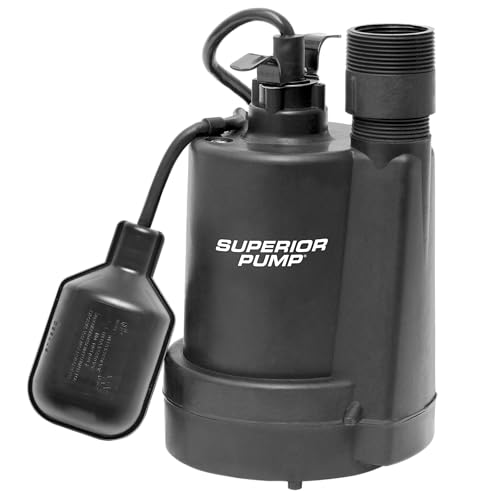
Superior Pump 92330 1/3 HP Sump Pump
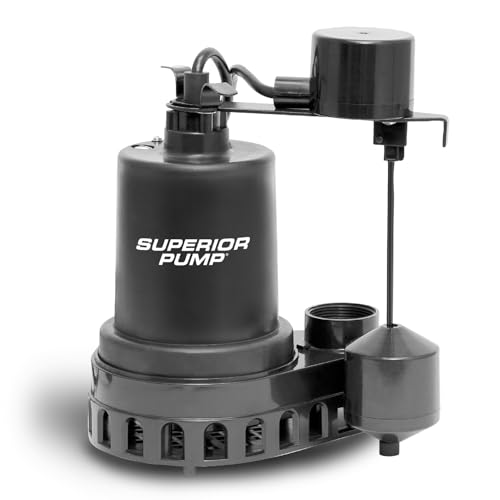
Superior Pump 92572 1/2 HP Sump Pump

OLTEANP 2500W Sump Pump Battery Backup System, Pure Sine Inverter

Red Lion RL-SC33V 1/3 HP Sump Pump

OLTEANP 2000W Sump Pump Battery Backup System, Pure Sine Inverter

Simer 2925B Sump/Laundry Sink Pump

Red Lion RL-SC33DUP Dual 1/3 HP Sump Pumps

Red Lion RL-SC50T 1/2 HP Sump Pump
The Details Behind The Selections
The Superior Pump 92330 fits a standard residential sump pit without asking you to redesign the drainage system. Its 1/3 HP motor handles up to 2,400 gallons per hour and lifts water as high as 25 feet vertically, which makes it relevant for basements with a meaningful rise between the pit and discharge point.
Compared with the 92572, this model offers less peak output but adds a tethered float that can bring the water level down to within half an inch of the surface when used as a utility pump. That flexibility gives you a reason to consider it beyond standard sump service.
Benefits That Matter
- The 2,400-gallon-per-hour rating provides ample capacity for typical household groundwater collection.
- A 25-foot vertical lift rating supports pits with a higher discharge line.
- The tethered float switches operation on and off without a separate control panel.
- The utility-pump function can remove water down to roughly half an inch from the surface.
Points To Keep In Mind
- Confirm your existing discharge accepts either the 1-1/4-inch or 1-1/2-inch NPT outlet before ordering.
- The 10-foot power cord places a limit on your outlet location, so measure the distance to the pit.
Key Specs
Who It Suits Best
You benefit most from the 92330 when your basement has a conventional sump pit, a nearby outlet, and a moderate water load.
Where Another Pick Suits Better
Choose the Superior Pump 92572 when your pit receives heavier inflow and the 1/2 HP motor better matches the workload.
Your sump pit sees more water than a basic household setup can handle, and the Superior Pump 92572 supplies more capacity without changing to a dual-pump system. The 1/2 HP motor moves up to 3,300 gallons per hour while retaining the same 25-foot maximum lift as the 92330.
Its vertical float switch provides automatic operation, while the 1-1/2-inch discharge supports the higher moving capacity. For a household with a deep or heavily loaded pit, the extra power is more useful than a compact footprint.
Practical Advantages
- The 3,300-gallon-per-hour rating adds meaningful capacity over the 1/3 HP Superior Pump 92330.
- A 1/2 HP motor suits pits that collect water quickly during prolonged rain.
- The vertical float controls both starting and stopping without a separate panel.
- The 1-1/2-inch NPT discharge matches a wider high-capacity pipe layout.
Practical Considerations
- The larger discharge opening may not match an existing 1-1/4-inch line without an appropriate connection.
- Plan around the 10-foot cord and position the outlet within reach of the pit.
- Vertical lift and flow share the pump’s capacity, so pipe height still affects real-world performance.
Made For
You get the most from the 92572 in a high-volume residential basement with adequate vertical lift and a compatible 1-1/2-inch discharge line.
Consider Something Else When
The Superior Pump 92330 is a more practical fit for a smaller pit where you also want utility-pump versatility.
During a storm, the main danger is a sump pump that stops exactly when groundwater enters. The OLTEANP 2500W system provides standby power rather than another drainage pump, allowing a compatible sump pump to keep operating while normal electricity is unavailable.
Its pure sine wave inverter produces a smoother form of alternating current than a modified wave, which can suit pumps with sensitive electronics. An automatic transfer switch handles the changeover, while the LCD remote gives you a way to check the system from another location.
Where It Helps
- The 2,500-watt inverter offers more capacity than the 2,000-watt OLTEANP system.
- Automatic transfer switching reduces manual intervention during an outage.
- The 25-amp charger supports faster battery replenishment than a lower-current arrangement.
- Compatibility with 12-volt deep-cycle batteries gives you a suitable battery type for sustained standby use.
Details To Watch
- Check the operating requirements of your sump pump against the inverter’s supported load before connecting the systems.
- Your installation needs a compatible battery, suitable cabling, and enough room for the control components.
Feature Snapshot
Right Fit For
You benefit most from this system when outage-driven water accumulation is a recurring concern and your sump pump’s electrical load fits within the inverter’s capacity.
A Better Fit Elsewhere
The OLTEANP 2000W Sump Pump Battery Backup System is a more compact choice for a pump setup with a lighter electrical load.
Space is often the limiting factor in a compact basement, and the Red Lion RL-SC33V is designed for pits at least 15 inches wide. That makes it worth checking for apartments, cottages, and older homes where a bulky pump would crowd the basin.
The 1/3 HP unit handles sump water and light effluent, giving it more flexibility than a pump intended only for clean household water. Its piggy-back vertical float starts the pump at a 7.25-inch water level and stops it at 2 inches.
Noteworthy Benefits
- The narrow-pit design helps conserve room in confined sump basins.
- Light-effluent capability suits drains that may contain small, manageable solids.
- The piggy-back float control keeps switching attached directly to the pump.
- A 1/3 HP motor offers a practical balance of capacity and compact operation.
Small Caveats
- Your pit must measure at least 15 inches wide for a comfortable fit.
- The pump stops at a 2-inch water level, so check that this operating range suits your drainage needs.
Quick Facts
Built With In Mind
You get the most from the RL-SC33V in a small residential sump pit where dimensions are tighter and light effluent may enter the basin.
Swap It Out When
The Red Lion RL-SC50T is a stronger option for handling light effluent with solids up to 3/8 inch.
The OLTEANP 2000W setup targets a familiar residential problem: a sump pump that cannot drain during a blackout. Instead of replacing your pump, this system supplies alternate power and transfers operation to a compatible deep-cycle battery.
Pure sine wave output suits electronics expecting a smooth alternating-current signal. The automatic transfer switch changes power sources, the 25-amp charger restores battery charge, and the LCD remote puts operating information within reach.
The Practical Payoff
- Standby power preserves sump-pump operation during an electrical interruption.
- The pure sine wave inverter provides smoother output for sensitive pump electronics.
- Automatic switching removes the need to manually reconnect the pump after power returns.
- The 25-amp charger supports quicker battery replenishment.
Factors To Consider
- Verify that your pump’s electrical demand remains within the inverter’s supported output.
- The setup requires a compatible 12-volt deep-cycle battery and careful cable placement.
- The 2,000-watt rating offers less headroom than the OLTEANP 2500W model.
Who Will Love This
You will appreciate the 2000W system in a typical basement where outages are frequent and the sump pump has a moderate electrical load.
Reach For A Different Pick When
Choose the OLTEANP 2500W Sump Pump Battery Backup System when your connected pump needs more inverter headroom.
A laundry sink and a small sump pit do not always require the same dedicated equipment. The Simer 2925B handles both applications with a 1/4 HP motor, making it a practical shared choice for homes where one drain type serves several needs.
You may find this model most useful where the water load is modest and the discharge route is already established. It is less involved than installing separate equipment for a basement pit and washing-machine sink, particularly in a utility room.
Strengths Worth Knowing
- One pump supports both sump and laundry-sink drainage needs.
- The 1/4 HP motor suits a smaller-duty role than the 1/2 HP selections here.
- A shared installation can simplify equipment around a compact utility area.
Where It May Fall Short
- Confirm that 1/4 HP output matches your expected water volume and discharge height.
- Your pit and sink arrangement must provide a practical discharge route for both uses.
Core Details
The Right Fit
You benefit most from the 2925B when a utility room needs one compact pump for a small sump pit and a laundry sink.
Not Your Match When
The Superior Pump 92330 is a better fit for a conventional sump pit that needs greater flow and vertical lift.
The Red Lion RL-SC33DUP turns a standard sump installation into a two-pump system. Each 1/3 HP cast iron pump can contribute to the stated 6,000-gallon-per-hour capacity, while the secondary unit adds support during heavy inflow or takes over when the primary pump cannot continue.
Two check valves protect the individual discharge paths, and the Y-shaped pipe arrangement joins both pumps to an existing 1-1/2-inch line. That connection is the heart of the system, giving you redundancy without requiring a second wall penetration.
Useful Touches
- Dual 1/3 HP pumps provide more capacity than a comparable single-pump setup.
- The secondary pump adds support when incoming water exceeds one pump’s capacity.
- Separate check valves help each pump maintain its own discharge path.
- The Y-connector joins the system to a 1-1/2-inch discharge pipe.
Potential Compromises
- Your sump pit must have room for two pumps and their float assemblies.
- The paired plumbing is more involved than a standard single-pump connection.
- Your existing discharge pipe must accept the 1-1/2-inch Y-connection.
Whose Shelf It Belongs On
You need this dual system in a large or flood-prone basement where heavy inflow or added redundancy justifies the additional pit space.
Where A Sibling Pick Shines
The Superior Pump 92572 is the simpler choice for a high-volume pit where one pump and a compact installation are priorities.
Light effluent brings small solids into the equation, and the Red Lion RL-SC50T is built around a clog-resistant impeller suited to that task. Its cast iron housing and 1/2 HP motor give you more substantial equipment than the Red Lion RL-SC33V, while the impeller is designed to handle solids up to 3/8 inch.
The piggy-back tethered float starts at a 13-inch water level and stops at 5 inches. Those deeper operating points suit a pit with substantial water storage, giving the pump room to collect a larger volume before each cycle.
What Works In Its Favor
- The cast iron housing suits demanding residential drainage environments.
- A clog-resistant impeller handles light effluent with solids up to 3/8 inch.
- The 1/2 HP motor provides more capacity than the 1/3 HP Red Lion models.
- The tethered float makes its operating level visible for maintenance checks.
Things That May Matter
- Your pit needs enough depth for the pump to reach its 13-inch starting level.
- Solids larger than the impeller’s stated 3/8-inch capability are outside its intended range.
- Check discharge-pipe size and vertical lift before confirming compatibility.
Technical Highlights
Best Suited To
You benefit most from the RL-SC50T in a deep residential pit that receives light effluent and small solid debris.
Look Elsewhere When
The Red Lion RL-SC33V is the better fit for a narrow pit where space is tighter and the water level stays low.
Match The Pump To Your Basement System
Start With The Water Load
The water entering your pit determines the motor size you need. A 1/3 HP model suits many conventional residential pits, while 1/2 HP gives you additional capacity for heavier inflow. Horsepower describes the motor’s potential work, but gallons per hour and vertical lift provide the more practical sizing details.
Check Pit Space And Discharge Height
Measure the basin before ordering, especially for the Red Lion RL-SC33V and the dual Red Lion RL-SC33DUP. Float height also matters because a pump that starts at 13 inches needs more basin depth than one that starts at 7.25 inches.
The discharge pipe must match the pump outlet, and higher discharge points reduce available flow. Measure the vertical rise before assuming that a headline gallon rating will appear at the end of the pipe.
Choose Redundancy Or Standby Power
Redundancy comes from two pumps sharing a discharge line, as in the RL-SC33DUP. Standby power comes from an inverter, battery, and transfer switch, as in the two OLTEANP systems. A dual-pump arrangement handles heavy water volume, while battery backup addresses loss of electrical power.
Account For Float And Pipe Details
A tethered float makes the switching level accessible, while a vertical float keeps the control attached to the pump. NPT refers to National Pipe Thread, the tapered thread standard used for pipe connections. Confirm thread diameter, float clearance, and cord length before purchasing.
Two Details That Affect Your Decision
Mistakes Worth Dodging
Focus on the whole installation, not only the motor rating. A powerful pump still fails to help when the discharge pipe is too small, the pit is too shallow, or the electrical cord cannot reach a suitable outlet.
Also distinguish a sump pump from battery backup equipment. One removes water, while the other keeps a compatible pump operating during an outage.
What Separates Premium From Basic
Higher-output motors suit heavier water loads, while cast iron and more tolerant impellers help with demanding debris. Paired pumps add capacity and a second operating path, but they require additional pit space and more involved plumbing.
The extra capability matters most in flood-prone basements, deep pits, or homes where an outage during heavy rain creates a familiar drainage problem.
Frequently Asked Questions
How do I choose the right horsepower for a sump pump?
Start with your water load and vertical lift. A 1/3 HP pump fits many standard residential pits, while 1/2 HP offers additional capacity for heavier inflow or demanding discharge conditions.
Does a sump pump work during a power outage?
A standard pump needs electrical power. An OLTEANP battery backup system can supply alternate power, provided the sump pump’s operating load is compatible with the inverter and battery setup.
What is the difference between GPH and HP?
GPH means gallons per hour, a measure of water-moving capacity. HP means horsepower, which describes the motor’s power and influences how much work it can perform.
What does a pure sine wave inverter provide?
A pure sine wave creates smoother alternating current than a modified wave. That makes it a sensible match for pumps with sensitive control electronics.
How much space should a sump pump leave in the pit?
Leave enough room for the pump, float assembly, check valve, and discharge connection. The Red Lion RL-SC33V requires a pit at least 15 inches wide, while dual-pump systems need considerably more working space.
Final Verdict
Your best sump pump depends on the basin rather than a single universal specification. Match motor output to the water load, verify vertical lift and pipe size, then account for solids, pit dimensions, and outage exposure. The right match keeps water moving without forcing you to rebuild the drainage system.