
A finished basement turns a small sump-pit problem into a serious household concern. You need a pump that fits the pit, removes water at the depth where it collects, and starts without you standing beside the pit with a switch. The right automatic setup depends on whether you need continuous protection, adjustable water-level control, or portable drainage for pools, ponds, and window wells.
A Fast Comparison Of The Options

BASEMENT WATCHDOG CITE-33 Preassembled Primary & Backup Pump System
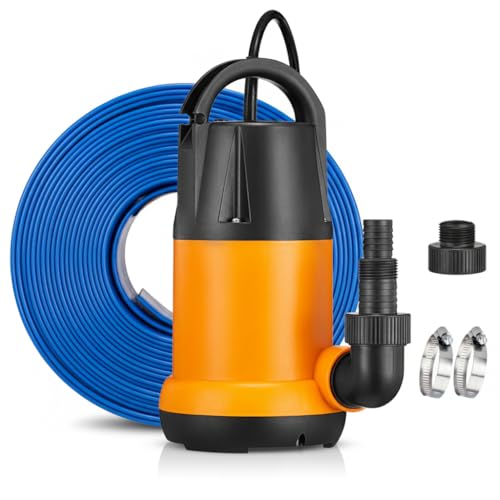
RainBro 1.5HP Pump with 25FT Hose

AQUASTRONG 1 HP 4500 GPH Pump

Aquastrong 1/2 HP 3159 GPH Submersible Utility Pump for Basements, Pools, Ponds, 10ft Cord
Aquastrong 1/2 HP 3159 GPH Utility Pump with Float Switch, 10ft Cord

Aquastrong 1/2 HP Automatic 3159 GPH Pump

Cleartide 2760 GPH Utility Water Pump with Copper Motor for Ponds and Pools

SEESII 1/3 HP Pool Cover Pump
A Closer Look At Each Pick
A wet basement rarely gives you much warning, which makes the BASEMENT WATCHDOG CITE-33 different from the portable pumps later in this list. Its primary and battery backup pumps arrive connected to their pipework, check valves, and elbows, reducing the assembly work required at installation.
The primary pump handles normal sump-pit drainage, while the second pump provides a separate response during a power interruption. Dual float switches trigger each pump at its own water level, and a monitoring controller uses lights and alarms to show the system’s condition.
Useful Touches
- Preassembled plumbing shortens a demanding basement installation.
- The 1/3 HP primary pump reaches 62 GPM at zero-foot lift, a useful figure for a typical pit with room to spare.
- At a 10-foot lift, the primary still moves 51 GPM, while the backup handles 25 GPH-per-minute flow.
- The compact assembly fits pits with diameters as small as 12 inches.
Practical Considerations
- Confirm that your pit measures at least 12 inches across and that the discharge pipe can be connected to the included arrangement.
- The 0.4-amp charger is designed for the BASEMENT WATCHDOG BW-27AGM battery, so check your existing battery before installation.
Technical Sheet
Made For
Homeowners with a small pit who want primary and battery backup pumping with less assembly work.
Where Another Pick Suits Better
The AQUASTRONG 1 HP 4500 GPH Pump suits temporary, high-volume draining where a permanent installed system is unnecessary.
Rain flooding a basement window well calls for more reach than a short garden hose can provide. The RainBro 1.5HP Pump pairs a 1.5-horsepower motor with a reinforced 25-foot hose, giving you a practical route from a deep well or pond to a discharge point.
Its bottom-suction intake draws from the lowest point of the water, where residual water tends to collect. That approach, combined with a stated maximum flow of 4,000 GPH, makes this a portable drainage option rather than a conventional installed sump pump.
What Stands Out
- The 25-foot reinforced hose supports longer discharge runs.
- A 4,000 GPH maximum flow supports substantial pond, pool, and window-well drainage.
- Bottom suction can reduce remaining water to a depth of one-fifth of an inch.
- Three nozzle types and several adapters accommodate different hose and pipe arrangements.
- The corrosion-resistant thermoplastic housing suits damp basement and pond environments.
Trade Offs
- Its 31-foot maximum head describes vertical pumping capability, so compare that figure with your actual lift and hose run.
- This is a portable pump without an automatic water-level control, so switching it on and off remains part of the task.
Quick Facts
Right Fit For
Pond owners and homeowners clearing deep window wells who need a long hose and high portable flow.
Consider Something Else When
The BASEMENT WATCHDOG CITE-33 Preassembled Primary & Backup Pump System fits better when you need continuous sump-pit operation and outage protection.
Moving a large volume of water quickly calls for more capacity than most compact utility pumps provide. The AQUASTRONG 1 HP 4500 GPH Pump combines a one-horsepower motor with a stated maximum flow of 4,500 gallons per hour, making it a strong candidate for temporary draining work.
Bottom suction lets the pump draw down to one-fifth of an inch and handle solids up to one-fifth of an inch. Compared with the RainBro 1.5HP Pump, it offers more peak flow in a smaller motor package, although the RainBro includes a 25-foot hose for longer discharge runs.
What Works In Its Favor
- The 4,500 GPH maximum flow suits large pools, hot tubs, and flooded areas.
- Its 1 HP motor offers a useful balance of capacity and portability.
- Bottom suction can remove the thin layer of water left after most of the volume is gone.
- At five feet of lift, the stated flow remains 4,500 GPH.
Where It May Fall Short
- It operates by direct plug-in control rather than an integrated automatic sensor.
- The one-fifth-inch solid-passing limit calls for keeping larger debris away from the intake.
- Plan the discharge route carefully, since high flow needs a compatible pipe and outlet.
Who Will Love This
Homeowners clearing large pools, hot tubs, or flooded areas who want portable high-volume capacity.
Not Your Match When
The Aquastrong 1/2 HP Automatic 3159 GPH Pump suits you better when automatic startup at a selected water level matters more than maximum portable flow.
Not every drainage job needs a pump powerful enough to empty an entire pool in one session. The Aquastrong 1/2 HP Submersible Utility Pump provides 3,159 GPH at five feet of lift, a more moderate figure suited to basements, garden ponds, and hot tubs.
The bottom-suction design can draw down to one-fifth of an inch and pass solids up to one-fifth of an inch. Its 10-foot power cord supports temporary placement, although the AQUASTRONG 1 HP 4500 GPH Pump remains the stronger choice when maximum volume matters.
Features That Help
- Its 1/2 HP motor provides useful capacity without the larger frame of the one-horsepower model.
- The bottom intake targets the lowest water remaining in a pit or basin.
- A 10-foot cord gives you room to position the pump near a suitable outlet.
Things To Consider
- The 10-foot cord can become the limiting factor when the nearest outlet sits farther away.
- This model requires manual switching, which differs from the sensor-controlled Aquastrong 1/2 HP Automatic 3159 GPH Pump.
Feature Snapshot
Built With In Mind
Homeowners needing moderate-capacity draining for a pond, hot tub, window well, or small flooded area.
Look Elsewhere When
The RainBro 1.5HP Pump with 25FT Hose fits better when a long reinforced hose and greater maximum head are essential.
A float switch turns a portable utility pump into a pump that responds to the water level. The Aquastrong 1/2 HP 3159 GPH Utility Pump with Float Switch uses a tethered float, meaning the switch rises with the water and activates the pump automatically.
For a flooded basement, pool, pond, or hot tub, that removes the need to watch the water continuously. The switch can also be locked in the on position, which gives the pump more versatility for draining tasks where a float may not be useful.
A Few Highlights
- The float switch starts the pump as water rises and stops it after the level falls.
- Its 3,159 GPH flow at five feet of lift suits substantial temporary drainage.
- Bottom suction reaches down to one-fifth of an inch and handles one-fifth-inch solids.
- Lock-on operation expands the pump’s use beyond automatic sump-pit control.
A Few Limitations
- Float placement affects the water level that activates the pump, so it needs enough room to move freely.
- The 10-foot cord limits how far the pump and float can sit from the power outlet.
Who Should Grab It
Homeowners who want portable automatic pumping for a pool, pond, hot tub, or basement cleanup.
A Better Fit Elsewhere
The Aquastrong 1/2 HP Automatic 3159 GPH Pump fits tighter sump pits better when an electronic sensor and six startup levels suit the installation.
Automatic control becomes useful when the water level you want to trigger the pump changes. The Aquastrong 1/2 HP Automatic 3159 GPH Pump uses an electronic water-level sensor rather than a mechanical float, with six selectable startup levels.
Those settings range from one inch to five inches, and the pump shuts off at 0.4 inch. That gives you more control than a fixed-float arrangement, particularly in a sump pit where you may want the pump to wait until water has accumulated.
What Earns Its Place
- Six startup levels let you match the activation point to your pit conditions.
- Electronic sensing removes the need to position a floating switch.
- The pump provides 3,159 GPH at five feet of lift and can lift water up to 26 feet vertically.
Points To Note
- Measure the pit’s normal water range before selecting a startup level.
- This model is designed for automatic operation, while the Aquastrong 1/2 HP 3159 GPH Utility Pump with Float Switch offers a simple mechanical control for portable work.
Key Details
The Right Fit
Homeowners with a sump pit who want automatic startup levels and electronic water-level control.
Another Choice May Suit
The BASEMENT WATCHDOG CITE-33 Preassembled Primary & Backup Pump System suits you better when a preplumbed backup pump and monitoring controller are needed.
Outdoor water-transfer jobs reward a pump that can combine substantial reach with a low-drawdown position. The Cleartide 2760 GPH Utility Water Pump with Copper Motor handles garden ponds, pool transfers, hot-tub emptying, and general water-moving tasks.
Its copper motor is paired with a stainless-steel housing and a plastic pump body designed to resist chemicals and abrasion. A maximum head of 32 feet gives it considerable vertical reach, while its low-water operation supports a final drawdown around one-sixteenth of an inch.
Real Benefits
- The 32-foot maximum head supports deeper ponds and raised discharge points.
- Copper motor construction provides a different material choice from the thermoplastic AQUASTRONG pumps.
- The stainless-steel housing is suited to outdoor water-transfer work.
- A 2,760 GPH maximum flow handles meaningful volumes for pools, ponds, and hot tubs.
Less Ideal Details
- Confirm that your outlet and discharge route accommodate the pump’s stated 32-foot head.
- This portable configuration does not provide the automatic water-level control found in the Aquastrong 1/2 HP Automatic 3159 GPH Pump.
Whose Shelf It Belongs On
Pond keepers, gardeners, and pool owners who transfer water between containers or drain a hot tub.
Reach For A Different Pick When
The AQUASTRONG 1 HP 4500 GPH Pump fits better when maximum portable flow takes priority over the Cleartide’s material construction and vertical reach.
A pool cover collects rainwater, and a dedicated cover pump removes it without requiring a separate submersible unit. The SEESII 1/3 HP Pool Cover Pump handles that seasonal task, with a detachable base that converts the unit into a general-purpose submersible water pump.
The conversion keeps one compact pump ready for cover drainage, hot tubs, basements, and garden ponds. Its stated 3,035 GPH output is lower than the 3,159 GPH from the 1/2 HP AQUASTRONG models, so it makes more sense as a focused pool tool than a high-volume general pump.
Notable Upsides
- The detachable base converts a cover pump into a submersible utility pump.
- Its 3,035 GPH drainage rate suits routine pool-cover water removal.
- One unit covers seasonal cover care and occasional household pumping tasks.
Factors To Consider
- Check that the cover attachment and detachable base fit your pool-cover setup.
- For sustained basement or pond work, compare its capacity with the AQUASTRONG 1 HP 4500 GPH Pump.
At A Glance
Best Suited To
Pool owners who want automatic cover drainage and a second use for occasional pond or basement pumping.
Skip It When
The BASEMENT WATCHDOG CITE-33 Preassembled Primary & Backup Pump System fits better when your priority is an installed sump-pit system with battery backup.
What Matters Before The Pump Goes In
Match The Pump To The Pit
Measure the pit diameter, depth, discharge-pipe position, and power-outlet distance before choosing. The BASEMENT WATCHDOG CITE-33 fits pits as small as 12 inches, while several AQUASTRONG models use 10-foot cords that suit temporary placement. A physical fit prevents the most annoying part of a new pump: discovering it cannot sit or reach where you need it.
Read Flow At The Needed Lift
Flow figures describe gallons per hour, or GPH, while head describes vertical lift. Output falls as the pump must push water higher, so a headline rate measured at zero lift can overstate performance in a deep pit. Compare the rated flow at a realistic lift with the distance between the water source and discharge point.
Decide How The Pump Should Start
Mechanical float switches, electronic water-level sensors, and manual switches suit different spaces. A tethered float needs room to rise and fall, while an electronic sensor offers several activation points. Manual portable pumps provide the most control during temporary cleanup but require someone to operate them.
Match The Use To The Plumbing
A garden hose and several adapters suit ponds and pools, while a sump installation usually needs rigid discharge piping and a suitable outlet. Check pipe diameter, adapter sizes, and the material of the connection before assembly. Keep the pump’s debris limit in mind too, especially near window wells, hot tubs, and pond bottoms.
Before The Water Rises: Control And Construction
Mistakes Worth Dodging
The most common mistake is choosing by headline flow while ignoring vertical lift and hose length. Another is overlooking pit dimensions or assuming a portable utility pump can replace an installed sump system. Check the full discharge route, cord length, and switching method before purchasing.
What Separates Premium From Basic
Cost differences often reflect added redundancy, automatic controls, included plumbing, or stronger materials. A preassembled system can reduce installation work, while a higher-output motor or deeper-drawdown intake helps demanding cleanup. Pay for the feature your situation requires rather than adding capacity you will never use.
Frequently Asked Questions
Do I need an automatic sump pump for a finished basement?
An automatic pump starts when its control detects a set water level, making it practical for an unattended sump pit. A portable utility pump is better for temporary cleanup because you control when it runs.
How much pumping capacity do I need?
Compare rated GPH at the lift your installation requires, not just the maximum zero-lift figure. Deeper pits and longer discharge runs reduce the flow available at the discharge point.
Is a battery backup sump pump necessary?
A battery backup provides another pumping response during a power interruption. It is most useful in flood-prone homes where water entry can threaten a finished basement.
Can a utility pump replace a sump pump?
A utility pump handles temporary drainage, but most do not provide continuous automatic operation. A dedicated sump pump with a float switch or electronic sensor is better suited to an installed pit.
What pipe and power connections should I verify?
Check the discharge-pipe diameter, adapter size, outlet location, and distance to power. Also confirm the pit dimensions and available space for the pump or float switch.
Final Verdict
Your best fit depends on the job: the BASEMENT WATCHDOG CITE-33 handles permanent basement protection, while the AQUASTRONG models cover portable, float-controlled, and sensor-controlled drainage. The RainBro, Cleartide, and SEESII options serve ponds, pools, hot tubs, and seasonal cleanup with more specialized setups. Match the control method, capacity, and connection requirements to the place where water collects, then let the installation determine the right choice.