
An automatic dog feeder should do more than release kibble on a timer. It needs enough capacity for your dog’s size, a portion system you can understand, and a design that works around your daily schedule. These options cover everything from large-breed kennels and multi-dog homes to connected feeders for cats, plus a few supporting stands and feeding sets.
The Leading Options At A Glance

Dokoo 15L Vacuum-Sealed Automatic Dog Feeder, Anti-Clog, Voice Recording

ISENVO Adjustable Food Stand

PETLIBRO 5L WiFi Automatic Feeder, 10 Meals, Low Food Sensor

MOLLY&CODY 14L Automatic Dog Feeder with Stainless Steel Bowl

PETLIBRO Camera Feeder with 2-Way Audio and Stainless Steel Slow-Feed Tray

Gardner Pet 304 Steel Feeder and Water Set
Nityers 5L Anti-Clog Feeder with Voice, Battery Life, and Freshness Seal
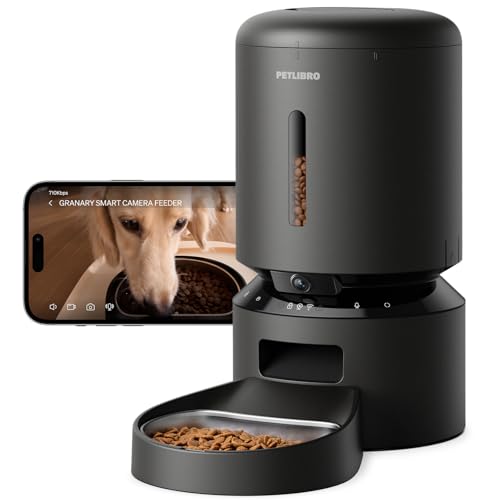
PETLIBRO Camera Feeder with Night Vision, Two-Way Audio, and Sensors
Why These Options Stand Out
The Dokoo 15L feeder suits a home where kibble storage and feeding frequency matter as much as scheduling. Its vacuum-sealed hopper reseals after each serving, reducing exposure to air, while the stated 10-to-15-day range makes fewer refills realistic for large dogs. Compared with the PETLIBRO 5L WiFi Automatic Feeder, this model prioritizes capacity over remote control.
For a Labrador, shepherd, or similar large breed, the wide outlet and adjustable bowl create a more practical setup. You program meals directly on the control panel, and the 10-second voice message gives your dog a familiar cue. A busy household will appreciate the lack of an app, although direct setup suits you best when you want a predictable appliance without a connected ecosystem.
The Value In It
- The 15L hopper reduces refill frequency in large-breed and multi-dog homes.
- Vacuum resealing helps protect kibble from air exposure between meals.
- The dispensing system accepts dry kibble from 2 to 22 mm.
- Six meal times and 12 portions per meal allow fairly detailed scheduling.
- Wall power with a four-cell battery backup helps maintain the routine during outages.
Things To Consider
- The 15L body requires more space than a compact household feeder.
- On-device controls mean you cannot adjust meals through a phone or remote connection.
- Batteries are not included with the backup system.
Key Specs
Built With In Mind
Large-breed owners, multi-dog households, and shoppers who value sealed food storage will appreciate this feeder most.
Another Choice May Suit
The PETLIBRO 5L WiFi Automatic Feeder suits smaller pets and households that want to change portions through an app.
Not every feeding problem requires another motorized dispenser. The ISENVO stand raises a bowl or compact automatic feeder, giving cats and small dogs a more comfortable eating height while keeping the serving area neater. It is a supporting accessory rather than a complete feeding system, but it can solve a practical setup issue that many larger feeders leave unresolved.
Three height positions let you adapt the platform to your pet, and the metal construction gives it a sturdier appearance than a lightweight plastic riser. The silicone mat helps control sliding and floor marks, while the side seal strip helps keep a bowl from tipping. In a compact apartment or quiet feeding corner, those details carry more weight than extra automated features.
Bright Spots
- Three height settings accommodate different cats and small dogs.
- The metal platform and reinforced legs offer a stable base.
- The silicone mat protects the floor and limits sliding.
- Tool-free twist-on legs make setup and repositioning straightforward.
Small Caveats
- It does not dispense food, so you need a separate bowl or feeder.
- Measure your feeder and bowl because the platform supports a 14.57 by 9.06-inch surface.
- The raised position may take some adjustment for pets accustomed to floor-level bowls.
Feature Snapshot
The Right Fit
Cat owners and small-dog households seeking a raised, stable feeding station will find this stand especially useful.
A Better Fit Elsewhere
The Nityers 5L Anti-Clog Feeder is the better choice when you need scheduled dispensing and sealed food storage in one appliance.
The PETLIBRO 5L WiFi Automatic Feeder works best for people who want to change a pet’s routine from a phone. It supports 2.4 and 5 GHz Wi-Fi through the PETLIBRO app, with as many as 10 scheduled meals and 48 portions per meal. Each listed portion equals one-twelfth of a cup, giving you a more consistent basis for dry-food portions.
That app-based flexibility distinguishes it from the Dokoo 15L feeder, which offers six meals but keeps programming on the appliance. A low-food sensor adds a practical signal for a home that depends on scheduled meals. You will find the 5L hopper more suitable for cats, small dogs, or a single medium-sized pet than for a large-breed household with several dogs.
A Favorable Mix
- App-based scheduling makes meal changes convenient while you are away from home.
- The detailed portion range supports more precise dry-food routines.
- Dual-band Wi-Fi can improve compatibility with modern home networks.
- The low-food sensor provides a useful status signal for unattended feeding.
Trade Offs
- The 5L capacity fills faster than the 15L Dokoo hopper in a multi-dog home.
- App control depends on a stable network connection and a compatible phone.
Made For
Pet owners who want remote portion changes, detailed schedules, and app-based oversight will get the most from this model.
Reach For A Different Pick When
The Dokoo 15L Vacuum-Sealed Automatic Dog Feeder suits large-breed households that prioritize capacity and sealed storage over app control.
The MOLLY&CODY 14L feeder is built around a straightforward premise: a large dog should not need you to refill its bowl every day. The hopper holds 14 liters, listed as 60 cups, and the manufacturer states that it can cover as many as 30 days of meals. That makes it useful for large breeds, multiple dogs, or households that intentionally stock food in larger quantities.
Unlike the connected PETLIBRO models, this design keeps feeding centered on a timed schedule. A stainless steel bowl provides a straightforward serving surface, while suction cups and a locking mechanism are intended to stabilize the unit against movement. The trade-off is less remote visibility, so this format makes more sense for a stable home routine than for remote monitoring.
Good Reasons To Consider
- The 14L hopper supports long periods between refills.
- The listed 30-day feeding span suits households that plan ahead.
- Suction cups and a locking mechanism add stability around active dogs.
- Stainless steel offers a durable, easy-to-wipe bowl surface.
Points To Note
- The large hopper requires adequate storage and a stable floor location.
- Its timed format does not provide the camera monitoring found in the PETLIBRO options.
Technical Sheet
Whose Shelf It Belongs On
Large-dog owners and multi-pet households that refill infrequently will benefit most from the high-capacity design.
Look Elsewhere When
The PETLIBRO 5L WiFi Automatic Feeder suits smaller pets and people who prioritize phone-based meal changes.
The PETLIBRO Camera Feeder with Slow-Feed Tray brings together two needs that usually require separate equipment. Its 1080p camera, night vision, and two-way audio let you check on your pet and speak through the feeder, while the stainless steel tray is shaped to slow fast-eating dogs. The claimed reduction in eating speed is up to twofold, making the tray a meaningful part of the design.
This setup is especially relevant to a small dog that bolts meals or to a cat that benefits from a more deliberate eating pace. Compared with the PETLIBRO Camera Feeder with Sensors, this model adds the slow-feed tray but does not list the same low-food, blockage, motion, and sound alert features. It feels like the better fit when eating behavior matters more than remote status alerts.
Well-Handled Touches
- The stainless steel slow-feed tray helps extend a fast meal.
- 1080p video provides a clear view of your pet while you are away.
- Night vision supports monitoring in low-light rooms.
- Two-way audio allows communication through the feeder.
Possible Compromises
- The camera and connected features require app and network access.
- The slow-feed design is less useful for pets that already eat slowly.
- The tray is designed around small-dog feeding needs rather than large-breed bowls.
Who Will Love This
Small-dog owners managing eager eaters will get a useful combination of meal pacing, video, and audio.
Another Choice May Suit
The PETLIBRO Camera Feeder with Night Vision, Two-Way Audio, and Sensors suits people who prioritize low-food and blockage alerts over a slow-feed tray.
The Gardner Pet set is a simpler alternative for a feeding area that needs both food and water. It combines a gravity food feeder with a water dispenser, and both bowls use 304 stainless steel. That makes it appealing for a basic setup where your dog needs dependable access without app controls, cameras, or complicated programming.
The steel construction is the main material advantage here, offering a practical surface that resists deformation and is straightforward to clean. You can position both pieces together or divide them around a room, depending on your dog’s habits. The same gravity-based food format makes it a better fit for simple access than for exact meal timing, so scheduled feeders serve a different purpose.
Everyday Advantages
- The set includes both a food feeder and a water dispenser.
- Both serving bowls are made from 304 stainless steel.
- The gravity format keeps the feeding setup uncomplicated.
Where It May Fall Short
- The gravity food format does not provide scheduled portion control.
- You will need to refill and clean both units as part of the daily routine.
Core Details
Who Should Grab It
Dog owners setting up a simple feeding and water station will appreciate the straightforward two-piece setup.
Swap It Out When
The Dokoo 15L Vacuum-Sealed Automatic Dog Feeder is the better option for large dogs that need timed meals and fewer refills.
The Nityers 5L feeder focuses on keeping dry food dry without turning meal setup into a connected project. A twist-lock lid, silicone seal ring, and desiccant compartment help limit moisture, while a protected rotor seals the food outlet between feedings. That attention to the food path gives it a different emphasis from the app-centered PETLIBRO 5L WiFi Automatic Feeder.
Six daily meals, programmable portions, and a 10-second voice message cover the essentials for a cat or small dog. Dry kibble from 2 to 15 mm fits within the stated anti-clog range. The 180-day battery figure makes the feeder appealing as a cord-light option, although the actual interval depends on how heavily you use the recording and dispensing functions.
What Makes Sense
- The sealed storage design helps reduce moisture and food odors.
- The anti-clog system is rated for common dry kibble sizes from 2 to 15 mm.
- Six meal times accommodate cats and small dogs with divided schedules.
- The voice recording provides a familiar mealtime cue.
- Battery operation reduces the need for a nearby wall connection.
Soft Spots
- The 5L hopper offers less capacity than either large-breed model.
- Use only dry kibble within the listed 2 to 15 mm range.
- The 180-day battery figure depends on operating conditions and frequency of use.
Best Suited To
Cat and small-dog owners who want scheduled meals, sealed storage, and less dependence on wall power will find this model practical.
Where A Sibling Pick Shines
The PETLIBRO 5L WiFi Automatic Feeder suits people who prefer app-based scheduling and more granular portion controls.
The PETLIBRO Camera Feeder with Sensors is built for people who want more than a timed meal notification. Its 1080p camera includes night vision, two-way audio lets you speak to your pet, and the app supports live viewing, recorded clips, and personalized meal calls. That makes it useful in a home where you want to check in without physically walking to the feeding area.
The low-food and blockage sensors add a more practical layer than video alone. They help you notice a feeding problem that might otherwise remain invisible, while motion and sound alerts add further awareness. Compared with the PETLIBRO Camera Feeder with Slow-Feed Tray, this option places more emphasis on status alerts and less on slowing the pace of a meal.
A Few Highlights
- Night vision supports clear viewing in dim rooms.
- Two-way audio allows direct interaction with your pet.
- Low-food and blockage sensors add useful feeding oversight.
- Motion and sound alerts make the feeder more interactive.
Details To Watch
- Camera, alert, and app functions depend on network setup and compatible devices.
- Connected features add more controls than a simple timed feeder requires.
Feature Facts
Who It Suits Best
Remote pet owners will appreciate the combination of video, communication, and feeding-status alerts.
Consider Something Else When
The PETLIBRO Camera Feeder with Slow-Feed Tray is the better fit for a small dog that needs a slower eating pace.
What Matters Most in an Automatic Feeder
Match Capacity to the Dog
Capacity should reflect the size of your dog and the length of time you want between refills. The Dokoo 15L and MOLLY&CODY 14L models suit large breeds, while the 5L options fit smaller pets and single-dog homes more comfortably. A larger hopper is useful, but the feeder still needs a stable place in your feeding area.
Choose the Scheduling Method
On-device programming offers a direct routine with fewer network dependencies. App-connected feeders provide more ways to adjust meals remotely, which is valuable during workdays or travel. A low-food sensor also matters more to you than a camera when your main concern is knowing that the dispenser still has kibble.
Check Kibble and Portion Compatibility
Dry-food feeders need a clear kibble-size range, and a stated range only helps when your regular food falls within it. Portion settings should also correspond to your dog’s meal plan rather than serving size. Measure a normal portion and compare it with the feeder’s stated increment before committing to a model.
Practical Details Before You Buy
Common Shopping Slip Ups
A large hopper is not always convenient, so measure the feeding area before choosing. Checking the bowl dimensions, outlet clearance, and kibble size prevents avoidable setup problems. For connected models, confirm that your Wi-Fi network and phone support the required functions.
What The Higher Tier Buys
Connected additions can provide remote scheduling, camera views, two-way audio, and alerts for low food or blockages. Those features are most useful for people managing long or variable workdays. A simple timed feeder may be more appropriate when physical reliability, capacity, and straightforward programming are the priorities.
Frequently Asked Questions
How much food capacity does a large dog need?
A large dog generally benefits from a high-capacity hopper that reduces refill frequency. The Dokoo 15L and MOLLY&CODY 14L models provide ample storage, while the actual feeding span depends on your dog’s portion size and number of meals.
Do automatic dog feeders need Wi-Fi?
Wi-Fi is optional for many models because they can schedule meals directly on the control panel. Connected feeders add remote adjustments, cameras, and alerts, so a network is more useful for monitoring than for basic dispensing.
Can an automatic feeder handle large kibble?
Kibble compatibility depends on the outlet design and stated size range. The Dokoo model accepts dry kibble from 2 to 22 mm, while the Nityers supports 2 to 15 mm, so check your food before ordering.
Is a camera feeder useful for a dog?
A camera is useful when you want to see or speak with your pet while you are away. The PETLIBRO camera options also provide night vision, while models with sensors add alerts for low food, blockages, motion, or sound.
Can these feeders be used for cats?
Yes. The 5L PETLIBRO and Nityers models, along with the ISENVO stand, are more naturally suited to cats and smaller dogs than the high-capacity large-breed feeders.
Final Verdict
The right automatic dog feeder depends on your dog’s size, your schedule, and how much connected control you actually need. Large-breed homes should weigh the 15L Dokoo and 14L MOLLY&CODY models, while connected PETLIBRO feeders suit owners who want remote adjustments or visual monitoring. The Nityers and ISENVO options add useful sealed storage or feeding-height support without requiring a large camera setup.