
A bedside clock should look good in the room before it ever sounds in the morning. I know the challenge of finding a timepiece that suits a carefully decorated bedroom, home office, or retro desk without sacrificing readability or useful alarm features. These six options cover quiet analog styling, ceiling projection, nostalgic digital displays, and connected sleep routines.
How The Shortlist Stacks Up
Maxspace 5.5-Inch Black European Retro Silent Desk Alarm Clock

OnLyee Projection Alarm Clock

Dralaw Maclock 1984 Retro Pixel Alarm Clock with USB, Calendar, Temperature

Hatch Bedside Sleep Clock, Cocoa

Hatch Bedside Sleep Clock, Greige
Hatch Bedside Sleep Clock, Putty
More On The Choices That Made The List
The Maxspace clock brings old-fashioned character to a bedroom or study without the mechanical chatter associated with many traditional alarm clocks. Its 5.5-inch scale feels substantial on a shelf, while the black European-style case and glass face give it a restrained decorative presence. For a shared bedroom or quiet home office, the silent movement may be the feature that matters most.
Unlike the OnLyee projection clock reviewed next, this model keeps all information in one physical dial rather than casting it across a wall or ceiling. The recessed mechanism also helps the case sit flat, which should look tidier on a bedside table. I find the metal construction more convincing as décor than a plastic novelty clock, although the styling naturally leans traditional.
Practical Advantages
- A silent quartz movement avoids the steady tick that can disturb a quiet room.
- The 5.5-inch glass face provides a practical scale for a desk or shelf.
- Metal construction and the classical finish complement vintage, industrial, and European-style interiors.
- Battery operation keeps placement flexible without a cable crossing the tabletop.
Things To Consider
- The traditional dial has no illuminated or projected display, so nighttime visibility is less convenient than the OnLyee design.
- Battery operation removes cord clutter but makes routine battery replacement part of ownership.
Key Specs
Made For
This clock suits people who want classic bedroom décor and near-silent operation more than a luminous display.
Look Elsewhere When
The OnLyee Projection Alarm Clock serves someone who needs a large time image from bed better than a traditional dial.
A ceiling projection changes the practical case for a bedside clock. The OnLyee can send a focused time display onto a wall or ceiling, making it easier to check the hour without handling a phone. That format feels especially useful in a dark bedroom, where a compact dial may be harder to read.
Where the Maxspace relies on a refined analog face, this model prioritizes visibility and scheduling. The projector rotates through 350 degrees, offering more freedom in placement, while adjustable focus helps refine the image. I would favor this setup for someone who values a large display over the decorative appeal of a traditional clock.
What It Does Well
- Projects the time where it can be read comfortably from bed.
- Adjustable focus and 350-degree rotation improve placement flexibility.
- Two alarm settings can separate weekday and weekend schedules.
Worth Noting
- Wall or ceiling projection requires an unobstructed surface and a practical angle from the bedside.
Quick Facts
Right Fit
This model fits people who regularly check the time from bed and prefer a large projected display.
Swap It Out When
The Maxspace 5.5-Inch Black European Retro Silent Desk Alarm Clock fits a traditional shelf display and silent analog styling more closely.
The Dralaw Maclock turns an alarm clock into a miniature piece of early-computer history. Its ivory molded case, pixel-style liquid-crystal display, and hidden startup smiley suit a home office, retro gaming setup, or shelf with period accessories. It has more personality than the restrained Maxspace dial and more desk-friendly character than the ceiling-based OnLyee.
Function goes beyond the nostalgic enclosure. The display combines time, calendar, date, and room temperature, while multiple alarms and adjustable brightness add practical controls. Powered by USB, the common wired connection used for charging and powered accessories, it appears better suited to a permanent desk position than a cordless bedside role.
The Value In It
- The 1984 computer theme feels specific rather than generically vintage.
- A single display presents time, calendar, date, and temperature.
- Multiple alarms offer flexibility for different daily routines.
- Adjustable brightness helps tailor the pixel display to the room.
- USB power suits a home office or gaming desk with a nearby outlet.
Small Caveats
- USB power requires a reachable cable and outlet near the desk.
- The information-heavy pixel display feels less restrained than the Maxspace analog face.
- The retro theme is less versatile across traditional, modern, and minimalist interiors.
Built With In Mind
I recommend this clock to retro-computing enthusiasts, collectors, and people building a coordinated gaming desk.
A Better Fit Elsewhere
The Hatch Bedside Sleep Clock, Greige fits a neutral bedroom where a connected sleep routine matters more than nostalgic computer styling.
The Cocoa finish gives this Hatch bedside device a warm, residential look that sits comfortably beside wood furniture or earth-toned bedding. Rather than imitate a conventional clock, it combines a sleep tracker, smart light, and sound machine in one bedside format. I tend to see it as a broader nighttime-routine device than a simple timepiece.
Compared with the Dralaw Maclock, the emphasis shifts from nostalgic display design to bedroom routines. The smart light provides gentle illumination, while the sound machine adds ambient audio without requiring a separate device. The Cocoa color gives this setup more warmth than the Greige and Putty versions, so it feels particularly suited to cozy interiors.
What Pays Off
- Combines bedside sleep tracking, lighting, and sound functions.
- The Cocoa finish adds warmth to wood, neutral, and earth-toned rooms.
- Support is available for setup, connectivity, and troubleshooting questions.
Practical Considerations
- The connected feature set requires more setup than a simple analog or alarm clock.
- The warm Cocoa tone is less suited to a strictly monochrome nightstand.
Core Details
Whose Shelf It Belongs On
This version suits a warm bedroom where sleep tracking, low-level lighting, and ambient sound share one bedside unit.
Another Choice May Suit
The Hatch Bedside Sleep Clock, Putty fits a minimalist room that calls for a more subdued bedside finish.
Greige softens the divide between warm and cool colors, making the Hatch Bedside Sleep Clock easy to place in a room that changes with the seasons. Its sleep tracking, smart light, and sound machine functions suit a family or shared-nightstand setup where one device can organize several parts of the evening routine.
The same functions define the Cocoa version, but the Greige finish feels less visually assertive. I would choose it for understated cabinetry, pale wood, linen bedding, and neutral walls. The result is a bedside device that recedes into the room until its light or sound functions are needed.
Notable Gains
- The Greige finish coordinates with both warm and cool neutral palettes.
- Sleep tracking, smart lighting, and sound support are combined in one bedside format.
Points To Keep In Mind
- The understated finish may blend into a similarly colored wall or nightstand.
- Smart setup and connectivity support add complexity compared with a basic clock.
- The device serves a broader sleep routine rather than a simple time-only function.
Made For
This finish fits neutral bedroom palettes, shared nightstands, and people who want technology to complement rather than dominate the room.
Reach For A Different Pick When
The Dralaw Maclock 1984 Retro Pixel Alarm Clock suits a desk where nostalgic computer styling matters more than a coordinated bedside routine.
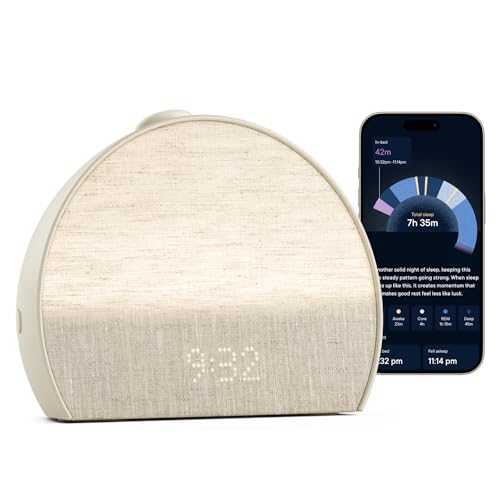
The Putty finish gives the Hatch a muted, contemporary presence suited to a nightstand with simple lines. Like the other Hatch versions, it combines sleep tracking, a smart light, and a sound machine, so the decorative choice does not require sacrificing bedtime functions. For a minimalist room, this is the most restrained color in the trio.
The comparison with the OnLyee is instructive: both are designed for the bedside, yet the OnLyee centers on a projected time display while the Hatch handles a broader routine. Putty also differs from the warmer Cocoa and more neutral Greige, making it an understated choice for pale, monochromatic, or softly industrial interiors.
What Earns Its Place
- The muted Putty finish fits minimalist and softly industrial rooms.
- Sleep tracking and ambient sound support a bedtime routine.
- The smart light adds a low-level bedside function.
- Support is available for setup, connectivity, and troubleshooting.
Possible Compromises
- The subdued color may create less of a visual focal point, and the smart functions require initial setup planning.
Feature Facts
The Right Fit
This version fits minimalist sleepers who want a connected bedside device that blends into pale, understated furnishings.
Consider Something Else When
The OnLyee Projection Alarm Clock serves someone who prioritizes a large ceiling display over sleep tracking, lighting, and sound.
What Matters Before the Style
Display Placement
A clock that looks right on a shelf may not work on a crowded nightstand. The Maxspace uses a compact 5.5-inch face, while the OnLyee projects onto a wall or ceiling, making room layout part of the purchase decision. I prioritize a visible surface or suitable projection angle before considering the finish.
Alarm Flexibility
Multiple alarms, weekday and weekend modes, and adjustable brightness make sense for people with changing schedules. The OnLyee and Dralaw Maclock provide that control, while the Maxspace keeps the experience deliberately simple. A traditional dial suits a bedroom where visual character matters more than scheduling flexibility.
Sleep-Routine Features
The Hatch options function as sleep trackers, smart lights, and sound machines rather than conventional time-only displays. That broader design serves a family nightstand or a bedroom routine built around light and ambient sound. It also means setup involves more than setting a clock face.
Finish and Setup
Black metal and European styling suit classic interiors, ivory pixel styling suits a nostalgic desk, and the three Hatch finishes cover warm, neutral, and muted palettes. I would match the color to the existing furniture before deciding. Connection requirements and reachable outlets also belong in the decision, particularly for USB and smart bedside models.
The Difference Between Display and Routine
Common Shopping Slip Ups
Choosing solely by appearance can hide a practical mismatch. A projection clock needs an unobstructed wall or ceiling, while a USB desk clock needs a reachable outlet. I also check power, placement, and display readability before considering a finish.
What Separates Premium From Basic
A more elaborate clock may add projection, multiple alarms, sleep tracking, smart lighting, or sound support. The extra cost is more defensible when those functions replace separate bedside accessories. A basic analog clock remains the more sensible choice for a simple shelf and a restrained schedule.
Frequently Asked Questions
Which aesthetic alarm clock is quietest?
The Maxspace 5.5-Inch Black European Retro Silent Desk Alarm Clock uses a silent quartz movement designed to avoid ticking. It is the more natural choice for a bedroom that values uninterrupted quiet.
Which model is easiest to read from bed?
The OnLyee Projection Alarm Clock can place a large, focused time display on a ceiling or wall. Its adjustable focus and rotating projector make it more practical than a small dial for people who struggle to read a compact bedside display.
Are the Hatch Sleep Clock colors functionally different?
The Cocoa, Greige, and Putty versions share the same stated sleep tracking, smart light, and sound machine functions. The meaningful difference is the finish, with Cocoa feeling warmer, Greige more neutral, and Putty more muted.
Which option suits a retro computer desk?
The Dralaw Maclock 1984 Retro Pixel Alarm Clock has the most direct connection to early-computer design. Its pixel display, multiple alarms, calendar, temperature, and USB power make it a natural fit for a home office or gaming setup.
What should I check before choosing a bedside clock?
Check outlet access, available surface area, display visibility, and the room’s color scheme. Projection models need a suitable wall or ceiling, while USB and smart models call for a practical connection and setup plan.
Final Thoughts
The right aesthetic alarm clock depends on the role it must play in the room. A classic metal dial brings quiet character, a projection display improves nighttime visibility, a pixel clock anchors a retro desk, and the Hatch models organize a broader bedside routine. I would choose the feature set first, then select the finish that feels natural beside the existing furniture.