
A damaged roof joint can let water creep beneath shingles, siding, or metal panels, while a loose solar panel can shift on an RV or off-grid cabin. You need materials matched to the surface, dimensions, and installation method, so this roundup covers aluminum flashing, self-adhering roofing strips, and solar mounting hardware for DIY projects.
The Picks In Brief

Therwen 20 in Aluminum Flashing Roll
PFCTART 28 in Solar Panel Mounting Kit

Vigorous 1060 Aluminum Flashing 10 x 10 ft
Sasylvia 6 in x 33 ft Self-Stick Roof Flashing

PFCTART 45 in Solar Panel Mount Brackets

PFCTART 46 in Solar Panel Mount with Beam Support

Peohud 6 in x 60 ft Aluminum Flashing Roll

Therwen 14 in x 10 ft Aluminum Flashing Roll
Meet The Standout Selections
A wide aluminum roll gives you room to shape flashing around roof edges, siding transitions, or exposed fasteners. You can cut the material with tin snips, then secure it with nails, screws, or adhesive tape, which makes this practical for a garage, workshop, or older home with mixed exterior materials.
Flashing is a strip that diverts water away from vulnerable joints and connections. The 20-inch width makes this roll more adaptable than a narrow trim strip, although the 10-foot length may fall short across a large roof edge.
Benefits That Matter
- The broad sheet can be trimmed for roofing, siding, composite panels, and flooring repairs.
- Aluminum offers a lightweight option that resists rust and corrosion outdoors.
- Three attachment options let you follow the surface and repair location.
- The continuous roll reduces the need for multiple small pieces on a long joint.
Practical Considerations
- Measure the full joint before cutting, since the roll is only 10 feet long.
- Thin aluminum needs a firm, clean support to sit flat without flexing.
Feature Snapshot
Who It Suits Best
This roll fits DIYers handling mixed roof and siding materials who value a wide, easy-to-trim sheet over a narrow preformed strip.
Where Another Pick Suits Better
Peohud 6 in x 60 ft Aluminum Flashing Roll suits projects needing a much longer, narrower run around windows or siding seams.
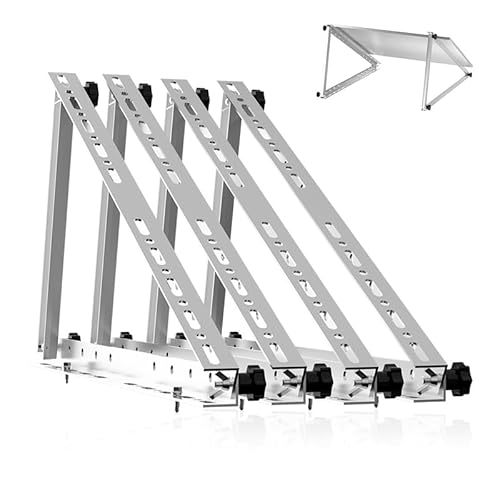
This is solar mounting hardware rather than a roofing sheet, but it belongs in the same roundup because roof-mounted equipment needs dependable support and a way to adjust the panel angle. The foldable 28-inch brackets work particularly well for mobile power arrangements where seasonal sunlight and temporary parking locations affect panel orientation.
Two mounting sets let you support several panels, while the aluminum rails and tilt hardware resist corrosion. For an RV, camping setup, balcony, or cabin, that combination offers more installation positions than a fixed frame.
A Few Highlights
- The tilt mechanism adjusts from flat to upright for changing sun angles.
- Wall, floor, balcony, and roof placement suit several portable projects.
- Aluminum alloy components keep the frame light without using bulky steel rails.
- The package includes rails, bolts, washers, wing nuts, retaining rings, and a manual.
Softest Trade-Off
- The 28-inch size needs panel-width and attachment-point measurements before assembly.
- Roof installation still depends on a sound attachment point and suitable weather sealing.
Technical Highlights
Made For
RV travelers, campers, and off-grid households benefit most from the compact frame, foldable legs, and adjustable tilt.
Consider Something Else When
PFCTART 46 in Solar Panel Mount with Beam Support fits larger panel groups that need greater rail length and added beam bracing.
A 10-inch roll gives you enough width for a chimney curb, pipe surround, or the exposed edge of another roof section without the bulk of a 20-inch sheet. That balance feels useful in a crowded work area where you need to cut a precise piece rather than shape a large section.
The half-hard 1060 aluminum is intended to tolerate bending and cutting without brittle fracture. Compared with Therwen 20 in Aluminum Flashing Roll, this option gives you a narrower profile and a different aluminum grade, which may suit a more controlled fabrication task.
Why It Works Well
- Half-hard aluminum balances flexibility with resistance to deformation.
- The sheet can be cut with a metal sheet cutter for tailored flashing shapes.
- Its resistance to sunlight, heat, ozone, and chemical exposure suits outdoor use.
- The 10-foot length covers a moderate roof transition without excess material.
Details To Watch
- A 10-inch width may not cover wider intersections without overlapping pieces.
- Its strength and flexibility still depend on correct cutting and support.
Best Suited To
Workshop-minded DIYers benefit most when forming neat pieces around pipes, chimneys, and roof-edge transitions.
Not Your Match When
Therwen 14 in x 10 ft Aluminum Flashing Roll fits you better when a wider strip gives you more overlap around doors, windows, or siding.
The self-adhering design changes the installation rhythm. Rather than cutting a metal sheet and reaching for fasteners, you position the strip over a cleaned joint and press it into place, which can suit dormers, porch roofs, mobile homes, and small outbuildings.
Butyl rubber gives the flashing elasticity as a surface expands, contracts, or flexes. The trade-off appears during preparation: the bonding area must remain dry, smooth, and firm, and installation requires a base temperature above 5 degrees Celsius.
Positive Points
- The adhesive underside simplifies small patch repairs.
- Butyl rubber flexes with movement without shrinking.
- The 6-inch width suits seams and moderate-size roof details.
- One roll covers approximately 16 square feet.
- It works with metal, plastic, corrugated roofing, asphalt patches, and farm buildings.
Small Caveats
- Dust, oil, moisture, or loose grit can reduce adhesion.
- Rough masonry needs repair with cement mortar before bonding.
- Keep it away from waterproofing materials containing the organic substances listed in its instructions.
Key Product Details
Who Will Love This
Homeowners patching a porch, dormer, metal roof, or mobile-home seam appreciate the adhesive installation and narrow profile.
Look Elsewhere When
Vigorous 1060 Aluminum Flashing 10 x 10 ft suits you better when a rigid, wider metal sheet is easier to shape around a pipe or chimney.
These 45-inch brackets extend the support distance between a solar panel and its mounting point, which can help you position a larger module above a roof edge or over a less even surface. The adjustable legs change the panel angle, while the torsion-resistant construction is designed to limit unwanted twisting during installation.
Compared with the compact 28-inch PFCTART kit, this pair gives you more rail length and fewer compromises with wider modules. The tool-free 0-to-90-degree adjustment keeps repositioning straightforward for seasonal light changes.
What Makes Sense
- The 45-inch rails accommodate a broader panel footprint with greater clearance.
- Aluminum rails provide a lightweight frame with corrosion resistance.
Points To Note
- Measure your panel width, attachment locations, and available roof clearance before selecting the bracket size.
Built With In Mind
Residential solar users benefit from the longer rails and simple angle adjustment, particularly where a fixed frame would leave little placement flexibility.
A Better Fit Elsewhere
PFCTART 46 in Solar Panel Mount with Beam Support suits you better when several panels need additional beam reinforcement across the frame.
Beam reinforcement is the defining feature here, adding cross-frame support to a 46-inch mounting arrangement. You gain a more structured base for groups of two to four panels rated from 100 to 500 watts, a useful range for an RV, boat, cabin, or small residential array.
Adjustable inclined legs let you tune the angle without removing the panel, while the aluminum construction suits outdoor exposure. Unlike PFCTART 45 in Solar Panel Mount Brackets, this system emphasizes reinforcement across multiple modules rather than a simpler two-panel setup.
Everyday Wins
- Beam reinforcement helps distribute support across a multi-panel frame.
- The 46-inch length offers useful clearance for larger modules.
- Inclined legs support angle changes throughout the year.
- Aluminum construction combines a manageable weight with corrosion resistance.
Things That May Matter
- The wider frame demands careful measurement of roof or deck space.
- Boat and RV installations still need secure attachment and suitable weather sealing at each contact point.
Quick Facts
The Right Fit
Off-grid households and mobile installers benefit most when two to four panels need a reinforced, adjustable frame.
Skip It When
PFCTART 28 in Solar Panel Mounting Kit fits you better for compact setups that prioritize folding, portability, and simple placement.
The defining advantage here is length. A 60-foot, 6-inch roll can follow an extended window edge, door header, or siding joint without frequent splices, which makes it useful for a long exterior repair in a busy workshop or yard.
Its 0.0078-inch aluminum sheet is easy to cut into narrow strips and is intended to remain stable through rain, snow, and temperature variation. Compared with Peohud’s shorter alternatives in this roundup, the continuous length reduces joints in the finished repair.
Useful Touches
- The 60-foot length suits extended seams with few interruptions.
- A 6-inch width works well for windows, doors, siding, and roofing edges.
- Lightweight aluminum is straightforward to trim for a custom fit.
Things To Weigh Up
- The narrow strip offers less overlap coverage than wider flashing rolls.
- A longer roll needs proper storage to prevent creases or deformation.
Whose Shelf It Belongs On
Workshops and homeowners handling long, narrow joints benefit most from the extended roll and minimal splicing.
Another Choice May Suit
Therwen 20 in Aluminum Flashing Roll suits you better when a wide sheet offers more material around irregular roof penetrations.
A 14-inch width lands between the narrow utility strips and the broad 20-inch Therwen roll. That middle ground gives you useful coverage around windows, doors, siding transitions, and roof edges without carrying an oversized sheet for a small repair.
You can trim the aluminum to the shape your project needs, and its light weight makes handling more convenient. Compared with the 20-inch option, the smaller sheet consumes less workspace and works well for focused household repairs.
Features That Help
- The 14-inch width provides useful overlap without excessive material.
- Aluminum offers rust and corrosion resistance for outdoor placement.
- The roll can be cut and shaped for several exterior applications.
The Fine Print
- The 10-foot length works best for localized repairs rather than long roof runs.
Core Details
Reach For A Different Pick When
Peohud 6 in x 60 ft Aluminum Flashing Roll fits you better for long, narrow seams where minimizing splices matters more than sheet width.
Another Choice May Suit
Sasylvia 6 in x 33 ft Self-Stick Roof Flashing suits you better when an adhesive-backed strip offers a simpler installation method.
Planning an Aluminum Roof Panel Repair
Match the Material to the Repair
Aluminum flashing works well where metal roofing, composite panels, siding, or similar exterior surfaces meet. It is lightweight, easy to trim, and resistant to rust and corrosion, making it useful around roof edges, pipes, chimneys, windows, and doors. A rigid metal roll suits shaped flashing, while self-adhering butyl rubber serves narrow seams that benefit from flexible bonding.
Check the Installation Path
Metal flashing can be trimmed with tin snips and attached with nails, screws, or tape. The substrate still matters, so make sure it is clean, stable, and able to support the sheet without flexing. Self-stick material needs a dry, smooth bonding area and a base temperature above 5 degrees Celsius, while roof-mounted solar hardware requires secure structural attachment points.
Measure Before Ordering
Record both the width and length of the repair area, then account for overlap and any cuts around obstacles. Wider sheets suit irregular intersections, whereas long narrow rolls reduce splices around extended siding seams. For solar brackets, measure panel width, rail spacing, roof clearance, and the space needed to tilt or fold the completed frame.
Avoiding Costly Roof Project Misfits
Mistakes Worth Dodging
Buying by thickness alone can leave you short on width or unable to make a clean attachment. Measure the joint, inspect the base surface, and confirm that the material suits the roofing and sealant already present. For solar mounts, check the complete panel arrangement rather than estimating from a single panel.
The Upgrade Payoff
A reinforced or larger system can pay off when it eliminates extra pieces, supports several panels, or provides room to adjust the angle. The added cost matters less for a complex array or long exterior seam, while a basic strip or compact bracket remains more economical for a small, isolated repair.
Frequently Asked Questions
Are aluminum roof panels suitable for DIY repairs?
Yes, aluminum flashing is often manageable for DIY work because it is lightweight and can be trimmed with tin snips. You still need suitable fasteners, a stable surface, and the correct placement for each joint.
What width of aluminum flashing should you choose?
Choose a width that provides sufficient overlap around the vulnerable area after trimming. Wider sheets suit corners and penetrations, while narrow strips work well for straight seams where less material is needed.
Can self-stick roofing flashing replace metal flashing?
It can suit many narrow seams and patch repairs, especially around dormers, porches, and metal roofs. Rigid metal remains preferable where you need a shaped piece, substantial overlap, or a mechanically fastened installation.
How do I choose a solar panel mounting bracket?
Measure the panel width, mounting-point spacing, available clearance, and intended placement location. Compact folding brackets suit portable systems, while longer reinforced frames fit larger multi-panel arrangements.
Is a thicker aluminum roof flashing roll always better?
No, thickness alone does not determine the right choice. Width, length, flexibility, surface condition, and fastening method may matter more for the particular repair.
Wrap Up
Choose aluminum flashing for shaped, mechanically fastened roof and siding repairs, a self-stick strip for simpler narrow seams, and solar mounting hardware for elevated panel arrays. Match the dimensions and installation method to your project before ordering, and you’ll avoid ending up with either too much material or too little support.