
A flushing commode solves a practical bathroom problem: adding toilet facilities where conventional drain lines are difficult to reach. A macerating toilet uses a grinder and pump to move waste through a smaller pipe, while a portable commode pail serves a completely different bedside-care need. You’ll find the right fit by matching the system’s pumping route, fixture connections, and power requirements to the room, not by focusing on the toilet alone.
The Picks In Brief

PCP Commode Half Pail with Lid, 6 Quart
Simple Project 750W Macerating Toilet

Simple Project 600W Macerating Toilet
Simple Project 500W Macerating Toilet

Simple Project 1000W Macerating Toilet

Simple Project 600W Basement Toilet
A Closer Look At Each Pick
This pail replaces the removable waste container in a bedside commode, so it suits home care, temporary recovery, and any situation where the chair must remain near a patient. Unlike the powered macerating systems that follow, it needs no pump or fixed waste line, which makes it a simpler option for portable care.
The 6-quart version holds 1.5 gallons, and a lid helps contain the waste container during normal use. The smooth, nonstick interior should make routine cleaning more manageable, although the smaller capacity may require more frequent emptying during extended use.
Everyday Advantages
- Fits standard and bariatric commode frames.
- Bottomless replacement liner supports a close-fitting splash guard.
- Includes a lid for the removable waste container.
- Smooth surface simplifies routine cleaning.
- Made in the USA for compatible commode setups.
Worth Noting
- The 6-quart capacity suits portable care, while a 10-quart version offers more room between emptying.
- Check the commode frame and splash-guard arrangement before replacement.
Feature Snapshot
Who It Suits Best
This pail fits caregivers managing a standard or bariatric bedside commode in a home, clinic, or temporary care setting.
A Better Fit Elsewhere
Choose the Simple Project 750W Macerating Toilet instead for a basement bathroom that needs a pumped waste connection.
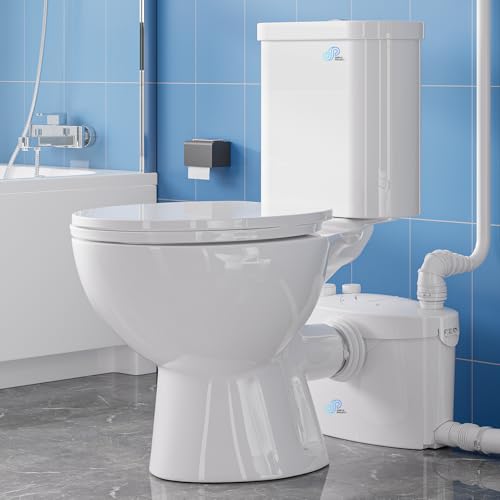
Basement bathrooms often place the nearest conventional drain beyond practical reach, and the Simple Project 750W Macerating Toilet takes on that routing challenge. Its 750-watt pump and stainless-steel grinding blades are designed to process waste before moving it through the line, making this a more capable alternative to the portable PCP pail.
The system can pump waste up to 360 feet horizontally or 36 feet vertically, according to its listed specifications. Four water inlets also let a shower, sink, or other fixture share the waste route, which is useful in compact basement layouts.
The Upside
- High 750-watt output suits demanding waste routes.
- Long horizontal and vertical reach reduces pipe-placement constraints.
- Four inlets support several connected bathroom fixtures.
- Stainless-steel blades add a durable cutting component.
- Round-the-clock support adds installation assistance.
Practical Considerations
- Confirm that the waste outlet and pipe route match the stated travel distance.
- Its pump, grinder, and fixed plumbing make it less portable than the PCP Half Pail.
Quick Facts
Made For Basements
This system fits homeowners and renovators adding a toilet below a main bathroom or connecting several basement fixtures.
Consider Something Else When
The PCP Commode Half Pail with Lid, 6 Quart is a better match for portable bedside care without fixed plumbing.
The Simple Project 600W Macerating Toilet shifts the focus toward a quieter pump configuration, which can suit a basement suite or guest room where a loud grinder would be unwelcome. Its rear outlet configuration and four water inlets provide the same kind of multi-fixture flexibility offered by the higher-output 750W model.
That makes it a sensible middle ground for a room with a conventional toilet and a nearby shower or sink. The honest caveat is that a basement with a long or unusually demanding waste route may justify the extra pump power found in the 750W and 1000W systems.
The Helpful Details
- 600-watt pump provides a solid midrange output.
- Quiet-oriented design suits guest and shared spaces.
- Four inlets support multiple bathroom fixtures.
- Rear outlet suits typical basement upflush layouts.
- Support is available around the clock.
Where It May Fall Short
- Its 600-watt rating is below the 750W and 1000W alternatives.
- Planned pipe measurements remain necessary before installation.
Right Fit For Shared Bathrooms
This macerating toilet suits a basement suite or guest bathroom where a lower-noise configuration and several fixture connections matter most.
Another Choice May Suit
The Simple Project 500W Macerating Toilet offers a different motor rating and a listed 1.6-gallon flush configuration for installers comparing flow and power.
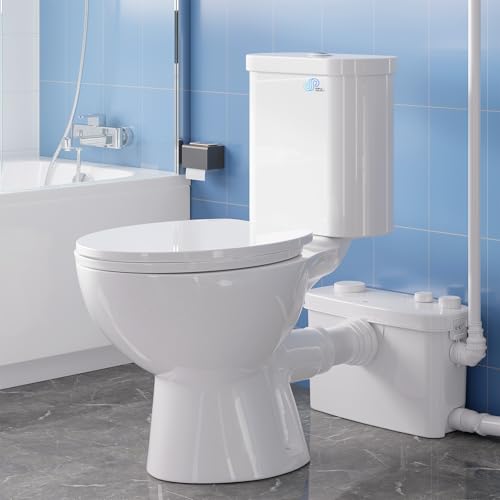
The Simple Project 500W Macerating Toilet is built around a configurable flush system, an extension pipe, and four water inlets. That combination gives installers a clear way to bring a toilet, shower, sink, or washbasin into one basement waste route, which can reduce the need for separate drainage lines.
Its listed 1.6-gallon-per-flush configuration provides another decision point for households managing water consumption, while the 500-watt motor sits below the other Simple Project models. The extension pipe also makes routing easier to visualize, provided the available distance and pipe layout support it.
Noteworthy Benefits
- Four inlets accommodate multiple fixture connections.
- Extension pipe supports more flexible route planning.
- Listed 1.6-gallon flush provides a defined water-use target.
- Silent-oriented motor configuration suits occupied basements.
- Damage and breakdown coverage varies by accompanying plan.
Points To Note
- The 500-watt motor offers less stated power than the 600W, 750W, and 1000W choices.
- Each connected fixture must be compatible with the system’s inlet arrangement.
Technical Highlights
Built With In Mind
This system fits renovators connecting several basement fixtures who value a defined 1.6-gallon flush and four inlet connections.
Reach For A Different Pick When
The Simple Project 1000W Macerating Toilet makes more sense for a route requiring greater stated pumping output and a listed 40-foot reach.
At 1,000 watts, the Simple Project 1000W Macerating Toilet offers the highest stated motor output in this group. That extra capacity makes it the logical option for a basement installation with a distant waste outlet, several connected fixtures, or a route that demands more pumping capacity than the 500W and 600W systems offer.
The included extension pipe and four water inlets support a combined layout, and the manufacturer lists a pumping reach of up to 40 feet. You’ll still need to map the pipe run and confirm the outlet position because those installation conditions determine whether the system’s stated reach has enough margin.
Key Advantages
- 1,000-watt motor provides the highest stated output here.
- Listed 40-foot reach supports a longer waste route.
- Extension pipe provides routing flexibility.
- Four inlets accommodate several fixture waste streams.
- Quieter operation is a stated design goal.
Possible Compromises
- Its greater output is unnecessary for a short, straightforward drain path.
- Fixed plumbing makes it less practical than portable commode equipment.
- Verify the extension pipe’s length against the available route.
Best Suited To Longer Runs
This model fits renovators with a longer basement waste route and several fixtures sharing one pumped connection.
Where A Sibling Pick Shines
The Simple Project 600W Basement Toilet offers a listed 295-foot horizontal reach and three inlets for a differently proportioned layout.
The Simple Project 600W Basement Toilet combines a 600-watt pump with a substantial listed reach of up to 295 feet horizontally and 30 feet vertically. That makes it a practical middle ground between the lower-output 500W model and the 750W and 1000W options for basements with a substantial waste route.
Three water inlets provide connections for fixtures such as a sink, shower, or washbasin. Its one-piece configuration also distinguishes it from the two-piece designs, giving installers a second choice to compare alongside pipe length, vertical drop, and the number of fixtures in the room.
What Stands Out
- Long 295-foot horizontal reach supports extended waste routes.
- 30-foot vertical reach handles a raised outlet.
- Three inlets serve multiple bathroom fixtures.
- One-piece configuration offers a distinct installation option.
- 600-watt motor balances power and routing capability.
Small Caveats
- Three inlets are fewer than the four offered by most of the other macerating models.
- Confirm the available outlet and vertical elevation before ordering.
Core Details
The Right Fit
This system fits homeowners adding a basement toilet with a long drain path and up to three connected fixture inlets.
Swap It Out When
The Simple Project 750W Macerating Toilet better serves a basement needing four inlets and a listed 360-foot horizontal reach.
What to Verify Before You Buy Flushing Commodes
Start With the Waste Route
Measure the path from the toilet or pail to the waste outlet before choosing a pump system. Compare that distance with the stated horizontal and vertical reach, then leave room for turns, pipe joints, and connection hardware.
Match the Fixture Count
Four inlets support more connected fixtures than a three-inlet arrangement. Measure the sink, shower, and washbasin locations before selecting a system, since every connected fixture must have a suitable waste path.
Check the Installation Details
Review the toilet configuration, outlet position, extension pipe, electrical supply, and local plumbing requirements. A macerating system requires a fixed installation, while the PCP Half Pail is designed for a portable commode frame.
Avoid Common Plumbing Missteps
Common Shopping Slip Ups
Focusing only on motor power can hide an unsuitable layout. Check fixture count, pipe direction, vertical drop, and outlet location before deciding which model fits the room.
What The Higher Tier Buys
A higher motor rating adds stated pumping capability, while extra inlets or an extension pipe improve routing options. Those additions matter for longer paths and more fixtures, but a short basement route may not require them.
Frequently Asked Questions
How are flushing commodes different from portable commode chairs?
Flushing commodes use a pump and grinder to move waste through a fixed line. Portable commode chairs collect waste in a removable pail that you empty by hand.
Which macerating toilet suits a basement?
The Simple Project 750W Macerating Toilet offers a listed 360-foot horizontal reach and four inlets. Measure the full route before selecting it for a basement.
Can macerating toilets accept shower wastewater?
Several models include multiple water inlets for connected fixtures. Match each inlet with the intended sink, shower, or washbasin waste line.
Is a higher-wattage macerator always better?
Higher wattage provides more stated pumping capability but does not remove installation requirements. Route length, elevation, and fixture connections still determine the practical fit.
What should be checked before installing a flushing commode?
Confirm pipe length, vertical drop, outlet position, electrical requirements, and fixture compatibility. Those details prevent a capable pump from being paired with the wrong plumbing layout.
The Takeaway
Your decision starts with the plumbing route rather than the largest motor rating. The PCP Half Pail handles portable bedside care, while the five macerating toilets suit fixed basement installations; shorter routes may need less power, and busier layouts benefit from additional inlets and reach. Match the system to the room, then check every connection before ordering.