
A cramped apartment, a family music room, and a practice space that must disappear into a closet present different piano requirements. I focus on Yamaha digital pianos that balance keyboard feel, sound, portability, and useful practice features. The 88-key models suit players working toward a full repertoire, while the Piaggero NP-15 choices make more sense for compact rooms, lessons, and portable practice.
The Shortlist At A Glance
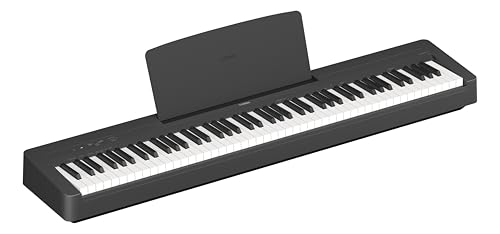
Yamaha P145BT 88-Key Weighted Digital Piano with Bluetooth and Built-In Speakers

Yamaha DGX-670WH 88-Key Weighted Digital Piano in White

Yamaha NP15B 61-Key Touch-Sensitive Portable Digital Piano
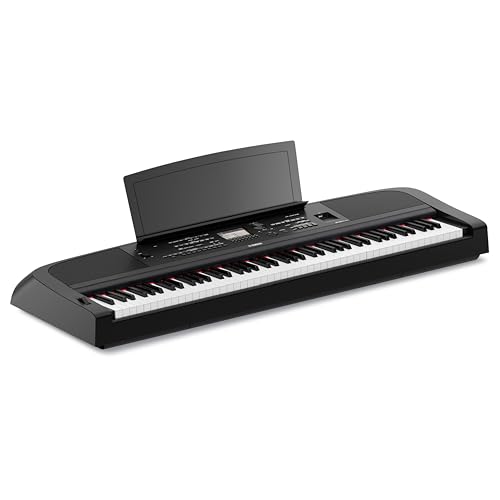
Yamaha DGX-670B 88-Key Weighted Digital Piano in Black

Yamaha NP15WH 61-Key Touch-Sensitive Portable Digital Piano

Yamaha P71 88-Key Weighted Action Digital Piano
More On The Choices That Made The List
The Yamaha P145BT handles a familiar home-piano conflict well: full-sized key range in a relatively slim cabinet. Its 88 weighted, touch-sensitive keys use Graded Hammer Compact action, meaning the resistance changes by register to approximate an acoustic instrument more closely than uniform light keys. That matters for technique, dynamic control, and practice pieces written for a full keyboard.
For most practice rooms, I see the P145BT as the strongest all-purpose balance in this group. Bluetooth audio supports streaming and playing along, while Smart Pianist and Rec’n’Share apps assist practice and recording. The included music rest, sustain foot switch, AC adapter, and built-in speakers make it a self-contained setup for a bedroom, studio, or rehearsal corner.
A Few Highlights
- Weighted, touch-sensitive 88 keys support more expressive control than the unweighted Piaggero models.
- Bluetooth audio adds a practical way to practice with streamed music or backing tracks.
- Smart Pianist and Rec’n’Share reduce some of the friction involved in learning and reviewing performances.
- Built-in speakers remove the need for separate equipment during ordinary home practice.
- The music rest, sustain foot switch, and power adapter cover several essential setup items.
Small Caveats
- An 88-key instrument still needs more horizontal space than a 61-key portable model, despite the slim body.
- The listed Bluetooth function covers audio streaming rather than a stated Bluetooth MIDI connection.
Key Specs
Who It Suits Best
Home pianists and students needing 88 weighted keys, wireless audio, and app-assisted practice in a compact setup.
Where Another Pick Suits Better
The Yamaha NP15B fits mobile players and small-room practice better when portability matters more than a full 88-key range.
Compared with the P145BT, the Yamaha DGX-670WH places greater emphasis on a traditional acoustic-piano response. Its weighted action feels heavier in the lower register and lighter toward the treble, a graded design that helps players translate touch, phrasing, and dynamics more naturally. The 88-key layout also removes the range limits encountered on a 61-key portable.
Yamaha’s CFX Stereo Sampling recreates the character of the company’s CFX concert grand, including its fuller resonance. I would favor this model in a dedicated music room where the instrument can remain set up and practice sessions regularly reach classical, jazz, or contemporary repertoire. The white finish also gives it a lighter visual presence than the black DGX-670B.
What Helps Most
- Register-sensitive weighting gives low and high notes distinct playing resistance.
- CFX Stereo Sampling captures the broad character of a concert grand.
- A broad selection of instrument voices extends practice beyond standard piano tones.
- The music rest and sustain foot switch support a more complete home setup.
Points To Note
- The furniture stand is sold separately, so the complete setup requires additional space and planning.
- Its full 88-key body makes it less convenient for quick transport than the Piaggero NP-15.
Feature Snapshot
Made For
Pianists in dedicated practice spaces who prioritize weighted action, concert-grand character, and a complete 88-key layout.
Another Choice May Suit
The Yamaha P145BT offers a more compact alternative for practice in smaller rooms or locations where a separate furniture stand is inconvenient.
The Yamaha NP15B takes a different approach from the DGX-670WH by reducing the keyboard to 61 full-size keys and prioritizing a lightweight, portable design. Touch sensitivity controls volume according to how firmly each note is struck, although the keys themselves do not carry the weighted resistance found in the larger models. That difference suits casual practice, lessons, and music learning more readily than advanced repertoire requiring the complete range.
For a dorm, studio, rehearsal space, or travel setup, the built-in speakers and battery-power option keep the instrument self-contained. A metronome supports tempo practice, recording preserves a take for later review, and the Smart Pianist app provides iOS-based configuration. I find the black finish discreet, although the white NP15WH offers a different visual character.
Notable Upsides
- Lightweight construction makes rehearsals, lessons, and temporary setups easier to manage.
- The built-in metronome gives practice sessions a consistent tempo reference.
- Recording creates a simple way to review timing, entrances, and developing technique.
Practical Considerations
- The 61-key range excludes the lowest octave available on an 88-key piano.
- Light, touch-sensitive keys feel different from the weighted action used for acoustic-style technique.
- Smart Pianist support is identified for iOS, so Android users should verify their preferred app route.
The Right Fit
Students, casual players, and traveling musicians who need a compact instrument for lessons, rehearsal, and everyday practice.
A Better Fit Elsewhere
The Yamaha P145BT is the stronger choice for pianists working on a full 88-key repertoire who prefer weighted action and connected practice features.
The Yamaha DGX-670B carries the DGX-670WH’s core piano-focused design into a black finish that blends easily with many music stands and furniture. Its 88 weighted keys feel heavier toward the bass and lighter in the upper register, supporting the gradual resistance changes expected from an acoustic instrument. For a player developing touch and dynamic control, that action remains more useful than uniform lightweight keys.
The CFX Stereo Sampling voice also gives the instrument a substantial concert-grand character, while the broader instrument selection adds value for lessons and repertoire exploration. Unlike the compact NP15B, this model stays ready for a full keyboard. In a dedicated room, I would choose it for players who want traditional piano response without giving up access to other instrument sounds.
Noteworthy Benefits
- Register-dependent weighting supports conventional piano technique.
- CFX piano sampling provides a rich reference sound for practice and performance preparation.
- Multiple instrument voices add flexibility for lessons and creative work.
- The black finish coordinates easily with dark furniture and understated room décor.
Trade Offs
- Its full-size keyboard requires a permanent surface and a larger practice footprint.
- The broader tonal range adds complexity for beginners who may only need a single piano voice.
Quick Facts
Who Will Love This
Home pianists in permanent practice spaces who want weighted action, 88 keys, and a broad selection of sounds in a restrained black cabinet.
Where A Sibling Pick Shines
The Yamaha DGX-670WH suits players who prefer the same core action and sound with a white finish and a listing that includes a music rest and sustain foot switch.
The Yamaha NP15WH pairs the NP15B’s portable architecture with a white finish that feels less utilitarian in a bright living room or compact bedroom. Its 61 full-size, touch-sensitive keys respond to changes in striking force, giving beginners and returning players some dynamic control despite the absence of weighted action. The result is a simple instrument that can follow a developing touch without demanding a large setup.
Built-in speakers and the battery-power option make it convenient for lessons, rehearsals, or temporary practice away from a permanent keyboard. The metronome, recording function, and iOS Smart Pianist app cover rhythm, review, and configuration needs. Compared with the black DGX-670B, this model is less about acoustic simulation and more about manageable size, useful practice tools, and visual versatility.
The Value In It
- The white finish adds a distinctive look to an otherwise compact instrument.
- Touch sensitivity makes phrase volume more responsive during ordinary practice.
- Built-in speakers and battery power support genuinely portable use.
Less Ideal Details
- The 61-key layout restricts repertoire compared with the full-size Yamaha models.
- Light action is less suitable for players specifically developing weighted-key technique.
Built With In Mind
Beginners, students, and casual home players who value portability, touch response, and a clean white design in a smaller instrument.
Swap It Out When
The Yamaha P71 offers a better fit for pianists committed to learning with 88 weighted keys and a streamlined set of onboard sounds.
The Yamaha P71 keeps the focus on essential piano characteristics: 88 weighted, touch-sensitive keys and a selection of ten voices, including a Yamaha grand-piano sound. Weighted action gives each note resistance under the fingers, while touch sensitivity lets the instrument respond to changes in pressure. For a focused home setup, that combination covers the main mechanical needs of a serious learning instrument.
Its one-button control scheme and streamlined layout make the P71 approachable without surrounding the player with an extensive control surface. The included sustain pedal and power supply cover core setup requirements. Compared with the P145BT, the P71 has a more deliberately simple design, although the newer model adds Bluetooth audio and dedicated practice apps that may suit connected learning better.
Positive Points
- The 88 weighted keys provide a full range and an acoustic-style response.
- Ten voices offer useful tonal variety without an elaborate control layout.
Areas To Watch
- Connected learners who prioritize Bluetooth audio and app-based workflows may find the P145BT more aligned with their needs.
Core Details
Whose Shelf It Belongs On
Home students and pianists who want a full-size weighted keyboard, direct controls, and essential onboard sounds without a broad feature set.
Reach For A Different Pick When
The Yamaha P145BT suits connected practice sessions that benefit from Bluetooth audio, Smart Pianist, and Rec’n’Share features.
What Matters Before Committing To A Home Piano
Keyboard Action And Range
I start with the keyboard because it shapes technique more than any other physical feature. Weighted action adds resistance, while touch sensitivity changes volume according to key pressure. An 88-key layout covers the range expected in most piano literature, whereas 61 keys offer portability at the cost of the lowest octave.
Sound For Practice And Lessons
A convincing grand-piano sound gives a home player a consistent reference for tone, balance, and phrasing. CFX-based sampling in the DGX models targets a concert-grand character, while the P145BT and P71 provide grand-piano voices within more compact or simplified layouts. Instrument variety helps with lessons and creative practice, but it should remain secondary for someone training primarily on piano.
Portability And Connection Needs
The Piaggero NP-15 models make the strongest case for limited floor space, rehearsal rooms, and transport. Built-in speakers and battery power support temporary setups, while the smaller key count changes the available repertoire. The P145BT adds Bluetooth audio and practice apps, making it a sensible middle ground between the portable Piaggero and the full-size DGX models.
Space And Accessories
I measure the available surface before choosing between models with the same key count. A slim 88-key cabinet still extends across a substantial desk, and the DGX-670WH requires a separate furniture stand. Music rests, sustain pedals, power supplies, and connected accessories also affect the complete setup rather than the instrument alone.
Two Decisions Piano Shoppers Often Regret
Common Shopping Slip Ups
Choosing by appearance before checking keyboard action can leave a new piano mismatched to the player’s technique. Another common mistake is counting key quantity without considering repertoire, since 61 keys exclude the lowest octave found on an 88-key model. I also check the complete physical footprint, including stands, pedals, cables, and storage.
What The Higher Tier Buys
Moving from a basic portable model to a higher-tier home piano often brings weighted action, a full 88-key range, richer sampling, and more instrument voices. The upgrade earns its place for serious technique and broader repertoire, while a compact model remains more practical for lessons, travel, and limited space. The best choice depends on how often the instrument will be played and what music must fit on the keyboard.
Frequently Asked Questions
Do I Need 88 Weighted Keys For A Home Piano?
I recommend 88 weighted keys for serious classical study, jazz, and repertoire that spans the full piano range. A 61-key light-action model is more practical for compact practice and casual learning.
Is The Yamaha P145BT Better Than The DGX-670WH?
The P145BT is more compact and includes Bluetooth audio plus dedicated practice apps, while the DGX-670WH emphasizes CFX sampling, graded weighted action, and a broader instrument palette. The dedicated-room player usually gains more from the DGX features, whereas the P145BT suits flexible home practice.
Are 61 Keys Enough For Learning Piano?
Sixty-one keys cover many beginning pieces, but students soon encounter music requiring the lowest octave of a full piano. A 61-key model works well for lessons, melodies, and portable use, while 88 keys suit long-term technical study.
Should I Choose The White Or Black DGX-670?
The DGX-670WH offers a white finish and a listing that includes a music rest and sustain foot switch, while the DGX-670B provides a black finish. Room appearance, included accessories, and the available furniture arrangement should guide the choice.
Which Model Takes Up The Least Space?
The Yamaha NP15B and NP15WH are the most compact choices because they use 61 keys and a portable body. Battery power and built-in speakers also make them convenient for temporary practice away from a permanent setup.
Final Thoughts
I would choose the P145BT for the strongest mix of weighted 88-key action, wireless audio, and app-assisted practice. The DGX models suit players focused on acoustic-style response and a wider sound palette, while the P71 serves anyone wanting full-size keys with simpler controls. The NP15 variants remain the clearest answer when portability matters more than range.