
A cracked PVC fitting or loose plastic housing can interrupt a repair before the repair even begins. You need an adhesive that suits the material, joint design, and conditions your project will face, especially around water lines, drainage fittings, tool handles, and household equipment. PVC pipe cement is a solvent-weld adhesive for compatible pipe and fittings, while the epoxies below are structural bonding products with different uses.
Before applying any product, confirm that it is listed for your exact plastic and application. For a pressurized PVC system, use a suitable solvent-weld cement or another PVC-compatible adhesive rather than assuming a general epoxy will create an approved joint.
A Side-By-Side Look

3M DP420 Off-White Epoxy, 50 mL

3M DP460NS Off-White Epoxy, 50 mL

3M DP420NS Black Epoxy

Franklin 1412 Tan Glue
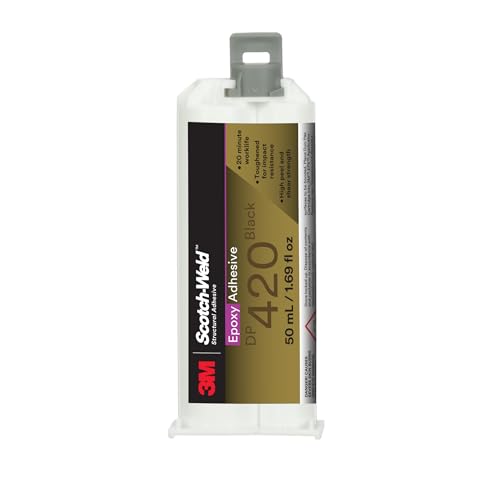
3M DP420 Black Epoxy, 50 mL

3M DP100 Plus Clear Epoxy

3M DP190 Gray Epoxy, 48.5 mL

3M 2216 Gray Epoxy Tube Kit
Why These Options Stand Out
For a general-purpose epoxy that can join several different materials, this 50 mL Duo-Pak has a useful combination of scope and manageable size. The off-white color suits light assemblies, while its strength makes it more relevant to fabrication work than a household craft glue.
The listed applications include joining, potting, panel bonding, and structural repairs involving metal, ceramics, wood, glass, composites, and plastics. You may find that breadth useful for mixed-material projects, though “plastics” should not be taken to mean every PVC formulation is compatible.
Positive Points
- High shear strength supports demanding structural joints.
- Works across metals, glass, ceramics, wood, composites, and many plastics.
- The 50 mL Duo-Pak format suits occasional repairs without an oversized container.
- Off-white color works well when a light joint line is less noticeable.
Things To Consider
- Confirm compatibility with the exact plastic before using it on a PVC pipe joint.
- Accurate resin and hardener mixing requires proper dispensing and careful technique.
Feature Snapshot
Built With In Mind
This suits experienced hobbyists and repair technicians bonding mixed materials where structural load and substrate compatibility are understood.
Another Choice May Suit
3M DP420 Black Epoxy, 50 mL serves you better when a dark joint line is preferable to the off-white finish of this option.
Vertical joints and assemblies that need to stay in place give this epoxy a distinct advantage over the more general 3M DP420. Its non-sag formula reduces the likelihood that the mixed adhesive will run away from the bond line, which matters during a repair involving a housing or bracket held overhead.
The 2:1 mixing ratio simplifies proportioning when you follow the dispensing instructions. A 60-minute work life provides time to position components, while handling strength arrives in about four hours, making planned workshop time more realistic.
Why It Works Well
- Non-sag behavior helps maintain contact on vertical or uneven surfaces.
- Impact and stress resistance suit demanding assemblies.
- Works with metals, ceramics, wood, glass, and some plastics.
- Longer working window reduces pressure during component alignment.
Practical Considerations
- The 50 mL package may run short for several large joints.
- Some plastics are excluded, so verify your workpiece before mixing.
- Accurate metering equipment helps preserve the specified ratio.
Technical Highlights
Who Will Love This
You will appreciate this option for fabrication work involving vertical components, mixed substrates, and a need for additional positioning time.
Where A Sibling Pick Shines
3M DP420 Off-White Epoxy, 50 mL is the more straightforward choice for general panel and structural bonding where non-sag behavior is unnecessary.
When several assemblies need attention, the 400 mL container offers more material than the 50 mL versions without moving to a bulk setup. That makes this black, non-sag epoxy practical for a workshop that handles repeated repairs rather than a single household fixture.
High peel and shear strength help it cope with pulling, twisting, and sliding forces, while toughening additives support impact and fatigue resistance. The 20-minute work life still gives you a practical window to adjust the position of the parts before the adhesive sets.
A Few Strong Suits
- Large 400 mL package supports multiple joint repairs.
- High peel and shear strength benefit loaded assemblies.
- Non-sag formula helps bonds stay on vertical surfaces.
- Black color can blend into dark components.
Details To Watch
- The larger package requires storage space and disciplined dispensing.
- The 20-minute work life leaves less adjustment time than 3M DP460NS.
Feature Facts
Whose Shelf It Belongs On
This belongs in a small workshop where repeated structural repairs justify a larger dispensing package and accurate mixing equipment.
Consider Something Else When
3M DP460NS Off-White Epoxy, 50 mL fits you better for a small vertical repair that needs a longer positioning window.
A small project does not always justify the equipment involved with a two-part structural epoxy. The Franklin International 1412 Titebond-3 package offers a straightforward 4-ounce format that is easier to keep within reach for a household repair box or occasional workshop task.
The tan color is suitable when you prefer a warmer adhesive appearance, and the smaller container is convenient for handling a limited amount. Its listing does not establish suitability for PVC pipe or pressure-bearing joints, so treat it as a general household adhesive rather than a solvent-weld cement.
Everyday Perks
- Four-ounce size suits smaller household projects.
- Tan color provides a warmer finish for suitable assemblies.
- Compact container is easier to store than a large Duo-Pak.
Points To Keep In Mind
- Do not substitute it for PVC solvent-weld cement without confirming compatibility.
- The limited amount means larger projects may require another container.
Quick Facts
Right Fit
This suits household repairers handling small non-PVC projects that need a compact adhesive package and a tan color.
Not Your Match When
3M DP100 Plus Clear Epoxy, 48.5 mL fits you better when a clear, self-leveling bond line and defined structural adhesive properties matter.
Color can matter more than people expect in a visible joint. This black version of 3M DP420 offers the same 50 mL scale as the off-white model, making it a more natural fit for dark housings, brackets, and equipment parts.
Its listed uses cover joining, potting, panel work, and structural bonding across several substrates. High shear strength is the main attraction, giving you a sensible option for load-bearing repairs where the joined materials are compatible and the joint is properly prepared.
Everyday Advantages
- Black finish blends with dark components and assemblies.
- High shear strength supports structural repair work.
- Useful for joining, potting, and panel applications.
- Metal, glass, wood, ceramic, composite, and plastic options broaden its use.
Smaller Caveats
- Many plastics are covered, but specific PVC compatibility still needs confirmation.
- The 50 mL amount is intended for selected repairs rather than repeated heavy production.
The Details
Made For
This suits makers and repair technicians who want general structural versatility with a discreet black joint line.
Reach For A Different Pick When
3M DP420NS Black Epoxy suits you better for repeated workshop repairs because its 400 mL package provides more material.
A visible joint does not have to look like a dark stripe across the assembly. 3M DP100 Plus remains clear after curing, while its low-viscosity consistency flows into small gaps and self-levels during application, making it useful for detailed household and craft work.
The fast-setting, two-part epoxy also provides high shear and peel strength, along with flexibility that suits joints exposed to vibration or impact. It bonds metals, ceramics, glass, and many plastics, but your specific PVC grade still needs confirmation before a pipe connection relies on it.
Where It Delivers
- Clear cured finish preserves the appearance of visible assemblies.
- Self-leveling consistency helps fill small gaps and fine details.
- Flexible adhesive handles vibration and impact better than a rigid bond.
- Works with metals, ceramics, glass, and many plastics.
Trade Offs
- Fast setting leaves less time for repositioning than slower-curing options.
- Low viscosity can make excess adhesive flow beyond a narrow bond line.
Feature Overview
Who Should Grab It
This suits careful hobbyists who value an unobtrusive bond line and need a flexible adhesive for detailed assemblies.
A Better Fit Elsewhere
3M DP190 Gray Epoxy, 48.5 mL fits you better for a visible mixed-material repair where color does not matter.
Mixed-material repairs rarely arrive in tidy pairs. The gray DP190 formula covers metals, ceramics, wood, fiberboard, glass, rubber, and many plastics, giving you a broader material list than several of the other 3M options here.
High shear strength describes resistance to sliding forces, while peel strength relates to pulling one bonded layer away from another. That combination makes this epoxy useful for assemblies where flexing or separation at the joint could be a concern.
Strengths Worth Knowing
- Broad substrate range suits mixed household projects.
- High shear strength supports joints exposed to sliding loads.
- Peel strength helps resist separation at the bond line.
- Gray color works well with darker or neutral assemblies.
Where It May Fall Short
- Some plastics are covered, but PVC remains a material-specific compatibility check.
- The Duo-Pak format calls for accurate mixing and suitable dispensing equipment.
Best Suited To
This suits experienced repairers joining several material types where a gray structural adhesive and strong peel performance are priorities.
Skip It When
3M DP100 Plus Clear Epoxy, 48.5 mL serves you better for a visible assembly that benefits from a clear finish and self-leveling application.
Heat changes the decision for demanding assemblies. Unlike the faster-setting options, 3M 2216 can cure at room temperature over approximately seven days or reach a full cure in 30 minutes at 200°F, giving you a way to accelerate a metal repair when the appropriate equipment is available.
The heat-resistant adhesive resists vibration, shock, and flexing, making it a stronger fit for metal components than the general-purpose choices in this roundup. The 3.33-ounce kit keeps Part A and Part B together, though those separate components must still be measured and mixed correctly.
A Strong Showing
- Heat-assisted curing can shorten the waiting period to about 30 minutes.
- Resists vibration, shock, and flexing in demanding assemblies.
- Room-temperature curing provides an alternative to using heat.
- Gray kit offers separate Part A and Part B containers.
Things That May Matter
- Room-temperature curing takes about seven days for a full cure.
- Heat curing requires suitable equipment and careful control of temperature.
- This metal-oriented choice does not establish PVC pipe compatibility.
Important Details
The Right Fit
This suits experienced metalworkers and repair technicians who can control the mix and curing conditions for a demanding joint.
Look Elsewhere When
3M DP100 Plus Clear Epoxy, 48.5 mL fits you better for a small visible repair that needs a clear finish without heat curing.
PVC Adhesive Decisions That Matter
Confirm the adhesive type
PVC pipe cement dissolves the surface of compatible pipe and fittings so the parts fuse as the solvent evaporates. An epoxy works by hardening into a structural bond, so the two products are not interchangeable. Use the product specifically listed for your pipe material, joint design, and service conditions.
Match the product to the joint
A short repair around a plastic housing may need a general epoxy, while a pipe connection requires a compatible PVC cement. Pay attention to substrate wording because “many plastics” does not establish compatibility with every PVC compound. Also consider joint orientation, surface preparation, and the curing time available before the assembly must be handled.
Think about application demands
Pressure, heat, vibration, and flexing create different demands on a bond. A fast-setting flexible epoxy may suit a detailed household repair, while a heat-cured formulation is more relevant to a metal assembly under demanding conditions. For larger jobs, choose a container size and dispensing setup that can handle the entire repair without rushing.
Account for the finished result
Color and consistency influence appearance as much as strength. Clear, self-leveling epoxy suits visible assemblies, while black or gray products blend with darker parts. Confirm the available workspace and application controls too, since a fast-setting formula offers less adjustment time than a slower one.
Common Choices and Last-Minute Checks
Mistakes Worth Dodging
The most consequential mistake is assuming a general epoxy can replace PVC solvent-weld cement. Another common error is treating “plastics” as proof of PVC compatibility. Check the exact material, cure time, joint orientation, and application conditions before dispensing anything.
What Separates Premium From Basic
Higher-tier epoxies may add non-sag behavior, faster heat-assisted curing, greater flexibility, or improved strength in demanding conditions. Those features help on loaded metal joints or detailed assemblies, while a compact general-purpose adhesive can be enough for a straightforward household task.
Frequently Asked Questions
Can these epoxies replace PVC pipe cement?
No, you should use a compatible PVC solvent-weld cement for a standard pipe-and-fitting connection. These products are structural epoxies with different application requirements.
Which product suits a visible plastic repair?
3M DP100 Plus Clear Epoxy is the closest visual match among these choices because it stays clear and has a self-leveling consistency. Verify that the exact plastic is compatible before relying on the bond.
What is non-sag epoxy?
Non-sag epoxy resists running downward during application, which helps it remain within a vertical or uneven joint. 3M DP460NS and 3M DP420NS have this useful characteristic.
Do these adhesives need mixing?
The Duo-Pak and two-part products contain separate resin and hardener components that must be measured and mixed before use. Follow the product instructions because an incorrect ratio can affect curing and bond performance.
Which option handles metal repairs best?
3M 2216 Gray Epoxy Tube Kit stands out for heat-assisted curing and resistance to heat, vibration, shock, and flexing. Its metal focus makes it more relevant to demanding metal assemblies than to PVC pipe work.
Final Verdict
Start with the actual joint rather than the adhesive name. A standard PVC pipe connection calls for a compatible solvent-weld cement, while these epoxies fit selected mixed-material, fabrication, and repair tasks. For a dark structural bond, consider 3M DP420; for a clear flexible joint, consider DP100 Plus; and for heat-cured metal work, look closely at 3M 2216.