
Protecting an outdoor water line through winter means addressing more than temperature alone. You may need to reduce heat loss from hot-water lines, limit condensation on cold pipes, shield exposed valves, or add active heat where freezing is a recurring concern. The right choice depends on pipe diameter, available length, installation conditions, and whether you need a wrap, a fitted cover, an electrical seal, or a powered heating cable.
The Lineup, Simplified

DOBTIM Pipe Insulation Foam Wrap Tape 13 Ft x 6 In

bruwaa Backflow Cover 16×20

XHF 225-Piece 3:1 Waterproof Heat Shrink Tubing Kit 8 Sizes

XHF 1/2 In 10 Ft 3:1 Adhesive Heat Shrink Tubing

XHF 1/8 In 55 Ft 3:1 Adhesive Heat Shrink Tubing
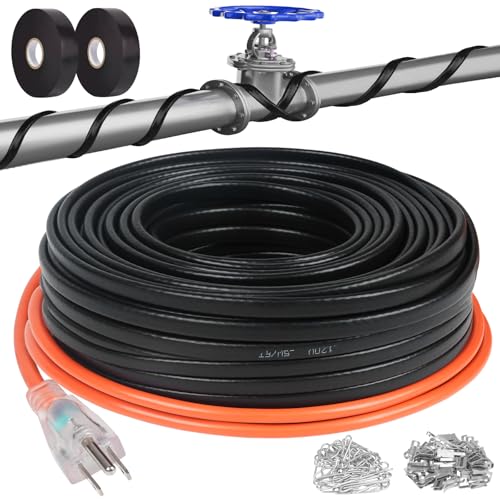
FYSFLYA Pipe Heating Cable 3-200 Ft

DEMEDO 2 In x 16.5 Ft Self-Adhesive Foam Pipe Insulation Tape

XFasten Heavy-Duty Outdoor Foam Pipe Insulation Tape 2 In x 15 Ft
More Details On Our Top Picks
A six-inch-wide strip gives a hot-water line more contact area than a narrow repair wrap, making the DOBTIM tape practical beneath sinks, in utility rooms, and along exposed pipe runs. You can cut it with scissors, bend it around fittings, and overlap the self-adhesive backing to create a continuous layer.
The 1/5-inch foam layer is designed to slow heat transfer while acting as a vapor barrier, a layer that limits moisture passage and condensation. Compared with the fitted bruwaa cover, DOBTIM suits continuous pipes rather than a backflow assembly. The trade-off is that the six-inch width may be excessive for a narrow line.
A Few Strong Suits
- The broad 6-inch format covers larger pipe sections and adjacent fittings with fewer narrow strips.
- Clean, dry surfaces give the adhesive backing a better chance to form a secure bond.
- The 13-foot roll can cover several pipe sections while remaining easy to cut to length.
- Flexible foam follows elbows and bends without requiring a separate molded sleeve.
Things To Consider
- Six inches of width may not suit a small line where excess material interferes with nearby walls or fittings.
- The adhesive requires surface preparation, so dust, oil, and moisture should be removed before wrapping.
Key Specs
Made For
You benefit most from DOBTIM when insulating accessible hot or cold water lines and you value a wide, cut-to-length foam wrap.
A Better Fit Elsewhere
Choose the bruwaa Backflow Cover 16×20 instead when your main concern is a backflow preventer, valve assembly, or other compact outdoor component.
A fitted cover solves a different problem from wrapping a long pipe. The bruwaa model surrounds a compact backflow preventer with five layers, including 600D Oxford fabric, two cotton insulation layers, a waterproof layer, and silver-coated PE material. That construction is useful for outdoor sprinkler and irrigation equipment exposed to rain, wind, cold, and sunlight.
Velcro strips keep the opening closed, nylon ties add support, and reinforced grommets accept a chain or lock. The honest read is that fit matters more than almost anything else here, so measure the equipment, connected pipes, and surrounding space before ordering.
Points In Its Favor
- Five layers provide more coverage than a single sheet of foam or fabric.
- Two fastening systems help reduce shifting in breezy outdoor locations.
- Reinforced grommets add a practical attachment point for added security.
- The cover can also protect exposed valves, irrigation components, and outdoor water pipes.
Worth Noting
- The fixed 16-by-20-inch dimensions require careful measurement, including room for the thickness of the connected equipment.
- A cover around an assembly does not provide the same continuous thermal layer as tape wrapped around a long pipe.
At A Glance
Right Fit For
You benefit most from the bruwaa cover when protecting a backflow preventer or valve assembly that fits within 16 by 20 inches.
Consider Something Else When
Choose DOBTIM Pipe Insulation Foam Wrap Tape 13 Ft x 6 In for long, accessible pipe runs rather than a single fitted assembly.
Electrical terminals and water pipes have very different insulation needs, so this XHF kit belongs in a different part of your toolkit. The eight-size assortment is aimed at sealing wire ends, solder joints, harnesses, and other electrical connections rather than wrapping household plumbing.
Its 3:1 ratio means the tubing can contract to roughly one-third of its original diameter, giving you some room to fit it over a wire or joint. The adhesive lining and waterproof construction support a sealed finish, although the 3.45-inch pieces suit shorter terminations rather than lengthy pipe runs.
Positive Takeaways
- Eight included sizes make it convenient to handle several wire gauges without buying separate rolls.
- The 225-piece format supports repeated electronics, automotive, and hobby projects.
- Adhesive-lined tubing adds sealing material as the sleeve contracts around a connection.
Small Caveats
- This is electrical heat-shrink tubing, not a broad foam wrap for reducing heat transfer around plumbing.
- The 3.45-inch length is short for covering a substantial length of pipe or cable.
Who It Suits Best
You benefit most from this kit when maintaining electronics, vehicle wiring, marine connections, or a collection of small electrical terminals.
Where A Sibling Pick Shines
Choose XHF 1/2 In 10 Ft 3:1 Adhesive Heat Shrink Tubing for a longer, continuous run around larger wire or cable.
A ten-foot roll gives you more working room than the short pieces in the XHF assortment. This format can cover several larger wire ends or create a continuous section around compatible cable, with the 1/2-inch diameter providing a sturdier sleeve than a narrow 1/8-inch option.
That size still matters. A 3:1 shrink ratio works best when the original tube is at least three times larger than the object being covered, so measure the cable before cutting. For plumbing insulation, turn to a foam tape instead; this tubing serves wire protection and connection sealing.
Benefits That Matter
- Ten feet offers enough material for multiple terminations or a longer harness section.
- The adhesive lining supplies a seal around covered electrical connections.
- Black tubing blends with many wire harnesses and keeps exposed endings visually tidy.
Trade Offs
- The fixed 1/2-inch diameter limits use to compatible cable and connection sizes.
- Heat-shrink tubing does not serve the same broad wrapping function as foam pipe insulation.
Feature Snapshot
Built With In Mind
You benefit most from this roll when sealing multiple 1/2-inch wire terminations, larger harness connections, or compatible marine and industrial wiring.
Reach For A Different Pick When
Choose XHF 1/8 In 55 Ft 3:1 Adhesive Heat Shrink Tubing when you have many small wires and need a greater overall working length.
Small wire projects tend to consume tubing in scattered cuts, and the 55-foot XHF roll gives you room to work. Its 1/8-inch diameter is suited to fine wire ends, low-voltage connections, model electronics, and compact harnesses rather than plumbing or larger power cable.
Compared with the 225-piece XHF kit, this format trades size variety for working length. That makes it more convenient for repetitive work on similar wire, assuming your cable diameter is compatible with the tube. The adhesive lining remains the main distinction from ordinary non-lined heat shrink.
Standout Benefits
- Fifty-five feet supports numerous small terminations without frequent roll changes.
- The narrow profile fits delicate wire ends and compact electronics connections.
- Adhesive-lined construction adds sealing material beneath the outer sleeve.
Practical Considerations
- You need a reasonably accurate wire-diameter estimate to avoid a loose or overly tight fit.
- Any heat source must suit the tubing and the item being covered.
Whose Shelf It Belongs On
You benefit most from this roll when repairing many small electronics, hobby, or low-voltage wire connections.
Swap It Out When
Choose XHF 225-Piece 3:1 Waterproof Heat Shrink Tubing Kit 8 Sizes when varied wire diameters matter more than a continuous 55-foot length.
Foam tape provides passive insulation, while the FYSFLYA cable adds active heat along a pipe. That distinction matters for an outdoor line in a consistently cold climate, where an exposed water pipe, roof edge, gutter, or similar run may need frost protection rather than only reduced heat loss.
Available lengths span 3 to 200 feet, so you can match a short branch or a much longer route. You still need a suitable electrical connection and correct placement along the line. The honest trade-off is complexity, because a passive wrap needs no power while a heating cable does.
Where It Delivers
- Active heating addresses cold-weather protection along exposed water pipes.
- The broad length range supports short runs and larger outdoor routes.
- The cable can also serve snow-melting applications around roofs, gutters, and similar areas.
- Its outdoor-oriented use makes it relevant to farms, barns, and cold-weather structures.
Things That May Matter
- You must provide a compatible electrical setup and route the cable carefully along the pipe.
- It provides less convenience than a self-adhesive foam wrap because it requires power.
Quick Facts
Seasonal Pick
You benefit most from FYSFLYA when an exposed outdoor water line needs powered frost protection in a consistently cold climate.
Another Choice May Suit
Choose DOBTIM Pipe Insulation Foam Wrap Tape 13 Ft x 6 In when you need simple passive insulation without an electrical heating setup.
The DEMEDO roll favors flexibility. Its soft rubber foam bends around elbows and irregular shapes, making it practical for outdoor water lines, HVAC tubing, and air-conditioning lines where a rigid sleeve would be difficult to fit. Scissors or a blade let you size each section as you work.
At 16.5 feet, it offers slightly more length than the 15-foot XFasten option, though the practical difference depends on your route. DOBTIM provides a wider six-inch strip, so DEMEDO makes more sense when a compact two-inch width is easier to handle around narrow piping.
The Practical Payoff
- Soft foam conforms to bends, joints, and uneven pipe shapes.
- Cut-to-length use helps avoid wasting material around a short run.
- The 16.5-foot length handles several sections or a moderate outdoor line.
Possible Compromises
- The two-inch width provides less coverage than DOBTIM’s six-inch strip.
- Adhesive performance depends on cleaning and preparing the pipe surface.
The Right Fit
You benefit most from DEMEDO when you need adaptable foam around narrow outdoor pipes, HVAC lines, and tight bends.
A Better Fit Elsewhere
Choose XFasten Heavy-Duty Outdoor Foam Pipe Insulation Tape 2 In x 15 Ft when a strongly stated adhesive holding strength matters more than an extra 1.5 feet of length.
XFasten targets exposed outdoor lines where the wrap needs to remain attached through changing weather. The two-inch width fits many HVAC and utility pipes, while the 15-foot roll can be divided into several sections or used around a moderate run. The tape is designed to bend around fittings and conform to pipe contours.
The listing states a tensile strength of 100 pounds per inch and a 25-year service rating, along with low thermal conductivity of 0.11 BTU. Those figures support a heavy-duty positioning, but your installation still determines the result. A clean, dry surface and consistent overlap remain important.
Key Advantages
- The stated 100-pound-per-inch tensile strength supports use on exposed outdoor piping.
- Low stated thermal conductivity is relevant to reducing heat transfer around hot or cold lines.
- Flexible foam follows pipe bends without requiring separate shaped pieces.
- Two inches of width gives you more coverage than many narrow repair tapes.
Details To Watch
- You must measure the pipe and nearby obstacles before committing to a two-inch-wide wrap.
- The stated service rating depends on suitable installation and the conditions around the line.
Technical Highlights
Who Should Grab It
You benefit most from XFasten when wrapping weather-exposed HVAC or water lines where a two-inch tape and strong adhesion are priorities.
Look Elsewhere When
Choose DEMEDO 2 In x 16.5 Ft Self-Adhesive Foam Pipe Insulation Tape instead when a slightly longer roll or softer bending behavior takes priority.
What Matters Before You Cover a Water Line
Start with the problem your pipe presents. Hot-water lines usually need a wrap that slows heat loss, while cold lines may need added resistance to condensation. Outdoor lines exposed to freezing conditions can call for a fitted cover or powered heating cable rather than ordinary insulation alone.
Measure before choosing tape width or cover dimensions. For a wrap, compare the tape width with the pipe diameter and account for bends, fittings, and nearby walls. For an equipment cover, include the connected pipes and allow extra room for the cover’s thickness.
Match the installation method to the location. Foam tape works on accessible pipe runs, heat-shrink tubing belongs around compatible electrical connections, and a heating cable needs a suitable electrical setup. Check the surface, route, and power requirements before beginning.
Details That Shape the Choice
Common mistakes often come from treating all pipe insulation as interchangeable. Measure the line, identify whether it carries hot or cold water, and account for exposed fittings before purchasing. Heating cable and electrical heat-shrink tubing serve different jobs from passive foam wrapping.
A higher spending level may provide more length, a wider strip, stronger adhesive construction, or a purpose-built weather cover. Those differences help when a route is long, the pipe sits in a demanding outdoor location, or a shaped assembly cannot be wrapped easily, but they do not replace correct sizing and installation.
Frequently Asked Questions
Can foam tape be used on both hot and cold water pipes?
Yes, foam tape can insulate accessible hot and cold water lines. Its usefulness depends on the pipe diameter, surface condition, overlap, and whether you need passive insulation or powered freeze protection.
Is heat-shrink tubing suitable for insulating water pipes?
Heat-shrink tubing is mainly intended for electrical wires, cable ends, and sealed connections. Use foam pipe wrap or a fitted outdoor cover for household plumbing insulation.
How should I measure a backflow preventer cover?
Measure the assembly, connected pipes, and space around the equipment, then allow extra room for the cover’s thickness. The bruwaa Backflow Cover 16×20 is intended for equipment that falls within its 16-by-20-inch dimensions.
Does pipe heating cable replace insulation?
No. Heating cable adds active warmth along a pipe, while foam insulation slows heat transfer. In some outdoor applications, the two can serve complementary roles, depending on the line and installation conditions.
What is the difference between pipe wrap tape and an outdoor cover?
Pipe wrap tape covers a length of pipe and conforms to bends and fittings. An outdoor cover encloses a compact assembly such as a backflow preventer, valve, or irrigation component.
Final Verdict
DOBTIM is the most flexible general-purpose choice for accessible water lines, while the bruwaa cover handles compact outdoor assemblies. XFasten suits exposed runs where adhesive holding power is the deciding factor, and FYSFLYA adds active heat where a powered setup is appropriate. Match the form to the pipe, the weather, and the installation you can actually complete.