
A storm cuts power at the worst possible moment, and suddenly the refrigerator, lights, and internet router all become critical. I know the difference between a conversion kit, a battery-based station, and a permanently installed standby system matters because each serves a different part of the home. The six options below cover portable fuel flexibility, quiet stored energy, and automatic whole-home power without pretending they are interchangeable.
The Essentials At A Glance

Grenergy EU2000i Tri-Fuel Conversion Kit
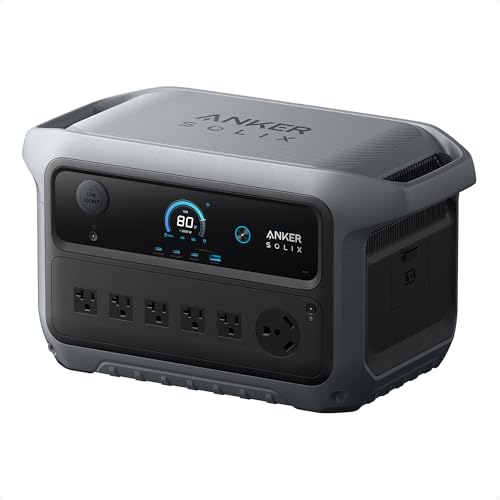
Anker SOLIX C2000 Gen 2 Power Station
Anker SOLIX S2000 Power Station

Generac 22kW Home Generator
Generac 26kW Home Generator
Generac 24kW Home Generator
The Strengths Of Each Pick
This is a conversion kit, not a complete generator. I see it as a practical way for an existing Honda EU2000i owner to run the inverter on propane, natural gas, or gasoline without replacing the generator itself.
The kit arrives configured for propane and is designed to attach without modifying the factory carburetor. Unlike the battery stations later in this list, it still depends on combustion and a compatible fuel source, but it can reduce the need to keep gasoline as the only available option.
What Helps Most
- One compatible Honda inverter can operate with three different fuel choices.
- Propane configuration is preset, removing an early setup step.
- Bolting the conversion system onto the generator avoids factory carburetor changes.
Practical Considerations
- Compatibility centers on the Honda EU2000i, so the exact generator model deserves a close check before purchase.
- The kit does not include a generator, meaning compatible equipment must already be on hand.
Key Specs
Built With In Mind
This kit best serves a Honda EU2000i owner who wants one portable inverter to adapt to several stored fuels.
Where A Sibling Pick Shines
The Generac 22kW Home Generator fits households seeking automatic whole-home backup rather than a portable conversion.
For a campsite, tailgate, or blackout without a fuel-burning engine, the C2000 Gen 2 puts substantial battery capacity in a portable format. Its 2,048Wh storage and 2,400W continuous output give it more range than a typical small power station, at least for moderate loads.
Unlike the Grenergy conversion kit, this unit stores energy rather than producing it on demand. I would treat it as useful emergency infrastructure for a refrigerator, communications, and essential electronics, not as a replacement for a permanently installed standby system.
The Practical Payoff
- A dual-door refrigerator can run for up to 32 hours on the stated configuration.
- An add-on battery can expand storage to 4kWh, extending the stated refrigerator runtime to 64 hours.
- AC and solar recharging can bring the unit to a full charge in 58 minutes under the stated conditions.
Small Caveats
- Runtime depends on stored energy, so extended use still requires a way to recharge.
- The 9W standby draw matters during a long outage, particularly with an added battery attached.
Quick Facts
Made For
Campers and households needing quiet, portable power for a refrigerator and communications gear fit this station best.
Consider Something Else When
The Anker SOLIX S2000 Power Station suits compact home backup where an integrated power strip matters more than expandable capacity.

The S2000 favors organization over maximum expansion. Its 2kWh battery and integrated power strip make it appealing for a home-office setup, apartment blackout, or weekend cabin where several small devices need one convenient power source.
Compared with the C2000 Gen 2, the S2000 omits the add-on expansion path, but it uses an all-in-one mainboard to reduce internal complexity. I find that arrangement sensible for a station intended to move from a desk to a campsite and back.
A Favorable Mix
- The integrated power strip removes the need to carry a separate multi-outlet accessory.
- The 2kWh battery can support a dual-door refrigerator for up to 35 hours under the stated conditions.
- A consolidated mainboard supports a smaller and lighter design than the stated industry comparison.
Worth Noting
- Its 2kWh capacity stores less energy than the C2000 Gen 2’s 2,048Wh base configuration and 4kWh expanded configuration.
- Like the C2000, it provides stored power rather than continuous combustion output.
The Right Fit
This station best serves apartment residents and remote workers who value a compact, self-contained power hub with an integrated strip.
Another Choice May Suit
Campers seeking greater runtime and expansion capacity will find more room in the Anker SOLIX C2000 Gen 2 Power Station.
The 22kW Generac changes the category from portable equipment to installed home infrastructure. It connects to an LP or natural-gas supply and starts automatically after sensing a power failure, removing the need to carry a unit outside and start it during bad weather.
Its transfer switch coordinates the change between utility and generator power, while cellular capability adds another connection feature. For essential circuits and routine household loads, 22kW offers a more practical starting point than the 26kW model, provided the load plan supports it.
Positive Takeaways
- Automatic operation begins within seconds of a detected outage.
- LP and natural-gas support accommodate two common permanent fuel arrangements.
- The included transfer switch handles the change between normal and backup power.
- Cellular capability adds connectivity to a permanently installed system.
Points To Note
- Proper electrical and fuel-system preparation is essential before installation.
- The 22kW rating is lower than the 26kW alternative, so large simultaneous loads require careful planning.
Feature Snapshot
Built With In Mind
Homeowners with an existing fuel supply and a defined essential-load plan will find this 22kW system logical.
Look Elsewhere When
The Anker SOLIX S2000 Power Station better fits a renter seeking plug-in backup without permanent generator installation.
The 26kW model carries the largest output rating in this group, which makes it the one I would examine first for a household with several substantial appliances or a broad standby-load plan. The increase over the 22kW system is meaningful, but only after the home’s electrical requirements are mapped.
Operation remains automatic. Once connected to LP or natural gas, the unit starts within seconds of a power loss and continues running until utility service returns, while the transfer switch manages the change between power sources.
What Pays Off
- The 26kW rating provides the highest capacity among the three Generac systems here.
- Automatic startup removes the need to operate portable equipment during an outage.
- LP and natural-gas connections support permanent fuel-system choices.
- Cellular capability adds connectivity to the installed package.
Possible Compromises
- Higher output can exceed what a modest essential-load plan actually requires.
- Installation planning must account for the fuel supply, transfer switch, and electrical connection.
Whose Shelf It Belongs On
Large households and carefully planned standby systems have the strongest reason to consider the 26kW capacity.
Reach For A Different Pick When
Smaller essential-load plans may be better served by the Generac 22kW Home Generator.
The 24kW Generac sits neatly between the 22kW and 26kW systems, giving me a middle-ground capacity for load plans that fall between those two points. It retains the automatic start, transfer switch, cellular capability, and permanent fuel connections that define the larger model.
For a household trying to balance backup capacity against installation planning, that midpoint can be more useful than automatically taking the highest rating. The 24kW unit still needs a realistic list of loads, because several motors or household systems operating together can demand considerable power.
What Earns Its Place
- Its 24kW output offers more capacity than the 22kW model without reaching the 26kW rating.
- Automatic startup responds within seconds of a detected outage.
- LP and natural-gas support accommodates either permanent fuel arrangement.
Factors To Consider
- Electrical and fuel preparation remain central parts of the installation.
- The middle rating still requires a load-based decision rather than a broad household-size assumption.
Feature Facts
Who Will Love This
Households with a midrange load plan will appreciate the balance between the 22kW and 26kW Generac systems.
Swap It Out When
The Generac 26kW Home Generator is the stronger choice for a plan with heavier simultaneous loads.
What Matters Before Powering The Home
Start With The Load
I begin with a list of appliances, circuits, and startup demands rather than generator size alone. A refrigerator, network equipment, lights, and a sump pump create a different requirement from HVAC, well pumps, and workshop machinery, particularly when several motor-driven devices start at once.
Choose The Energy System
Battery stations offer quiet, portable energy with finite runtime. Propane conversion kits add fuel flexibility to compatible portable engines, while standby generators provide automatic power from a permanent LP or natural-gas supply.
Plan The Installation
A portable kit needs a compatible generator and an appropriate fuel arrangement. A battery station needs room to operate and recharge, while a standby system requires electrical, transfer, and fuel-system planning before installation.
Where Shoppers Go Wrong
Mistakes Worth Dodging
A common mistake is judging a generator by headline output without checking how the connected load changes the result. Another is confusing stored battery energy with continuous fuel generation, or choosing a conversion kit without confirming the exact engine model.
What The Higher Tier Buys
A higher-capacity standby model provides more room for simultaneous household loads, while an expandable battery adds storage rather than engine output. The extra capacity is worthwhile only after the appliance list and installation requirements match the intended use.
Frequently Asked Questions
Are Portable Power Stations Propane Generators?
Portable power stations store energy in batteries and do not burn propane. The Anker SOLIX C2000 Gen 2 and S2000 serve portable or short-duration backup, while the Generac systems use a permanent LP or natural-gas supply.
Can This Kit Make a Honda Generator Run on Propane?
The Grenergy kit is designed to convert a compatible Honda EU2000i to propane, natural gas, or gasoline operation. The exact generator model and kit version should be confirmed before ordering.
Can a Whole-Home Generator Use Either Propane or Natural Gas?
The three Generac systems support either LP or natural gas through a permanent fuel connection. Fuel availability at the installation site is a central part of the setup.
Is 22kW, 24kW, or 26kW Better?
The 22kW model suits a more limited load plan, while 26kW offers the most room for simultaneous demand. The 24kW system provides a midpoint that can align well with a load list falling between them.
What Should Be Checked Before Installation?
I would verify the electrical load, fuel supply, placement, and transfer-switch requirements before selecting a system. These checks prevent a capable generator from being installed in a way that does not fit the property.
Final Verdict
I would choose the Grenergy kit for a compatible Honda EU2000i, the C2000 Gen 2 for portable battery capacity, and the S2000 for compact backup with an integrated strip. The 22kW, 24kW, and 26kW Generac systems suit households committed to permanent automatic installation, with the middle or highest rating matching the actual load plan.