
A storm cuts power while the refrigerator is full and the sump pump needs electricity. I focus on six ways to restore power, from portable tri-fuel models to permanently installed Generac systems with cellular monitoring. The important distinction is simple: portable units offer flexibility, while standby generators provide automatic response but require professional installation.
A Closer Look At The Lineup

Westinghouse 8200W Tri-Fuel Portable Inverter Generator with Remote Start
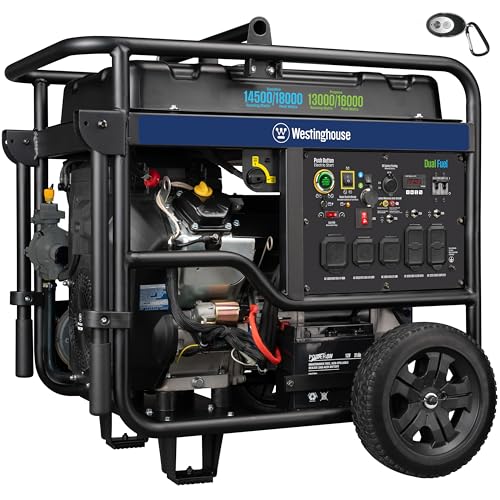
Westinghouse 18000W Dual-Fuel Portable Generator with Electric Start

Champion 8500W Dual-Fuel Inverter Generator with Electric Start

Generac 22kW Whole Home Generator
Generac 26kW Whole Home Generator
Generac 24kW Whole Home Generator
Why These Options Stand Out
The Westinghouse 8200W gives households a portable option that can run on gasoline, propane, or natural gas. That flexibility matters where fuel availability changes or a home already has a natural-gas supply. Remote electric start adds convenience, while transfer-switch readiness opens a path toward integrating the unit with a home’s electrical system.
Inverter electronics smooth the current delivered to computers, televisions, and other sensitive devices. Total harmonic distortion, or THD, measures that waveform quality; the stated level stays below 3 percent. For most homes, the combination of 8,200 peak watts, 6,600 running watts, and parallel capability makes this a capable portable choice.
Key Advantages
- Three fuel choices make it adaptable to stored and installed fuel sources.
- Inverter output suits sensitive household electronics.
- Remote electric start simplifies operation after a dark outage.
- Parallel capability supports a compatible generator pairing for additional output.
Things To Consider
- A carbon monoxide sensor adds protection, but outdoor placement and ventilation still require attention.
- Natural-gas capability may also require a properly sized fuel connection that a portable setup cannot provide on its own.
Quick Facts
Made For
This model suits households that need portable backup, sensitive-electronics support, and more than one fuel option.
Another Choice May Suit
The Champion 8500W Dual-Fuel Inverter Generator fits travelers who prioritize lower operating noise over natural-gas compatibility.
The jump from 8,200 peak watts in the Westinghouse 8200W to 18,000 peak watts here changes the role substantially. This model targets larger loads, including homes where a refrigerator, furnace, well pump, and several essential circuits may need support at once. Its 14,500 running-watt rating provides more continuous capacity than the smaller tri-fuel unit.
The gasoline-and-propane configuration keeps fuel decisions straightforward, and a 713cc V-twin engine uses a cast-iron cylinder sleeve. Remote electric start and transfer-switch readiness make the unit easier to operate during an outage. A carbon monoxide sensor provides another layer of protection while the generator runs.
Everyday Perks
- The 18,000-watt peak rating covers substantial startup loads.
- Gasoline or propane operation gives households two fuel choices.
- Electric starting avoids the effort of repeated manual pulls.
- Up to 16 hours of operation on gasoline at a 25% load supports extended outages.
Practical Considerations
- Compared with the Westinghouse 8200W, this unit has greater size and weight demands, making storage and manual positioning important considerations.
- Its larger fuel tank requires space, and prolonged runs mean fuel availability deserves attention.
Right Fit
Large households and owners of power-hungry essential equipment gain the most from its high output.
Consider Something Else When
The Generac 26kW Whole Home Generator serves households seeking automatic, permanently installed backup rather than a portable machine.
The Champion 8500W makes more sense than the larger Westinghouse 18000W for RV travel, tailgating, or outages where low noise matters. Its stated 61 dBA operating level is designed for settings where a conventional open-frame generator can become intrusive. The electric start and single EZ Start Dial also reduce the learning curve for occasional users.
Gasoline produces 7,000 running watts and up to 14 hours of operation, while propane provides 6,300 running watts and up to 12 hours. The difference in output gives fuel selection a practical role beyond convenience. A CO Shield system provides automatic shutdown when carbon monoxide reaches the generator’s detection threshold.
Benefits That Matter
- The 61 dBA rating supports quieter RV, campsite, and tailgate use.
- Electric starting makes setup less demanding during an outage.
- Dual-fuel operation lets travelers carry the fuel that is easier to obtain.
- CO Shield shuts the unit down when carbon monoxide reaches its threshold.
- An easy-read fuel gauge helps prevent an unnecessary dry run.
Small Caveats
- Propane operation delivers less continuous output than gasoline, so the intended load should be checked first.
- Runtime figures depend on load and fuel, making a full fuel supply essential for longer outages.
Feature Breakdown
Who Will Love This
RV owners, campers, and households needing relatively quiet portable power benefit most from this configuration.
Look Elsewhere When
The Westinghouse 8200W Tri-Fuel Portable Inverter Generator better serves households that require natural-gas operation and parallel capability.
A fixed standby generator changes the outage experience because it detects the loss of utility power and starts without someone reaching for a control cable. The Generac 22kW Whole Home Generator brings that automatic approach to households that want essential circuits handled without dragging a portable unit outdoors. Its 22-kilowatt rating provides a substantial installed capacity level.
The included transfer switch separates the generator from the home’s normal electrical path, while cellular capability adds remote awareness. Connection to an existing propane or natural-gas supply allows continuous operation without refilling a tank. Compared with the Champion 8500W, the trade-off is installation rather than portability.
Positive Points
- Automatic startup removes manual intervention during an outage.
- The included transfer switch supports integrated home backup.
- Cellular capability allows remote status awareness.
- Propane or natural-gas operation suits homes with an installed fuel supply.
Things To Weigh
- Professional site assessment and installation are required for a permanently placed generator.
- The unit offers less flexibility than a portable model because it cannot move between homes or jobsites.
Built With In Mind
This system fits homeowners seeking automatic essential-circuit backup and a permanent fuel connection.
Reach For A Different Pick When
The Westinghouse 18000W Dual-Fuel Portable Generator better suits households needing substantial output without a fixed installation.
The Generac 26kW Whole Home Generator offers more installed capacity than the 22kW model, which matters for homes with several high-demand appliances or a broader backup plan. It detects utility power loss, starts automatically, and supports operation from an existing propane or natural-gas supply. For most large homes, that combination makes the additional planning more consequential than the physical footprint.
The transfer switch provides the required transition between utility and generator power, while cellular capability adds remote monitoring. I would pair either rating with a careful appliance list, since peak startup requirements can exceed steady consumption. The 26kW designation gives an installer more room to design the circuit selection than the 22kW unit.
The Practical Payoff
- The 26-kilowatt rating supports broader household load planning.
- Automatic operation restores power without manual starting.
- Transfer-switch integration suits permanent home backup.
Potential Drawbacks
- Installation requires outdoor siting, fuel-supply work, and electrical-system changes.
- Capacity alone does not identify which appliances can operate together safely.
- Owners must confirm that permanent equipment suits the property rather than portable use.
Quick Technical Notes
The Right Fit
Large homes with multiple high-demand loads benefit most from the additional installed capacity.
Swap It Out When
The Generac 24kW Whole Home Generator may offer a closer capacity match for a home whose load assessment points between these ratings.
The Generac 24kW Whole Home Generator sits between the 22kW and 26kW systems in rated output. That middle position can be useful for households seeking more installed capacity than the 22kW model without moving directly to the 26kW version. Automatic startup and an installed fuel supply provide the core standby experience.
The included transfer switch integrates the generator with the home’s electrical system, and cellular capability supports remote status checks. In my view, an appliance-by-appliance load assessment matters more than choosing a rating by intuition. Motorized equipment can create startup surges that deserve particular attention during the system design.
A Strong Showing
- The 24-kilowatt rating provides more installed capacity than the 22kW option.
- Automatic startup handles outages without manual intervention.
Details To Watch
- The system requires professional electrical installation and a suitable outdoor location.
- Propane or natural-gas availability determines how closely the installation can follow an existing fuel supply.
- A load assessment should confirm that this output matches the household’s planned circuits.
Core Features
Whose Shelf It Belongs On
Homeowners wanting installed capacity between the 22kW and 26kW Generac options find this the most balanced fit.
A Better Fit Elsewhere
The Champion 8500W Dual-Fuel Inverter Generator better serves RV travel, camping, and temporary use away from a permanent installation.
What Matters Before Installing Backup Power
Capacity Must Match the Load List
I start with the appliances and systems that cannot remain offline. Running watts describe sustained demand, while peak watts cover startup surges from motors and compressors. A household with a well pump, central furnace, and several refrigeration appliances needs a broader list than one keeping only internet equipment alive.
Portable and Standby Serve Different Purposes
A portable generator provides flexibility but requires outdoor setup, fuel management, and extension cords or a compatible transfer switch. A standby generator is permanently installed, starts automatically, and draws from an existing propane or natural-gas supply. For most year-round household coverage, the installed approach removes much of the interruption.
Installation Details Drive the Final Choice
Outdoor placement, local electrical codes, fuel availability, and transfer-switch configuration all affect the project. The wattage rating alone cannot answer those questions. I have the installation team review the proposed circuit list and site before settling on a capacity.
Noise and Runtime Matter More for Portables
The Champion 8500W is particularly relevant to RV users and campers because its stated operating level is 61 dBA. Runtime figures also change with fuel and load, so the available fuel supply deserves equal attention. Portable models work best for temporary or supplemental coverage rather than pretending they are permanently installed systems.
Avoiding Common Power-Planning Errors
Mistakes Worth Dodging
The most consequential error is sizing from the generator’s headline wattage without listing the connected loads. Another mistake is overlooking fuel access, outdoor placement, or extension-cord distance. I also avoid assuming that every portable generator can operate indoors or connect directly to household wiring.
Where The Extra Capacity Goes
Higher output gives an installer more room to coordinate large appliances and startup surges. It also adds cost and may require a more involved site plan. Paying more makes sense when the load assessment leaves little margin, not merely because a larger number appears on the listing.
Frequently Asked Questions
Are portable generators the same as standby generators?
No. Portable generators require manual setup and fuel management, while standby generators are permanently installed and start automatically after utility power fails.
What does peak wattage mean?
Peak wattage covers the short surge produced when equipment starts, while running wattage describes sustained power consumption. Both figures matter when choosing a generator for a home.
Can a portable generator power a whole house?
It can support selected circuits with proper connection and safe outdoor operation, but it does not replace a permanently installed standby system. Households needing automatic response should evaluate fixed equipment and professional installation.
Is natural gas necessary for a backup generator?
No. Natural gas is one fuel option for some models, while others use gasoline or propane. The practical choice depends on the generator’s design and the fuel already available at the property.
Which capacity fits a large home?
The correct rating depends on the appliances selected for backup, their running demands, and their startup surges. An electrical load assessment provides a better answer than home size alone.
Final Verdict
I would choose the Westinghouse 8200W for portable tri-fuel flexibility, the Westinghouse 18000W for high-output portable use, and the Champion 8500W for quieter travel and camping. For automatic whole-home response, I would compare the Generac 22kW, 24kW, and 26kW systems through a professional load and installation assessment. The most useful choice is the one that matches the planned loads, fuel access, and property layout.