
A dog slipping through an open gate can turn a quiet afternoon into a frantic search, and a fence boundary that is hard to see can cause repeated corrections. You need a containment setup suited to your yard, your dog count, and your comfort with installation, whether that means physical wire, a radio signal, or GPS tracking. The options below cover boundary markers, replacement components, wireless systems, and collar-based fences, so your decision starts with what your existing setup actually needs.
A Closer Look At The Lineup

High Tech Pet FL-1 Flag Set

KoolKani 500-Foot Boundary Wire Spool
KoolKani Extra Boundary Wire Spool
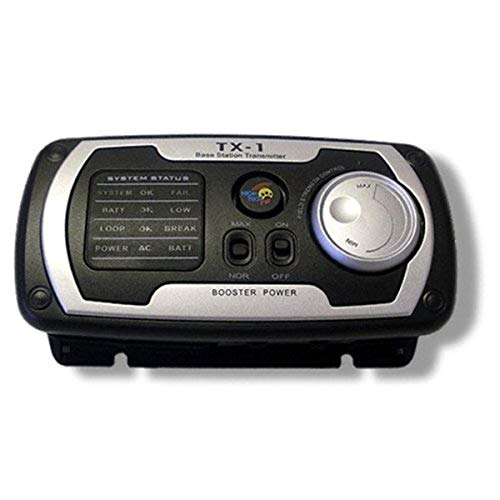
High Tech Pet TX-1 Replacement Transmitter

Htcuto 2-Dog Wireless Fence

Htcuto 2-Dog Multi-Mode Fence

Halo Collar 5 GPS Fence

Halo Collar 5 Graphite
The Picks, Examined More Closely
Buried wire can work without anyone noticing exactly where the boundary runs, which makes flags a practical visual aid. The High Tech Pet FL-1 Flag Set gives your dog and family a visible line to recognize, particularly in yards where snow, landscaping, or uneven ground obscures the wire.
These are boundary markers, not a complete containment system, so your existing electronic fence still supplies the signal. Their broad compatibility makes them useful alongside many wired setups, and the 50-piece count gives you room to mark corners, gates, and stretches where your dog tends to test the line.
Practical Pluses
- Waterproof construction suits year-round outdoor placement.
- High visibility makes the boundary easier for your dog to recognize.
- Works with any brand of electronic fence, reducing marker compatibility concerns.
- A 50-piece set covers multiple sides of a typical yard.
Points To Note
- This accessory does not include a transmitter, receiver collar, or boundary wire.
- Flags need placement where grass, mulch, or landscaping will not hide them.
Quick Facts
Made For
Dog owners with a working wired fence who want a more visible boundary around a home yard.
Consider Something Else When
Choose the KoolKani 500-Foot Boundary Wire Spool when your project requires more physical perimeter rather than visual markers.
Expanding a buried boundary starts with the wire itself, and this 500-foot spool gives you enough length to rethink an existing perimeter. Unlike the FL-1 flags, which only mark a line, this wire helps extend the physical path that a compatible electronic fence system uses to carry its signal.
The listing pairs the wire with named EasyPet EP-8000 and KoolKani KK-9000 systems, and compatibility with other systems may be possible. That makes it most practical for owners extending a known compatible installation, while the 23-gauge solid copper construction provides a clear basis for comparing it with generic wire.
What It Does Well
- A 500-foot length supports substantial perimeter expansion.
- Solid single-core copper offers a defined conductor for the signal path.
- Known compatibility covers EasyPet EP-8000 and KoolKani KK-9000 systems.
- The stated coverage of roughly one-third acre helps with layout planning.
Trade Offs
- This listing is for extra boundary wire, not a complete fence and training system.
- Other branded systems require a careful compatibility check before installation.
- Expanding the wire also means planning the route, connections, and burial work.
The Right Fit
Dog owners extending a compatible wired system around a larger home yard or a second outdoor area.
Another Choice May Suit
The Htcuto 2-Dog Wireless Fence fits households that want radio-based containment without installing a physical wire perimeter.
This second KoolKani wire option serves a similar expansion job as the 500-foot spool, so the meaningful comparison comes down to the listing details and your existing equipment. Both offer 500 feet of 23-gauge solid copper wire and support the same named EasyPet and KoolKani systems.
That makes this a straightforward spare-wire choice for an owner who already knows the system and simply needs more length. The 500-foot run is easy to translate into property dimensions, and the single-core copper construction gives you a more useful basis for planning than a spool with vague wire specifications.
Strong Points
- Provides 500 feet for extending a compatible boundary.
- Uses 23-gauge solid single-core copper wire.
- Supports EasyPet EP-8000 and KoolKani KK-9000 systems.
- Keeps the expansion focused on the wire your system expects.
Practical Considerations
- It remains wire only, so a collar and transmitter are separate requirements.
- Other systems may be compatible, but their specifications need checking before connection.
- Buried runs must follow a planned boundary rather than simply use the entire spool.
Technical Sheet
Best Suited To
Owners of the named wired systems who need a clearly specified spool for perimeter expansion.
Reach For A Different Pick When
The High Tech Pet TX-1 Replacement Transmitter is the better fit when your missing component is the central fence transmitter rather than wire.
A failed central transmitter can stop an entire wired system, while the wire and receiver collar remain usable. The High Tech Pet TX-1 Replacement Transmitter is designed for the Humane Contain X-10 Rechargeable Multi-function system and the HC-8000 Ultra system, giving you a focused repair path for supported equipment.
Its waterproof housing allows outdoor mounting, which is useful for a transmitter installed near a garden, gate, or outbuilding. Audible and visual wire-break alerts provide two ways to notice a connection problem, and the optional B12V-0.8 backup battery can preserve operation during a power interruption.
Where It Excels
- Replaces the transmitter in two named High Tech Pet systems.
- Weatherproof housing supports outdoor placement.
- Audible and visual alerts help reveal a broken wire run.
- The illuminated status panel makes system state easier to check.
- Power Boost supports expanded wire layouts up to 50 acres.
Things To Weigh
- It only fits the specifically named Humane Contain systems.
- The backup battery is optional rather than included.
- Your original receiver collar and wiring must still be serviceable.
Whose Shelf It Belongs On
High Tech Pet X-10 or HC-8000 owners who need a weather-ready central transmitter for an existing wired installation.
Look Elsewhere When
The Halo Collar 5 GPS Fence suits you better when GPS containment without a buried wire perimeter is the priority.
Moving beyond buried wire changes the installation decision, and the Htcuto 2-Dog Wireless Fence combines a radio-based boundary with remote training functions. That makes it a more complete starting point for a multi-dog household than the KoolKani wire spools, which only extend the physical perimeter of an existing system.
The two-dog configuration suits homes managing more than one pet without separate wireless layouts. Its training component adds a way to address wandering, chasing, and other unwanted behaviors, which can be useful during the process of teaching your dogs where the boundary sits.
Benefits That Matter
- Wireless containment avoids installing a boundary wire around the yard.
- The two-dog version serves multi-pet households directly.
- Remote training functions complement the containment signal.
- The black two-dog configuration suits straightforward household use.
Possible Compromises
- It is a full electronic system, so it does not replace a damaged wire spool.
- Radio-based boundaries need careful placement around buildings and yard obstacles.
- The dog count matters, so single-dog households may pay for capacity they do not need.
Feature Snapshot
Who Should Grab It
First-time fence owners with two dogs who prefer wireless setup and remote training functions in one system.
Swap It Out When
The High Tech Pet FL-1 Flag Set is the better fit for adding visual guidance to a wired system you already own.
The Htcuto 2-Dog Multi-Mode Fence gives you more control over the training side of a wireless setup than the basic Htcuto two-dog package. It pairs a 3,500-foot containment range with a remote training collar reaching 6,000 feet, giving you separate distances for a yard boundary and behavior work away from home.
Its 14-level adjustment offers a finer way to set the containment signal according to your dog’s response. The rose two-dog configuration also differentiates it from the black Htcuto 2-Dog Wireless Fence, giving multi-dog households a clear color choice without changing the core two-dog premise.
Why It Works Well
- Contains two dogs in one wireless system.
- Fourteen levels allow boundary-signal adjustment.
- Separate containment and remote-training ranges support different activities.
- Rose coloring provides an alternative to the black two-dog configuration.
Small Caveats
- More adjustment settings require careful introduction and monitoring.
- The listed training range should not be treated as a guarantee of consistent reception in every environment.
- Two-dog capacity offers little benefit in a single-dog home.
Core Details
Built With In Mind
Multi-dog owners who want adjustable wireless containment plus remote training functions in one setup.
Where A Sibling Pick Shines
The Htcuto 2-Dog Wireless Fence is the simpler alternative for households that want the combined functions without the listed multi-level adjustment.
Large open properties and irregular boundaries create a different problem for radio fences, since a fixed transmitter position may not cover the entire area. The Halo Collar 5 GPS Fence uses satellite positioning and real-time ground-station corrections instead, giving you a boundary that follows a mapped zone without buried wire.
Its dual-frequency L1 and L5 satellite system, drift prevention, and obstacle filtering are designed to improve position accuracy, with the manufacturer listing accuracy within two feet of the dog’s location. For most multi-acre properties, that makes this a more natural choice than trying to bend a wireless signal around distant corners.
What Earns Its Place
- GPS boundaries suit large or irregular properties.
- Dual-frequency satellite reception supports position accuracy.
- Real-time corrections are designed to limit location drift.
- Obstacle filtering helps account for environmental obstructions.
- No physical boundary wire needs to be installed across the property.
Areas To Watch
- The collar and location service create a different cost structure from wire-only accessories.
- GPS-based setup requires a usable satellite and cellular connection in the service area.
- Mapping a large property takes planning before the boundary is active.
Who Will Love This
Dog owners with a large property, irregular perimeter, or a need for mobile location tracking beyond a conventional radio signal.
Another Choice May Suit
The Htcuto 2-Dog Multi-Mode Fence fits you better when remote training and adjustable radio modes matter more than mapped GPS boundaries.
The graphite version carries the same GPS-focused approach as the Halo Collar 5 GPS Fence, so your decision comes down to the collar variant rather than a different containment technology. It uses dual-frequency L1 and L5 satellite reception, real-time ground-station corrections, drift prevention, and obstacle filtering.
That makes it suited to open grounds and irregular boundaries where laying a wire perimeter would be inconvenient. The listed two-foot location accuracy provides a clear reference point, while graphite gives your dog a discreet-looking collar option for everyday wear and outdoor routines.
What Works In Its Favor
- GPS mapping allows a custom boundary shape.
- Real-time corrections support more precise position tracking.
- Drift prevention and obstacle filtering address common location issues.
- Graphite provides a neutral color for everyday wear.
Honest Caveats
- The service must function in the area where your dog spends time.
- Location accuracy can still vary with signal availability and environmental conditions.
- This listing differs from the standard Halo Collar 5 listing mainly through its specified color.
Feature Facts
The Right Fit
Dog owners prioritizing mapped GPS containment who prefer the graphite version of the Halo Collar 5.
Not Your Match When
The KoolKani Extra Boundary Wire Spool is a better match for extending a supported wired system without a GPS subscription or collar-based location service.
Matching A Boundary System To Your Property
In-Ground Wire Or Radio Signal
A wired system gives you a continuous physical boundary, while a radio system depends on signal coverage from a fixed transmitter. The High Tech Pet FL-1 Flag Set makes a buried wire easier to see, whereas the Htcuto systems avoid perimeter wire altogether. Large properties, outbuildings, and irregular shapes can complicate radio coverage, so map the full area before choosing one approach.
One Dog Or Two
Check the dog capacity before buying. The Htcuto 2-Dog Wireless Fence and Htcuto 2-Dog Multi-Mode Fence are designed for two pets, while a single-dog home may benefit more from spending its budget on a system that matches its space and training needs. Neither wire spool nor replacement transmitter changes the number of collars your setup supports.
Training Functions And Repairs
A wireless collar that also provides remote training gives you one device for containment and behavior guidance. A wired system separates those roles among the transmitter, boundary wire, and receiver collar. Before ordering a wire spool or replacement transmitter, confirm the exact model, connection requirements, and whether you need training functions at all.
Before The First Installation
Mistakes Worth Dodging
Do not mistake boundary flags for a working fence, or extra wire for a complete system. Compatibility matters more than the length printed on a spool, and a two-dog package offers little benefit to a single-pet household. Plan the perimeter and signal coverage before connecting anything.
What The Higher Tier Buys
Higher-tier GPS systems add mapped boundaries, satellite positioning, and location corrections. Those features suit large or irregular properties, while simpler radio fences may handle a modest yard at a lower cost. Choose the added positioning capability only when your property or travel needs justify it.
Frequently Asked Questions for Electronic Fence For Dogs
Are Wireless Fences Suitable for Large Yards?
Wireless fences can suit large yards when the transmitter provides dependable coverage across the entire boundary. GPS-based collars offer more flexibility for irregular properties because the zone is mapped rather than tied to a fixed radio location.
What Is the Difference Between Wired and Wireless Fences?
Wired fences use physical boundary wire to carry the containment signal, while wireless fences transmit a signal from a central unit. Wired layouts can be easier to visualize with flags, whereas wireless systems reduce the need for perimeter excavation.
How Many Dogs Can These Systems Support?
The two Htcuto options are listed for two dogs. The other items are accessories, wire, or a replacement transmitter, so their dog capacity depends on the compatible receiver collars and central system you already own.
Can Boundary Flags Replace an Electronic Fence?
No. Flags make the boundary easier to see, but they do not transmit the containment signal or replace a receiver collar, transmitter, and boundary wire.
How Do I Check Wire Compatibility?
Compare the wire length, gauge, conductor, connector, and named system models with your current fence. The KoolKani spools specifically list the EasyPet EP-8000 and KoolKani KK-9000 systems, while other brands require a separate compatibility check.
The Takeaway
Start with the gap in your current setup: flags improve visibility, wire extends a compatible perimeter, and a replacement transmitter restores a supported central unit. A complete wireless system fits yards where running wire is impractical, while GPS fencing handles larger, more irregular properties. Match the dog count, signal coverage, training needs, and installation effort before choosing.