
A rolling stool earns its place when work demands mobility, adjustable height, and a stable seated position. I rely on the differences between salon seating, low garage tasks, and tool-heavy workstations to narrow the field for hair stylists, tattoo artists, technicians, mechanics, and home projects. The right model reduces unnecessary walking, fits the work surface, and keeps essentials within reach.
The Lineup, Simplified
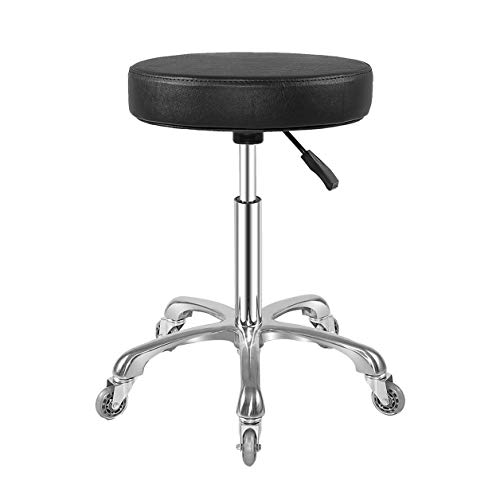
Ainilaily Heavy-Duty Hydraulic Massage Rolling Stool, Black

BFTOU Black Minimalist Height-Adjustable Swivel Stool with Wheels

FreekyFit Heavy-Duty Rolling Shop Stool with Tool Tray, 350 lbs, Red

FreekyFit Heavy-Duty Rolling Shop Stool with Tool Tray, 350 lbs, Blue

FreekyFit Heavy-Duty Rolling Shop Stool with Tool Tray, 350 lbs, Black

MAYAKOBA Dayton Short Pneumatic Garage Rolling Seat, Pink, 13-15 Inch
Why These Options Stand Out
A raised client chair changes the rhythm of a salon, tattoo studio, or workshop. I see the Ainilaily model as a strong fit for practitioners who spend long stretches seated at a counter-height station and prefer a substantial cushion over a thin utility seat. Its working height extends higher than the BFTOU stool reviewed later, which suits elevated benches and service cabinets.
The 14.2-inch round seat provides a broad sitting area, while the 4-inch cushion adds noticeable depth for an active workday. Hydraulic adjustment uses a lift column controlled by a lever, allowing the position to change without removing the stool. The black finish stays visually restrained in a professional room.
The Upside
- The 4-inch cushion gives seated work more support than a standard thin salon pad.
- The 22-29-inch range accommodates counter-height surfaces that ordinary stools may not reach.
- The broad round seat suits clients, clients’ legs, and practitioners working around a fixed station.
- Hydraulic height adjustment makes frequent repositioning straightforward.
Trade Offs
- The 22-inch minimum height can be excessive for lower desks or conventional seated tasks.
- The design focuses on cushioning and elevation rather than the tool organization built into the FreekyFit models.
Key Specs
Who It Suits Best
Salon professionals, tattoo artists, and studio workers who need elevated seating with a deeply padded seat.
A Better Fit Elsewhere
The FreekyFit Heavy-Duty Rolling Shop Stool, 350 lbs, Black suits mechanics who need a tool tray and larger 4-inch casters.
Clean lines matter in a salon or compact treatment room, and the BFTOU stool keeps the visual footprint deliberately simple. Its square PU leather seat has parallel stitched accents, with a water-resistant surface that can be wiped down between appointments. I favor this model for operators who value a tidy appearance and simple care routine.
Height adjustment spans 19.3-25.4 inches, placing it below the Ainilaily model at the upper end while still handling many standard counters. A 360-degree swivel allows the seat to turn without moving the base, and the stated 300-pound load capacity suits professional use. The base also needs a short initial assembly period, so I would set it up before the first appointment.
A Strong Showing
- The water-resistant PU leather is practical for salon spills and routine cleaning.
- The 360-degree swivel makes it easier to turn between a client and a nearby station.
- The restrained square design complements modern treatment rooms without visual clutter.
Points To Note
- The 300-pound capacity is lower than the 350-pound figure listed for the FreekyFit shop stools, so the intended working load deserves attention.
Quick Facts
The Right Fit
Stylists, estheticians, and mobile service professionals who want clean styling and an easy-to-clean seat.
Consider Something Else When
The Ainilaily Heavy-Duty Hydraulic Massage Rolling Stool, Black offers a higher 29-inch maximum for taller service counters.
Repairs rarely happen in one place, so the red FreekyFit shop stool makes sense for technicians who move between a vehicle, bench, and parts storage. Unlike the seat-focused Ainilaily and BFTOU models, this rolling stool carries a tool tray and two cup or tool holders, reducing the need to return to a workbench for every small component.
A divided section inside the tray provides a place for screws and similarly small hardware. Four-inch casters, meaning the larger wheel diameter specified for the stool, suit workshop floors where a compact caster could catch on debris. Height adjustment and a 350-pound load capacity make it more mechanically focused than the minimalist salon options.
What Earns Its Place
- The tool tray keeps frequently used items moving with the seat.
- A partitioned tray section helps separate small screws from larger tools.
- Two cup or tool holders add storage without requiring a separate rolling cart.
- The 4-inch casters and 350-pound capacity suit demanding workshop tasks.
Practical Considerations
- The larger casters and projecting tray need a reasonably clear route across the workshop floor.
- The red finish is the main distinction from the blue and black FreekyFit versions, so color may matter more than performance.
Built With In Mind
Automotive technicians, repair technicians, and garage hobbyists who want tools and hardware close at hand.
Where A Sibling Pick Shines
The FreekyFit Heavy-Duty Rolling Shop Stool, 350 lbs, Black provides the same core configuration in a more understated finish.
The blue FreekyFit model shares the working core of the red version, so the decision comes down to finish and how the stool fits visually within a shared garage. I find blue easier to identify as a movable seat when the space contains several dark benches and cabinets, although that remains a preference rather than a performance advantage.
The tool tray includes a small divided area for loose hardware, while two cup or tool holders leave the main workspace open for a larger item. Four-inch casters and adjustable height suit technicians who alternate between low and standard work positions. The stated 350-pound capacity gives this workshop model more load headroom than the BFTOU stool.
Bright Spots
- One tray, two holders, and a divided section create organized tool access.
- Four-inch casters are suited to moving across workshop floors.
- The blue finish is easy to spot in a visually busy repair space.
Minor Gripes
- The blue, red, and black versions share essentially the same tool-storage layout, so the color choice should be based on workshop aesthetics rather than expected capability.
Feature Snapshot
Who Will Love This
Technicians who value a visible seat, a tool tray, and ample storage in a shared repair environment.
Look Elsewhere When
The MAYAKOBA Dayton Short Pneumatic Garage Rolling Seat, Pink, 13-15 Inch serves floor-level work beneath low cabinets better.
Black gives this FreekyFit model a practical, low-key finish for a home garage, utility room, or automotive workspace. Its core advantage remains function rather than color: the seat moves with a divided tool tray, two storage openings, and 4-inch casters. I see it as the most neutral-looking workshop option in the group.
Adjustable height handles standard benches, while the stated 350-pound load capacity suits a broad range of repair and assembly tasks. The four storage areas keep small parts separated from drinks or larger hand tools. Compared with the red and blue versions, the structure is unchanged, making this a straightforward finish-based decision.
Well-Handled Touches
- The black finish blends naturally with many garage tools and workbenches.
- Tool storage remains organized and accessible while the seat rolls.
- The 4-inch casters and adjustable height suit varied workshop tasks.
Things To Weigh
- The tray and holders add width around the seat, which can matter in a narrow work aisle.
- A dark finish may blend into a dim garage, making the stool less conspicuous to household members.
Made For
Home mechanics and automotive hobbyists who favor understated equipment and built-in tool storage.
Another Choice May Suit
The FreekyFit Heavy-Duty Rolling Shop Stool, 350 lbs, Red is easier to spot in a crowded or dim workshop.
Low cabinets and floor-level repairs call for a different stool geometry, and the MAYAKOBA Dayton uses a short 13-15-inch seat height. Pneumatic adjustment uses air pressure to raise or lower the seat, keeping the profile low while still allowing position changes. I favor this design for cleaning beneath appliances, reaching into low storage, and working close to the floor.
The 15-inch seat provides a compact sitting area, while an ergonomic backrest adds support during longer low-level tasks. Five glide casters support smooth movement across hard floors, and chrome trim gives the stool a light visual profile. Minimal assembly, with a manual and assembly video included, keeps setup straightforward.
A Favorable Mix
- The low 13-15-inch range reaches positions standard shop stools cannot.
- The backrest supports seated work close to the floor.
- Five glide casters suit movement across smooth hard flooring.
- Minimal assembly reduces setup work before the first task.
Where It May Fall Short
- The compact height range is poorly matched to counter-height or standard-height desks.
Technical Notes
Best Suited To
Technicians, cleaners, and home hobbyists who work beneath cabinets, appliances, or other low structures.
Swap It Out When
The FreekyFit Heavy-Duty Rolling Shop Stool, 350 lbs, Red is the stronger choice for organized tools and standard-height benches.
What Matters Before the Wheels Turn
Match the Seat to the Task
A salon stool, workshop seat, and low rolling chair solve different problems. I start with the work surface and the body position it requires, then check cushion thickness, back support, and storage. A broad cushioned seat suits long appointments, while a short profile reaches beneath equipment.
Set the Height Before the Wheels Move
Height adjustment is useful only when the range covers the intended position. A 13-15-inch model works near the floor, whereas a 19-25-inch range handles standard counters. Taller service stations may require a model that extends beyond 25 inches, so measuring the work surface prevents an uncomfortable mismatch.
Consider the Base and Storage
Caster diameter influences how a stool moves over debris and uneven flooring. Tool trays, cup holders, and divided compartments also change the footprint around the seat. A workshop with narrow aisles may benefit more from the MAYAKOBA short profile, while a technician working across a bench gains more from organized storage.
Lessons That Prevent Costly Mistakes
Mistakes Worth Dodging
The most common error is choosing by color before checking seat height and floor clearance. I would also avoid ignoring the caster size on rough surfaces, since larger wheels can roll differently from compact ones. Measure the work area, compare the full height range, and account for any tray that projects beyond the seat.
The Upgrade Payoff
A higher-tier model generally spends more on features such as thicker cushioning, a backrest, pneumatic or hydraulic adjustment, or added storage. That expense makes sense for frequent professional use, while a basic task may need only mobility and a workable height range.
Frequently Asked Questions
What height is best for a rolling stool?
The best height places the user’s feet securely on the floor while keeping the work surface comfortably within reach. Measure the surface first and compare it with the stool’s complete adjustment range.
Are rolling stools suitable for salon work?
Rolling stools suit salon work because height adjustment and swivel movement reduce repeated standing and reaching. A cushioned, wipeable seat also fits appointment-based service environments.
Do garage rolling stools need a backrest?
A backrest is helpful for longer seated work but is not required for every shop task. Low-level technicians may value the support more than mechanics who spend most of their time standing at a bench.
What makes a tool tray useful on a rolling stool?
A tool tray keeps frequently used items attached to the moving seat. A divided section is especially useful for screws and other small hardware that could otherwise mix with larger tools.
Which model suits work beneath a low cabinet?
The MAYAKOBA Dayton Short Pneumatic Garage Rolling Seat, Pink, 13-15 Inch is designed for low positions, with a compact seat and a 13-15-inch height range. Standard-height shop stools do not fit beneath the same spaces.
Final Verdict
The right rolling stool depends on the work surface, not the number of features. I would choose the Ainilaily for elevated professional seating, BFTOU for a clean minimalist salon setup, FreekyFit for tool-heavy garage work, and MAYAKOBA for tasks close to the floor. Measuring first remains the most useful step in narrowing the field.