
Carpenter ant activity around a deck, foundation, or damp wood calls for more than a general household insecticide. Your decision should account for where you found the insects, whether the label names carpenter ants, and how much residual protection you need. These seven options range from broad outdoor concentrates to fast-drying contact sprays and peppermint-oil alternatives, each serving a different household need.
The Essentials At A Glance

Spectracide Triazicide 32 Oz

HARRIS Asian Lady Beetle, Japanese Beetle and Box Elder Killer

BASF PT PI Pressurized Contact Insecticide Spray for Indoor Use, 14 oz

Smart Grower Peppermint Bug Spray 10 oz

Smart Grower Peppermint Spray Refill Kit

Mighty Mint Ant Spray 16 oz
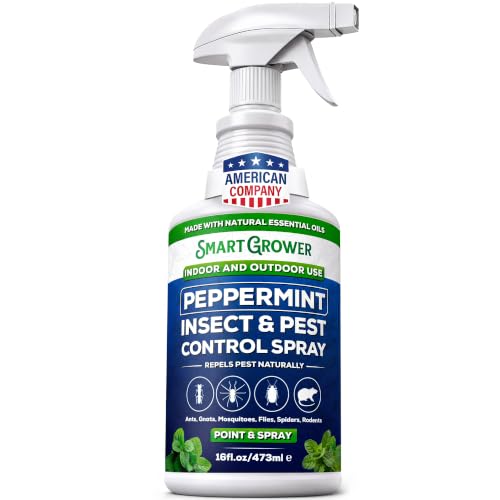
Smart Grower Peppermint Pest Spray 16 oz
A Closer Look At Each Pick
Finding carpenter ant trails in mulch or along a foundation calls for broader outdoor coverage than a small peppermint mister can offer. Spectracide Triazicide covers lawns, soil, vegetables, trees, flowers, and shrubs, with a 32-ounce container that attaches directly to a garden hose. Its labeled insect list includes more than 260 targets, including most ants.
Unlike the mint-based options later in this list, Triazicide uses a triazicide concentrate designed for broad lawn and landscape use. The label reports activity within 24 hours and coverage for areas up to 16,000 square feet, although your actual application rate and pest coverage still depend on the directions. For most people managing outdoor ant activity around landscaping, it offers the broadest environmental fit here.
Standout Benefits
- Broad lawn, soil, and ornamental-plant coverage
- Hose attachment simplifies large-area application
- Targets grubs, many ants, fleas, ticks, and Japanese beetles
- Formula is designed not to stain most siding when used as directed
Things To Consider
- The published insect list says “most ants” rather than specifically naming carpenter ants, so confirm the label first.
- The 32-ounce container needs more storage space than a 10-ounce hand sprayer.
Key Specs
Made For
This option fits homeowners managing broad ant activity across lawns, gardens, or soil areas where a hose-end format is practical.
A Better Fit Elsewhere
BASF PT PI Pressurized Contact Insecticide Spray fits smaller indoor spaces that need fast-drying application in cracks and crevices.
A gallon jug makes practical sense for repeated use around a home with beetles gathering near windows, siding, or entry points. HARRIS Asian Lady Beetle, Japanese Beetle and Box Elder Killer uses an odorless, non-staining liquid and includes a trigger sprayer for targeted placement. The formula begins working once dry and is designed to remain active for weeks after application.
This is a more specialized choice than the general ant options. Its strongest fit is beetle activity, and carpenter ants are not specifically named in the available use information. The gallon capacity still makes it useful for households managing several exterior areas, provided the product label supports the pest and location you have in mind.
The Upside
- Extended activity after the spray dries
- Odorless formula suits sensitive indoor spaces
- Non-staining when used according to label directions
- Trigger sprayer supports precise application
- Gallon size allows repeated use
Practical Considerations
- Confirm that your target pest and application site appear on the label, particularly for carpenter ants.
- A full gallon requires dedicated storage and may be more than a small household needs.
Quick Facts
Who It Suits Best
Households focused on Asian lady beetles, Japanese beetles, and box elder bugs will get the most direct use from this gallon container.
Consider Something Else When
Spectracide Triazicide 32 Oz makes more sense for broad outdoor ant coverage across lawns and landscaping.
Fast-drying contact action makes BASF PT PI useful around interior entry points where you need to reach a narrow crack without leaving a wet trail across the floor. Its 0.5 percent pyrethrin formula, a botanical insecticide, is labeled for ants, bed bugs, cockroaches, fleas, and flying insects. The pressurized format supports direct sprays, crevice application, and broader space sprays.
Compare that approach with Spectracide Triazicide, which is built for exterior lawn and landscape coverage. BASF PT PI emphasizes rapid contact indoors and leaves no residual control by design. That makes it a practical option for active insect traffic, although the label must still confirm carpenter-ant suitability and the proper application method.
What Helps Most
- Fast drying suits indoor floors and work areas
- Multiple spray patterns support precise or broad placement
- Lists ants among its labeled insect targets
- Works in residential and commercial settings
Points To Note
- The non-residual design may call for more frequent follow-up than a product with lasting activity.
- Label protective equipment includes long sleeves, long pants, closed shoes, socks, and chemical-resistant gloves.
- Carpenter ants are not specifically named, so verify the species and site on the label.
The Right Fit
This spray suits someone dealing with visible indoor insect traffic in baseboards, cracks, or other confined areas where fast drying matters.
Where Another Pick Shines
Smart Grower Peppermint Spray Refill Kit offers a more natural-minded option for households focused on recurring applications around entry points.
A continuous fine mist makes Smart Grower Peppermint Bug Spray easy to direct along baseboards, cracks, and entry points without repeatedly working a trigger pump. The ready-to-use 10-ounce bottle contains peppermint oil and no synthetic pesticides, according to its listing. It is intended for ants, spiders, wasps, bees, roaches, and other insects around homes, garages, vehicles, gardens, and other areas.
Where BASF PT PI relies on fast-drying pyrethrin contact action, this bottle offers a botanical-based alternative and a refillable design. The honest read is that the label matters most here. The listed insect coverage is broad, but carpenter ants are not singled out, so confirm the product directions before relying on it for a persistent structural problem.
Real-World Strengths
- Fine mist reaches narrow cracks and baseboard edges
- Continuous sprayer reduces repeated pumping
- Ready-to-use bottle requires no mixing
- Refillable container supports repeated use
Small Caveats
- Confirm that the label lists carpenter ants and permits the intended indoor or outdoor location.
- The 10-ounce bottle offers less coverage than a 16-ounce container or refill bundle.
- Near pets, plants, or people, follow the label’s small patch-test guidance.
Feature Snapshot
Built With In Mind
Apartment residents and renters looking for a compact, refillable spray for small entry points will find this format straightforward to manage.
Not Your Match When
Smart Grower Peppermint Pest Spray 16 oz better fits occasional users who want a larger ready-to-use bottle and no concentrate mixing.
Repeated pest-control work gets more convenient with Smart Grower Peppermint Spray Refill Kit, which pairs a ready-to-use 10-ounce continuous sprayer with a 4-ounce concentrate. The concentrate can make a half-gallon of spray, providing as many as six 10-ounce refills according to the product information. You can begin with the premixed bottle and refill it when the original bottle runs down.
Compared with Smart Grower Peppermint Bug Spray 10 oz, this kit reduces the need to buy another ready-mixed container for later use. It also differs from BASF PT PI by using peppermint oil instead of a pyrethrin contact formula. The trade-off is preparation, since the concentrate requires careful mixing and proper storage.
Useful Touches
- Combines an immediate-use bottle with refill concentrate
- Continuous fine mist supports even edge coverage
- Refill format suits recurring applications
- Works around many indoor and outdoor spaces
Possible Compromises
- Mixing the concentrate requires accurate measurement and label compliance.
- Keeping both bottles requires more storage than a single 10-ounce sprayer.
- Carpenter ants are included only in broad ant coverage, so verify the label.
Best Suited To
Households expecting repeated applications across several rooms, entry points, or garden areas will benefit most from the refill format.
Another Choice May Suit
Mighty Mint Ant Spray 16 oz may align better with you want a larger bottle focused specifically on ants and plant-based ingredients.
When ants appear near a patio, lawn, or garden, a dedicated 16-ounce bottle can be less complicated than carrying a hose-end sprayer. Mighty Mint Ant Spray uses peppermint oil and geraniol, giving it a plant-based angle that distinguishes it from the pyrethrin-based BASF PT PI. Its stated use covers ant control in outdoor areas such as patios, lawns, and gardens.
The product information describes a pet-friendly and family-oriented formula when used according to its directions. For most households, that makes label-directed placement more important than choosing a larger container. Check the permitted areas, keep pets away during application and drying, and confirm that carpenter ants are included before directing the spray toward structural areas.
Strengths Worth Knowing
- Designed specifically around ant control
- Uses peppermint oil and geraniol
- Sixteen-ounce size suits garden and patio use
- Plant-based formula fits ingredient preferences
Where It May Fall Short
- Confirm carpenter-ant coverage because the product is named for ants generally.
- Keep the bottle away from pets and children until the sprayed area is dry according to label directions.
Core Details
Who Will Love This
Pet households seeking a plant-based ant spray for a patio or garden will find the focused formulation and manageable bottle size appealing.
Look Elsewhere When
BASF PT PI Pressurized Contact Insecticide Spray fits you needing indoor crack-and-crevice application with a fast-drying contact formula.
A larger ready-to-use bottle suits occasional pest-control jobs without the measuring step required by Smart Grower Peppermint Spray Refill Kit. The 16-ounce container uses peppermint oil and is intended for insects and rodents around homes, garages, vehicles, and outdoor areas. You can cover baseboards, entry points, and similar spaces without preparing a refill mixture.
Compared with Smart Grower Peppermint Bug Spray 10 oz, this option trades compact storage for more product in one container. Both use a peppermint-based approach, but the smaller bottle’s continuous fine-mist sprayer may be easier to control in tight indoor areas. For repeated work across a garage, garden, or larger entry zone, the 16-ounce format is the more practical of the two.
Features That Help
- Ready-to-use format avoids mixing
- Sixteen-ounce capacity suits broader areas
- Peppermint oil offers a plant-based option
- Suits indoor and outdoor pest-control tasks
Details To Watch
- The product covers insects broadly, so confirm the label names carpenter ants and permits the location.
- Follow the label’s patch-test guidance before use near pets, plants, or people.
Important Details
Made For
Households wanting a larger ready-to-use bottle for occasional work around entry points, garages, vehicles, and outdoor spaces will find this format practical.
Reach For A Different Pick When
Smart Grower Peppermint Bug Spray 10 oz suits you needing a smaller continuous-mist bottle that is easier to store and control indoors.
What Matters Before You Buy a Carpenter Ant Spray
Confirm the insect before selecting a formula
Carpenter ants can resemble termites and other wood-associated insects, so identify the insect before applying anything. Look for the pest named on the product label, especially when the activity is inside a wall, near damp wood, or along a structural joint. A product that mentions “most ants” may cover carpenter ants, but only the current label confirms the permitted use.
Match the spray to the location
Outdoor landscaping calls for a concentrate that can cover soil, lawns, and plant areas. Indoor entry points often suit a fast-drying aerosol or a fine-mist bottle that reaches narrow cracks. Check whether the product is intended for the room, foundation, garden, patio, garage, or another surface where you found the ants.
Look beyond the ingredient list
A peppermint-based formula may suit your household preferences, while a conventional insecticide may provide broader labeled insect coverage. The deciding factors include active ingredients, application method, residual period, protective-equipment requirements, and whether the bottle is ready to use or concentrated. Volume matters too, especially when repeated application is likely.
Getting Past the First-Timer Choices
Common Shopping Slip Ups
A peppermint scent does not confirm carpenter-ant coverage, and a broad lawn spray may be poorly suited to a small indoor crack. Read the pest, location, and application instructions before considering container size or ingredient preference.
What Separates Premium From Basic
More specialized choices add lasting activity, targeted application, refill capacity, or broader pest coverage. A smaller ready-to-use bottle may still be the better fit for a single entry point, while a gallon or refill kit makes more sense for repeated use.
Frequently Asked Questions
Can I use a general bug spray on carpenter ants?
Only use it when the label lists carpenter ants or the relevant target ants and permits the site. BASF PT PI and Spectracide Triazicide cover broad ant use, while the current label remains the deciding factor.
Is peppermint oil spray better for carpenter ants?
Peppermint oil products fit a botanical-based preference, but performance depends on the labeled species, concentration, and contact with the activity. Smart Grower lists ants more generally, so verify carpenter-ant wording before relying on it for a larger infestation.
Should I spray the nest, entry points, or the wood?
Target visible trails, nest openings, and structural areas permitted by the label, with close attention to damp or damaged wood. Hidden galleries or extensive structural damage may require a professional inspection rather than repeated surface spraying.
How often should pest spray be reapplied?
Follow the product label because timing and lasting activity vary. BASF PT PI specifies reapplication every 7 to 10 days for bed bugs, but that interval should not be carried over to carpenter ants without the label’s directions.
Can I use these sprays around children and pets?
Use them only where the label permits and follow its protective-equipment, placement, and drying instructions. Smart Grower calls for a small patch test near pets, plants, or people, while BASF PT PI lists specific protective clothing and gloves.
Final Verdict
Start with pest confirmation and label directions, not scent or ingredient alone. Spectracide Triazicide offers the broadest outdoor landscape coverage, BASF PT PI handles fast-drying indoor contact work, and the Smart Grower options suit botanical-based preferences. The right bottle is the one whose label matches the pest, location, and household constraints.