
A rattly ceiling fan can make a small bathroom feel louder than it is, especially after a long shower. Replacing it involves checking airflow, sound level, duct size, ceiling dimensions, and how much attic access your installation allows. The right unit depends less on style than on whether it fits the opening, moves enough air, and suits your room.
CFM, or cubic feet per minute, measures airflow volume, while sones rate sound output. Understanding those figures before shopping makes the practical differences clearer and helps you avoid a replacement that looks right but creates installation problems.
The Main Contenders
KAZE APPLIANCE SEP120 120 CFM 0.3 Sone Bathroom Exhaust Fan

KAZE APPLIANCE SNP100L9 Bathroom Exhaust Fan

CONGKAILU S97012026 Bathroom Fan Assembly

mw 80 CFM Bathroom Exhaust Fan with Light, 0.8 Sone No-Attic Retrofit

JOEAONZ 110 CFM Bathroom Exhaust Fan with Hidden Grille and 4-Inch Outlet

KAZE APPLIANCE SNP100 100 CFM 0.8 Sone No-Attic Exhaust Fan
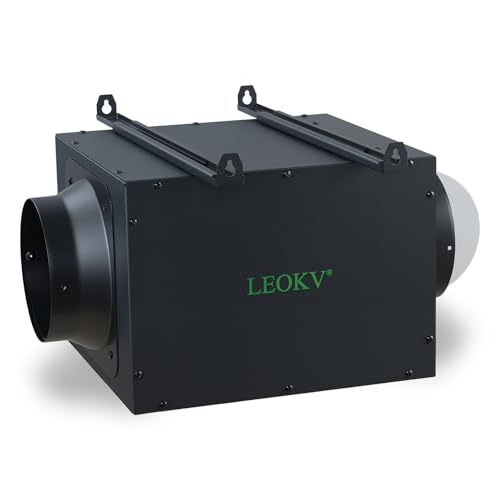
LEOKV 330 CFM Inline Exhaust Fan, 6 Inch, Two Speeds, Galvanized Steel
Taking A Closer Look At The Options
A noisy extractor can undercut the benefit of powerful ventilation, especially in a bathroom beside a bedroom. The SEP120 combines 120 CFM with a 0.3-sone rating, making it the quietest airflow figure in this group and a sensible match for a bathroom up to 120 square feet.
The trade-off appears during installation. Attic access is required, and the ceiling opening must measure 11 3/8 by 10 1/2 inches. Sliding hanger bars span up to 24 inches, giving you some flexibility when positioning the housing between framing members.
Where It Helps
- The 0.3-sone rating supports quiet operation for shared bathrooms and overnight ventilation.
- 120 CFM provides substantial airflow for rooms measuring up to 120 square feet.
- The removable six-inch duct includes a reducer and a backdraft damper.
- Adjustable hanger bars make housing placement less dependent on exact framing positions.
Trade Offs
- Attic access rules this out for many straightforward room-side replacements.
- A different ceiling opening size means cutting or enlarging the existing opening.
Key Specs
Built With In Mind
You benefit most from this model in a larger bathroom where low sound and high airflow matter more than room-side installation.
Another Choice May Suit
The KAZE APPLIANCE SNP100L9 suits you better when attic access is unavailable and an integrated LED panel is desired.
Replacing a bathroom fan from below the ceiling can save considerable attic access work, and that is the central appeal of the SNP100L9. It pairs 100 CFM airflow with an edge-lit LED panel, so ventilation and room lighting come from one ceiling unit rather than separate fixtures.
Unlike the KAZE APPLIANCE SEP120, this model installs from the room side and uses a four-inch duct. Its one-piece blower assembly provides access to the housing, wiring, and duct connection, which is helpful during a replacement project.
Standout Benefits
- Room-side installation avoids the need to work from an attic.
- The dimmable 4000K LED distributes 1,040 lumens across the grille.
- Fan and light can share a circuit or operate on separate switches.
- A removable blower assembly simplifies access to internal connections.
- The galvanized-steel housing uses a permanently lubricated motor.
Worth Noting
- The 9.5-inch square ceiling opening must be measured before removal.
- Its 0.8-sone rating is louder than the SEP120’s 0.3 sone.
At A Glance
Made For
You benefit most from this model in a small bathroom replacement where attic access is inconvenient and lighting matters.
Consider Something Else When
The KAZE APPLIANCE SEP120 offers a better fit for larger rooms and the lowest sound rating in this group.
Not every failed ceiling fan needs a complete unit. When an existing housing and grille remain usable, replacing the internal assembly can be a more targeted solution. The S97012026 is designed around that kind of repair and lists compatibility with several Broan and Nutone assemblies.
The listed matches include Broan 688-K, 688-J, 688-H, 688-G, 663-J, 663-H, 663G, 670, and 671 models. Compatible Nutone numbers include 696N-R02B, 696N-R01B, 696N-R03B, 695-R02B, 695-R01B, and 695-R03B.
Positive Takeaways
- Targeted assembly replacement can preserve usable surrounding components.
- The model-number list provides a concrete starting point for compatibility checks.
- Broan 670 and 671 assemblies are included in the stated compatible range.
Practical Considerations
- The 696N model is specifically excluded from the stated fit.
- Broan 670 and 671 compatibility does not extend to Nutone versions.
- Other assemblies may fit only when they share the same metal blade and assembly dimensions.
The Right Fit
You benefit most from this assembly when your existing fan matches one of the listed Broan or Nutone model numbers.
Look Elsewhere When
The KAZE APPLIANCE SNP100 is the better fit when you want a complete ceiling unit rather than a component-level repair.
Compact bathrooms do not always have space for a large ceiling housing, which makes the mw model’s 80 CFM rating worth a closer look. It is designed for rooms up to 80 square feet and adds an integrated light for a practical two-in-one ceiling fixture.
Room-side retrofit installation removes the attic-access requirement, useful in apartments and finished homes. Compared with the KAZE APPLIANCE SEP120, airflow is lower, but the operating sound rating is 0.8 sones rather than 0.3.
What It Does Well
- No attic access is needed for the stated retrofit installation.
- The integrated light gives you a useful reason to replace both functions at once.
- Its 0.8-sone operation remains modest for routine shower ventilation.
Points To Note
- The 80 CFM capacity is intended for bathrooms no larger than 80 square feet.
- Check the existing cutout and duct arrangement before assuming a retrofit fit.
Feature Snapshot
Who Will Love This
You benefit most from this model in a compact bathroom where a light and fan need replacing without attic access.
Swap It Out When
The JOEAONZ 110 CFM model offers a better fit when greater airflow and a concealed grille matter more than compact capacity.
A visible grille can interrupt an otherwise clean ceiling, particularly in a renovated bathroom where the design matters as much as the ventilation. The JOEAONZ model uses a hidden grille while providing 110 CFM of airflow, giving the fixture a restrained appearance.
Its 1.0-sone rating is suitable for routine use, though the KAZE APPLIANCE SEP120 offers lower sound with stronger airflow. The four-inch outlet also gives you a common connection option, but the existing duct and ceiling opening still need to align with the installation.
The Upside
- The concealed grille keeps the ceiling appearance visually restrained.
- 110 CFM provides more airflow than the mw 80 CFM model.
- The four-inch outlet can simplify connection to a compatible existing duct.
Less Ideal Details
- Its 1.0-sone rating is the highest among the listed ceiling-mount models.
- The four-inch outlet must match your available duct connection.
Quick Facts
Made For
You benefit most from this model in a design-conscious bathroom where a visible ceiling grille would spoil the finished look.
Where A Sibling Pick Shines
The KAZE APPLIANCE SNP100L9 suits you better when dimmable edge lighting and room-side installation are the priority.
A basic replacement still has to handle routine humidity without turning installation into a major project. The SNP100 delivers 100 CFM at 0.8 sones and installs without attic access, which makes it a practical starting point for many small bathroom upgrades.
Its standard 9-by-9-inch opening suits common layouts, although minor adjustment may be needed during replacement. Compared with the SNP100L9, this version concentrates on ventilation rather than adding the integrated edge-lit LED panel.
Where It Delivers
- The room-side installation avoids attic access during a replacement.
- 100 CFM airflow suits bathrooms up to 100 square feet.
- The 0.8-sone rating keeps routine operation relatively restrained.
- Its core platform supports straightforward replacement work.
Room For Improvement
- A standard opening still needs to be measured before the old unit comes down.
- Its sound level is higher than the SEP120’s 0.3 sone.
- The four-inch duct requirement needs to match your existing route.
Built With In Mind
You benefit most from this model in a typical small bathroom where dependable airflow and room-side installation are the main goals.
Reach For A Different Pick When
The KAZE APPLIANCE SNP100L9 is the better fit when you also want a dimmable LED panel from the same fixture.
Some ventilation problems exceed what a small ceiling housing can handle. This inline model moves 330 CFM on its higher setting and can also operate at 240 CFM, giving you two airflow levels for different times of day.
The galvanized-steel housing and six-inch configuration distinguish it from every ceiling-mounted choice here. You may also use it in a kitchen or garage, but an inline installation requires a suitable duct route and physical space away from the ceiling.
Strong Points
- High-speed mode provides 330 CFM for demanding ventilation tasks.
- Low-speed mode delivers 240 CFM at 1.5 sones.
- High-speed operation produces 330 CFM at 1.7 sones.
- Two speed settings let you balance airflow and sound.
Some Limits To Know
- Its sound level is higher than the dedicated ceiling fans in this group.
- You need a six-inch inline duct route and space for the housing.
Technical Highlights
Best Suited To
You benefit most from this model in a larger space or shared ventilation setup with access to a six-inch duct route.
Skip It When
The KAZE APPLIANCE SNP100 is a better fit for a small bathroom with a standard ceiling opening and no room for inline ductwork.
What Matters Before You Replace an Exhaust Fan
Match the opening first
Measure the existing ceiling cutout and compare it with the replacement dimensions before removing anything. The KAZE APPLIANCE SEP120 needs an 11 3/8 by 10 1/2-inch opening, while the SNP100 and SNP100L9 use more compact layouts. A close match reduces framing and drywall work.
Choose airflow for the room
CFM indicates how much air moves each minute, so the room size and ceiling height help determine the appropriate range. The mw model targets up to 80 square feet, the 100 CFM KAZE models target up to 100 square feet, and the SEP120 reaches 120 square feet. Larger or unusually humid spaces may justify more capacity.
Check sound and installation together
A lower sone rating generally means less noticeable operation, but sound is only one part of the decision. The SEP120 offers the lowest rating among the ceiling models, while its attic-access requirement makes installation less convenient. The SNP100 series and mw model work from the room side, which often proves more practical in finished spaces.
Confirm the duct path
Duct diameter affects compatibility. The SEP120 uses a removable six-inch duct with a four-inch reducer, the KAZE SNP100 models use four-inch connections, and the JOEAONZ model has a four-inch outlet. The LEOKV inline unit requires a six-inch route and suitable space for its housing.
Common Mistakes Worth Avoiding
Mistakes Worth Dodging
Choosing by airflow alone can leave you with an opening or duct that does not match. Check the dimensions, electrical arrangement, and installation access before buying.
The Upgrade Payoff
A higher-end model may add quieter operation, integrated lighting, or flexible speed control. Those extras are worth the added cost when your room requires the additional airflow, but a straightforward compact bathroom can be served well by a simpler matching unit.
Frequently Asked Questions
Can you replace a bathroom exhaust fan yourself?
You can handle some room-side replacements, provided you understand the wiring and local electrical requirements. A qualified electrician is sensible when the wiring or ceiling structure is unfamiliar.
Do all replacement bathroom exhaust fans need attic access?
No, the SNP100, SNP100L9, and mw model support room-side installation. The KAZE APPLIANCE SEP120 requires attic access for positioning its housing.
What size ceiling opening does a replacement fan need?
The required opening depends on the model, ranging from a standard 9-by-9-inch layout to 11 3/8 by 10 1/2 inches. Measure the old cutout and compare it with the listing before removal.
Is more CFM always better for a bathroom?
More CFM can help in larger or humid spaces, but the unit must still fit the opening and duct route. Match capacity to the room rather than selecting the largest available airflow figure.
Can a replacement fan connect to a four-inch duct?
Several models use four-inch connections, including the KAZE APPLIANCE SNP100 series and JOEAONZ 110 CFM unit. Confirm the connection before ordering because the LEOKV inline model uses a six-inch configuration.
Final Verdict
The right replacement depends first on your ceiling opening and duct, then on airflow and sound. The SEP120 suits larger rooms and quiet operation, the SNP100L9 adds practical lighting, and the LEOKV handles higher-volume ventilation. Take accurate measurements before choosing, and the installation becomes much less complicated.